The mourning gecko is one of the most unusual reptiles you can keep at home, and not because of how it looks. Every single mourning gecko is female. There are no males in this species. They reproduce through parthenogenesis, a form of asexual reproduction where females produce fertile eggs on their own. Their offspring are essentially clones of the mother. Once you wrap your head around that, you realize keeping mourning geckos means you will eventually have eggs, whether you planned for them or not.
These tiny geckos are social, active, and surprisingly fun to watch once they’re set up in a planted vivarium. This guide covers everything you need to know about mourning gecko care, from enclosure setup to managing the eggs that are definitely coming.
What Makes the Mourning Gecko Different
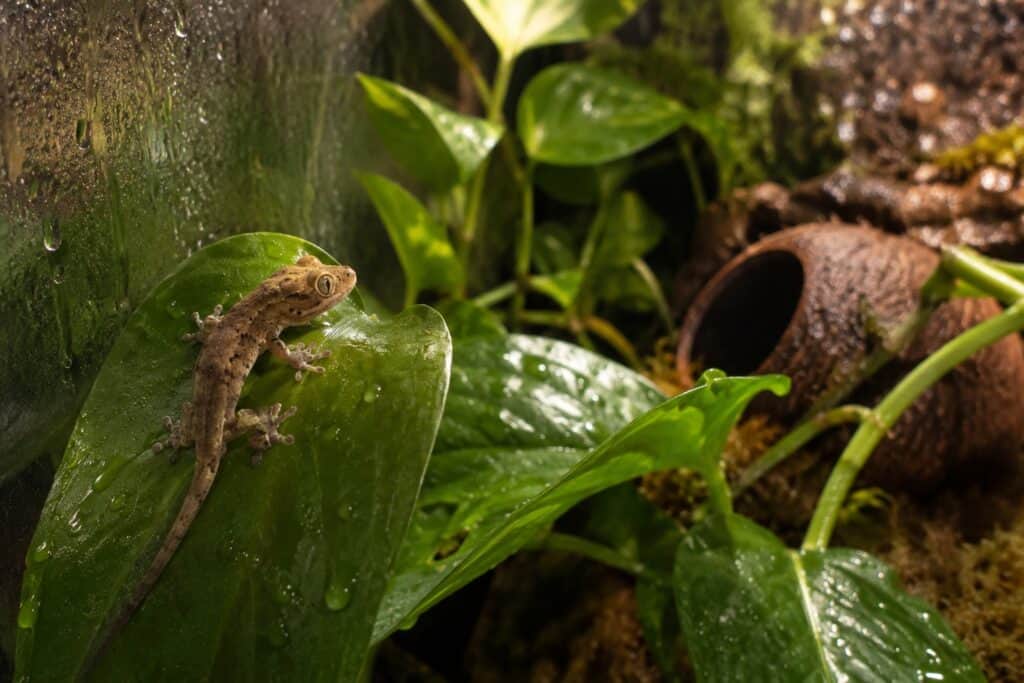
Mourning geckos (Lepidodactylus lugubris) are small arboreal geckos native to tropical Pacific islands and parts of Southeast Asia. They’ve spread across a huge range thanks in part to their ability to reproduce without a mate, which means a single gecko that hitches a ride on a cargo ship can colonize a new island by itself.
Adults top out at about 3 to 4 inches total length including the tail. Hatchlings are roughly 1.5 inches. These are tiny animals. Don’t expect to handle them the way you would a crested gecko or a leopard gecko. They’re fast, they’re fragile, and they’ll bolt through the smallest gap in your enclosure if given the chance.
Lifespan in captivity is 10 to 15 years with proper care. They’re nocturnal but you’ll catch them moving around during the day too, especially if the enclosure is well planted and they feel secure.
The biggest draw for a lot of keepers is the social behavior. Unlike most gecko species, mourning geckos are communal. They live in groups with a loose social hierarchy and interact with each other constantly. Watching a small colony navigate their vivarium, chirping at each other, jockeying for the best sleeping spots, and hunting fruit flies is genuinely entertaining. Housing them alone is actually not recommended. They do best in pairs or small groups.
Mourning Gecko Enclosure Setup
Because mourning geckos are arboreal, they need vertical space more than floor space. The minimum enclosure for a pair or small group is 12 by 12 by 18 inches tall. A standard Exo Terra or similar front-opening terrarium in that size works well as a starter.
That said, bigger is better. An 18 by 18 by 24 inch enclosure gives you much more room for live plants, climbing surfaces, and a proper colony. If you start with two geckos, you’ll eventually have more, so planning for a larger enclosure from the start saves you an upgrade later.
Front-opening enclosures are strongly recommended. These geckos panic when approached from above, and a top-opening tank means you’re reaching in like a predator every time you do maintenance. Front access keeps things calmer.
Mourning geckos are escape artists. Any gap wider than a couple millimeters is an exit route. Check every seam, every cable port, and every ventilation opening. If air can get through, a hatchling mourning gecko can get through. Many keepers use fine mesh or foam to seal gaps around cord holes.
For substrate, a tropical bioactive mix works best. Something like ABG mix (a blend of tree fern fiber, peat moss, charcoal, orchid bark, and sphagnum moss) holds humidity well and supports live plants. If you’ve built a bioactive reptile enclosure before, the same principles apply here. Add springtails and isopods as your clean-up crew and the substrate largely maintains itself.
Fill the enclosure with live plants, cork bark, bamboo tubes, and plenty of leaf cover. Pothos, bromeliads, and small ferns all thrive in these conditions. The more cover you provide, the more active and visible your geckos will be. Bare enclosures stress them out and they’ll hide all day.
A shallow water dish should always be available, but mourning geckos primarily drink water droplets from leaves and glass after misting. A bottle cap or small shallow lid works fine as a supplemental water source. Anything deeper is a drowning risk at this size.
Temperature and Humidity for Mourning Geckos
One of the reasons mourning geckos are so popular is that their temperature requirements are simple. Daytime temps of 75 to 82 degrees Fahrenheit work well. Nighttime can drop to 70 to 72 degrees. In most homes, room temperature is already close to this range, which means many keepers don’t need any supplemental heating at all.
If your room runs cool, a small low-wattage heat lamp or heat mat on one side of the enclosure provides a gentle warm spot. Don’t overheat them. Temperatures above 85 degrees can stress mourning geckos quickly. If you use any heat source, put it on a thermostat.
Humidity is more important. Mourning geckos need 60 to 80 percent humidity, with natural fluctuations throughout the day. Mist the enclosure once or twice daily, enough to see water droplets forming on the leaves and glass. The substrate should stay damp but not waterlogged.
A bioactive setup with live plants does most of the humidity work for you. The plants transpire moisture, the substrate holds it, and the enclosed space keeps it circulating. If you’re using a screen-top enclosure, you’ll need to cover most of the screen to retain moisture, same trick that works for any tropical species.
Low-output UVB is recommended but not strictly required. A 5 percent T5 tube or something like an Arcadia ShadeDweller supports calcium metabolism and overall health. If you skip UVB, make sure your gecko’s diet includes vitamin D3 supplementation. A consistent light cycle of 12 hours on and 12 hours off helps regulate behavior and activity patterns.
What to Feed a Mourning Gecko
Mourning geckos are omnivores, which makes feeding them easy compared to strict insectivores. Their diet in captivity is built around two things: commercial gecko diet (meal replacement powder) and small live insects.
Commercial crested gecko diet, mixed with water to a paste consistency, should be available at all times. Brands like Pangea and Repashy are the most popular and widely available. Offer the diet in a small wall-mounted feeding cup or a bottle cap placed on a ledge. Replace it every 24 to 48 hours. Mourning geckos eat small amounts frequently, so having food available around the clock works better than scheduled meals.
For live insects, flightless fruit flies (Drosophila melanogaster) are the go-to feeder. They’re the perfect size for mourning geckos and easy to culture at home. Pinhead crickets, bean beetles, and tiny dubia roach nymphs also work. Offer insects two to three times per week.
Dust insects with calcium powder at every feeding. If you’re not providing UVB, use calcium with D3. Add a multivitamin dust every two to four weeks. Because mourning geckos are constantly producing eggs, calcium demand is high. Skimping on calcium supplementation leads to egg binding and metabolic bone disease.
Some keepers leave a small dish of calcium powder in the enclosure for the geckos to lick on their own. It’s cheap insurance.
Dealing With Eggs and Population Control
Here’s the reality of keeping mourning geckos: they will lay eggs. Constantly. Every mourning gecko is female, every one reproduces through parthenogenesis, and they start laying as young as 8 to 10 months old. A single gecko typically produces a pair of eggs every 4 to 6 weeks.
Eggs are usually glued to smooth surfaces inside the enclosure, on glass, on the underside of leaves, or inside bamboo tubes and cork bark. They’re small, white, and hard-shelled. Once glued in place, they’re nearly impossible to remove without breaking them.
If you want to hatch the eggs, just leave them alone. At normal enclosure temperatures and humidity, they’ll hatch in about 60 to 90 days. The hatchlings are tiny but fully independent. They can stay in the enclosure with the adults as long as there’s enough food and hiding spots.
If you don’t want more geckos, you need a population control plan. The easiest method is removing or crushing eggs as soon as you spot them. Some keepers freeze eggs before disposing of them. Others keep a small colony and rehome or sell surplus geckos periodically. Whatever you decide, have a plan before you start, because the eggs will come faster than most people expect.
Tracking Your Mourning Gecko Colony
When you’re keeping a group of tiny identical geckos that are constantly laying eggs, things can get chaotic fast. Tracking who’s eating, when eggs appear, and whether the colony population is growing or stable helps you stay ahead of problems.
The Exotic Reptile Care app lets you log feedings, track weight (useful for spotting egg-bound individuals), set misting and feeding reminders, and keep notes on egg production and hatchling counts. For a communal species like mourning geckos, having that data in one place keeps your colony management organized instead of guesswork.
Common Health Issues
Most mourning gecko health problems stem from humidity or diet mistakes.
Low humidity causes shedding issues. Retained shed on the toes is the most common sign. Bump humidity up and make sure the enclosure has enough moist surfaces for the geckos to rub against during shedding.
Calcium deficiency is a real risk because of the constant egg production. Without adequate calcium, females can become egg-bound (unable to pass eggs), develop metabolic bone disease, or produce soft-shelled eggs that stick internally. Keep calcium supplementation consistent and make sure UVB or dietary D3 is part of the routine.
Overcrowding stress happens when the colony outgrows the enclosure. Signs include tail nipping, weight loss in subordinate individuals, and geckos spending all their time hiding. If you see bullying behavior, the enclosure is either too small or too bare. Add more hides and vertical space, or split the group.
Mouth rot (stomatitis) shows up as redness, swelling, or cheesy discharge around the mouth. It’s usually caused by poor hygiene or injuries from rough surfaces. Keep the enclosure clean and watch for early signs.
Is a Mourning Gecko Right for You?
Mourning geckos are perfect if you want a living vivarium with tiny, active geckos that are fascinating to observe. They’re not handleable pets. They’re too small and too fast for that. But as a display species in a well-planted enclosure, they’re hard to beat.
They’re also one of the most affordable reptiles to get into. The geckos themselves are inexpensive, the enclosure doesn’t need to be huge, and commercial gecko diet plus fruit fly cultures cover most of the food costs. The main ongoing effort is humidity management and egg control.
If you’ve kept a crested gecko before, you already understand the basics of tropical vivarium care and gecko diet. Mourning geckos are a natural extension of that experience, just smaller, weirder, and endlessly interesting.
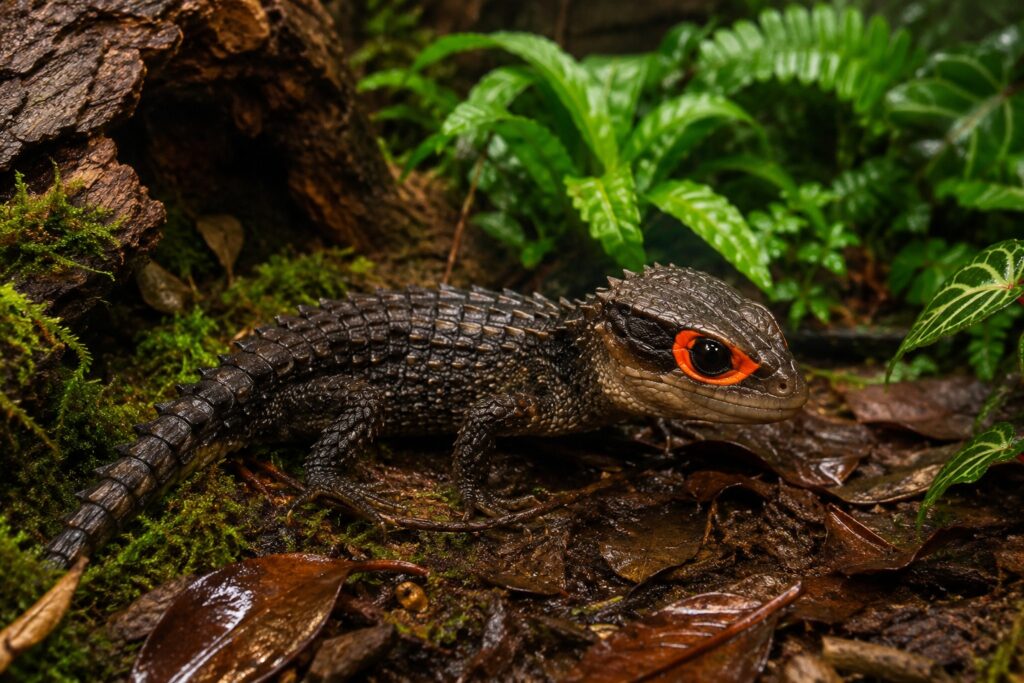
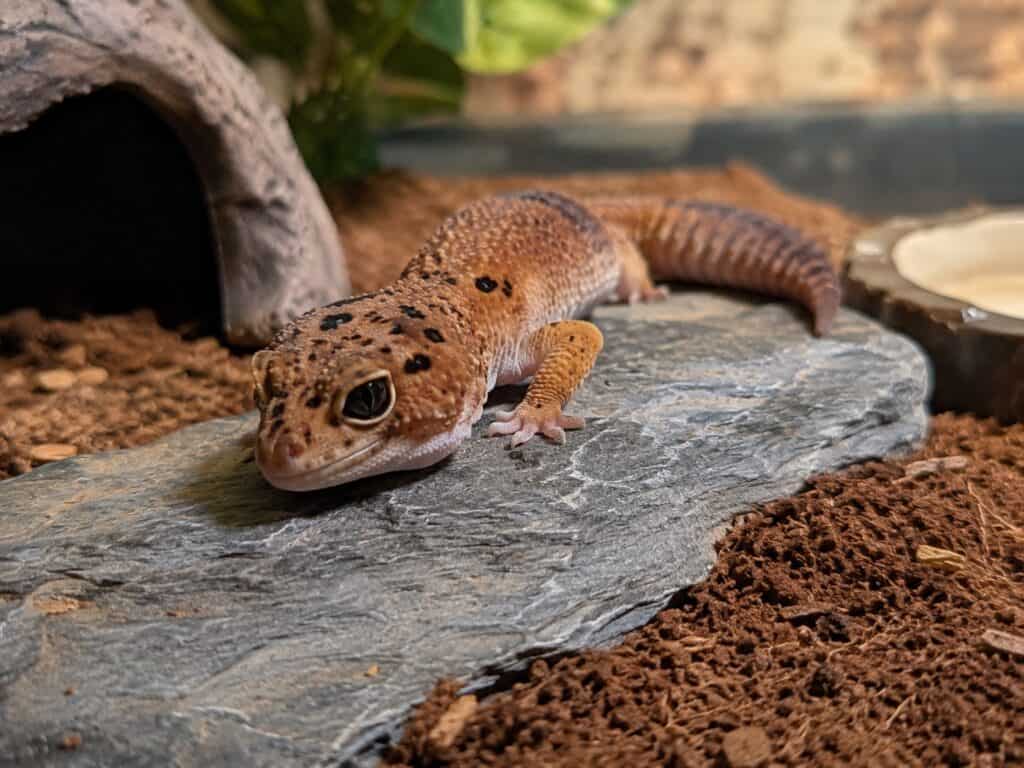
If you enjoy unusual display species, take a look at our care guides for the red-eyed crocodile skink and African fat-tailed gecko.
Mourning gecko care: frequently asked questions
Are all mourning geckos really female?
Yes. There are no males in the species. Every mourning gecko is female and reproduces through parthenogenesis, a form of asexual reproduction where a female produces fertile eggs on her own. The offspring are essentially clones of the mother, which is why a single gecko can start an entire colony without a mate.
Can you keep a single mourning gecko alone?
You can, but it’s not recommended. Mourning geckos are one of the few communal gecko species, and they do best in pairs or small groups where they can interact. A lone gecko misses out on the natural social behavior that makes them so fun to watch. Just know that keeping two or more means eggs are coming, since each one lays on its own.
How often do mourning geckos lay eggs?
Constantly. A single gecko typically produces a pair of eggs every four to six weeks and can start laying as young as eight to ten months old. Eggs get glued to glass, leaves, or inside bamboo and cork, and they’re nearly impossible to remove intact. Decide on a population plan before you start, whether that’s hatching, rehoming, or removing eggs.
Are mourning geckos good for beginners?
Yes, as a display species. They’re affordable, their temperature needs are simple enough that many homes need no supplemental heat, and their diet is easy. The two real skills are humidity management and egg control. What they’re not is a handling pet, since at 3 to 4 inches they’re too small, fast, and fragile to handle the way you would a crested or leopard gecko.
What do mourning geckos eat?
They’re omnivores, which makes feeding simple. Keep commercial crested gecko diet like Pangea or Repashy mixed to a paste available at all times, and offer small live insects two to three times a week. Flightless fruit flies are the go-to feeder, with pinhead crickets and bean beetles as alternatives. Dust insects with calcium every feeding, since constant egg-laying makes calcium demand very high.
Why is calcium so important for mourning geckos?
Because they produce eggs almost nonstop, their bodies pull heavily on calcium reserves. Skimping on it leads to egg binding, soft-shelled eggs, or metabolic bone disease. Dust feeders with calcium at every feeding, provide UVB or dietary D3, and many keepers leave a small dish of calcium in the enclosure as cheap insurance. Consistent supplementation is non-negotiable for a laying colony.
How do I keep track of a whole colony of identical geckos?
It gets chaotic fast when tiny, near-identical geckos are constantly laying. Logging feedings, egg appearances, and weights (useful for spotting an egg-bound individual) keeps colony management organized instead of guesswork. The Exotic Reptile Care app handles feeding logs, misting reminders, weight tracking, and notes on egg and hatchling counts, which fits naturally into a consistent care routine for a communal species.