Ball python not eating after shed is one of the most common concerns keepers have. Your ball python just dropped a beautiful full shed, and you’re feeling good about it. So you thaw out a rat, warm it up, offer it with your tongs, and… nothing. Head turn. Maybe a full retreat into the hide. If your ball python is not eating after shed, don’t panic. This is one of the most common things ball python keepers deal with, and most of the time it resolves on its own. But there are a few things you should check and a few tricks that actually work.
Ball Python Not Eating After Shed: Common Causes
Shedding takes a lot out of a snake. Think about it from their perspective. For the last week or two, they couldn’t see well because their eye caps were clouded over. Their skin felt tight and uncomfortable. They were basically running on survival mode the whole time, hiding more, drinking more, and ignoring food completely.
Once the shed is done, most ball pythons need a reset period. Their body just went through something physically demanding, and jumping straight into feeding mode isn’t always in the cards. For a lot of snakes, this means skipping one or two meals after the shed before they’re interested again. That’s totally normal. A healthy adult ball python can easily go a few weeks without eating and be perfectly fine.
Where keepers get into trouble is when they start stressing about it too early. You offer food the day after the shed, the snake refuses, and suddenly you’re on Reddit at 2am reading about force feeding. Don’t do that. Give it some time.
Do Ball Pythons Eat When Shedding?
Short answer up front: most won’t, from the time the eyes go blue until a day or two after the shed completes. Explain the blue-phase vision thing and that they’re in survival/hide mode, not hunting mode. One or two sentences reassuring that refusing food through the shed itself is expected. You already say most of this in your “Common Causes” section, so this is really just giving that idea its own headed home so it ranks for the exact query.
How Long Can a Ball Python Go Without Eating?
You already make this point in the body (“a healthy adult can easily go a few weeks”). Pull it into its own H2 and expand slightly: healthy adults can safely go weeks to months, weight is the real gauge not the calendar, and post-shed fasting is a tiny subset of that. This reaches toward the “how long can ball python go without eating” demand you have floating around other posts too.
How Long Should You Wait to Feed After a Shed
The general rule that works for most keepers is to wait about 2 to 3 days after the shed is complete before offering food. Some snakes will take it right away. Others need closer to a week. A ball python not eating after shed for 5 to 7 days is completely within the normal range. If your ball python was eating consistently before the shed cycle started, they’ll almost certainly pick it back up within one to two feeding attempts after shedding.
If it’s been two weeks post-shed and your snake still isn’t interested, that’s when you want to start looking at other factors. Two refused meals after a shed is nothing. Four or five in a row starts to become worth investigating.
Check Your Husbandry First
Before you start trying feeding tricks, double check the basics. Nine times out of ten, when a ball python is not eating after shed and it drags on longer than expected, something in the enclosure is off.
Temperature is the big one. Your warm side should be sitting around 88 to 92 degrees Fahrenheit, and your cool side around 76 to 80. If your temps dropped during the shed and you didn’t notice, your snake might still be feeling the effects. Cold snakes don’t eat. Period. Check your thermostat, check your heat source, and verify with a temp gun, not the stick-on thermometers that come with starter kits.
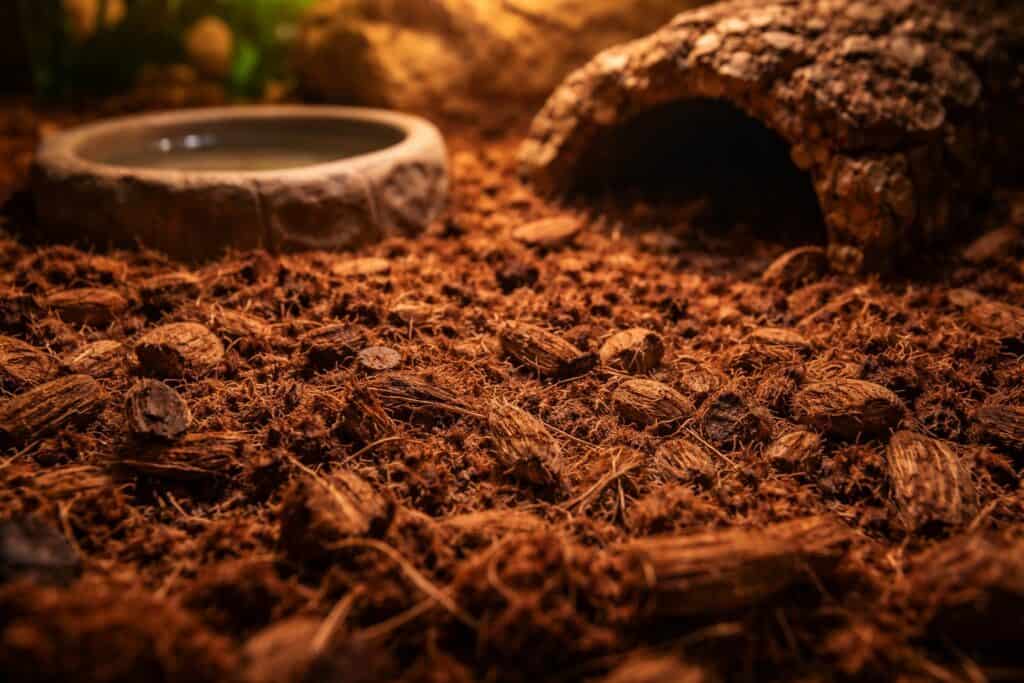
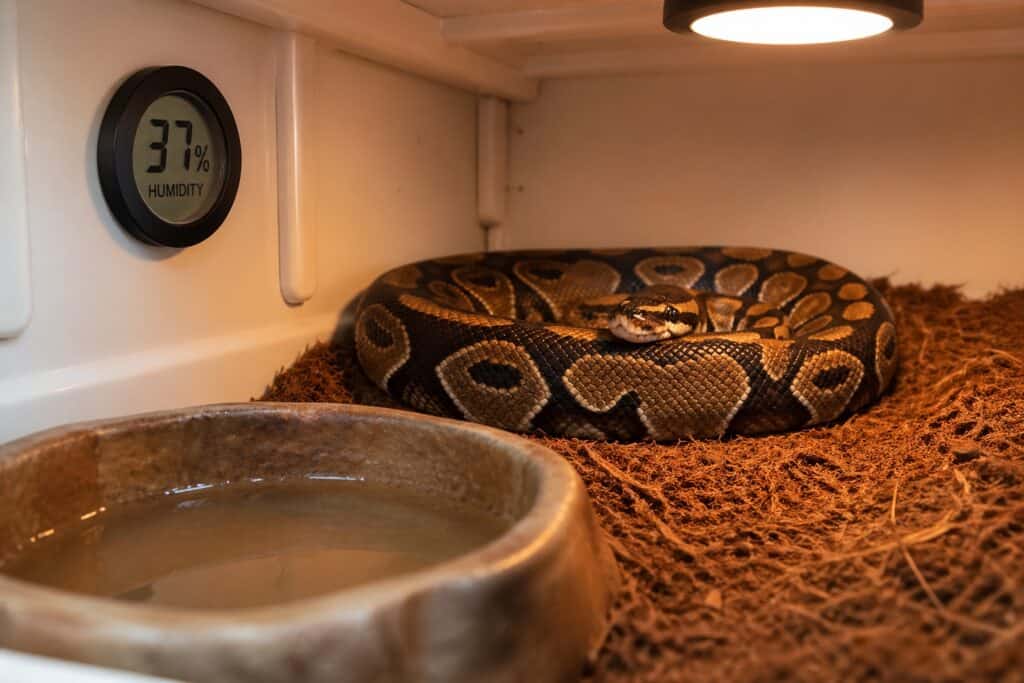
Humidity matters too, especially right after a shed. If the shed was rough or came off in pieces, your snake might be dealing with retained skin that’s causing discomfort. Aim for 60 to 80 percent humidity. A good thick layer of coconut fiber or cypress mulch helps hold moisture. If the shed was clean and came off in one piece, humidity probably isn’t your issue, but it’s still worth checking.
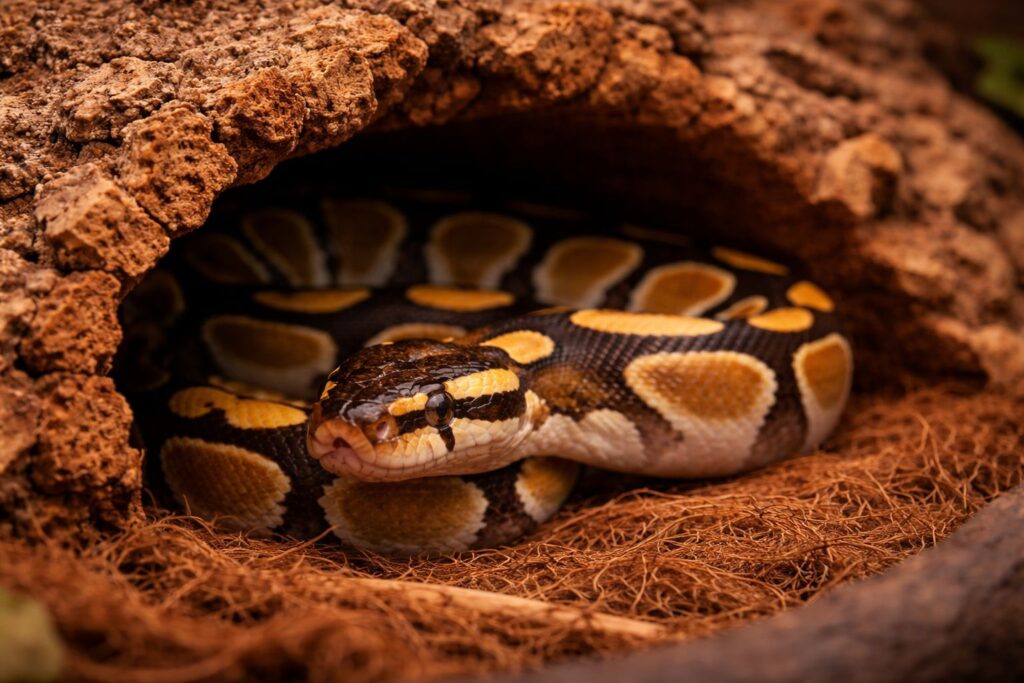
Also look at hides. Your ball python needs at least two snug hides, one on the warm side and one on the cool side. If they don’t feel secure, they won’t eat. It’s that simple, and it’s one of the most overlooked reasons a ball python is not eating after shed.
How to Get a Ball Python Eating After Shed
So your husbandry checks out, it’s been a few days since the shed, and your snake still isn’t interested. Here are some things that have worked for me and for a lot of other keepers.
First, make sure your feeder is warm enough. Ball pythons find prey using heat-sensing pits, so a lukewarm rat that’s barely above room temperature isn’t going to trigger a feeding response. After thawing, dunk the rat in hot water (not boiling, just hot tap water) for a few minutes right before offering. You want it noticeably warm to the touch.
Second, try feeding at night. Ball pythons are nocturnal hunters. If you’re offering food at 2 in the afternoon with all the lights on, you’re fighting their instincts. Turn the lights off, wait 30 to 60 minutes, then offer the prey. The difference this makes is honestly surprising.
Third, try the paper bag method. Put the thawed and warmed rat in a brown paper bag, put the bag in the enclosure near the snake’s hide, and walk away. Leave it overnight. Some ball pythons just don’t want to eat with you watching. The paper bag gives them privacy and traps the heat scent of the prey. A lot of stubborn feeders will take food this way when they refuse tong feeding.
One more thing worth trying is cleaning the enclosure thoroughly after the shed. In the wild, ball pythons will move to a new burrow after shedding because the scent of their old skin can deter them from hunting in the same spot. A full substrate change and wipe down of the enclosure can sometimes flip a switch.
When to Actually Worry
A ball python not eating after shed that only skips a couple meals is not an emergency. But there are some signs that mean you should stop troubleshooting at home and get to a reptile vet.
If your snake is losing significant weight, that’s a concern. This is where having a record of regular weigh-ins really helps. A snake that drops from 1,500 grams to 1,350 over a month of not eating is worth having checked out. If you don’t have a weight history, it’s harder to know when things are actually going south versus just a normal fast.
Watch for other symptoms too. Wheezing or clicking sounds when breathing can point to a respiratory infection. Discharge around the mouth or nostrils is another red flag. Mites, which look like tiny black or red dots around the eyes and under scales, will definitely put a snake off food. And if your snake seems unusually lethargic on top of not eating, that combination warrants a vet visit.
If you want to stay on top of weight trends and shed cycles so you can spot problems early, the Exotic Reptile Care app makes it easy. You can log every shed, track weight over time with growth charts, and set reminders for feeding attempts so you know exactly how long it’s been since your snake last ate. It takes the guesswork out of knowing when a fast is normal versus when it’s time to call the vet.
FAQ
Is it normal for a ball python not to eat after shedding?
Yes, it’s very common. Most ball pythons skip a meal or two around a shed and resume within a week or so. As long as weight is stable and there are no other symptoms, it isn’t a cause for concern.
How long after shedding will a ball python eat?
Usually 2 to 3 days after the shed completes, though some take up to a week. Refusing food for 5 to 7 days post-shed is within the normal range.
When should I worry about my ball python not eating after a shed?
Worry if your snake is losing significant weight, or if you see wheezing, clicking, mouth or nose discharge, mites, or unusual lethargy. Those signs warrant a reptile vet visit.
It’s Probably Fine, But Stay Observant
Most ball pythons that refuse food after a shed will start eating again within a week or two with zero intervention from you. A ball python not eating after shed is one of those things that feels urgent but almost never is. The best thing you can do is keep your husbandry dialed in, offer food on your normal schedule, and not make a big production out of it every time. If the snake says no, pull the rat, wait a week, and try again. Ball pythons are notorious for testing their keepers’ patience, and the ones who stay calm and consistent are the ones who have the fewest feeding issues long term.
For more detailed guidance on ball python shedding cycles, see our guide on dealing with a stuck or retained shed, and check our ball python humidity guide since humidity is the most common cause of shed and feeding problems.