Pet stores sell a dozen bags that all claim to be the right corn snake substrate, and half of them aren’t. The good news is that corn snakes are easy to please. They come from fairly dry habitat, they love to burrow, and they don’t need the wet, humid bedding that ball pythons do. Pick a substrate that holds a tunnel, stays mostly dry, and is deep enough to dig in, and you’ve done most of the job.
This guide compares the four substrates that work, the ones to skip, the right depth, and the signs your bedding is causing problems.
Corn Snake Substrate at a Glance
The best corn snake substrate is aspen shavings, cypress mulch, or a topsoil and play sand mix, laid 3 to 4 inches deep. Coconut fiber works too. Avoid cedar, pine, calcium sand, reptile carpet, and loose sand on its own.
| Substrate | Best for | Watch out for |
|---|---|---|
| Aspen shavings | Burrowing, easy spot cleaning | Molds if it gets wet |
| Cypress mulch | Holding a bit more humidity | Pieces too big for hatchlings |
| Topsoil and sand (70/30) | Naturalistic and bioactive builds | Dusty if it dries out completely |
| Coconut fiber | Shed support in dry homes | Dusty when dry, soggy when wet |
| Paper towel | Quarantine, mites, sick snakes | No burrowing, frequent changes |
Humidity for a corn snake should sit around 40 to 60%, with short spikes to 70% or more during shed. The substrate you pick is the main thing that decides where in that range you land.
The 4 Corn Snake Substrates That Work
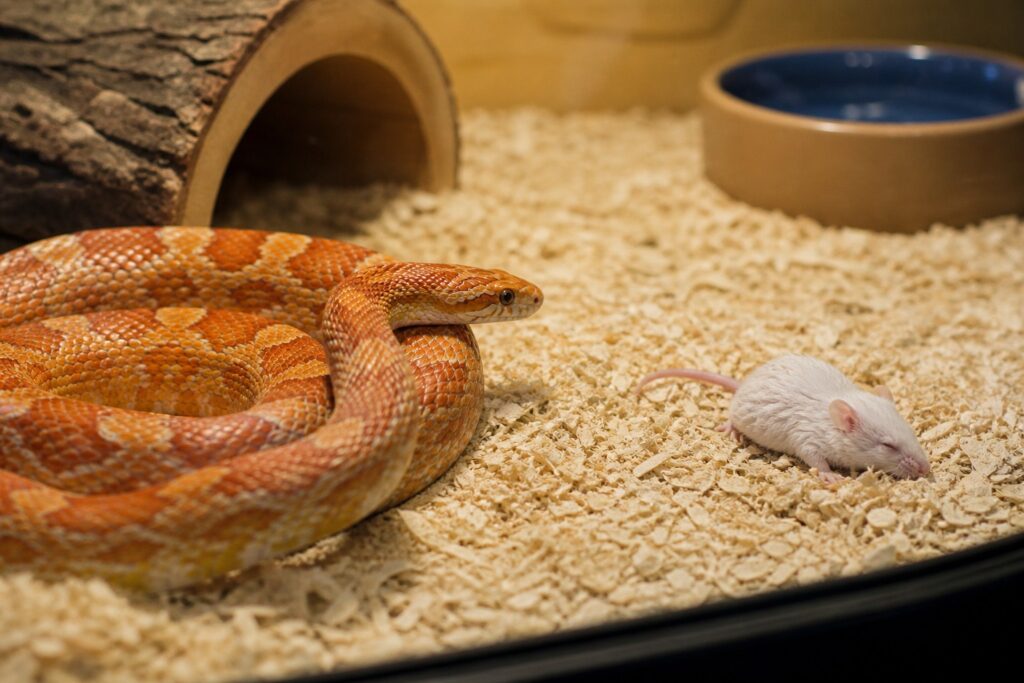
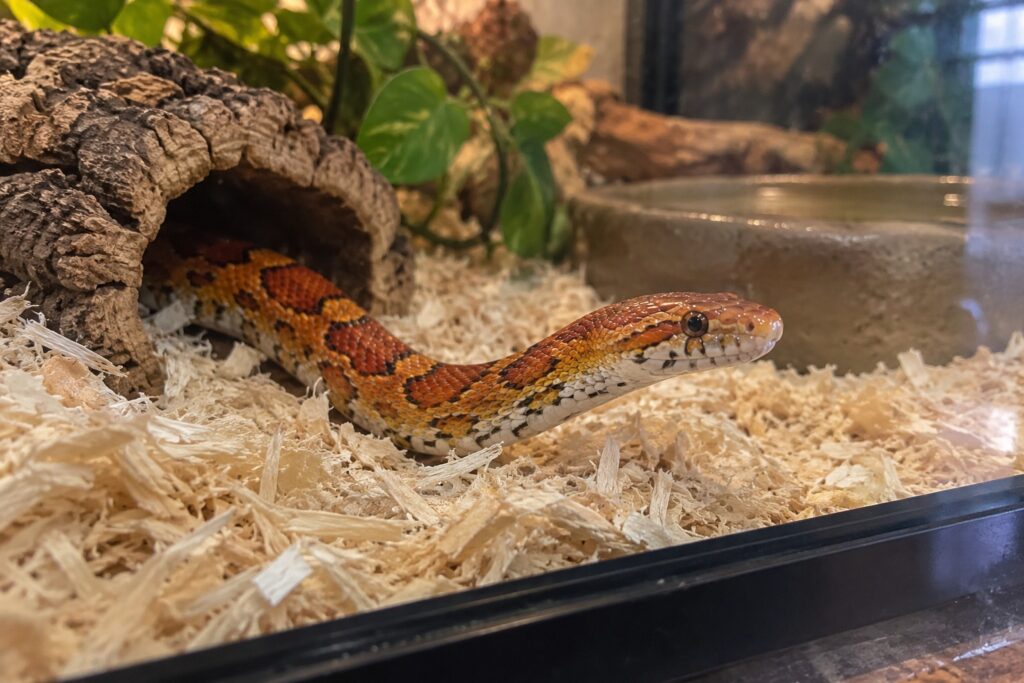
Aspen shavings are the classic choice, and for most keepers they’re the right one. They’re soft, cheap, and hold their shape when a corn snake tunnels through them, so you’ll see little burrows all over the tank. Waste sits on top and is easy to scoop out. The one weakness is water. Aspen molds quickly when it gets wet, so keep the water bowl on a flat stone or in a corner where spills are easy to spot, and pull out any damp patches.
Cypress mulch holds a little more moisture than aspen and resists mold well. It’s a good pick if your home is very dry and your corn snake keeps having patchy sheds. It doesn’t hold tunnels quite as well as aspen, and the bigger chunks can be awkward for hatchlings, so use a fine grade.
A topsoil and play sand mix, roughly 70% organic topsoil with no fertilizer or perlite and 30% play sand, is the naturalistic option. Lightly dampen it when you lay it down, pack it, and it holds burrows very well. It’s also the base for a bioactive build. Let it dry to slightly damp, not wet, since corn snakes don’t need the moisture a tropical species does.
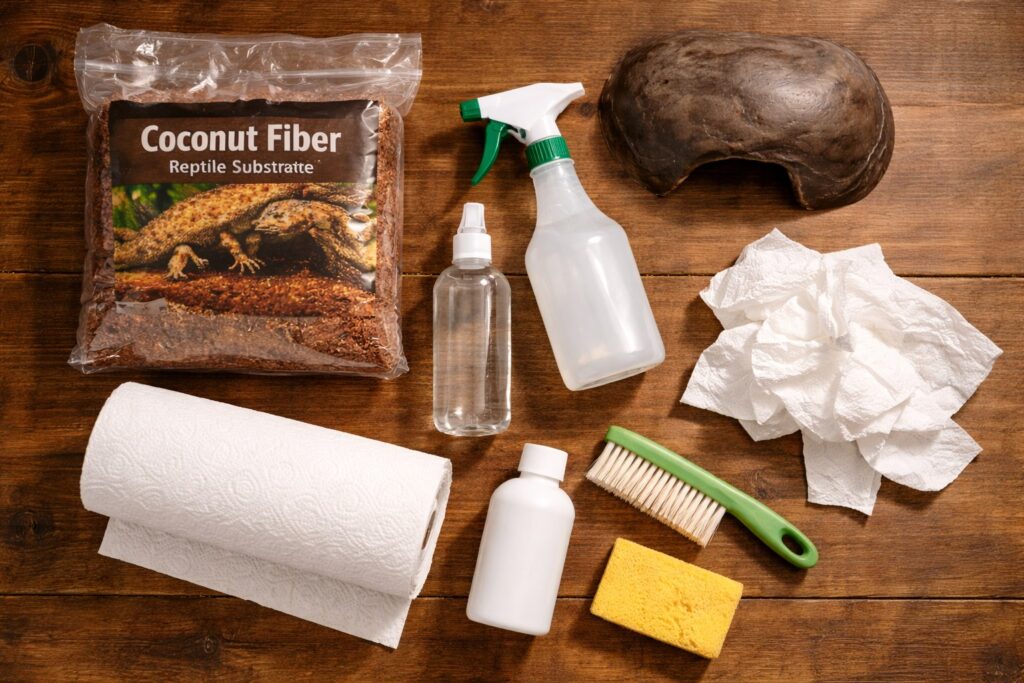
Coconut fiber works, but it’s my least favorite of the four for corns. When it’s dry it gets dusty, and when it’s wet it stays wet. It can help in a very dry house, mixed in with aspen or cypress, but on its own it’s harder to get right than the others.
Corn Snake Substrate to Avoid
Cedar and pine shavings are out. Their aromatic oils irritate a snake’s airways and skin, and long term exposure is linked to respiratory problems.
Calcium sand is sold as digestible, but it clumps when it gets damp and can cause impaction if a snake swallows some with its prey.
Reptile carpet looks tidy but traps waste and bacteria in the fibers, and corn snakes can catch their teeth on the loops. It also gives them nothing to burrow in.
Sand on its own is too loose to hold a tunnel and gets dusty. Mixed with soil it’s fine. By itself, skip it.
How Deep Should Corn Snake Substrate Be?
Go 3 to 4 inches deep, whatever material you use. Corn snakes are burrowers, especially juveniles, and a thin layer of bedding leaves them nowhere to hide except under the hides you’ve given them. With proper depth you’ll find your snake has dug its own tunnels between the hides, which is a good sign it feels secure.
Deep substrate also buffers humidity. A thin layer dries out in a day, while 4 inches stays slightly more humid near the bottom even when the surface is dry. That gives the snake a choice, which is exactly what you want.
If you use an under tank heat mat, keep the substrate a little thinner over the mat so heat gets through, and always measure the surface with a temp gun rather than reading the glass. For overhead heat, depth doesn’t matter. The rest of the setup, including sizes and heating, is in our corn snake enclosure guide.
How Corn Snake Substrate Compares to Ball Python Bedding
Keepers with both species often use the same bag for both. That usually goes wrong for one of them. Corn snakes do best on drier, fluffier bedding like aspen, while the substrate a ball python needs has to hold much more moisture, which is why aspen molds in a ball python tank. If you keep both, use aspen or cypress for the corn and a moisture holding mix for the ball python.
5 Signs Your Corn Snake Substrate Is Wrong
Most substrate problems show up in the snake before you notice them in the tank. Work through these in order.
1. Patchy or stuck sheds. The enclosure is too dry for your home. Add a humid hide with damp sphagnum moss on the warm side, or mix some cypress into the aspen. Don’t soak the whole tank. Keep a record of each shed, whether it came off in one piece, and how humid the tank was that week. It’s easy to track sheds in the app with Exotic Reptile Care, and after two or three cycles you’ll see whether the fix worked.
2. Mold, mildew, or a musty smell. The substrate is staying wet. Find the source, usually a tipped water bowl or overmisting, remove the damp patches, and stop misting. Corn snakes rarely need it outside shed.
3. Your snake never burrows and sits out in the open. The substrate is too shallow or too coarse to hold a tunnel. Top it up to 3 to 4 inches, and switch to aspen if it’s a coarse mulch.
4. Bedding stuck to prey or found in droppings. A little is normal, but regular mouthfuls raise the risk of impaction, especially with sand mixes. The Merck Veterinary Manual’s reptile husbandry guide warns that swallowed substrate can block the gut, which is why gravel and pebbles are a bad idea for any ground dwelling reptile. Feed on a flat stone, a paper plate, or in a separate tub, and use tongs.
5. Tiny black dots on the snake or in the water bowl. Those are mites, and they hide in substrate. Bag and bin all of it, switch to paper towels, and follow a full snake mites treatment before putting fresh bedding back.
Frequently Asked Questions
What is the best substrate for a corn snake?
Aspen shavings are the best all round choice. They hold burrows, stay dry, and make spot cleaning easy. Cypress mulch and a topsoil and sand mix are good alternatives.
How deep should corn snake substrate be?
3 to 4 inches. Corn snakes like to burrow, and deeper substrate also keeps humidity more stable.
Can corn snakes live on coconut fiber?
Yes, but it’s dusty when dry and holds too much water when wet. It works best mixed with aspen or cypress rather than on its own.
Is pine or cedar safe for corn snakes?
No. The oils in pine and cedar shavings irritate a snake’s airways and skin. Use aspen instead.
How often should I change corn snake substrate?
Spot clean every few days and replace all of it about once a month, or sooner if it gets damp or smells.
Pick aspen unless you have a reason not to, lay it 3 to 4 inches deep, keep it dry, and watch the sheds. Get that right and the substrate becomes the easiest part of keeping a corn snake.