Can bearded dragons eat grapes? Yes, but only rarely and in small amounts, more sparingly than most other fruits. Grapes are not toxic, and most beardies love them, but they are high in sugar and have a poor calcium ratio, which puts them in the “once in a while treat” category rather than the regular rotation. So if your dragon eyed the grape on your plate, you can share a little, as long as you keep it occasional and prep it right. Here is exactly how much is safe, how to serve it, and why grapes sit near the bottom of the fruit list.
Are Grapes Safe for Bearded Dragons?
Grapes are safe in the sense that nothing in them is poisonous to bearded dragons. They are not on the toxic list the way avocado or rhubarb are. They also bring a little value: some hydration from the high water content, antioxidants, and small amounts of vitamins A, C, and K. And beardies tend to go wild for them, which makes grapes a handy tool for tempting a picky eater.
But safe is not the same as good for them daily, and grapes have two real drawbacks. The first is sugar. Grapes are one of the sweeter fruits, and bearded dragons are not built to process much sugar. Too much leads to digestive upset, loose stool, and over time contributes to obesity and even tooth problems. The second is the calcium to phosphorus ratio. Grapes have more phosphorus than calcium, and phosphorus binds calcium so the body cannot absorb it well. Calcium is the one mineral a bearded dragon really cannot afford to run low on, since a shortage leads to metabolic bone disease. Between the sugar and the calcium math, grapes earn their spot as an occasional treat and not much more. Strawberries run into the same sugar problem, and both are best treated as an occasional topper rather than part of the salad.
How Often Can Bearded Dragons Eat Grapes?
Offer grapes no more than once or twice a month, and only a small amount when you do. Fruit as a whole should make up only about 5 to 10 percent of a bearded dragon’s diet, and within that fruit budget grapes should be a rare pick, behind better options like blueberries, strawberries, and papaya. This lines up with the fruit guidance in our full bearded dragon food guide, where fruit is a weekly-at-most treat, not a food group.
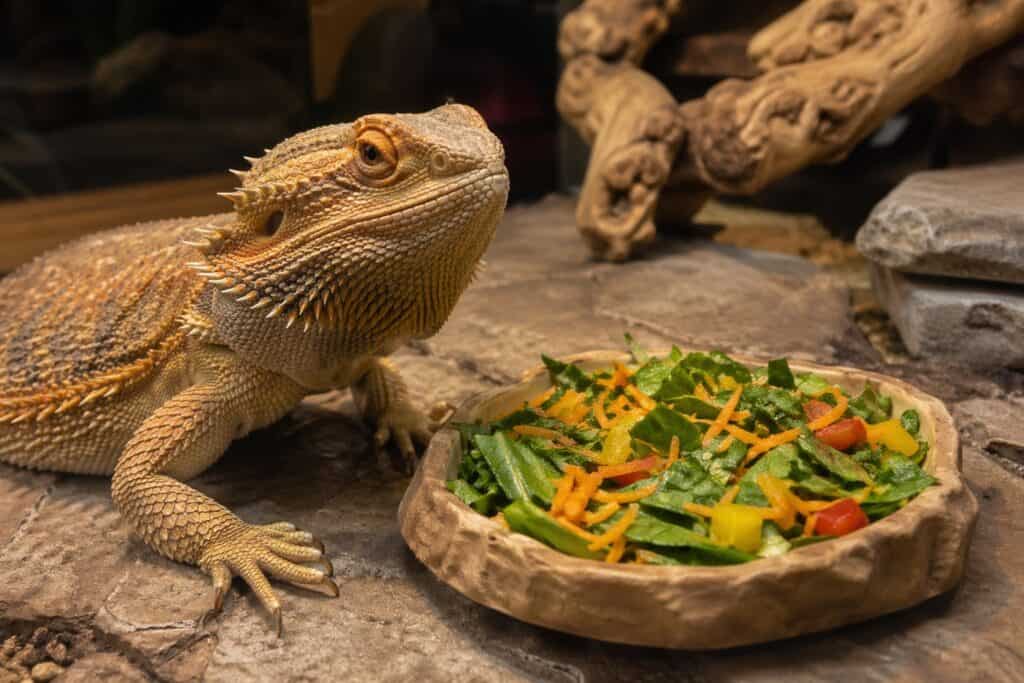
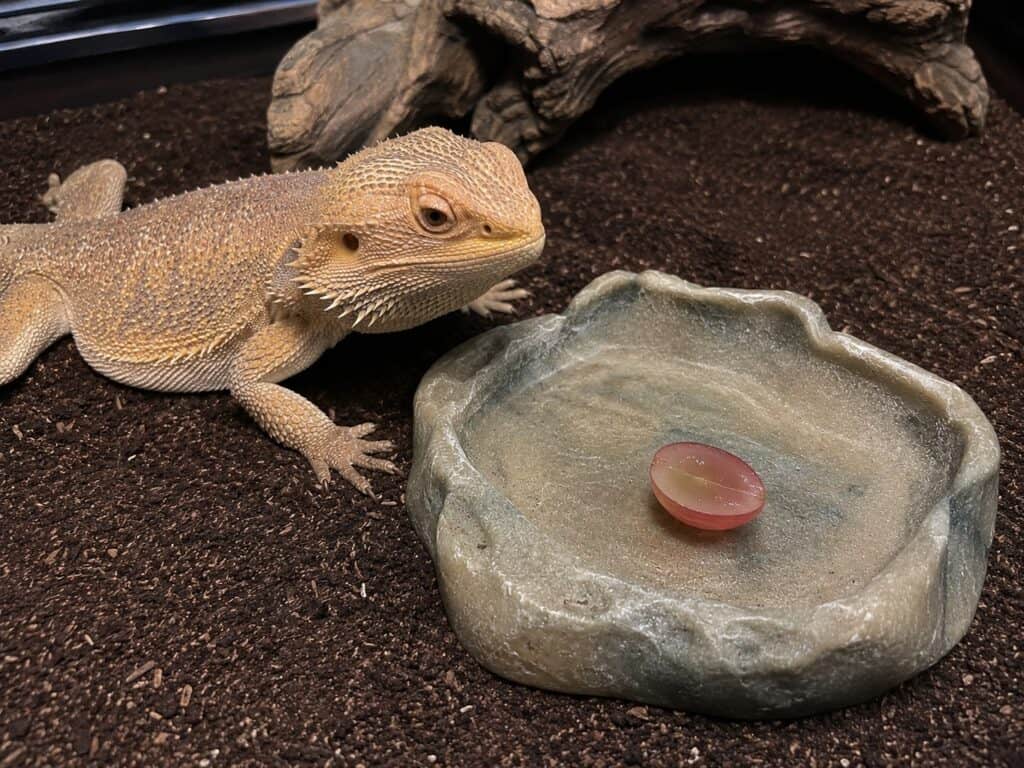
A sensible serving is one grape, halved or quartered, for an adult dragon, mixed into the salad. That is it. You are giving a taste, not a portion. Grapes are the kind of food where it is genuinely easy to overdo it because your dragon reacts so enthusiastically, but that enthusiasm is not a reason to feed more, it is a reason to be careful.
Age matters here too. Adults eat a mostly plant diet, so their salad is where the occasional grape appears. Babies and juveniles live mostly on insects and need their limited plant intake to be nutrient-dense greens, not sugar. For a baby, skip grapes almost entirely, there are far better ways to use that small amount of stomach space.
How to Prepare Grapes for Your Bearded Dragon
Prep is quick but the details matter for safety. Buy seedless grapes, or cut out any seeds, since seeds are a choking and impaction hazard. Wash the grape well to remove pesticide residue, and go organic if that is easy, because grapes are one of the more heavily sprayed fruits.
Cut the grape up. A whole grape is round, smooth, and exactly the wrong size and shape to lodge in a throat, which makes it a serious choking risk. Halve it for a large dragon, quarter it for a smaller one. As with any food, no piece should be bigger than the space between your dragon’s eyes. Cutting it also helps it mix through the greens so your dragon is not just eating a lump of sugar on its own.
Serve grapes raw. There is no reason to cook them, and you would only be adding mush and losing what little nutrition is there. Skip anything processed too: no raisins, which are basically concentrated sugar bombs, and nothing from a fruit salad with dressing or syrup. Plain, raw, seedless, and cut small is the whole method.
Can Bearded Dragons Eat Grapes Every Day?
No. Grapes every day would be one of the easier ways to slide a bearded dragon into health problems. The daily sugar load stresses the digestive system and pushes toward obesity, and the ongoing calcium imbalance chips away at bone health. What makes this trap easy to fall into is exactly how much dragons love grapes, it is tempting to reward that excitement, and the treat quietly becomes a habit.
Keep grapes to a small piece once or twice a month and none of that is a concern. If you ever notice loose stool, a suddenly picky attitude toward regular greens, or weight creeping up, look at how much fruit has been sneaking into the diet and pull it back. Grapes are a treat that works beautifully when it stays a treat.
Keeping Fruit Treats Under Control
The honest challenge with any sweet treat is memory. It is easy to believe grapes are a once-a-month thing while actually handing one over most weeks because your dragon does its happy food dance every time. Over a couple of months that adds up to far more sugar than you intended.
Logging what your dragon actually eats fixes the guesswork, and that is where the Exotic Reptile Care app helps. You can record each feeding, so the occasional treats stay genuinely occasional instead of quietly becoming regulars, and track weight over time to catch the early creep that too much fruit causes. Seeing “grapes: 5 times this month” written down is a much better reality check than trying to remember.
The Bottom Line on Grapes
Can bearded dragons eat grapes? Yes, but treat them as a rare, small treat, one halved seedless grape once or twice a month, served raw and mixed into a salad built on proper leafy greens. The sugar and poor calcium ratio are the reasons grapes stay near the bottom of the fruit list, not a reason to avoid them entirely. Used sparingly, a grape is a great way to reward your dragon or tempt a reluctant eater. For the full breakdown of which fruits, greens, and insects belong in the diet and how they fit together, our complete bearded dragon food guide covers it all, and if your beardie is refusing its vegetables, our guide on getting a bearded dragon to eat greens has strategies that actually work.
Can Bearded Dragons Eat Grapes: Frequently Asked Questions
Can bearded dragons eat grapes every day?
No. Grapes are a rare treat, not a daily food, because they are high in sugar and have a poor calcium to phosphorus ratio. Fed daily they contribute to digestive upset, obesity, and weaker calcium absorption. A small piece once or twice a month is the safe amount.
Can bearded dragons eat grapes with seeds?
Only if the seeds are removed. Seeds are a choking and impaction hazard, so use seedless grapes or cut any seeds out, and always slice the grape into small pieces before serving.
Can baby bearded dragons eat grapes?
It is best to skip grapes for babies and young juveniles. They eat mostly insects and need their small amount of plant intake to be nutrient-dense greens rather than sugar. Save grapes for adult dragons as an occasional treat.
Are grapes or strawberries better for bearded dragons?
Both are occasional treats, but strawberries are generally a slightly better pick because grapes are higher in sugar. Either way, keep total fruit to about 5 to 10 percent of the diet and serve small amounts cut into bite-sized pieces.
Can bearded dragons eat raisins?
No, avoid raisins. They are dried grapes with concentrated sugar, which makes an already sugary food much worse. Stick to a small piece of fresh, raw, seedless grape instead.