There’s a weird amount of conflicting advice out there about how often to clean a snake enclosure. Some keepers treat it like a sterile lab and bleach everything weekly. Others barely touch it for months. The truth is somewhere in the middle, and it depends on a few things like your substrate type, your snake species, and how big the enclosure is. But there is a practical schedule that works for most keepers, and once you get into the rhythm of it, the whole process takes almost no time at all.
Why Cleaning Actually Matters
This might sound obvious, but it’s worth saying. Snakes sit in their enclosures 24/7. They eat, drink, defecate, shed, and sleep in the same space. If waste builds up, bacteria thrive, especially in the warm and humid conditions most snake species need. That’s how you end up with scale rot, respiratory infections, and mouth rot. All of those are preventable with basic enclosure hygiene.
The flip side is that overcleaning causes problems too. Snakes rely heavily on scent to feel secure in their environment. If you’re ripping everything out and scrubbing it down every few days, you’re stripping away the familiar smells that tell your snake it’s home. That leads to stress, and stressed snakes stop eating, hide constantly, and become more defensive during handling. So the goal is clean enough to prevent illness but not so sterile that your snake feels like it’s living in a new enclosure every week.
How Often to Clean Snake Enclosure on a Daily Basis
Daily spot cleaning is the foundation of good enclosure maintenance. This doesn’t mean a deep scrub. It means a quick visual check and removing anything that shouldn’t be there.
When you see feces, pick them up. When you see urates, scoop out the urates and the substrate around them. Urates are the real problem because the liquid soaks into the bedding and creates that awful ammonia smell if you let it sit. If your snake has shed, pull the skin out. If the water bowl is dirty or has substrate in it, dump it, scrub it with hot water, and refill it. That’s it. The whole thing takes two minutes.
You don’t need to remove your snake for this. Just work around them. Most snakes will barely acknowledge you’re doing it. The key is making this a habit so waste never sits for more than a day or two. If you’re consistent with spot cleaning, your deep cleans become way less of a production.
How Often to Deep Clean a Snake Enclosure
Once a month, plan for a full enclosure cleaning. This is when you take everything out, replace all the substrate, wipe down the walls and floor, clean the hides and water bowl, and put it all back together.
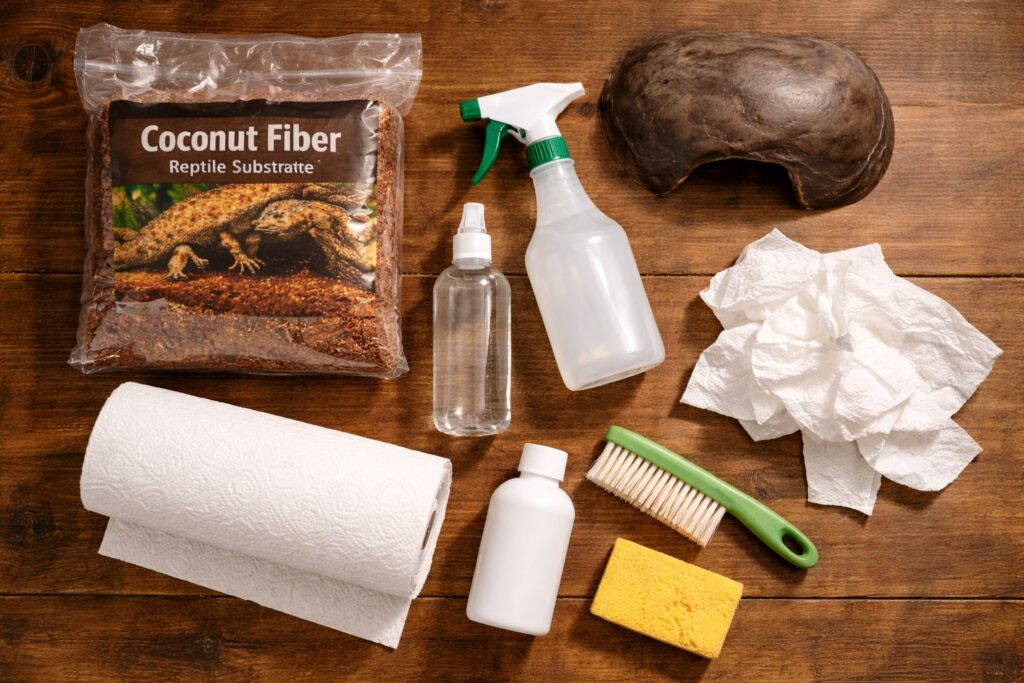
Here’s how to do it without making it a bigger deal than it needs to be. First, move your snake to a secure temporary container with a lid. A plastic tub with air holes works fine. Then pull out all the decor, hides, and the water bowl. Toss the old substrate in a trash bag. Spray down the inside of the enclosure with a reptile-safe disinfectant or a diluted vinegar solution, about 50/50 with water. Let it sit for a few minutes, then wipe everything down with paper towels. Make sure you get into the corners and along the edges where grime builds up.
For hides and decor, soak them in hot water with a splash of the same disinfectant, scrub with a brush, rinse thoroughly, and let them dry. The water bowl gets the same treatment. Once everything is dry and the enclosure doesn’t smell like cleaning product anymore, add fresh substrate, put everything back, and return your snake.
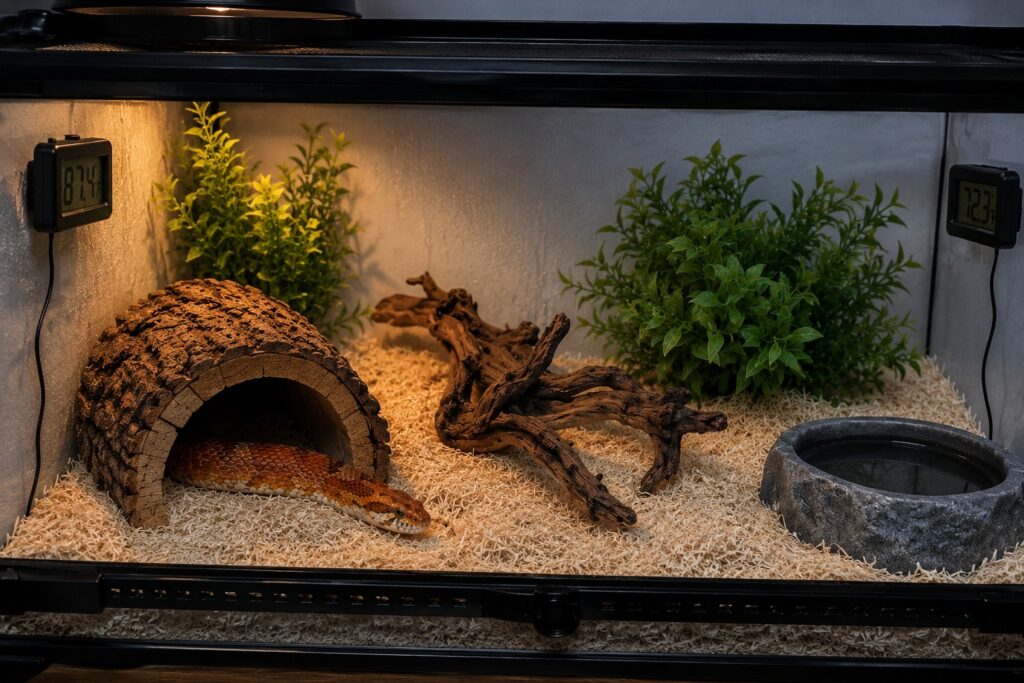
One thing worth mentioning. Try to keep the layout roughly the same when you put things back. Same hides in the same spots, water bowl in the same corner. Your snake mapped out its enclosure using scent and spatial memory. Rearranging everything on top of replacing all the substrate is a lot of change at once. Keep it familiar.
How Often to Clean Snake Enclosure With Different Substrates
Your substrate type changes the cleaning schedule more than most people realize.
Paper towel and newspaper are the easiest to maintain but need replacing most often. Because waste sits on the surface instead of being absorbed, you’ll want to swap out soiled sections every couple of days and do a full replacement weekly. The trade-off is that deep cleans are faster since there’s less to deal with.
Aspen shavings absorb well and control odor better than paper, but urates can get buried and go unnoticed. Spot clean carefully and plan on a full substrate swap every 3 to 4 weeks. If you’re noticing a smell before the month is up, you’re probably missing urates during spot cleans.
Coconut fiber and cypress mulch hold humidity great for tropical species but can harbor bacteria if they stay too wet. Keep an eye on soggy patches and replace them as needed between deep cleans. A full swap every month is usually the right cadence.
Bioactive setups are a different story entirely. If your cleanup crew is established and working well, you may only need to do a real deep clean once or twice a year. But you still need to spot clean anything the isopods and springtails aren’t handling fast enough, and you should still refresh the water bowl every day or two.
Signs You’re Not Cleaning Enough
If you can smell the enclosure from across the room, you’re behind. A well-maintained snake enclosure should have little to no noticeable odor. That ammonia smell from sitting urates is the biggest offender.
Watch your snake too. If you’re seeing scale rot, which shows up as reddish, swollen, or crusty-looking scales on the belly, that’s almost always tied to a dirty or overly damp substrate. Mouth rot, where you’ll see redness or discharge around the mouth, can also develop in unsanitary conditions. Both of these are treatable but completely avoidable with a consistent cleaning routine.
If your snake is soaking in its water bowl more than usual, that can sometimes be a sign of mites, but it can also mean the substrate is irritating its skin. Either way, it’s worth investigating and cleaning more thoroughly.
Setting Up Cleaning Reminders
The hardest part of enclosure cleaning isn’t the actual work. It’s remembering to do it consistently. Life gets busy and it’s easy to let a weekly water bowl scrub slide into every ten days, then every two weeks.
This is one of those areas where the Exotic Reptile Care app comes in handy. You can set custom care reminders for cleaning on whatever schedule works for your setup, whether that’s daily spot clean alerts, weekly water bowl reminders, or monthly deep clean notifications. Having it on a schedule means you don’t have to rely on memory, and you can track when each clean actually happened so you always know where you stand.
Keep It Simple and Stay Consistent
Figuring out how often to clean a snake enclosure doesn’t need to be complicated. Spot clean daily, do a thorough deep clean monthly, adjust based on your substrate type, and pay attention to what your snake is telling you. A consistent routine keeps your snake healthy and keeps the workload manageable. The keepers who stay on top of small daily tasks are the ones who never have to deal with a major enclosure overhaul or a vet bill from a preventable infection.
For a deeper dive into substrate options and enclosure setup best practices, ReptiFiles has excellent species-specific care guides that are worth checking out.