
Crested geckos are one of the easiest reptiles to feed, but that doesn’t mean you can just wing it. A lot of keepers either overfeed insects, skip them entirely, or have no real rhythm to their feeding routine. Getting your crested gecko diet schedule right from the start prevents picky eating habits, obesity, and nutritional deficiencies down the road. And once you have a system, it takes almost zero effort to maintain.
Here’s what a solid feeding routine actually looks like.
Meal Replacement Powder Is the Foundation
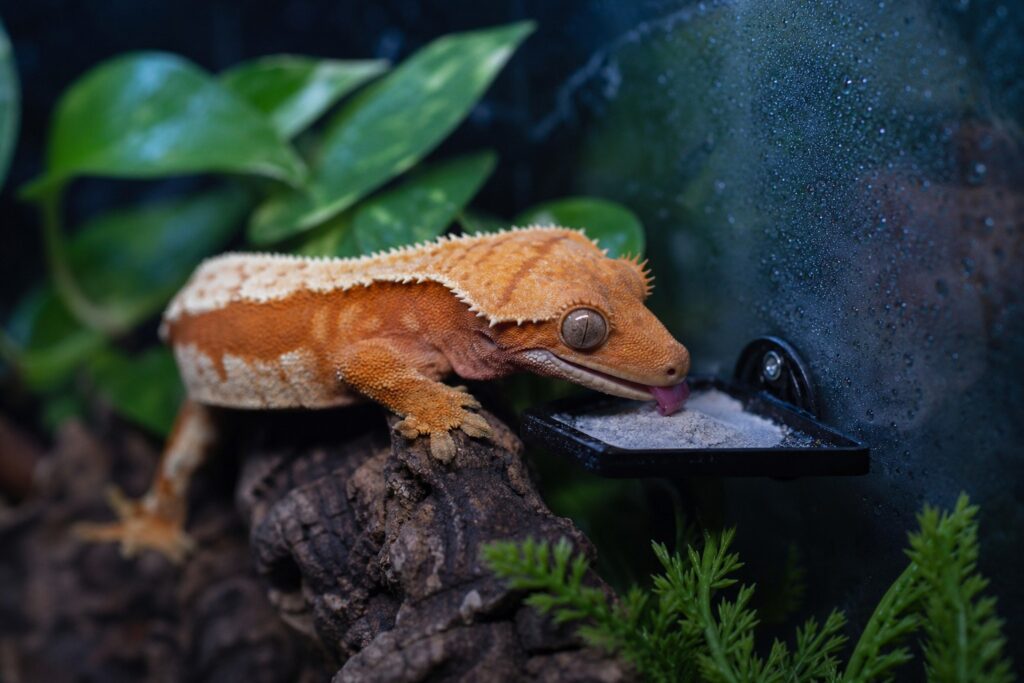
If you’re new to crested geckos, this might surprise you. The bulk of their diet should be a commercial meal replacement powder, not insects. Products like Pangea and Repashy are specifically formulated for crested geckos and contain the right balance of protein, calcium, vitamins, and fruit that these geckos need. You mix a small amount with water to make a paste and serve it in a shallow dish or feeding ledge.
Offer fresh MRP every other day, or roughly three to four times per week. Remove uneaten food after 24 hours because it dries out and grows mold fast, especially in the high humidity crested geckos need. Some keepers do Monday, Wednesday, Friday, Sunday and then repeat. That kind of rotation works well and is easy to remember.
Don’t mix up a big batch and refrigerate it for the week. Mix fresh each time. It takes 30 seconds and the gecko is more likely to eat it when the texture and smell are right.
Where Insects Fit Into Your Crested Gecko Diet Schedule
Insects are a supplement, not the main course. Offer live insects once or twice a week on the days you’re not serving MRP. Crickets and dubia roaches are the best options. Black soldier fly larvae work too, especially for younger geckos.
Size matters a lot. The insect should be no longer than the width of your gecko’s head. Anything bigger is a choking risk and can stress out smaller geckos. For adults, medium crickets or 3/4 inch dubias are usually the right size.
Dust every insect feeding with calcium powder. Use calcium with D3 once a week and plain calcium without D3 for the other insect feeding if you’re doing two per week. This is non-negotiable. Crested geckos are prone to metabolic bone disease, and skipping calcium supplementation is one of the fastest ways to cause it.
Some crested geckos flat out refuse insects. That’s okay. If your gecko eats MRP consistently and maintains good weight and body condition, an insect-free diet is perfectly viable. The commercial diets are formulated to be nutritionally complete on their own. Insects are a bonus, not a requirement.
A Sample Weekly Crested Gecko Diet Schedule
Here’s a straightforward weekly routine that works for most adult crested geckos:
- Monday: Fresh MRP
- Tuesday: Remove old MRP, rest day
- Wednesday: Fresh MRP
- Thursday: Live insects dusted with calcium + D3
- Friday: Fresh MRP
- Saturday: Live insects dusted with plain calcium
- Sunday: Rest day
For juveniles under 15 grams, offer MRP every day and insects twice a week. Young cresties are growing fast and need the extra calories. You can start stretching to the adult schedule once they hit 15 to 20 grams and their growth rate slows down.
The exact days don’t matter. What matters is the ratio: MRP three to four times a week, insects one to two times a week, with a rest day or two mixed in. Pick a pattern that fits your life and stick with it.
Feeding Time and Placement
Crested geckos are nocturnal, so feed them in the evening. Right around when the lights go off is ideal. You’ll notice way more food getting eaten compared to morning feedings because the gecko is actually awake and active.
Place MRP dishes high in the enclosure, not on the ground. Crested geckos are arboreal and spend most of their time up in the branches and along the glass. A magnetic feeding ledge stuck to the glass about two-thirds of the way up works perfectly. If you put food on the floor, most crested geckos won’t bother going down for it.
For insects, drop them into the enclosure in the evening and let the gecko hunt. Remove any uneaten insects the next morning. Crickets left overnight can actually bite your gecko while it sleeps, which causes stress and skin damage. Dubias are less aggressive, but still clean them out if they’re uneaten.
Common Mistakes That Mess Up the Schedule
Overfeeding insects is the most common one. Some keepers treat crested geckos like leopard geckos and offer crickets every other day. That’s way too much protein for a frugivorous species and can lead to kidney problems and obesity over time. Stick to once or twice a week max.
Another mistake is not rotating MRP flavors. Crested geckos get bored. If you feed the same Pangea Watermelon flavor for three months straight, don’t be shocked when the gecko stops eating. Keep two or three flavors on hand and rotate every few weeks. Going from a fruit blend to an insect-based MRP flavor can spark interest in a gecko that’s been picking at its food.
Not tracking what your gecko actually eats is a sneaky problem too. MRP is hard to measure because geckos lick at it rather than eating a distinct item like a mouse. But you can tell by how much is left in the dish. If the dish is mostly full every morning, your gecko isn’t eating enough, and that’s something you need to catch early rather than three months from now when the gecko has dropped weight.
Tracking Your Feeding Routine Makes It Easier
The hardest part of any crested gecko diet schedule isn’t knowing what to feed. It’s staying consistent with it week after week. Life gets busy, you forget whether you fed MRP yesterday or the day before, and suddenly your gecko has gone four days without food. It happens to everyone.
Logging feeds and setting reminders takes the guesswork out of it entirely. You know exactly what was offered, whether it was eaten, and when the next feeding is due. The Exotic Reptile Care app lets you set custom feeding reminders for each gecko, log every meal, and track weight over time so you can spot changes before they become problems. Especially useful if you keep more than one gecko on slightly different schedules.
Adjusting the Crested Gecko Diet Schedule Seasonally
Crested geckos tend to eat less during cooler months. If your gecko room drops to the low 70s or upper 60s in winter, don’t be surprised if food consumption drops off a bit. This is normal. Some keepers reduce to MRP three times a week and insects once a week during winter, then bump back up in spring when temperatures and activity levels rise.
Summer can bring the opposite problem. If room temperatures climb above 80F, crested geckos get stressed and stop eating. They’re a cool-climate species that does best between 72 and 78F. If your gecko is refusing food in summer, check your temps before you blame the diet.
Weigh your gecko monthly regardless of season. A healthy adult crested gecko holds pretty steady between 35 and 55 grams depending on the individual. If weight starts dropping consistently over two or three months, something in the routine needs to change, whether that’s feeding frequency, MRP formula, insect supplementation, or environmental conditions.
The best feeding schedule is one you can actually stick to. Keep it simple, stay consistent, and pay attention to what your gecko tells you through its eating habits and weight trends. That’s really all there is to it.