You mixed up the crested gecko diet, placed it in the dish, and went to bed. The next morning, the food looks completely untouched. No lick marks, nothing. You try again the next night. Same thing. Now you’re staring at your gecko wondering if something is seriously wrong. A crested gecko not eating is one of the most common concerns new keepers have, and honestly, it freaks out experienced keepers too when it goes on long enough. But before you rush to the vet, there are a few things worth checking first because most of the time, the fix is simpler than you think.
Are You Sure Your Crested Gecko Is Not Eating?
This sounds like a dumb question, but it’s the right place to start. Crested geckos are nocturnal and they eat in the dark. They also don’t eat much per sitting. A juvenile might only take a few tiny licks from the dish, barely enough to notice. An adult doesn’t need much more than that.
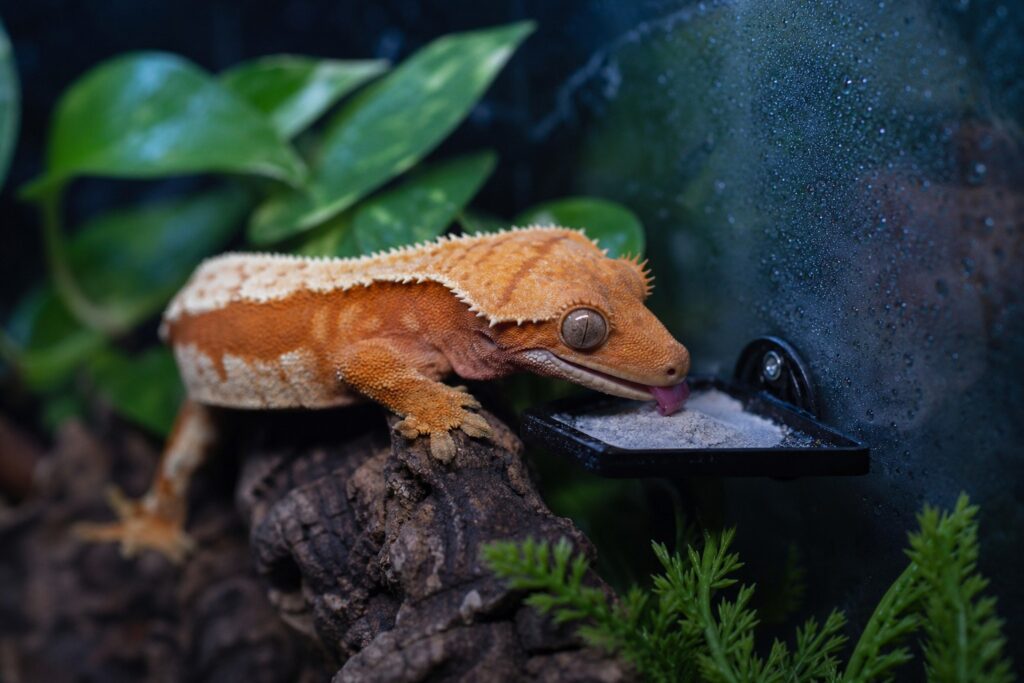
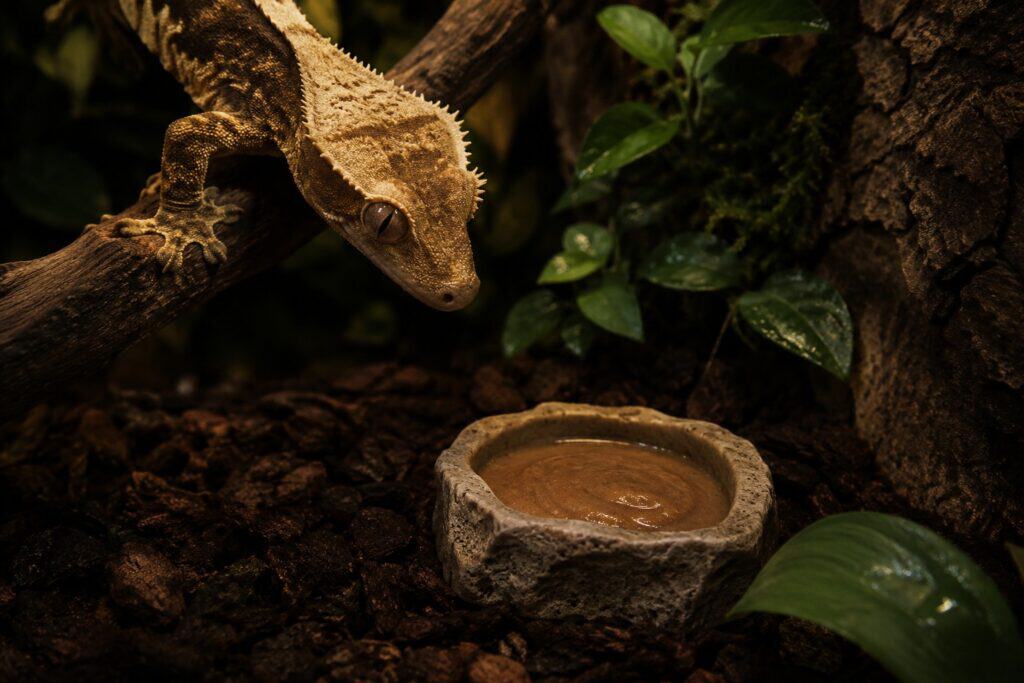
Look for lick marks in the food. Mix the diet a little thicker than usual and spread a thin layer in a shallow dish or bottle cap. Even faint tongue marks in the surface mean your gecko is eating. Also check for poop. If there’s feces in the enclosure, your gecko is eating something. You just aren’t catching it in the act.
If you’re using loose substrate like coco fiber or bark, droppings can blend right in. Switch to paper towel for a week or two so you can actually see what’s going on. This alone has solved the mystery for a lot of worried keepers.
Temperature and Humidity Problems
If your crested gecko is genuinely not eating, the enclosure environment is the first thing to check. Cresties are sensitive to temperature in a way that surprises people. They do best between 72 and 78 degrees Fahrenheit during the day, with a slight drop at night. That’s cooler than most reptiles.
Here’s where things go wrong. If the room gets above 80 to 82 degrees, crested geckos get stressed. Above 85 can actually be dangerous. Heat stress kills appetite fast, and if it’s sustained, it can be fatal. On the flip side, if temps drop into the low 60s, their metabolism slows to a crawl and they stop wanting food.
Humidity is the other half of this equation. You want overnight spikes up to 70 to 80 percent from misting, then let it drop to 40 to 50 percent during the day. If humidity stays high all the time, you’re looking at respiratory issues and skin problems. If it stays too low, dehydration sets in and your gecko won’t feel like eating. A decent digital hygrometer is worth the ten dollars. The analog stick-on ones that come with starter kits are unreliable.
Stress and Settling In
A crested gecko not eating right after moving into a new enclosure or coming home from a breeder is almost always stress. That’s normal. Some geckos won’t eat for a full week after a move, and a few hold out even longer. Don’t panic at the one-week mark.
During this period, leave the gecko alone. Don’t handle it. Don’t rearrange the enclosure. Just put fresh food in every evening and remove it in the morning. Make sure there are plenty of leafy plants and hides so the gecko feels hidden and secure. A crested gecko that feels exposed in a bare tank with bright lighting is not going to eat no matter what you offer.
Enclosure size matters too. A baby or juvenile crestie in a massive 18x18x24 bioactive setup might actually have trouble finding the food dish, and the open space can feel overwhelming. Young geckos do better in smaller setups where food is easy to locate and the space feels safe. You can always upgrade as they grow.
Other stress triggers people overlook include loud rooms, vibrations from speakers or washing machines near the enclosure, other pets staring through the glass, and too-frequent handling. If your gecko was eating fine and suddenly stopped, think about what changed in the environment recently.
Food Preferences Are Real
Crested geckos are picky. Way pickier than most reptile keepers expect. A gecko that devours one flavor of crested gecko diet might completely ignore another. Some like it mixed thick, almost like pudding. Others prefer it runny. Some geckos refuse to eat from a ledge-mounted cup but will eat from a bottle cap placed on a branch.
If your crested gecko is not eating, try switching the brand or flavor of CGD. Pangea, Repashy, and a few other brands all have different flavors and textures. Rotate through them. You might also try mixing it slightly thicker or thinner than usual.
Live insects are great as a supplement, but don’t start offering bugs to a gecko that’s refusing its CGD. They’ll learn to hold out for the good stuff and ignore the complete diet entirely. Get them eating CGD consistently first, then add gut-loaded, calcium-dusted insects once or twice a week as a bonus.
When a Crested Gecko Not Eating Is Actually Normal
There are several situations where appetite loss is completely expected and not a reason to worry.
Shedding kills appetite for a day or two before and after. You might not even see the shed happen since cresties eat their skin. But if your gecko skips a couple of meals and then goes right back to normal, shedding was probably the cause.
Seasonal slowdowns happen too. As daylight hours shorten in fall and winter, some crested geckos naturally eat less. They aren’t true brumators like bearded dragons, but many cresties do slow down. As long as they’re maintaining weight, this is fine.
Female crested geckos often eat less during ovulation and egg-laying, even without a male present. Females can produce infertile eggs on their own, and the hormonal changes that come with it can suppress appetite for a week or more. Males can also eat less at the start of breeding season.
The key in all these cases is weight. If your gecko is maintaining a healthy weight, an occasional dip in appetite isn’t an emergency. Weigh your gecko weekly on a digital scale that reads to the nearest gram. A healthy adult crestie should be somewhere in the 35 to 55 gram range, depending on the individual.
Track Feeding and Weight to Catch Problems Early
The tricky thing with crested geckos is that they’re small and they don’t eat much, so gradual weight loss can sneak up on you. A gecko that drops from 42 grams to 36 grams over two months looks basically the same day to day. But that’s a significant loss.
The Exotic Reptile Care app makes this easy. You can log every feeding attempt, note whether the gecko ate or refused, and track weight over time with a growth chart. If there’s a slow downward trend, you’ll see it in the data before you see it on the gecko. You can also set reminders so you’re not relying on memory for feeding nights, especially if you keep multiple geckos on different schedules.
When to Actually Worry
Most of the time, a crested gecko not eating resolves itself once you fix the environment or give the gecko time to settle. But there are red flags that mean a crested gecko not eating has become a real problem.
If your gecko hasn’t eaten in two weeks or more and is losing weight, something deeper might be going on. Parasites, bacterial infections, and metabolic bone disease can all cause prolonged appetite loss. MBD in particular shows up as twitching, difficulty gripping surfaces, and a soft or rubbery jaw. That needs treatment immediately.
A gecko that’s lethargic, has sunken eyes, or isn’t sticking to the glass like it used to is likely dehydrated or sick. If you notice any discharge around the mouth or nose, or if the gecko’s body feels bony along the spine and hips, get to a reptile vet. The ARAV vet directory can help you find one near you.
Don’t wait until your crested gecko not eating turns into visible weight loss. By the time a reptile looks obviously unwell, the problem has usually been building for weeks. Regular weighing and feeding logs are the best early warning system you’ve got.