You fed your ball python, everything looked normal, and two days later there’s a slimy, half-intact rat on the substrate. Ball python regurgitation is upsetting to find, and it’s hard on the snake too. Stomach acid comes back up through the throat, the gut loses some of its useful bacteria, and the snake needs time to recover. The good news is that a single regurgitation usually has a simple cause, and most snakes are fine if you handle the next few weeks properly.
This guide covers the common causes, what to do today, how long to wait before feeding again, and when it means a vet visit.
Regurgitation or Vomiting?
Regurgitation means the prey comes back up mostly undigested, usually within a few hours to two or three days after the meal. It still looks like a rodent, covered in mucus. Vomiting means the food was already partly digested when it came up, and it often comes later. That points more strongly to illness.
Both need the same first steps below, but partly digested food, repeated episodes, or a snake that seems unwell is a reason to call a vet sooner.
The Most Common Causes of Ball Python Regurgitation
The enclosure is too cool. This is the big one. Ball pythons digest with heat, and if the warm side surface drops below about 88°F, digestion slows down. The meal can start to spoil in the gut before it’s broken down, and the snake brings it back up.
Handling too soon after feeding. Picking a snake up, or even moving it to clean, within 48 hours of a meal puts pressure on a full stomach and stresses the snake.
Prey that’s too big. Our ball python feeding schedule uses prey of 1 to 1.5 times the widest part of the body. Meals at the top of that range, or larger, are more likely to come back up, especially in a snake that’s already stressed.
Stress. Stress is behind a lot of ball python regurgitation. A new enclosure, a move to a new home, a busy room, or too little cover can all cause it. Ball pythons that feel exposed digest badly.
Prey that wasn’t fully thawed or warmed. A cold center in a thick rat can upset digestion. Thaw completely and warm the prey right through before offering it.
Illness. Parasites, bacterial infections, and a few serious diseases cause repeated regurgitation. This is the less likely cause after a single episode, and the main thing to rule out if it keeps happening.
What to Do Right After Ball Python Regurgitation: 6 Steps
1. Clean up, but leave the snake alone. Remove the regurgitated prey and any soiled substrate, and wipe the area. Don’t pick the snake up to do it. Work around it.
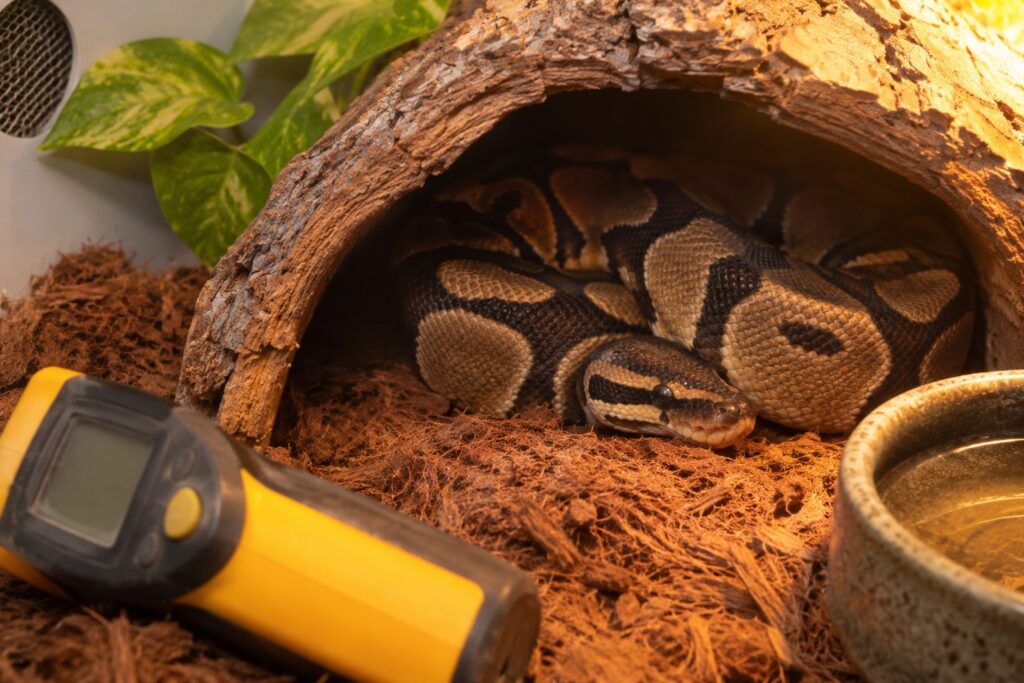
2. Check the temperatures. Point an infrared temp gun at the warm side surface where the snake rests. It should read 88 to 92°F, with ambient air around 80 to 85°F, and nights not below 75°F. Check that the thermostat probe hasn’t been moved and the heat source still works. If anything is low, fix it now. It’s the most likely cause.
3. Wait 10 to 14 days before feeding again. After ball python regurgitation, the gut needs time to recover. Feeding sooner is the most common reason a second regurgitation follows the first. Keep fresh water available the whole time.
4. Don’t handle until after the next successful meal. Leave the snake in a calm, quiet enclosure with snug hides and enough clutter that it feels hidden. Then wait the usual 48 hours after that next meal before handling.
5. Feed a smaller meal first. For the first meal back, offer prey about a size smaller than usual, or at the low end of the 1 to 1.5 times rule. If it stays down, go back to the normal size at the following meal.
6. Track the restart. Write down the date of the regurgitation, the prey size, the temperatures you measured, and every meal after it. Log it in the feeding tracker in the Exotic Reptile Care app, along with a weight check. If a pattern shows up, like it only happens with larger rats or after cleaning day, you’ll see it. If it happens again, that record is exactly what a vet will ask for.
When Regurgitation Means a Vet Visit
One regurgitation with an obvious cause, such as a cold night or handling the day after a meal, can usually be handled at home. See a reptile vet if:
- It happens twice in a row, or more than twice in a few months
- The food came up partly digested
- The snake is losing weight, lethargic, or has a swollen body
- You see mouth redness, mucus, or bubbles at the nose
- The droppings are runny, bloody, or very smelly
Repeated ball python regurgitation can be a sign of parasites or an infection that needs testing. Bring a fresh dropping if you can, and keep the snake away from any other reptiles until it’s checked, since some causes are contagious.
How to Stop It Happening Again
Most cases of ball python regurgitation come down to a few habits. Check the warm side surface with a temp gun weekly, not just the thermostat display. Don’t handle or clean for 48 hours after a meal. Keep prey at a sensible size, and thaw and warm it fully. Give the snake snug hides and a quiet spot, and avoid feeding the same week you rearrange the enclosure or bring the snake home.
Frequently Asked Questions
How long should I wait to feed after ball python regurgitation?
Wait 10 to 14 days, then offer a smaller meal than usual. Feeding too soon often causes a second regurgitation.
Is ball python regurgitation an emergency?
A single episode with an obvious cause usually isn’t. Repeated regurgitation, weight loss, or a snake that seems unwell needs a vet.
Why did my ball python regurgitate days after eating?
Usually because digestion was too slow, most often from a warm side below 88°F. Stress or handling after the meal can also cause it.
Can a ball python die from regurgitation?
A single episode rarely causes serious harm, but repeated regurgitation weakens the snake and can be a sign of disease. Don’t let it continue without finding the cause.
Should I handle my ball python after it regurgitates?
No. Leave it alone until after the next meal has stayed down, then wait the usual 48 hours.
A regurgitation feels like a disaster, but the fix is mostly patience. Find the cause, fix the heat, wait two weeks, and start back with a smaller meal. Most ball pythons are back on their normal schedule within a month.