It usually starts small. The very tip of your leopard gecko’s tail looks a bit darker than it used to, maybe slightly shriveled. A week later the dark patch has crept up a little. That’s the pattern of leopard gecko tail rot, and the earlier you catch it, the less tail your gecko loses.
Tail rot is tissue death. Something cuts off the blood supply to part of the tail, the tissue dies, and the dead section slowly spreads toward the body. This guide covers the warning signs, how to tell it from normal coloring, the usual causes, and why it needs a vet rather than a home fix.
What Leopard Gecko Tail Rot Looks Like
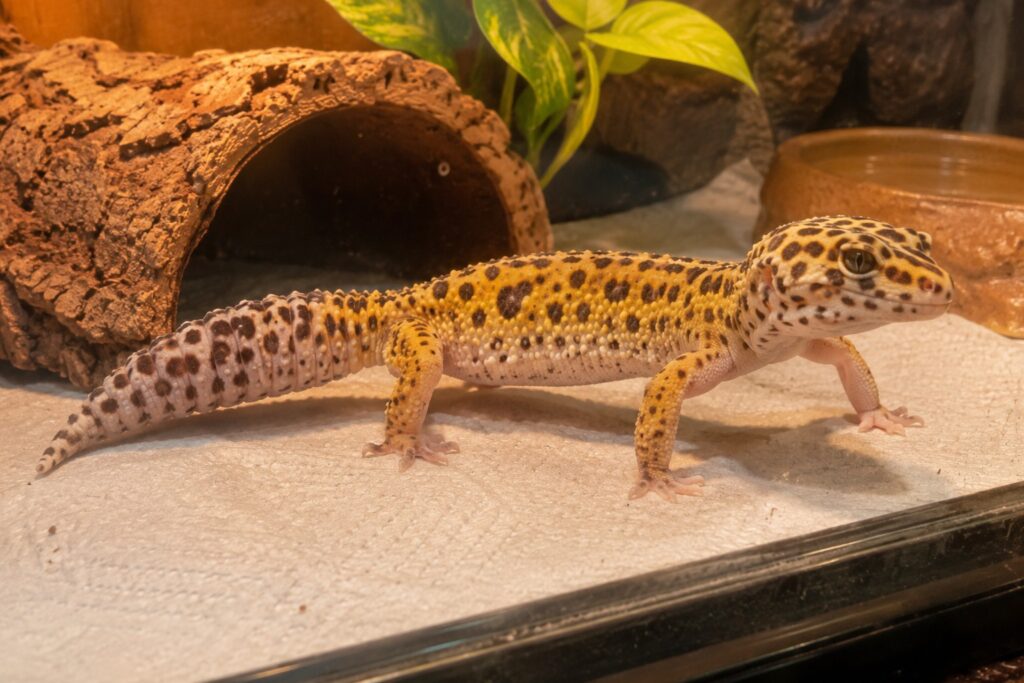
Leopard gecko tail rot almost always starts at the tip and moves toward the body. The dead tissue is usually dark grey, brown, or black, dry, shriveled, and harder than the rest of the tail. Sometimes it’s the opposite, with a wet, swollen, or smelly area where an infection has set in. That’s more serious.
The key feature is change over time. A healthy tail stays the same color and texture from week to week. Tail rot spreads.
5 Warning Signs of Leopard Gecko Tail Rot
1. The tip is darker than it was. Compare it to an old photo. A tip that’s turned grey, brown, or black is the most common early sign.
2. The tip feels dry, hard, or shriveled. Healthy tail tissue is soft and slightly plump. Dead tissue dries out and gets stiff.
3. There’s a clear line between healthy and dark tissue. A sharp boundary, often with a slightly pinched or narrow band at the line, is typical.
4. The dark area moves up the tail. If it’s longer than it was last week, it’s spreading.
5. Swelling, wetness, or a bad smell. These point to an infection in or around the dead tissue and need a vet quickly.
Is It Tail Rot or Normal Coloring?
Plenty of leopard geckos have dark bands on the tail, and some morphs have a dark or pale tip naturally. The difference is that normal coloring is soft, evenly textured, and doesn’t change. A regrown tail, from a gecko that dropped its tail in the past, also looks different. It’s often shorter, fatter, smoother, and has a blotchy pattern, but it’s healthy tissue.
If you’re unsure, gently feel the tip and take a photo in good light. Check it again in three or four days. Anything that’s spreading, hardening, or changing color is worth showing a vet.
What Causes Leopard Gecko Tail Rot?
The most common cause is stuck shed on the tail tip. A ring of old skin that doesn’t come off dries, tightens, and squeezes the tail like a rubber band. Below that ring, the tissue loses its blood supply and dies.
Other causes include:
- Injuries, such as a bite from a cagemate or a loose feeder insect
- A tail caught or crushed in decor or a door
- Bacterial infection in a wound
- Poor circulation from illness, or in a very thin or weak gecko
Low humidity is the usual reason for stuck shed. Leopard geckos do well at 30 to 40% ambient humidity, but they need a humid hide for shedding, and without one, the tail tip and toes are the places shed gets stuck. Our leopard gecko humidity guide covers the setup.
What a Vet Will Do
Leopard gecko tail rot doesn’t heal on its own, and dead tissue doesn’t come back to life. If it’s left alone, it can keep spreading toward the body and, in bad cases, lead to a serious infection.
A reptile vet will usually examine the tail, check how far the dead tissue goes, and remove the tail above the affected area. This is a quick procedure for an experienced vet. They may also give antibiotics or pain relief, depending on the cause.
Don’t try to cut the tail off at home, and don’t try to force the gecko to drop it. You risk heavy bleeding, infection, and leaving dead tissue behind. The good news is that leopard geckos can regrow their tails. The new tail is shorter and fatter and looks different, but it does the job.
Caring for Your Gecko After Treatment
Follow your vet’s instructions exactly. Most will suggest something like this:
- Keep the gecko on plain paper towel for at least two weeks, so loose substrate doesn’t stick to the wound
- Keep temperatures at the normal range so healing isn’t slowed down
- Don’t handle until the wound has closed
- Keep the humid hide damp, but not wet near the wound
- Weigh weekly
Weight matters here. Leopard geckos store fat in their tails, so losing part of it means losing some reserves. A gecko that’s eating well and holding weight is recovering. One that’s losing weight needs another vet check.
How to Prevent Leopard Gecko Tail Rot
Check the tail tip and toes after every shed. Look for any ring of old skin, and if you find one, give a short soak in 80 to 85°F water for 10 to 15 minutes, then gently roll it off with a damp cotton swab. Our guide to stuck shed on the tail tip walks through it step by step.
Keep a humid hide damp at all times, and keep one leopard gecko per enclosure. Remove uneaten crickets so they can’t nibble on a sleeping gecko. A clean, simple enclosure with secure decor also prevents crushed or caught tails.
It also helps to keep a record of shed dates and how each one went. If you track sheds in the app with Exotic Reptile Care, a missed or messy shed stands out right away, and you’ll know to check the tail tip that day.
Frequently Asked Questions
Can leopard gecko tail rot heal on its own?
No. Dead tissue doesn’t recover, and the rot can keep spreading. It needs a vet.
What causes tail rot in leopard geckos?
Most often, stuck shed that constricts the tail tip. Injuries, bites, and infection can also cause it.
Will my leopard gecko’s tail grow back after tail rot?
Usually, yes. Leopard geckos regrow their tails after a vet removes the damaged section, though the new tail looks shorter and fatter.
Is leopard gecko tail rot an emergency?
It isn’t usually an emergency in the first few days, but it should be seen by a vet soon. Swelling, wetness, or a bad smell means go quickly.
How do I prevent tail rot?
Provide a humid hide, check the tail tip after every shed, and remove any stuck skin early.
The easiest leopard gecko tail rot to treat is the one you catch at the first dark millimeter. Check the tail tip after every shed, keep that humid hide damp, and get a vet involved the moment the dark area starts to spread.