Ask ten keepers for the easiest reptile to take care of and you’ll get ten answers, usually whatever they happen to own. The more useful question is what actually goes wrong for beginners. Most first reptiles don’t struggle because the owner didn’t care. They struggle because the animal needed something the owner didn’t realize was hard: high humidity, strong UVB, daily salads, a huge enclosure, or live bugs every other day.
So this list ranks reptiles by how forgiving they are of normal beginner mistakes. Every pick here is calm, stays a manageable size, eats reliably, and copes with a few degrees of error. After the list, there’s a short guide to choosing the right one for you, and four very popular pets that are harder than their reputation.
What Makes a Reptile Easy to Take Care Of?
The easiest reptile to take care of is one that tolerates small mistakes. In practice, that comes down to six things: room temperature or simple heating without tight targets, low or moderate humidity, a diet that’s easy to buy and store, a small or medium enclosure, a calm temperament that settles with handling, and a reliable appetite.
None of these animals are “no work”. They all need the right setup on day one and a few minutes of care most days. But get the setup right, and they’re very hard to get wrong after that. That’s what separates the easiest reptile to take care of from one that’s merely popular.
Easiest Reptiles to Take Care Of at a Glance
| Reptile | Adult size | Minimum adult enclosure |
|---|---|---|
| Leopard gecko | 8 to 10 inches | 40 gallon breeder (36 x 18 inches) |
| Crested gecko | About 8 inches | 18 x 18 x 24 inches, front opening |
| Corn snake | 4 to 4.5 feet | 40 gallon breeder, 4 x 2 x 2 feet ideal |
| Kenyan sand boa | Males 15 to 20 inches | 24 x 12 inches (male), 36 x 18 (female) |
| African house snake | Males 2 to 2.5 feet | 24 x 12 x 12 (male), 36 x 18 x 12 (female) |
| Blue tongue skink | 18 to 24 inches | 4 x 2 x 2 feet, with UVB |
| Gargoyle gecko | 7 to 9 inches | 18 x 18 x 24 inches, front opening |
Every one of these can live 15 to 20 years or more. That’s the real commitment, and it’s the same whichever one you pick.
1. Leopard Gecko: The Best All-Round Beginner Reptile
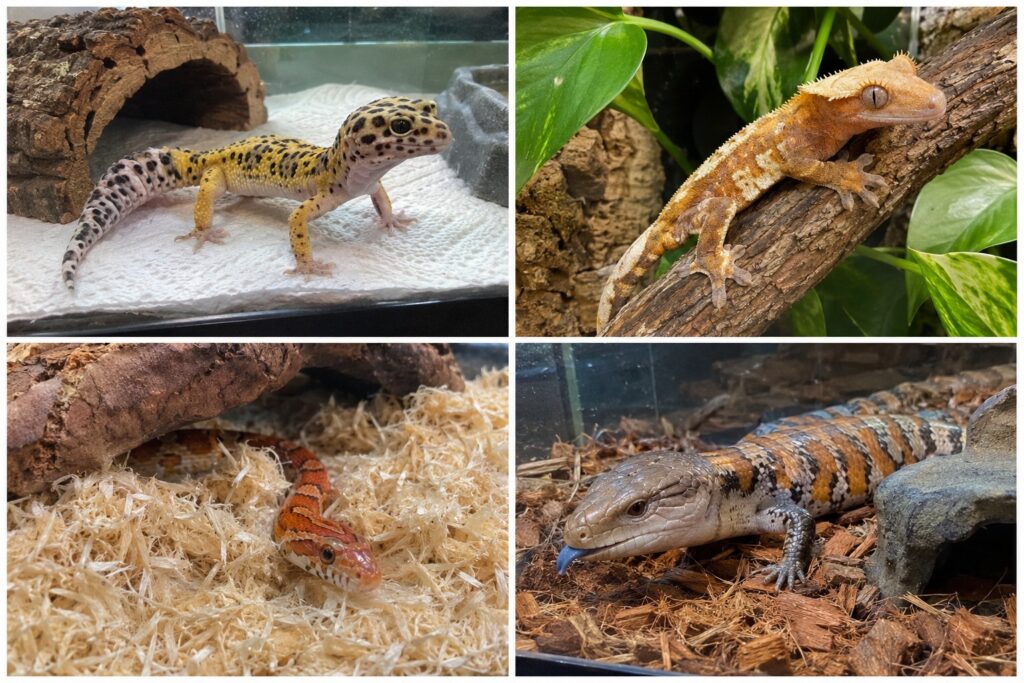
If you only read one section, read this one. The leopard gecko is the easiest reptile to take care of for most people. It’s small, slow, calm in the hand, and lives happily at the floor of a simple 40 gallon breeder tank with a warm side, a cool side, and three hides.
They don’t need high humidity. They don’t need a big UVB setup, though a low output tube is increasingly recommended and worth adding. Most are tame within a few weeks, and they rarely bite.
The one catch is the diet. Leopard geckos eat live insects only, usually crickets, dubia roaches, or mealworms, dusted with calcium. If you’re fine keeping a tub of bugs in the house, there’s no better first reptile. Our leopard gecko enclosure guide covers the full setup.
2. Crested Gecko: The Easiest Reptile If You Don’t Want Live Bugs
If live insects are a dealbreaker, the crested gecko is the easiest reptile to take care of. They’re just as easy as leos, with one big advantage: they can live on a complete powdered diet that you mix with water. No live insects required, although they enjoy them as a treat.
They’re happy at normal room temperature, around 72 to 78°F, so most homes need no heating at all. The main job is misting in the evening and letting the enclosure dry out by day.
The trade-offs are personality and fragility. Cresties are jumpy, more a display animal you can handle gently than a lap pet, and they drop their tails if grabbed. That tail never grows back. Our crested gecko care guide walks through the setup, which is simpler than it looks.
3. Corn Snake: The Easiest Snake to Start With
If you’d rather have a snake, the corn snake is the easiest reptile to take care of in that group. Corn snakes are the classic first snake for a reason. They’re hardy, curious, rarely bite after the baby stage, and almost never refuse food. Adults eat one frozen thawed mouse every week or two, which you buy in bulk and keep in the freezer.
They stay a sensible 4 to 4.5 feet, they’re happy at modest humidity, and they’re forgiving if the warm side is off by a few degrees. They’re also escape artists, so a secure lid matters more than anything else in the setup. Our corn snake enclosure guide covers size, heat, and that lid.
4. Kenyan Sand Boa: The Easiest Reptile for Small Spaces
If you’re short on room, a male Kenyan sand boa is hard to beat. Males stay 15 to 20 inches long and live well in an enclosure just 24 x 12 inches. Females are bigger but still small for a boa.
They spend most of their time buried in sand or a sandy mix, they eat a small frozen mouse every two to three weeks, and they’re slow and calm in the hand. The only thing that throws new keepers is the long winter fast many males go through. It’s normal, and our Kenyan sand boa guide explains how to tell it apart from a real problem.
5. African House Snake: The Snake That Never Skips a Meal
African house snakes are underrated. They’re about as easy as corn snakes, a little smaller, and famous for their appetite. Picky eating, the number one stress for new snake keepers, basically doesn’t happen with this species.
Males stay 2 to 2.5 feet. Females get bigger, so check which you’re buying. Babies can be a bit jumpy, and most bites happen at feeding time when they’re overexcited, so use tongs. Our African house snake care guide covers the rest.
6. Blue Tongue Skink: The Easiest Large Lizard
Blue tongue skinks are the pick for anyone who wants a bigger, more interactive lizard. They’re sturdy, slow, and among the most handleable lizards in the hobby. Their diet is easy too, a mix of protein, greens, and a little fruit, and they’re not fussy eaters.
They’d be the easiest reptile to take care of on this list if it weren’t for the size of the setup, which is why they rank sixth. Adults need a 4 x 2 x 2 foot enclosure and a proper UVB tube. Once that’s built, though, day-to-day care is simple. Our blue tongue skink care guide has the full numbers.
7. Gargoyle Gecko: The Tougher Cousin of the Crested Gecko
Gargoyle geckos need almost exactly the same setup and powdered diet as crested geckos, but they’re a bit sturdier, and if they lose their tail, it grows back. They benefit from insects more regularly than cresties, so you’ll want feeders on hand.
They rank last only because they’re harder to find and a little more likely to nip. For someone who loves the look of a crestie but wants a slightly more robust animal, a gargoyle is the easiest reptile to take care of in that style. Our gargoyle gecko care guide covers the differences.
Popular Reptiles That Are Harder Than They Look
These four show up on a lot of beginner lists. They can all be great pets, but they’re not the easiest reptile to take care of, and most rehoming stories start with one of them.
Bearded dragons. Friendly and fun, but the care is bigger than people expect. So is the lizard, as our guide to how big bearded dragons get shows. They need a proper bearded dragon tank of at least 4 x 2 x 2 feet, strong UVB that’s replaced on schedule, a hot basking spot, and fresh greens plus live insects every day. Easy to love, not easy to keep cheaply.
Ball pythons. Calm and handleable, but they’re known for long hunger strikes, and they need more humidity than most homes provide. A lot of first-time ball python keepers end up fighting humidity that keeps dropping in a glass tank.
Sulcata tortoises. Cute as hatchlings. Then they grow. A sulcata tortoise becomes one of the largest tortoises in the world, needs a yard rather than a tank, and can outlive its owner.
Chameleons. Probably the hardest common reptile. Chameleon care involves screen enclosures, constant misting or drippers, precise UVB, and animals that hide illness until it’s serious. Wonderful animals, but not a first one.
Which Easy Reptile Is Right for You?
The easiest reptile to take care of on paper isn’t always the easiest for you. Once you know the shortlist, the right pick depends on how you live. Start with the question that rules out the most.
Can you keep live insects in the house? If not, go with a crested gecko, or a corn snake, house snake, or sand boa that eats frozen mice.
Do you want to handle it a lot? Leopard geckos, corn snakes, and blue tongue skinks are the best for regular handling. Crested and gargoyle geckos are better watched than held.
How much space do you have? A male Kenyan sand boa or a leopard gecko fits a small room. A blue tongue skink needs a 4 foot enclosure.
Is it for a kid? A leopard gecko or a corn snake is the best fit, with an adult in charge of the setup and feeding. All reptiles can carry salmonella, so wash hands after every handling and cleaning session, and the CDC advises that children under 5 shouldn’t handle reptiles at all.
Do you want a display animal? A planted enclosure with a crested or gargoyle gecko is one of the nicest looking setups in the hobby, and very low maintenance once it’s running.
What Easy Still Means
Even the easiest reptile to take care of needs a routine. Daily, it’s a quick look at temperatures, fresh water, and spot cleaning. Weekly, it’s feeding for most snakes, supplement dusting for insect eaters, and a weight check every few weeks. Our guide to a simple weekly reptile care routine lays it out.
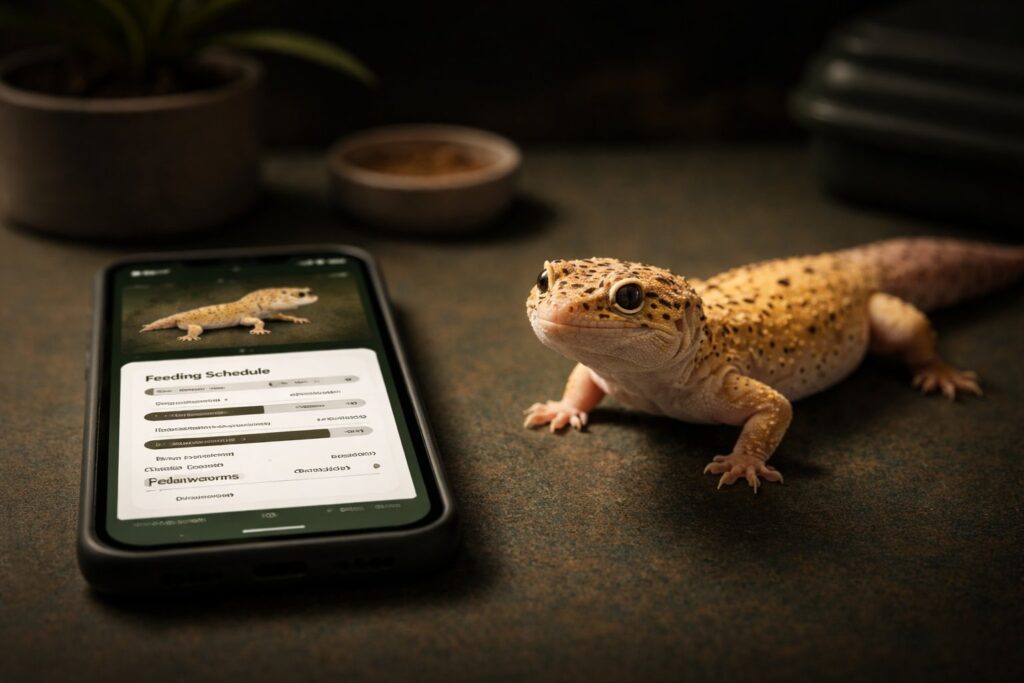
The thing that goes wrong most often isn’t the setup. It’s forgetting. A snake that eats every 10 to 14 days is very easy to lose track of, and the same goes for a monthly UVB check or a supplement schedule. It helps to set a feeding reminder in Exotic Reptile Care, and to log each meal and weight there, so you know exactly when the last one happened and can spot a problem early.
Frequently Asked Questions
What is the easiest reptile to take care of?
For most people, the leopard gecko. It’s small, calm, handleable, and needs simple heat and low humidity. If you don’t want live insects, a crested gecko is the easiest alternative.
What is the easiest snake for beginners?
The corn snake. It’s hardy, rarely bites, eats reliably, and stays a manageable size. African house snakes and Kenyan sand boas are close behind.
Are bearded dragons easy for beginners?
They’re friendly, but not the easiest. They need a large enclosure, strong UVB, a hot basking spot, and fresh food every day.
What is the easiest reptile for a small space?
A male Kenyan sand boa, which lives well in a 24 x 12 inch enclosure, or a leopard gecko in a 40 gallon breeder.
Which reptile doesn’t need live insects?
Crested geckos can live on a complete powdered diet. Corn snakes, house snakes, and sand boas eat frozen thawed mice.
The easiest reptile to take care of is the one whose needs match your life. Pick from the top of this list, build the setup properly before the animal comes home, and you’ll skip almost every problem new keepers run into.