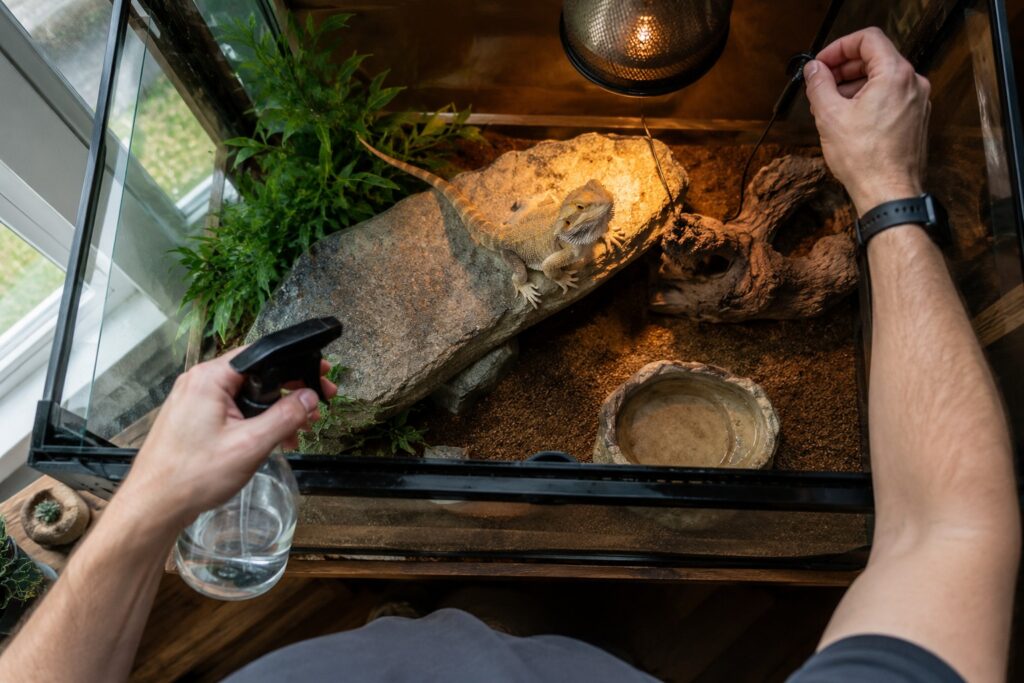
If you keep reptiles, learning to track reptile feeding schedules is one of the most important habits you can build. A baby leopard gecko needs to eat daily. An adult ball python might eat once every two weeks. A bearded dragon’s diet shifts from mostly insects as a juvenile to mostly greens as an adult. When you’re keeping multiple animals, remembering who ate what and when gets complicated fast.
Most keepers start with mental notes. Then they move to sticky notes on the enclosure. Then maybe a spreadsheet. And somewhere along the way, something gets missed. A feeding gets skipped, a shed goes unrecorded, or a weight trend gets overlooked because nobody was tracking it.
The truth is, tracking your reptile’s feeding schedules isn’t just about staying organized. It’s one of the simplest ways to catch health issues early before they become serious.
Why you should track reptile feeding schedules
Feeding frequency depends heavily on species and age. Here’s a general starting point for the most common pet reptiles before you fine-tune based on your own animal’s records.
| Reptile | Life Stage | Typical Feeding Frequency |
|---|---|---|
| Leopard gecko | Baby / juvenile | Daily |
| Leopard gecko | Adult | Every 3 to 5 days |
| Ball python | Baby / juvenile | Every 5 to 7 days |
| Ball python | Adult | Every 10 to 14 days |
| Bearded dragon | Juvenile | Insects 2 to 3 times daily, greens daily |
| Bearded dragon | Adult | Insects every other day, greens daily |
| Corn snake | Hatchling / juvenile | Every 5 to 7 days |
| Corn snake | Adult | Every 7 to 10 days |
| Crested gecko | All stages | 3 to 4 times per week |
Why you should track reptile feeding schedules
A reptile that refuses food once is probably fine. A reptile that’s refused food three times in a row might be heading into brumation, could be stressed from a habitat issue, or might be developing an illness. But you’ll only notice that pattern if you’re keeping records.
Weight loss is another signal that’s easy to miss without data. A ball python that drops 15 grams over six months might look perfectly healthy, but that slow downward trend can indicate a problem you’d never catch just by looking at the animal.
Feeding records also help you dial in the right schedules for each individual animal. Care sheets give you ranges, but every reptile is different. Some adult leopard geckos do fine eating every five days, while others prefer every three. The only way to find your animal’s sweet spot is to track and adjust.
The spreadsheet approach
Many experienced keepers use spreadsheets, and they work. You can set up a Google Sheet or Excel file with columns for date, animal name, food type, quantity, and whether the food was accepted or refused. Add a column for weight if you’re tracking growth.
The upside is total flexibility. You can customize it however you want. The downside is that spreadsheets live on your computer, not in your pocket. When you’re standing in front of the enclosure at 10pm, you’re probably not going to open your laptop to log a feeding. Things get forgotten, and gaps appear in the data.
The notebook approach
Some keepers prefer a physical notebook or planner. It’s simple, doesn’t need a battery, and there’s something satisfying about pen and paper. Many breeders with decades of experience still use this method.
The downside is that notebooks can’t send you reminders, can’t calculate weight trends, and can’t filter records by animal. When you’re looking back through months of handwritten notes trying to figure out when your corn snake last shed, it’s not ideal.
Using an app to track reptile feeding schedules
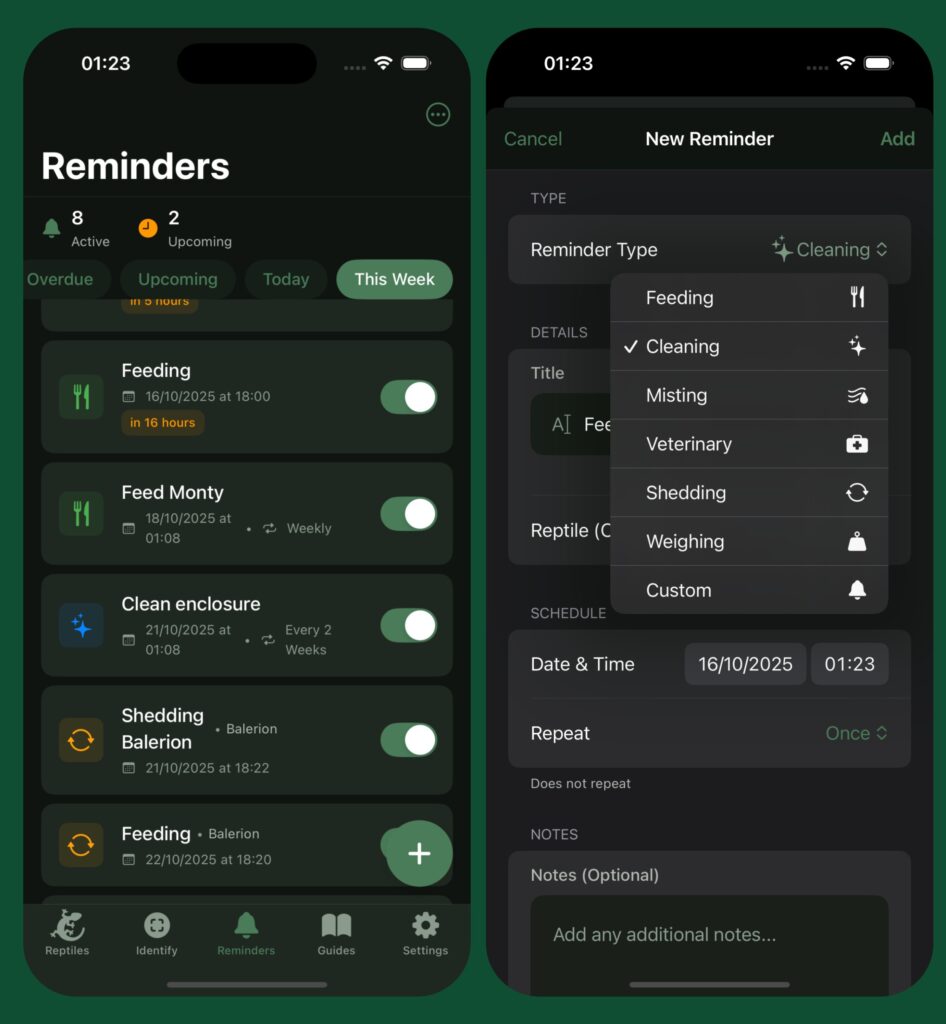
This is where reptile tracking apps come in. A good app lets you log feedings in seconds right from your phone while you’re standing in front of the enclosure. It calculates time since last feeding, tracks weight trends over time, and sends you reminders so nothing slips through the cracks.
The key advantages over spreadsheets and notebooks are reminders and trend visibility. When your app tells you that your leopard gecko hasn’t eaten in four days, or shows you a weight chart trending downward over the last month, you have actionable information without having to dig through records manually.
This is where apps that track reptile feeding schedules come in, we built Exotic Reptile Care specifically for this purpose. It supports unlimited reptile profiles, feeding and shed tracking, weight logging with growth charts, custom reminders for feeding, cleaning, misting, and vet visits, plus care guides for 20+ species. It’s free on iOS and all your data stays on your device. No account required.
What to track beyond feedings
Once you start tracking feedings, you’ll naturally want to track more. The most useful additions are shedding cycles (especially for snakes, since irregular sheds can signal humidity problems), weight at regular intervals, and any behavioral changes like reduced activity or unusual aggression.
Temperature and humidity logs are also valuable if you’re troubleshooting feeding refusals. Many times when a reptile stops eating, the issue isn’t the food. It’s the environment. Having habitat data alongside feeding records helps you connect the dots.
Start simple, stay consistent
Whatever method you choose, the most important thing is consistency. A perfect spreadsheet that you stop updating after two weeks is less useful than a simple app you check every day. Pick the method that fits into your routine and stick with it. Your reptiles will be better off for it.
Frequently asked questions about tracking reptile feeding schedules
How often should I feed my reptile?
It depends on species and age. Baby leopard geckos eat daily, while an adult ball python may only eat every 10 to 14 days. Juveniles almost always eat more often than adults because they’re still growing. The feeding frequency table above covers the most common pet reptiles as a starting point.
What is the best way to track reptile feeding schedules?
Spreadsheets, notebooks, and apps all work. Spreadsheets are flexible but stay on your computer, and notebooks can’t send reminders or calculate weight trends. A dedicated app is the easiest way to track reptile feeding schedules because you can log a feeding in seconds right at the enclosure and get reminders when something is overdue.
Is there an app to track reptile feeding and shedding?
Yes. The Exotic Reptile Care app lets you log feedings, track shed cycles, and record weight with growth charts for unlimited reptiles. It’s free on iOS, stores all data on your device, and needs no account.
What should I do if my reptile refuses food?
One refusal is usually nothing to worry about. Repeated refusals can point to brumation, stress, a habitat problem, or illness, and you’ll only spot that pattern if you’re keeping records. A leopard gecko that stops eating but stays active is a common example where feeding logs help you tell a normal fast from a real problem.
Can I track more than one reptile in the same app?
Yes. Exotic Reptile Care supports unlimited reptile profiles, so keepers with a full collection can log feedings, sheds, and weights separately for each animal and keep individual reminders for every enclosure.
How do I know if my reptile is losing weight?
Slow weight loss is easy to miss by eye. A ball python can drop 15 grams over several months and still look healthy. Weighing at regular intervals and logging it, ideally on a growth chart, is the only reliable way to catch a downward trend before it becomes a problem.