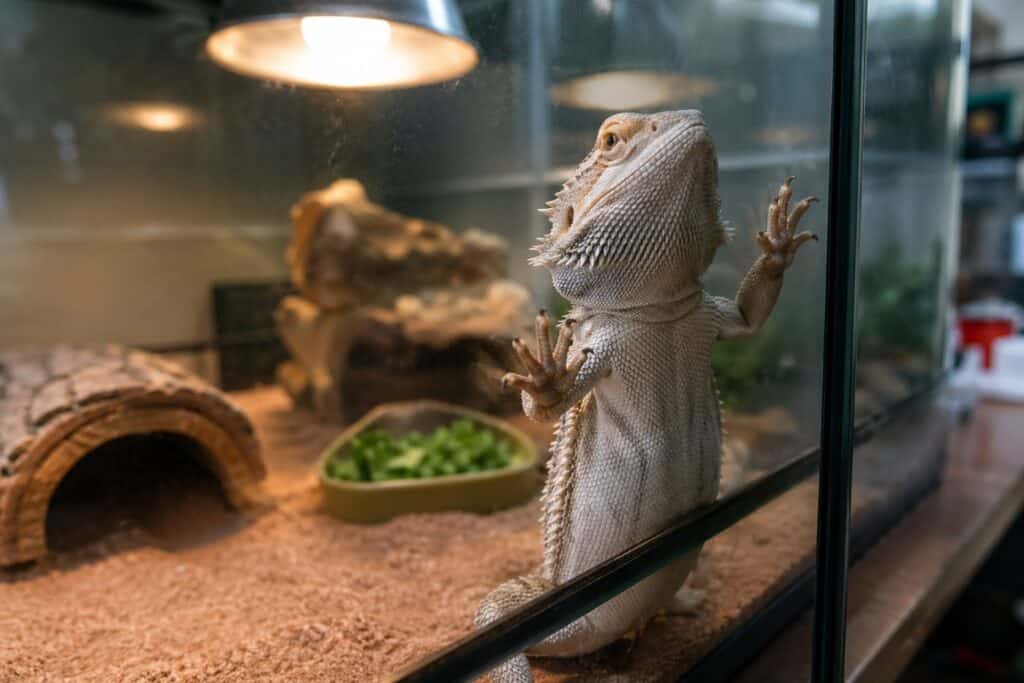
You walk into the room and your bearded dragon is standing on its hind legs, frantically scratching at the glass like it’s trying to escape a burning building. This is bearded dragon glass surfing, and it looks alarming the first time you see it. Your dragon is pawing at the walls, sliding down, climbing back up, and repeating the whole thing over and over. It’s one of the most common behavioral concerns beardie owners search for, and for good reason. It looks like something is seriously wrong.
The good news is that glass surfing isn’t a disease or an emergency. The bad news is that it almost always means something in your dragon’s environment is off. Think of it as your beardie’s way of telling you it’s stressed, uncomfortable, or overstimulated. Your job is to figure out which one.
You might hear it called glass surfing, glass dancing, glass scratching, or just “my bearded dragon won’t stop clawing at the glass.” Different names, same behavior. Your dragon is repeatedly pressing against or sliding along the glass walls of the enclosure, and it’s trying to tell you something. No matter what you call it, the causes and fixes are the same.
What Bearded Dragon Glass Surfing Actually Means
Glass surfing, sometimes called glass dancing, is a repetitive behavior where your dragon stands against the enclosure walls and paddles its front legs against the glass. Some dragons do it occasionally for a minute or two. Others do it for hours until they exhaust themselves. The intensity matters. A quick scratch at the glass once in a while is nothing to panic about. But if your beardie is doing this daily, especially for long stretches, something needs to change.
This behavior is a stress response. Bearded dragons don’t glass surf because they’re happy or playful. They do it because they want to get away from something or because their body is telling them something isn’t right. The tricky part is narrowing down the cause, because there are quite a few possibilities.
Why Does My Bearded Dragon Scratch at the Glass?
Scratching, clawing, and pawing at the glass are all forms of glass surfing. Some bearded dragons do more of a scratching motion than the classic “surfing” slide, but it means the same thing. Your dragon wants out, or something in the enclosure is bothering it. The causes and fixes listed below apply whether your beardie is surfing, scratching, or full-on digging at the glass like it’s trying to escape a prison movie.
Why Is My Bearded Dragon Banging Its Head on the Glass?
Head banging or pressing against the glass is a more intense version of glass surfing. If your dragon is doing this, the stress level is usually higher than with regular scratching or surfing. It’s worth addressing the cause sooner rather than later, because repeated head pressing can actually cause minor nose and snout injuries over time. The same troubleshooting checklist below applies, so start working through it and see what changes the behavior.
Why Is My Bearded Dragon Trying to Climb the Glass?
Climbing attempts are part of the same glass surfing family. You’ll see this more often in juveniles and younger dragons who are naturally more active and exploratory. They’re not trying to be escape artists on purpose, they just have more energy and less patience with their enclosure. Same causes, same fixes.
Temperature Problems Are the Most Common Cause
Before you start rearranging the entire enclosure, grab your thermometer. Temperature issues cause more glass surfing than anything else. If the basking spot is too hot, your dragon will try to escape the heat by moving to the cool side. If the cool side is also too warm because the enclosure is too small or the heat source is too powerful, your dragon has nowhere to go. So it tries to leave.
The basking surface should read between 100 and 110 degrees Fahrenheit for an adult beardie. The cool side should sit around 75 to 85 degrees. If your basking spot is pushing 115 or higher, that alone could be driving the glass surfing. Use an infrared temperature gun to check the actual surface temperature, not just the ambient air temp. Stick-on dial thermometers are notoriously inaccurate and could be telling you everything is fine when it isn’t.
The opposite can happen too. If temperatures are too low, your dragon may glass surf because it feels sluggish and uncomfortable. Cold dragons can’t digest properly, and that discomfort makes them restless. Check both extremes before moving on to other causes.
How to Stop Your Bearded Dragon from Seeing Its Reflection
This one surprises a lot of new keepers. Bearded dragons are territorial and solitary animals. When your beardie sees its own reflection in the glass, it doesn’t think “oh, that’s me.” It thinks there’s another dragon in its space. That triggers a stress response, which often looks like glass surfing, head bobbing, beard darkening, or all three at once.
This tends to happen more in enclosures with dark backgrounds or when the lighting inside the tank creates a mirror effect on the glass panels. If you notice your dragon glass surfing more on one particular side of the enclosure, check whether that panel is reflecting more than the others.
The fix is simple. Add a background to the outside of the glass on three sides of the enclosure. You can use a reptile background from a pet store, a piece of construction paper, or even a cork tile. It doesn’t have to be fancy. Just covering the glass so your dragon can’t see its reflection will often reduce or completely stop the behavior within a few days.
The Enclosure Might Be Too Small
Adult bearded dragons need a minimum of a 4 foot by 2 foot by 2 foot enclosure. A 40 gallon tank, which is what a lot of pet stores still recommend, is honestly too small for anything other than a juvenile. If your adult beardie is living in a 40 gallon, the glass surfing might simply be your dragon telling you it needs more room.
Think about it from their perspective. In the wild, bearded dragons roam open scrubland with plenty of space to thermoregulate, explore, and claim territory. Cramming them into a tank where they can barely turn around without bumping into something is going to create stress. Upgrading to a properly sized enclosure is one of the best things you can do for a glass surfing beardie, and for their long term health in general.
New Environments and Relocation Stress
If you just brought your bearded dragon home or recently moved them to a new enclosure, glass surfing is pretty normal for the first week or two. Everything is unfamiliar. The smells, the layout, the lighting. Your dragon doesn’t know where the warm spot is yet, doesn’t know where to hide, and doesn’t feel safe.
Give them time. Avoid handling during this adjustment period. Make sure the enclosure has at least two hides, one on the warm side and one on the cool side, so your dragon can retreat and feel secure. Most beardies settle down within one to two weeks. If the glass surfing continues past that point, start looking at the other causes on this list.
A darkened beard alongside glass surfing points the same direction. See bearded dragon black beard for how to read the two together.
Hunger, Boredom, and Wanting Out
Sometimes glass surfing has nothing to do with fear or discomfort. Some bearded dragons glass surf because they’re hungry and they’ve learned that you, the giant creature on the other side of the glass, are the one who brings food. This is especially common in the morning before feeding time. If your dragon only does it right before meals and stops once it eats, that’s probably all it is. If your beardie is also refusing greens on top of the glass surfing, check out our guide on bearded dragon not eating greens for some tricks that actually work.
Boredom is another factor behind bearded dragon glass surfing that doesn’t get enough attention. Bearded dragons are more active and curious than a lot of people expect. An empty tank with one hide and a water dish isn’t very stimulating. Adding branches to climb, rocks to explore, and rearranging the layout every few weeks gives your beardie something to interact with besides the glass.
Some keepers also let their dragons out for supervised roaming time in a safe, warm room. A lot of glass surfing dragons calm down significantly when they get 20 to 30 minutes of exploration outside the enclosure a few times a week. Just make sure the room is warm enough and free of hazards like other pets, small objects they could swallow, or cold drafts.
Track Your Bearded Dragon’s Glass Surfing Patterns
One of the best ways to figure out what’s causing your bearded dragon’s glass surfing is to track when it happens. Is it always in the morning? Right after lights come on? Only on certain days? After feeding? The pattern usually points straight to the cause.
The Exotic Reptile Care app makes this easy. You can log behavioral notes alongside your regular feeding and care entries, so over a week or two you’ll have a clear picture of when the glass surfing happens and what else was going on at the time. That kind of record takes the guesswork out of troubleshooting and helps you make changes with confidence instead of just trying random fixes.
When Glass Surfing Points to Something Serious
In most cases, glass surfing is environmental. Fix the temperature, cover the reflections, upgrade the enclosure, and the behavior stops. But there are a few situations where it could point to something more serious.
Female bearded dragons that are gravid, meaning they’re carrying eggs, will often glass surf relentlessly. They’re looking for a place to dig and lay. If you have a female beardie that suddenly starts glass surfing nonstop and looks a bit rounder than usual, she may need a lay box. A container filled with 6 to 8 inches of moist soil or sand mix, placed in the enclosure, gives her somewhere to deposit her eggs. Females can develop eggs even without a male present, and if they can’t lay them, it becomes a veterinary emergency called egg binding.
If the glass surfing is happening during fall or winter and your dragon is also eating less and sleeping more, it might be brumation rather than stress. Here’s how to tell if your beardie is brumating so you don’t panic over something totally normal.
Parasites and illness can also cause restless behavior. If your dragon is glass surfing and also showing other symptoms like weight loss, runny stool, lethargy between episodes, or loss of appetite, a vet checkup is a good idea. A fecal test can rule out parasites quickly and cheaply.
If the surfing comes with picky eating, our guide on what bearded dragons should eat covers building a diet they’ll actually eat.
Glass surfing looks dramatic, but it’s your dragon communicating the only way it can. Go through the checklist. Check temps, cover reflections, evaluate enclosure size, and give your beardie some enrichment. Most of the time, one of those fixes is all it takes.
Frequently Asked Questions
Is glass surfing normal for bearded dragons?
It’s common, but that doesn’t mean you should ignore it. Most bearded dragons will glass surf at some point, especially when they’re new to an enclosure or going through a schedule change. If it happens once in a while, it’s not a big deal. If it’s happening daily, something needs to change.
Why does my bearded dragon scratch at the glass at night?
Nighttime scratching usually means temperatures are off or the lighting schedule is disrupting their sleep cycle. Make sure all lights, including any colored “night” bulbs, are completely off after dark. Bearded dragons need total darkness to sleep properly. If the room gets cold at night, check that temps aren’t dropping below 65°F.
Can glass surfing hurt my bearded dragon?
The surfing itself won’t cause serious injury, but repeated scratching and head pressing can wear down their nails and cause minor scrapes on the nose over time. The bigger concern is the stress behind it. Chronic stress weakens their immune system and can lead to appetite loss, so fixing the root cause matters more than the surfing itself.
How long does glass surfing last in new bearded dragons?
New bearded dragons can glass surf for a few days to a couple of weeks while they settle in. That’s normal relocation stress. If it continues past two to three weeks, the enclosure setup is probably the issue, not just adjustment. Go through the checklist and double check temps, lighting, and hides.
Why is my bearded dragon glass surfing after eating?
Some dragons get a burst of energy after a meal and start surfing out of restlessness. This is usually harmless, especially in juveniles. If it only happens right after feeding and stops within 20 to 30 minutes, you probably don’t need to worry. If it goes on longer, check basking temps, because they may not be warm enough to digest comfortably.