If your corn snake not eating for weeks, you’re not alone, and in most cases it’s something fixable. You drop a thawed mouse in the enclosure, come back an hour later, and it’s still sitting there. Untouched. You try again a few days later. Same thing. Now it’s been two, maybe three weeks, and your corn snake is not eating for weeks on end with no obvious explanation. It’s stressful, especially if this is your first snake. But here’s the thing. Corn snakes go off food more often than most people expect, and the reason is usually something fixable.
Before you start force-feeding or panicking on Reddit, let’s walk through the most common causes and what you can actually do about each one.
Check Your Temperatures First
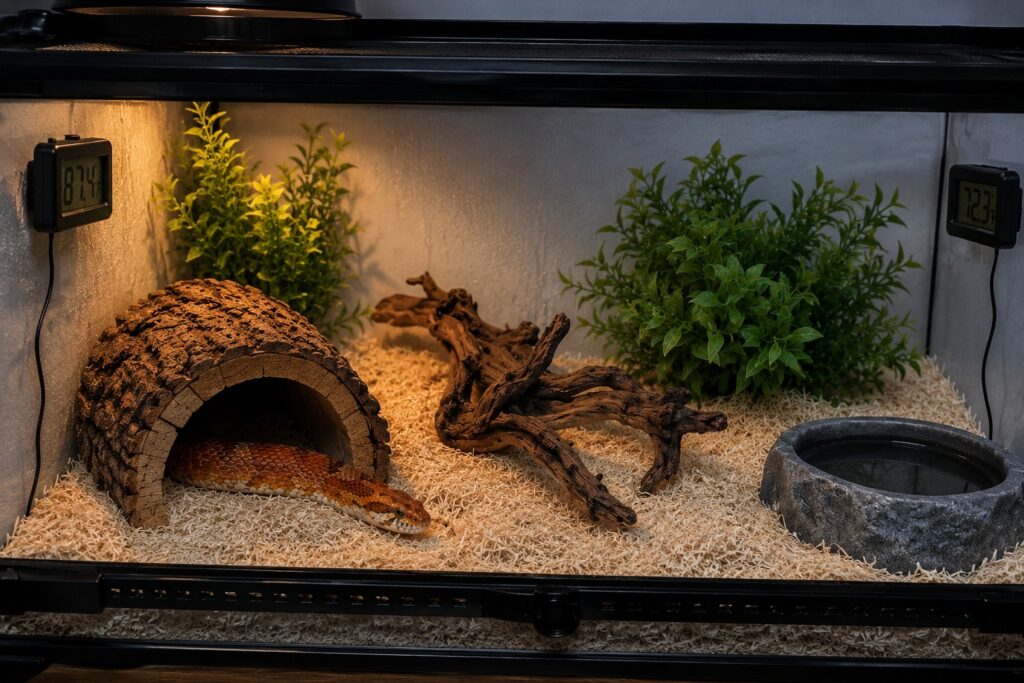
Nine times out of ten, when a corn snake refuses food for weeks, it’s a husbandry issue. And the number one husbandry issue is temperature. Corn snakes need a warm side around 85F and a cool side around 75F. If your warm side has drifted down to 78 or 80, your snake physically cannot digest food properly, so it just won’t eat.
Don’t trust the stick-on thermometers that come with starter kits. They’re unreliable. Get a digital thermometer with a probe, or better yet, a temp gun, and measure the actual surface temperature on the warm side. If it’s low, fix that first and wait a full week before offering food again.
Also check that your thermostat is working. A failed thermostat can silently kill your heat source, and you won’t notice until your snake stops eating.
Shedding, Season, and Stress
Corn snakes commonly refuse meals when they’re in blue, meaning they’re about to shed. Their eyes go cloudy, their colors dull out, and they just don’t want food. This is totally normal. Wait until the shed is complete and offer food two or three days after.
Seasonal changes can trigger fasting too. Corn snakes in the wild brumate during cooler months, and even captive-bred corns sometimes slow down or stop eating in fall and winter. If your snake is healthy, maintaining weight, and just less interested in food from November through February, that might be all it is. Some keepers try to fight this by cranking up temperatures, but a mild seasonal slowdown is not dangerous for a healthy adult.
Stress is the other big one. Did you recently move the enclosure? Add new decor? Handle the snake a lot? Is the enclosure in a high-traffic room with dogs or kids constantly walking by? Corn snakes are pretty hardy, but they still need to feel secure. If the snake doesn’t have enough hides or cover, it’s going to stay stressed and won’t eat. You want at least two snug hides, one on the warm side and one on the cool side, where the snake can curl up and touch the walls.
Is Your Corn Snake Not Eating for Weeks Because of Prey Issues?
Sometimes it’s not the snake. It’s the food. If you’ve been offering the same prey size for months and the snake has grown, it might just not be interested in something too small. Corn snakes should eat prey roughly 1 to 1.5 times the width of their body at the widest point. A meal that’s too small isn’t worth the effort to them.
The opposite can happen too. Offering prey that’s too large can intimidate a corn snake into refusing. This is more common with juveniles.
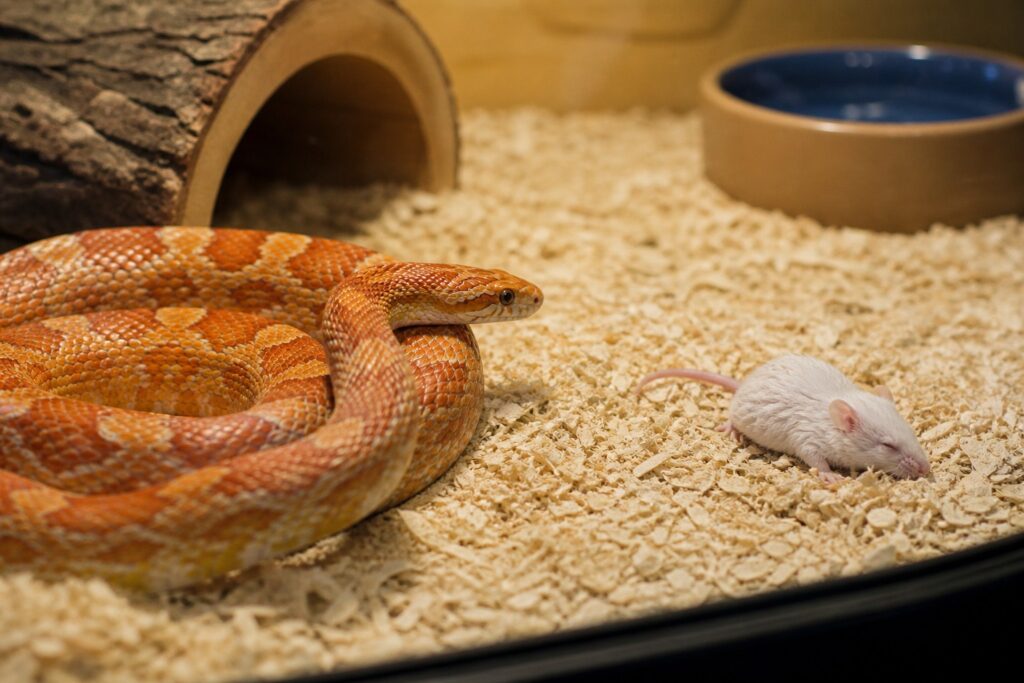
How you thaw and present the food matters as well. Corn snakes rely on heat detection, so if you’re offering a mouse that’s barely room temperature, it might not trigger a feeding response. Thaw in warm water (not hot, not microwaved) until the mouse is around 100F. Some picky corn snakes also do better when you “brain” the prey, making a small cut in the skull to release scent. Not the most pleasant task, but it works.
If your snake has only ever eaten live and you switched to frozen-thawed, that transition can take weeks. Be patient. Offer the thawed mouse, leave it overnight, and remove it in the morning if untouched. Try again in five to seven days.
When a Corn Snake Not Eating for Weeks Is a Real Problem
A healthy adult corn snake can go a month or two without eating and be completely fine. They’re not like mammals that need constant calories. If your snake is maintaining weight, staying active when you handle it, and showing no signs of illness, a few weeks of fasting is usually not an emergency.
But there are red flags. If your corn snake is losing visible body condition, showing wrinkly skin, has a kinked spine becoming visible, or you see discharge from the mouth or nose, get to a reptile vet. Respiratory infections, mouth rot, and parasites can all kill appetite, and those need treatment, not just husbandry tweaks.
Also keep an eye out for regurgitation. If the snake ate and then threw it back up, that’s different from refusing food entirely. Regurgitation means you need to wait at least 10 to 14 days before offering a smaller meal, and you need to figure out why it happened, usually handling too soon after feeding or temperatures that are too low.
Keeping Track So You Catch Problems Early
The tricky thing about a corn snake not eating for weeks is knowing exactly how many weeks it’s actually been. When you keep multiple snakes or life gets busy, it’s easy to lose track. Was the last successful feed two weeks ago or four? That distinction matters a lot.
Logging every feed attempt, whether accepted or refused, along with your snake’s weight every couple of weeks, makes it way easier to see patterns. Maybe your corn snake refuses every October. Maybe it always skips a meal after a shed. Once you see those patterns, you stop worrying about normal fasts and start catching the real problems sooner. The Exotic Reptile Care app lets you log feeds, track weight with charts, and set feeding reminders, so you always know exactly where your snake stands without digging through notebooks or spreadsheets.
Try a Reset
If you’ve checked temperatures, humidity is in the 40 to 60 percent range, the enclosure has good cover, prey size is correct, and your snake still won’t eat, try a full reset. Leave the snake completely alone for seven to ten days. No handling, no peeking, no checking in. Keep the room quiet. Then offer a properly warmed prey item at night when the snake is naturally more active. Dangle it gently with tongs, simulate a little movement, and give the snake time to strike.
For stubborn cases with juveniles, try switching prey type. Some corn snakes that refuse mice will take an African soft fur rat or even a day-old chick. It’s not ideal long-term, but it can break a fast and get the snake feeding again.
Corn snakes are one of the most forgiving species in the hobby, and most feeding strikes resolve on their own once you fix the underlying cause. The key is figuring out which cause it is instead of throwing every trick at the wall at once. Change one thing, wait a week, and go from there.
Corn snake not eating for weeks: frequently asked questions
How long can a corn snake go without eating?
A healthy adult can go a month or two without food and be completely fine, since snakes don’t burn calories the way mammals do. As long as it’s holding weight, staying active when handled, and showing no signs of illness, a few weeks off food isn’t an emergency. Hatchlings and juveniles have far less margin, so a young snake fasting is more urgent than an adult doing the same.
Why is my corn snake not eating but still active and healthy-looking?
This usually points to husbandry or timing rather than illness. The most common causes are a warm side that’s drifted below 85F, an approaching shed, a seasonal slowdown in the colder months, or stress from a recent change. A corn snake not eating for weeks while looking bright and alert is far less worrying than one that’s also losing condition.
Do corn snakes stop eating in winter?
Often, yes. Even captive-bred corns follow a wild instinct to slow down or fast through the cooler months, typically November through February. If your snake is healthy and maintaining weight, a mild seasonal appetite drop is normal and not dangerous. The most common real trigger, though, is temperature, so it’s worth confirming your corn snake temperature gradient is actually correct before blaming the season.
Should I force feed a corn snake that won’t eat for weeks?
No, not on your own. Force feeding is stressful and risky, and it should only ever happen under a reptile vet’s direction for a genuinely emaciated snake. For a stubborn but otherwise healthy corn, work through husbandry first, then try warming the prey to around 100F, braining it, or offering at night with a gentle wiggle of the tongs.
When should a corn snake not eating for weeks see a vet?
Book a vet when you see visible weight loss, wrinkly or loose skin, a spine starting to show, or any discharge from the mouth or nose. Regurgitation is its own red flag and needs a 10 to 14 day rest before offering a smaller meal. Respiratory infections, mouth rot, and parasites all kill appetite and need treatment rather than husbandry tweaks.
How do I keep track of how long it’s really been?
This is the tricky part, since “two or three weeks” is easy to misremember when life gets busy or you keep several snakes. Logging every feed attempt, accepted or refused, plus a weight check every couple of weeks, makes patterns obvious. The Exotic Reptile Care app tracks feeds, weight charts, and reminders so you always know exactly where your snake stands.