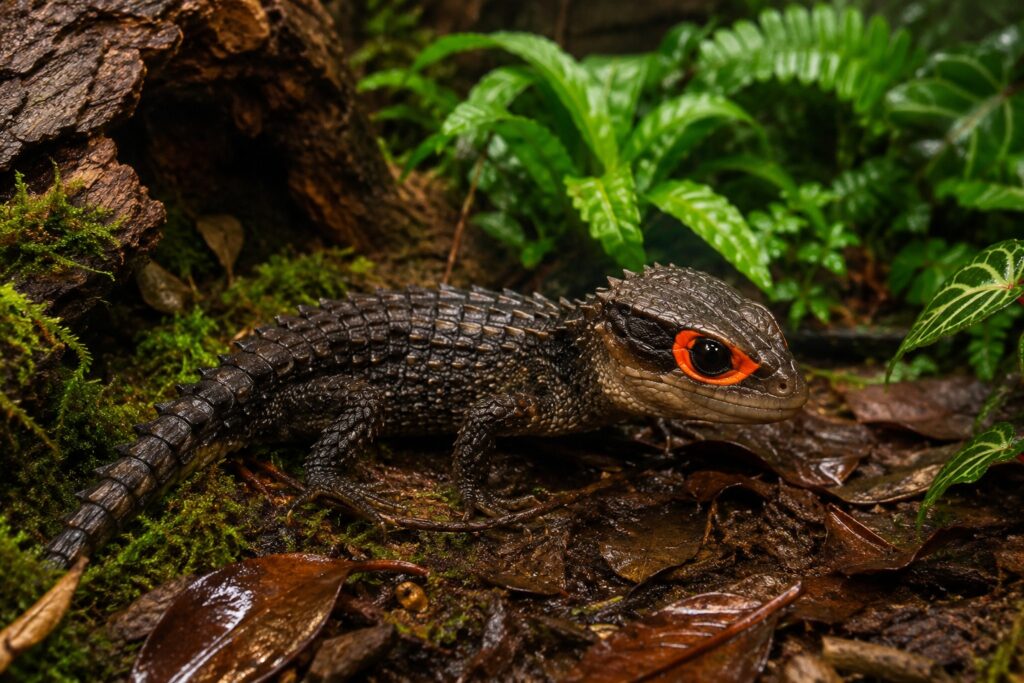
The red eyed crocodile skink is one of the coolest looking reptiles you can keep at home. They look like tiny dragons, with armored scales running down their backs and bright orange rings around their eyes. But here’s the thing most people don’t tell you before you buy one: these are not the kind of pet you’re going to handle and cuddle. They’re shy, secretive, and spend most of their time hiding. If you’re okay with that and you want a display animal that makes every visitor stop and stare, a red eyed crocodile skink might be exactly what you’re looking for.
This guide covers everything you need to set up a proper enclosure, keep your skink healthy, and avoid the mistakes that trip up most new owners.
Here’s a quick reference for red eyed crocodile skink care specs before we get into the detail.
| Care Spec | Requirement |
|---|---|
| Adult size | 8 to 10 inches total length |
| Lifespan | 8 to 10 years, up to 12 to 14 with great care |
| Minimum enclosure (single) | 24 x 18 x 18 inches, front-opening |
| Basking temperature | 80 to 82°F (never above 85°F) |
| Cool side | 72 to 78°F |
| Humidity | 70 to 90 percent at all times |
| Diet | Insectivore, feeders no wider than eye gap |
| Handling | Display animal, minimal handling |
| Experience level | Intermediate |
What You Should Know Before Getting a Red Eyed Crocodile Skink
Red eyed crocodile skinks (Tribolonotus gracilis) are native to the tropical forests of New Guinea. They’re crepuscular, meaning they’re most active around dawn and dusk, though some keepers report activity during the night too. In the wild they live among leaf litter on the forest floor, usually near streams or other water sources.
They grow to about 8 to 10 inches total length including the tail. That’s not big at all. But don’t let the small size fool you into thinking they’re low maintenance. These skinks need specific humidity, temperature, and enclosure conditions that take some effort to get right.
Lifespan in captivity is typically 8 to 10 years, with some keepers reporting up to 12 or 14 years with excellent care. They’re generally considered intermediate-level reptiles. Not impossible for a beginner, but you need to do your homework first, which you’re doing right now.
One behavior that catches new owners off guard is vocalization. Red eyed crocodile skinks will actually squeak or chirp when they’re stressed or startled. Some will even play dead. These are not signs of a friendly, interactive pet. These are stress responses, and they’re telling you to back off.
Enclosure Setup
The minimum enclosure size for a single red eyed crocodile skink is 24 inches long by 18 inches wide by 18 inches tall. A front-opening terrarium works best because opening from above can startle them. They’re terrestrial but capable climbers, so vertical space isn’t wasted, but floor space matters more.
Go bigger if you can. A 36 by 18 by 18 inch enclosure gives you much more room to create a proper setup with a decent water area, multiple hides, and live plants. If you’re keeping a pair, bigger is not optional.
Speaking of pairs, you can keep one male and one female together, but never two males. Two males will fight and stress each other out. Two females can sometimes coexist, but it’s hit or miss. If you’re not planning to breed, a single skink in its own enclosure is the safest approach.
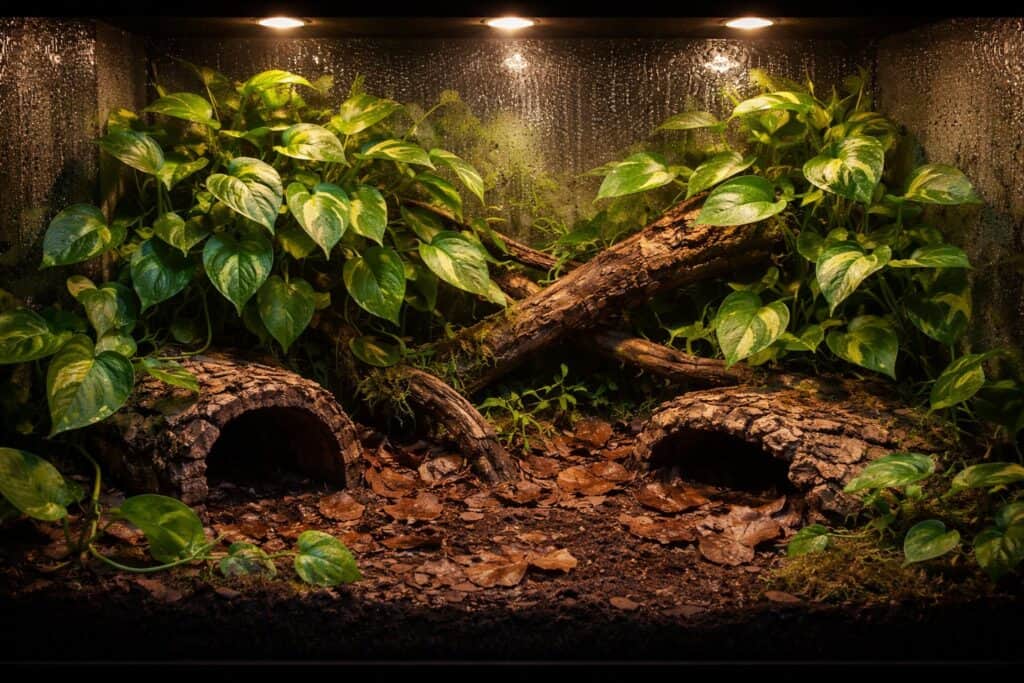
For substrate, you want something that holds moisture well. A mix of organic topsoil, coconut fiber, and sphagnum moss works great. Aim for at least 3 to 4 inches deep. This lets them dig and burrow, which they love to do. Top it with a layer of leaf litter to mimic their natural habitat. Oak leaves, magnolia leaves, or commercially available leaf litter all work.
A bioactive setup is ideal if you’re up for it. Springtails and isopods will break down waste and keep the substrate healthy long term. If you’ve never done bioactive before, check out our beginner guide to bioactive reptile enclosures for a walkthrough of the whole process.
Hides are critical. Provide at least two or three. Cork bark flats, coconut hides, and pieces of driftwood with gaps underneath all work well. Place them on both the warm and cool sides of the enclosure so your skink can thermoregulate without being exposed.
You also need a water area. Red eyed crocodile skinks love water and will soak regularly. A shallow dish that’s easy to climb in and out of is the minimum. Some keepers go all out with a paludarium-style setup that has a dedicated water section. Whatever you use, make sure the water is shallow enough that they can’t get stuck or drown. Change it daily.
Temperature and Lighting
This is where red eyed crocodile skinks differ from a lot of popular reptiles. They do not need high basking temperatures. In fact, temperatures above 82 to 85 degrees Fahrenheit can cause serious health problems or even death.
Here’s what you’re aiming for:
Basking spot: 80 to 82 degrees Fahrenheit. Cool side: 72 to 78 degrees. Nighttime: can drop to 68 to 72 degrees. That’s it. A low-wattage halogen bulb or incandescent bulb on one side of the enclosure is usually enough to create a gentle gradient. Always use a thermostat. These skinks overheat easily and you cannot afford temperature spikes.
For lighting, a 12-hour day and 12-hour night cycle works well. UVB is technically not required since they can get vitamin D3 through supplementation, but most experienced keepers recommend it anyway. A low-output UVB like a ShadeDweller-style fixture is perfect. It supports immune function, digestion, and overall health without blasting them with too much light.
Do not use red or blue heat bulbs. They’re not effective and can mess with your skink’s day/night cycle.
Humidity Requirements
This is the part that makes or breaks red eyed crocodile skink care. They need 70 to 90 percent humidity at all times. Let it drop below 70 consistently and you’ll start seeing shedding problems, dehydration, and respiratory issues.
Mist the enclosure at least twice a day, morning and evening. A pressure sprayer works fine for this. If you want to automate it, an automatic misting system on a timer saves a lot of effort and keeps things consistent.
The substrate should feel damp but never waterlogged. If you squeeze a handful and water pours out, it’s too wet. If it feels dry and crumbly, you need to mist more. Live plants help maintain humidity naturally. Pothos, ferns, and bromeliads all do well in these conditions and give your skink extra cover.
Use a digital hygrometer with a probe placed in the middle of the enclosure to monitor levels. Don’t trust the stick-on analog gauges. They’re wildly inaccurate.
If you’re struggling to keep humidity up, covering part of the screen top with a piece of acrylic, glass, or even plastic wrap can help retain moisture. Just make sure you still have enough ventilation to prevent stagnant air and mold growth.
What to Feed a Red Eyed Crocodile Skink
Red eyed crocodile skinks are insectivores. Their diet should consist of small, appropriately sized live insects. The general rule is that the feeder insect should be no wider than the space between your skink’s eyes, or about half the width of their head.
Good staple feeders include small dubia roaches, small crickets, and black soldier fly larvae. You can supplement with mealworms, waxworms (sparingly, they’re fatty), small hornworms, and red wigglers. Variety matters here. Don’t just feed one type of insect forever.
Feed adults every other day and juveniles daily. Offer enough insects for about a five-minute feeding session. Some keepers prefer to drop feeders in during the evening when the skink is most active. Others use feeding tongs to place insects near the skink’s hiding spot. Either works, but tong feeding can help you monitor intake more closely.
Dust feeders with calcium powder (with D3 if you’re not providing UVB) at every feeding. Add a multivitamin supplement once or twice a week. This is especially important for juveniles, who are growing fast and need consistent nutrition.
Tracking Health and Feeding
One of the trickiest parts of keeping red eyed crocodile skinks is that they hide so much. You might not see yours eat for days. That’s normal. But it also means problems can sneak up on you if you’re not paying attention.
Tracking what your skink eats, when it sheds, and any weight changes over time gives you an early warning system. If feeding suddenly drops off or weight starts trending down, you know something is up before it becomes a crisis.
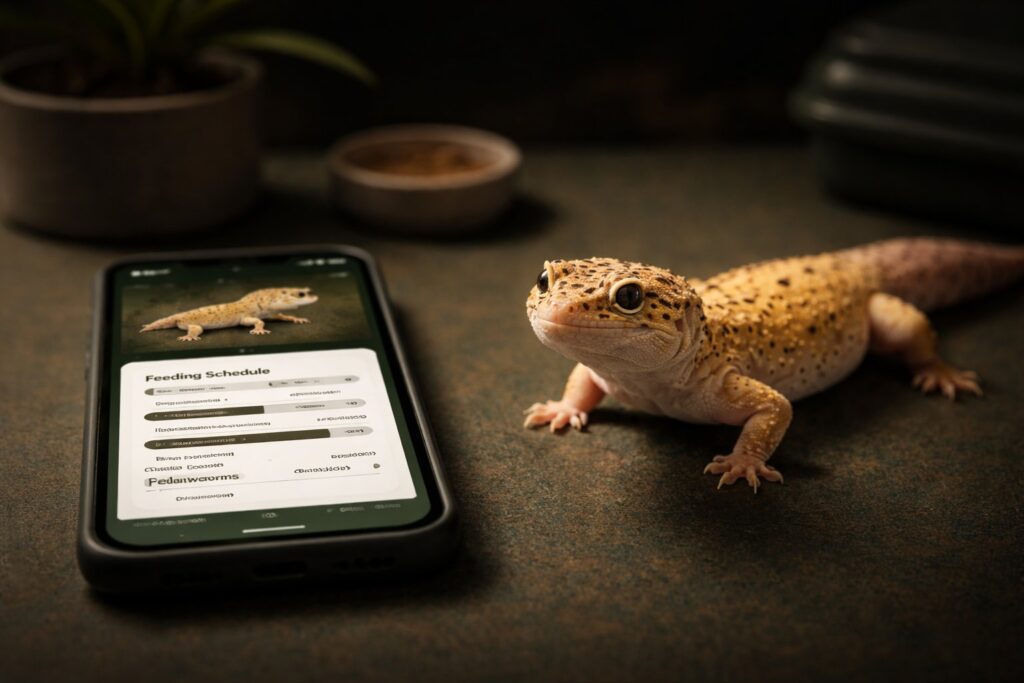
The Exotic Reptile Care app makes this easy. You can log feedings, set reminders for misting and cleaning, track sheds, and monitor weight with growth charts, all in one place. For a species this secretive, having that data logged consistently is the difference between catching a problem early and finding out too late.
Common Health Issues
Red eyed crocodile skinks are generally hardy when their environment is dialed in. Most health problems come from husbandry mistakes, not from the skink being fragile.
Low humidity is the number one issue. It leads to stuck sheds, dehydration, and can set the stage for respiratory infections. If your skink has retained shed skin, especially around the toes or tail tip, bump up the humidity and provide a damp moss hide.
Overheating is the other big risk. These skinks cannot tolerate high temperatures. If your basking spot is above 85 degrees, you’re in dangerous territory. Signs of overheating include lethargy, gaping, and trying to press against the glass on the cool side.
Parasites can be an issue, especially with wild-caught imports. If your skink is losing weight, has runny stools, or seems lethargic despite proper husbandry, a vet visit with a fecal exam is a smart move. Always try to buy captive bred when possible.
Tail dropping (autotomy) happens when they’re severely stressed. The tail will grow back, but it won’t look the same. Minimize handling and sudden movements around the enclosure to reduce this risk.
Handling Tips
Let’s be real: red eyed crocodile skinks are not handleable pets in the way that bearded dragons or ball pythons are. Most will never enjoy being picked up. Some tolerate brief handling after months or years of trust building, but many never come around to it.
If you do need to handle your skink, whether for enclosure maintenance or a vet visit, move slowly and scoop from below rather than grabbing from above. Approaching from above mimics a predator and will trigger a stress response. Don’t be surprised if they vocalize, freeze, or play dead. That’s normal for this species.
The best way to interact with your red eyed crocodile skink is hand feeding with tongs. Over time, many skinks learn to associate your presence with food and will come out when they see you approach. That’s about as social as most of them get, and honestly, it’s pretty rewarding when it happens.
Is a Red Eyed Crocodile Skink Right for You?
If you want a reptile you can hold and interact with daily, this isn’t it. Get a bearded dragon or a leopard gecko instead.
But if you love the idea of building a beautiful, lush tropical vivarium and watching a tiny armored dragon peek out from under a piece of cork bark at dusk, then a red eyed crocodile skink is hard to beat. They’re quiet, they don’t need a massive enclosure, and when your setup is right, they’re low daily effort.
Just get the humidity right, keep the temperatures cool, provide plenty of cover, and leave them alone. That’s genuinely the best care advice for this species. Set up their world properly and then let them live in it.
If you’re drawn to unusual, display-style reptiles, you might also like our care guides for the mourning gecko and African fat-tailed gecko.
Red eyed crocodile skink care: frequently asked questions
Are red eyed crocodile skinks good for beginners?
They’re best described as intermediate rather than strictly beginner. The care itself isn’t complicated once the enclosure is dialed in, but the humidity and temperature margins are tight and unforgiving. A red eyed crocodile skink is a great first “advanced” reptile for someone willing to do the research, but it’s not a grab-and-go starter pet like a leopard gecko.
Can you handle a red eyed crocodile skink?
Not really, and you shouldn’t plan on it. These are display animals, not handling pets. Most never enjoy being picked up, and forcing it triggers stress responses like squeaking, freezing, playing dead, or even dropping their tail. The best interaction is tong feeding, which many skinks warm up to over time.
Why is my red eyed crocodile skink squeaking?
Vocalizing is a stress or startle response, not a friendly greeting. It’s telling you to back off. Common triggers are opening the enclosure from above, sudden movements, or handling. Approach slowly, open front-opening enclosures from the front, and give the skink plenty of hides so it feels secure enough not to react.
Do red eyed crocodile skinks need UVB?
It’s not strictly required if you supplement with calcium plus D3, but most experienced keepers provide it anyway. A low-output UVB fixture supports immune function, digestion, and overall health without overwhelming a shade-loving species. Pair it with a 12-hour day and night cycle and keep the basking spot cool, since these skinks overheat dangerously above 85°F.
Can red eyed crocodile skinks live together?
You can keep one male and one female together, but never two males, as they’ll fight and stress each other badly. Two females sometimes coexist but it’s unpredictable. If you’re not breeding, a single skink in its own enclosure is the safest choice. Any pair needs a larger enclosure than the 24 by 18 by 18 inch minimum.
How do I keep humidity high enough for a red eyed crocodile skink?
Aim for 70 to 90 percent and never let it sit below 70. Mist twice daily, use a moisture-holding substrate topped with leaf litter, add live plants like pothos and ferns, and partially cover the screen top if levels keep dropping. Monitor with a probe hygrometer, not a stick-on gauge. A bioactive setup makes stable humidity much easier to maintain long term.
How do I know if my secretive skink is actually healthy?
Since they hide constantly and you may not see one eat for days, tracking is your early warning system. Log feedings, sheds, and weight so a drop in appetite or condition shows up before it becomes a crisis. The Exotic Reptile Care app handles feeding logs, misting reminders, shed tracking, and weight charts, which matters more for a species this hidden than for most reptiles.