A bioactive reptile enclosure is basically a living ecosystem inside a tank. Instead of replacing substrate every month and scrubbing everything down, you build a setup where tiny organisms break down waste, plants filter the air, and the whole thing mostly maintains itself. It sounds complicated, but once you understand the layers involved, it’s actually pretty straightforward. And the payoff is huge. Less cleaning, better humidity control, more natural behavior from your reptile, and an enclosure that looks incredible.
If you’ve been keeping your snake or gecko on paper towels or basic loose substrate and you’re ready to level up, this guide walks you through everything you need to build your first bioactive reptile enclosure from scratch.
Choosing the Right Enclosure for a Bioactive Reptile Setup
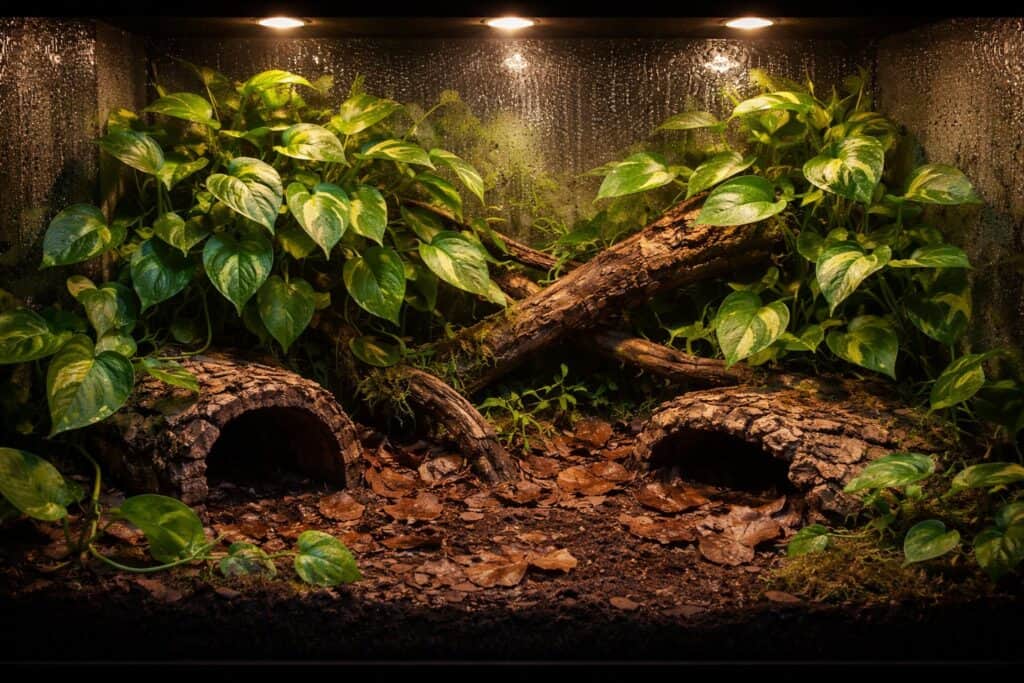
Not every tank works well for a bioactive setup. You need something that holds humidity without falling apart from moisture exposure. Glass and PVC enclosures are the best choices. Both handle humidity well, are easy to clean during the initial setup, and don’t warp or develop mold the way untreated wood can.
You also need depth. A bioactive setup has multiple layers, including drainage material, a substrate barrier, and several inches of soil mix on top. If your enclosure has a shallow base, you won’t have room for all of that. Aim for at least 4 to 6 inches of total substrate depth once everything is layered in. Front-opening enclosures make maintenance easier since you’re not reaching over the top and disturbing everything.
If you’re converting an existing tank, make sure it can handle the added weight. Wet substrate and drainage material are heavier than you’d expect.
The Drainage Layer
The drainage layer sits at the very bottom of the enclosure. Its job is to collect excess water that drains through the substrate so it doesn’t pool and turn your soil into a swamp. This is especially important in tropical setups where you’re misting regularly.
Lightweight clay balls, sometimes called hydro balls or LECA, are the most popular choice. They’re light, hold some moisture, and create air pockets that keep things ventilated. Lava rock works too, though it’s heavier. You want about 1 to 2 inches of drainage material across the bottom.
On top of the drainage layer, place a mesh barrier or screen to keep the substrate from sinking down into the drainage material. Window screen mesh cut to fit works perfectly. Some keepers use weed barrier fabric. Either way, it needs to let water pass through while holding the soil in place.
Building Your Bioactive Reptile Enclosure Substrate
The substrate is where the magic happens. This is the layer where plants root, cleanup crew organisms live, and waste gets broken down. Getting the mix right matters because it needs to support plant growth, hold appropriate moisture, and provide structure for burrowing species.
For tropical species like crested geckos, ball pythons, or tree frogs, a mix of organic topsoil, coconut fiber, and orchid bark works great. A common ratio is about 40 percent topsoil, 40 percent coconut fiber, and 20 percent orchid bark. The topsoil provides nutrients for plants, the coconut fiber retains moisture, and the bark improves drainage and aeration.
For arid species like leopard geckos or bearded dragons, swap the orchid bark for play sand and reduce the coconut fiber. Something like 50 percent organic topsoil, 30 percent play sand, and 20 percent coconut fiber gives you a mix that holds some moisture without staying too wet. Arid setups are trickier to keep bioactive because the cleanup crew needs some humidity to survive, so you’ll typically keep one corner of the enclosure slightly more moist than the rest.
Lay the substrate 3 to 4 inches deep on top of the mesh barrier. You can go deeper for burrowing species.
The Cleanup Crew for Your Bioactive Reptile Enclosure
This is the part that makes a bioactive reptile enclosure actually work. The cleanup crew is a group of small invertebrates that break down organic waste, including feces, shed skin, and decaying plant material. Without them, you just have a fancy planted tank that still needs regular cleaning.
Springtails are the foundation of any cleanup crew. They’re tiny, white, and barely visible. They feed on mold, fungus, and decaying organic matter. They reproduce quickly and are essentially maintenance-free once established. Every bioactive setup should have springtails.
Isopods are the other essential. These are the small crustaceans that look like tiny armadillos. Different species thrive in different conditions. Dwarf white isopods are a great starter species for tropical setups because they reproduce fast and stay small enough that most reptiles leave them alone. For arid setups, powder orange isopods or Porcellionides pruinosus handle drier conditions better than most.
Add your cleanup crew to the enclosure at least two to three weeks before introducing your reptile. This gives the colonies time to establish and start reproducing. Drop in some leaf litter and a few pieces of rotting wood to give them food and shelter while they settle in.
Plants and Hardscape
Live plants are what make a bioactive setup look amazing, but they also serve real functions. They help regulate humidity, provide cover for your reptile, and their root systems help aerate the substrate.
For tropical builds, pothos is nearly indestructible and grows well in low light. Bromeliads add structure and can hold water in their cups. Ferns look great but some species are delicate and may get eaten by isopods. Spider plants are another hardy option.
For arid builds, you’re more limited. Aloe, haworthia, and some succulents can work, but they need adequate light and well-draining soil. Snake plants are tough and tolerate the heat well.
Hardscape is your non-living decor. Cork bark flats and rounds make great hides and climbing surfaces. Branches and driftwood add vertical space. Rocks create basking spots. Arrange these before planting so you can build the layout around the structure. Your reptile will use the hardscape more than the plants, so prioritize creating functional hides and climbing opportunities.
Top everything off with a layer of leaf litter. Dried magnolia leaves, oak leaves, or Indian almond leaves work well. Leaf litter gives the cleanup crew a primary food source, holds surface moisture, and gives the enclosure that finished natural look.
Lighting and Heating
Plants need light to survive, and your reptile needs proper heating and potentially UVB. In a bioactive setup, you often need more lighting than a standard enclosure because you’re supporting plant growth on top of your reptile’s needs.
A full-spectrum LED grow light will keep most plants healthy. Pair that with whatever UVB and basking setup your species requires. For tropical species, a combination of a UVB tube and an LED bar across the top works well. For arid species, a halogen basking bulb plus UVB plus an LED will cover everything.
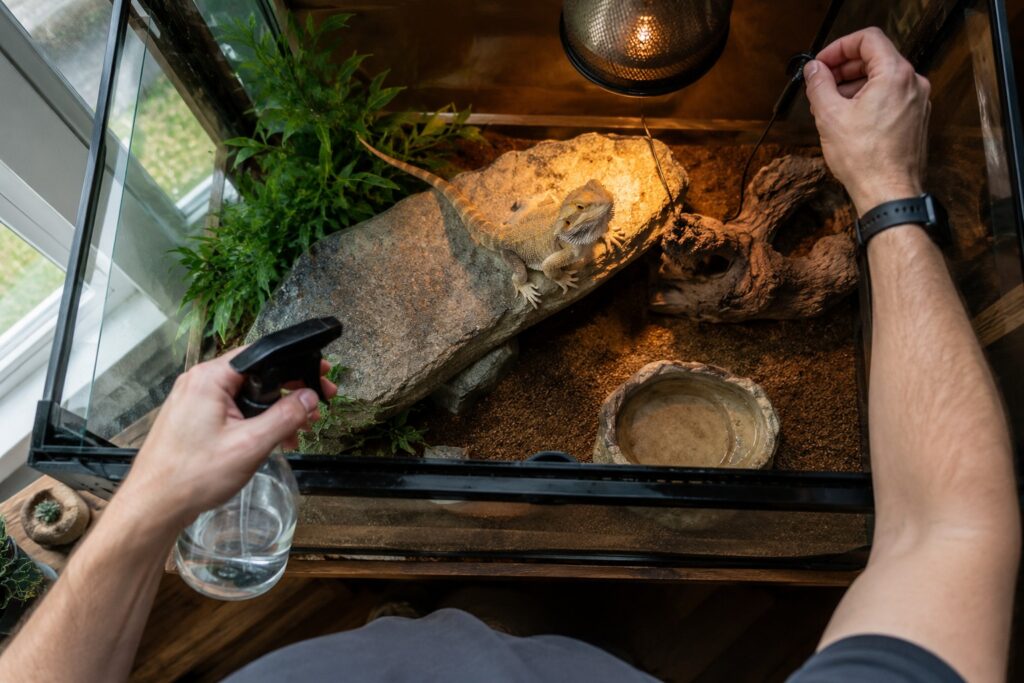
Mist regularly in tropical setups to keep humidity up, and monitor with a digital hygrometer. The drainage layer will catch excess water so you don’t have to worry about overwatering the substrate.
Maintenance Is Minimal but Not Zero
One of the biggest selling points of a bioactive reptile enclosure is reduced maintenance, and that’s true. But it’s not zero maintenance. You still need to spot clean anything the cleanup crew can’t handle fast enough, like a large fecal deposit sitting on top of the substrate. You still need to refresh water bowls, check temperatures, and replace any plants that die off.
What you don’t have to do is tear the whole thing apart every month and replace the substrate. A well-established bioactive enclosure can go 6 to 12 months or longer without a full substrate change. Some keepers with mature setups go years.
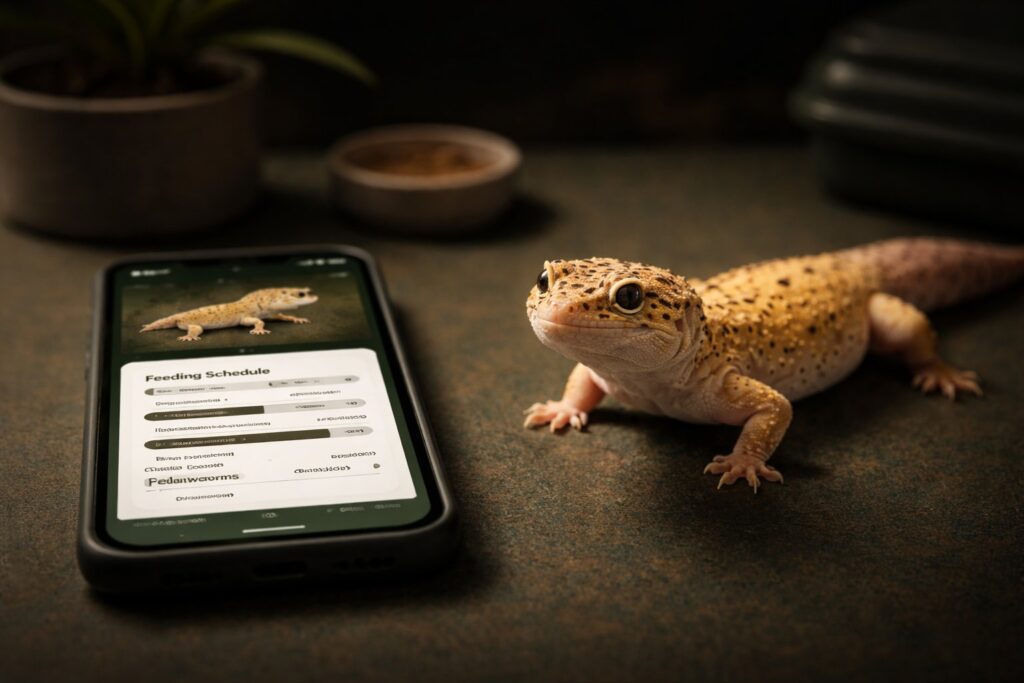
Tracking when you misted, when you last added springtails, or when a plant needs replacing is easier when you have it all in one place. The Exotic Reptile Care app lets you set custom reminders for misting schedules, feeding your cleanup crew, and any other enclosure tasks you want to stay on top of. It’s useful for keeping your bioactive setup running smoothly without having to remember everything yourself.
It’s Worth the Effort
Setting up a bioactive reptile enclosure takes more work upfront than throwing down some paper towels and a hide. But the long-term benefits are real. Less time cleaning, better humidity, more enrichment for your animal, and an enclosure that actually looks like a piece of their natural habitat. Once the system is established and the cleanup crew is doing its job, you’ll wonder why you didn’t do it sooner.
For species-specific bioactive setup guides and detailed substrate recommendations, ReptiFiles has excellent resources worth bookmarking.