Leopard gecko not eating but active is one of the most common concerns keepers search for. You walk up to the tank and your gecko is cruising around, climbing on things, tongue flicking, looking totally fine. Then you drop in some mealworms and they just… ignore them. Or they walk right over to the dish, lick a worm, and turn away. If your leopard gecko is not eating but active, it’s one of the most confusing situations you can deal with as a keeper. They look healthy. They’re moving around. But they won’t touch food. So what gives?
The good news is that this combo of active behavior plus no appetite is usually not an emergency. In most cases, it points to something fixable. But you do need to figure out which one it is.
Common Reasons Your Leopard Gecko Is Not Eating but Active
There are a handful of causes that cover about 90 percent of these cases. Let’s go through them.
Temperature is the first thing to check. Always. Leopard geckos need belly heat to digest food properly. If your warm side has dropped below 88 degrees Fahrenheit, your gecko might still feel energetic enough to move around but won’t have the metabolic ability to process a meal. They know this instinctively, so they skip food. This happens a lot during seasonal temperature changes when room temps drop and your heat mat or overhead source can’t quite keep up. Check your warm side with a temp gun. You want 88 to 92 degrees on the floor surface, not the air temperature above it. Cool side should sit around 75 to 80. If those numbers are off, fix them before you try anything else.
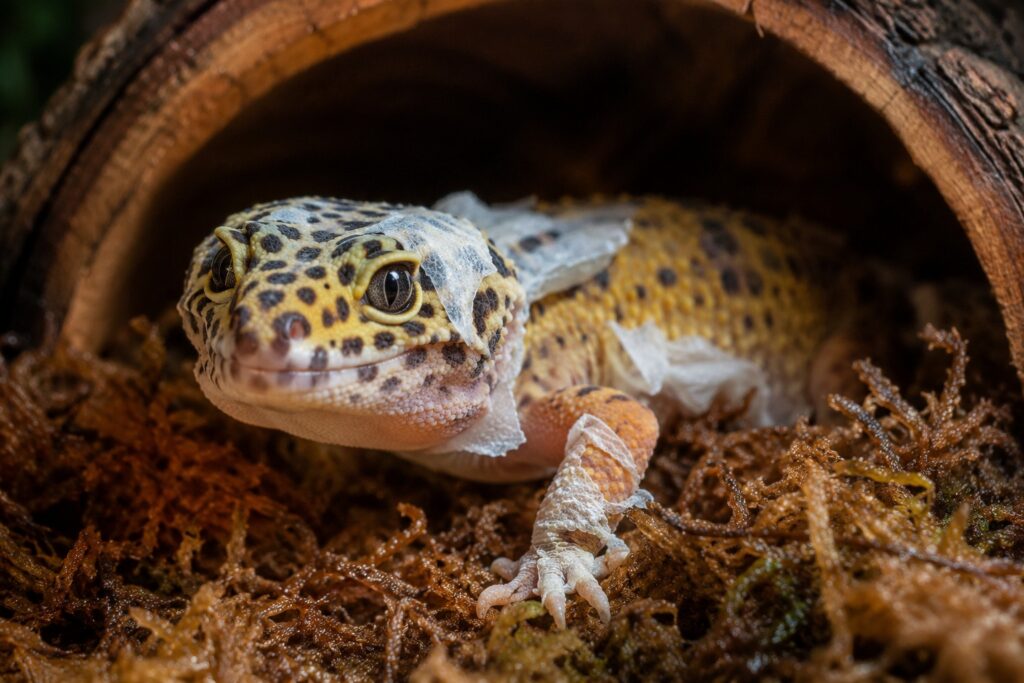
Shedding is another big one. Leopard geckos often stop eating a few days before and during a shed. Their skin gets tight, their vision gets cloudy, and food is the last thing on their mind. But they’ll still move around, especially to find their moist hide and soak up humidity. So you get this weird window where they look perfectly active but refuse every feeder you offer. Once the shed is done, most geckos will eat within a day or two. Just make sure your moist hide is actually moist and not dried out. Stuck shed usually traces back to the enclosure rather than the gecko, and our guide to leopard gecko humidity covers the numbers you’re aiming for and how to build a humid hide that actually holds moisture.
Then there’s boredom with their diet. This one catches keepers off guard. Leopard geckos can get tired of eating the same thing every single day. If you’ve been feeding nothing but mealworms for months, your gecko might just be over it. They’ll look at the worm, maybe lick it, and walk away. Try switching to crickets, dubia roaches, or black soldier fly larvae. Sometimes all it takes is a different feeder insect to flip the appetite back on. Variety isn’t just a nice to have with leos. It matters.
A refusing gecko tempts people into experimenting, and that’s usually where fruit gets offered. Don’t. Our guide on whether leopard geckos can eat fruit explains why it makes a picky eater worse, not better.
Brumation and Seasonal Slowdowns
If this is happening between November and February, you might be dealing with brumation. This is the reptile version of hibernation, and leopard geckos over a year old will sometimes go through it even in captivity. Their appetite drops off, they sleep more, and they might eat very little or nothing for weeks at a time.
Here’s the tricky part. Some geckos that are going through a mild brumation response will still be somewhat active. They’ll come out at night, wander around, drink water, then go back to their hide and sleep all day. But they won’t eat, or they’ll only take one or two insects when they’d normally eat eight. Their metabolism hasn’t fully shut down, but their body is telling them to slow down on food intake.
If your gecko is over a year old, the temps and lighting haven’t changed, and this lines up with the colder months, brumation is probably your answer. Keep offering food once a week, make sure fresh water is always available, and weigh them weekly. As long as they’re not losing more than 10 percent of their body weight, they’ll come through it fine. Most geckos snap out of it in 2 to 3 months once the days start getting longer again. So if your leopard gecko is not eating but active during winter, brumation is likely the cause.
Ovulation and Breeding Season Behavior
Female leopard geckos can go off food during ovulation, even without a male present. This usually happens in the spring and you’ll notice your gecko is restless, digging around, and very active, but refusing meals. Some females develop visible follicles that you can see as pinkish spots on their belly if you look closely.
Males can also get distracted during breeding season. They become more active and alert but lose interest in food because their body is focused on finding a mate. This usually resolves on its own within a few weeks. Keep offering food on schedule and don’t stress about it unless weight loss becomes significant.
When a Leopard Gecko Not Eating but Active Becomes a Problem
Most of the scenarios above are harmless and temporary. But there are situations where you need to take action.
Watch the tail. A leopard gecko’s tail is their fat reserve. A healthy leo has a thick, plump tail. If you notice the tail getting thinner over a few weeks of not eating, that’s your signal to dig deeper. Weigh your gecko weekly with a kitchen scale. If you see a consistent downward trend, it’s time for a vet visit.
Look for other symptoms beyond just the appetite loss. Runny or discolored stool, lethargy that replaces the activity you were seeing, swelling around the eyes or limbs, discharge from the mouth or nose, or difficulty walking are all signs that something medical is going on. Parasites, respiratory infections, and metabolic bone disease can all cause appetite loss, and some of these won’t slow your gecko down until the condition gets more advanced.
If your gecko hasn’t eaten for more than two weeks and you’ve ruled out shedding, brumation, and temperature issues, get a fecal test done. Parasites are more common than most keepers realize, and they’re easy to treat if caught early.
Tricks to Get a Picky Leo Eating Again
If you’ve checked husbandry, ruled out illness, and your gecko is just being stubborn, here are a few things worth trying when your leopard gecko is not eating but active.
Switch up the feeder insect. If you’ve been doing mealworms, try crickets or dubia roaches. If they’ve been getting dubias, try some small hornworms or waxworms as a one-time appetite kickstarter. Waxworms are fatty and shouldn’t be a regular thing, but one or two can sometimes spark the feeding response in a gecko that’s been refusing everything else.
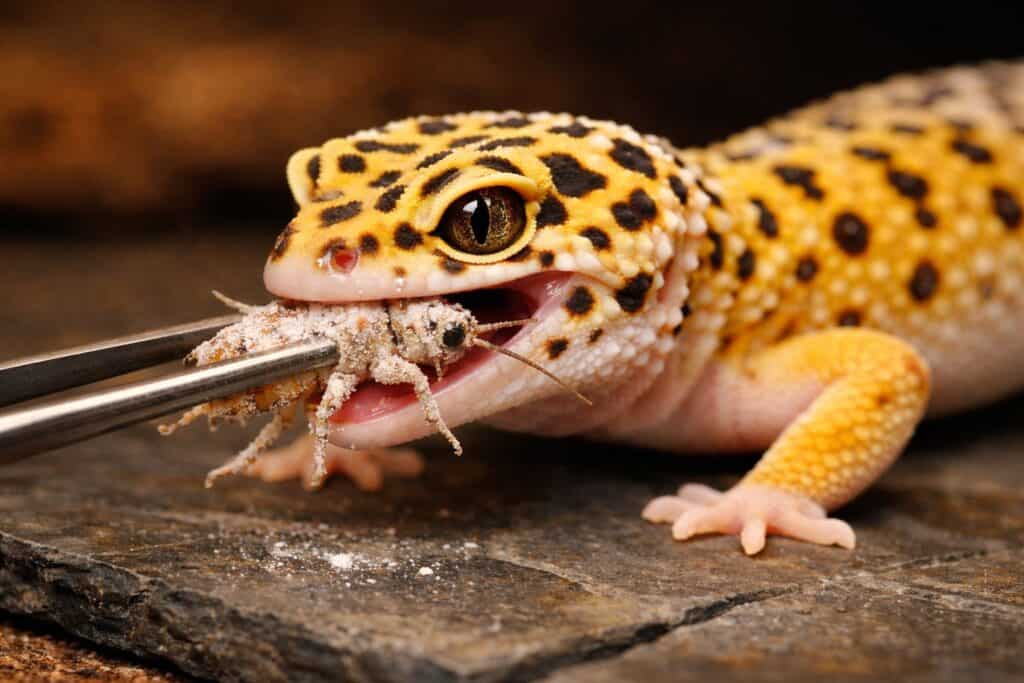
Try tong feeding. Some geckos that ignore a dish full of worms will grab one that’s wriggling in front of their face on tweezers. The movement triggers their hunting instinct in a way that a bowl of still mealworms just doesn’t.
Feed at dusk. Leopard geckos are crepuscular, meaning they’re most active at dawn and dusk. Offering food right as the lights go down matches their natural hunting rhythm. If you’ve been trying to feed during the middle of the day, that alone might be why they’re not interested.
And keep track of everything. This is where logging feeding attempts, refusals, sheds, and weights really pays off. When you have a record showing your gecko refused food three times after a shed but ate normally the week after, you stop panicking every time it happens. The Exotic Reptile Care app is built for exactly this. You can log every feeding attempt, track weight trends on a chart, and get reminders for when it’s time to try again. Over time you’ll start seeing your gecko’s patterns and you’ll know what’s normal for them specifically.
Don’t Overthink It
A leopard gecko not eating but active is almost always less scary than it looks. These geckos are tougher than people give them credit for, and a week or two without food is genuinely not a crisis for a healthy adult with a good tail. Check your temps, check your humidity, offer variety, and give them space. Most of the time, they’ll come around on their own. The key is knowing your individual gecko’s baseline so you can tell the difference between a normal off week and something that actually needs attention.
For more on keeping your leopard gecko healthy, see our guides on leopard gecko enclosure setup and preventing impaction.
Leopard gecko not eating: frequently asked questions
How long can a leopard gecko go without eating?
A healthy adult with a plump tail can safely go two to three weeks without food, and sometimes longer during brumation. The tail is their fat reserve, so a well-conditioned leo has a real buffer. Hatchlings and juveniles have far less margin and shouldn’t skip more than a few days, so a young gecko not eating is more urgent than an adult one.
Why is my leopard gecko not eating but still active?
The most common causes are low warm-side temperatures, an upcoming shed, boredom with the same feeder, brumation in the colder months, or breeding-season behavior. A gecko can feel energetic enough to move around while still lacking the belly heat to digest a meal, which is why they look fine but refuse food. Check your warm side sits at 88 to 92 degrees before anything else.
When should I worry about a leopard gecko not eating?
Watch the tail and the weight. If the tail is visibly thinning, the gecko has refused food for more than two weeks with husbandry ruled out, or you see runny stool, lethargy, swelling, or discharge, it’s time for a vet and a fecal test. Slow weight loss tracked over several weeks is the clearest warning sign that this is medical rather than a normal off week. Short appetite gaps are normal. Sustained weight loss is what shortens a leopard gecko’s lifespan, so track the trend rather than any single week.
Can cold temperatures make a leopard gecko stop eating?
Yes, and it’s the number one cause. Leopard geckos need floor-surface belly heat of 88 to 92 degrees Fahrenheit to digest properly. If the warm side drops below 88, they’ll often refuse food even while staying active, because their body knows it can’t process a meal. Seasonal room-temperature drops are a frequent trigger, so check with a temp gun before assuming anything’s wrong.
Should I force feed a leopard gecko that won’t eat?
No, not on your own. Force feeding is stressful and risky, and it should only ever happen under a reptile vet’s direction for a genuinely emaciated animal. For a stubborn but otherwise healthy gecko, try tong feeding, switching the feeder insect, or offering food at dusk instead. Force feeding a leo that’s simply brumating or shedding does more harm than good.
How do I get my leopard gecko eating again?
Fix husbandry first, then tempt the appetite. Switch feeders, try tong feeding to trigger the hunting response, offer a single waxworm or hornworm as a kickstarter, and feed right as the lights go down. Logging every attempt also helps, and the Exotic Reptile Care app lets you track feedings, refusals, and weight trends so you can tell a normal fast from a real problem.