Snake mites treatment fails for one reason more than any other: people treat the snake and forget the enclosure, or treat once and stop. The mites you can see on your snake are only part of the population. The rest are eggs and young mites hiding in the substrate, the decor, and the corners of the tank. To get rid of them, you have to treat the snake and its surroundings together, and keep going long enough to outlast every egg.
Here’s how to do it in six steps.
How to Tell If Your Snake Has Mites
Snake mites are tiny black or dark red dots, about the size of a pinhead, and they move. Check these places first:
- Around the eyes and in the heat pits
- In the groove under the chin
- Around the vent
- Under the edges of the belly scales
Other signs are a snake that soaks in its water bowl for hours, black specks floating in the water, fine white dust on the scales (mite droppings), and rough, patchy sheds. If you wipe your snake with a damp white paper towel and see small dark smears or moving dots, you have mites.
Mites aren’t just an itch. The Merck Veterinary Manual notes that heavy infestations can kill a snake through anemia or infection, and that mites can carry bacteria and viruses from one reptile to another. So treat them as soon as you find them.
Snake Mites Treatment in 6 Steps
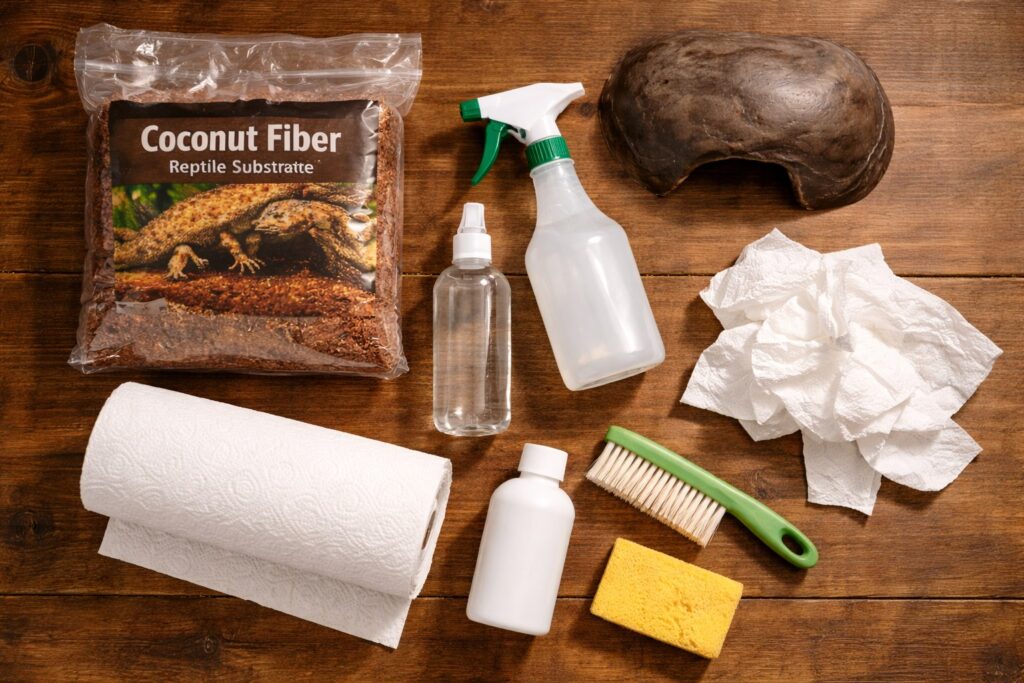
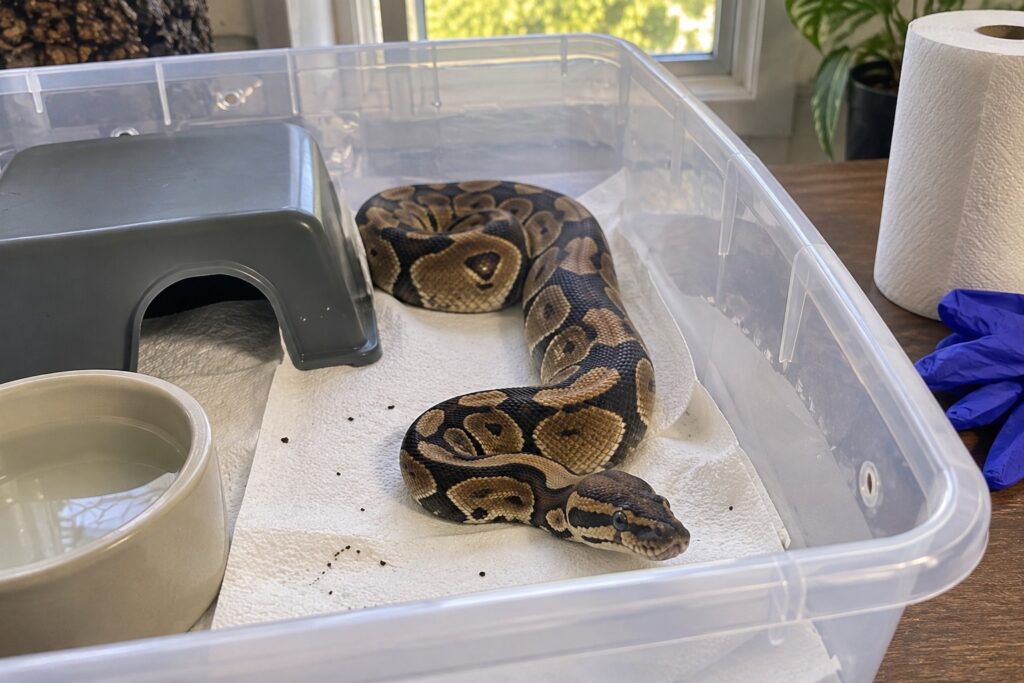
1. Move the snake to a quarantine tub. Use a plain plastic tub with air holes, white paper towels as substrate, one simple plastic hide, and a water bowl. White paper lets you see mites and tells you whether the treatment is working. Keep the tub at the snake’s normal temperatures.
2. Soak the snake. Give it a 15 to 20 minute soak in shallow lukewarm water, deep enough to cover the body but not the head. This drowns many of the mites on the body. Gently wipe the head, chin groove, and around the eyes with a damp cotton pad, since mites gather there to escape the water.
3. Treat the snake. Use a mite product made for reptiles, and follow the label exactly. Permethrin is the ingredient licensed for use on reptiles. Vets also use ivermectin, but the wrong dose is dangerous, so only use it if a vet prescribes it. Take the water bowl out before spraying and keep spray away from the snake’s face. For a small, young, or weak snake, see a vet before using any product.
4. Strip and treat the enclosure. This is the step most people skip. Throw away all the substrate in a sealed bag, straight into the outside trash. Throw away cork, wood, and anything porous, or bake wood at 250°F for an hour. Wash the enclosure, hides, and bowls with hot soapy water, getting into every corner, seam, and vent. Then treat the empty enclosure with a reptile mite spray, let it dry completely, and air it out before the snake goes back in.
5. Repeat on schedule. Mite eggs survive most treatments and hatch within days. Change the paper towels daily, repeat the soak every few days, and re-treat the snake and tub as often as the product label says, usually weekly. Miss a round and the newly hatched mites start laying again. It helps to set a reminder for each treatment day in the Exotic Reptile Care app, so the schedule doesn’t slip in week three when you’ve stopped seeing mites.
6. Keep going for 30 days after the last mite. Keep your snake on paper towels until you’ve gone a full 30 days without seeing a single mite. Only then set up the normal enclosure again with fresh substrate.
Snake Mites Treatment Timeline at a Glance
| When | What to do |
|---|---|
| Day 1 | Quarantine tub, first soak, treat snake, strip and treat enclosure |
| Daily | Change paper towels, check for mites, fresh water |
| Every 3 to 4 days | Repeat the soak |
| Weekly | Re-treat the snake and tub as the label directs |
| 30 days mite free | Return to the normal enclosure |
Treat the Room and Your Other Reptiles
Mites walk, so a snake mites treatment has to cover the whole room. If you keep more than one reptile in the same room, assume the others are exposed, even if you can’t see mites on them yet. Check every animal, and treat any that share a rack or shelf with the infected snake.
Vacuum the floor and shelves around the enclosure, and wipe down surfaces. Handle the infected snake last, and wash your hands and forearms afterward. Don’t move tools, hides, or water bowls between enclosures until the mites are gone.
What Not to Do During Snake Mites Treatment
- Don’t use household bug sprays or flea products. Many are toxic to reptiles.
- Don’t coat your snake in oil. It’s messy, it doesn’t reach the eggs in the enclosure, and it can interfere with shedding.
- Don’t hang pest strips in the enclosure. The fumes can harm your snake.
- Don’t put the snake back early. A clean looking snake after one week still has eggs hatching around it.
When to See a Vet
Home snake mites treatment has limits. Go to a reptile vet if the mites are still there after three or four weeks of proper treatment, if your snake is lethargic, pale in the mouth, or not eating, or if you see swelling or sores around the eyes. Heavy infestations in small snakes can cause serious blood loss, and they need treatment a keeper can’t give at home.
How to Stop Mites Coming Back
Almost every mite outbreak arrives on a new animal or on secondhand equipment. Quarantine every new reptile in a separate room, on paper towels, for at least 60 days before it goes near the rest of your collection. Clean and treat any used enclosure or decor before using it. Wash your hands after visiting reptile shops and expos, and change clothes if you’ve handled animals there.
Sticking to a regular snake enclosure cleaning schedule also helps, since you’ll spot the first few mites during a routine clean instead of weeks later. This applies whatever you keep, from a humid ball python enclosure to a dry Kenyan sand boa setup.
A good snake mites treatment is boring and repetitive. Treat the snake, treat the enclosure, repeat on schedule, and don’t stop until you’ve had 30 clear days.
Frequently Asked Questions
How long does snake mites treatment take?
Plan for at least four to six weeks. You need to keep treating until every egg has hatched and died, then go 30 days without seeing a mite.
Can snake mites live on humans?
They can bite people and cause itchy red bumps, but they can’t live or breed on humans. They need a reptile host.
Will soaking alone get rid of snake mites?
No. Soaking drowns mites on the snake’s body, but not the ones on its head or the eggs in the enclosure. It’s one step, not the whole treatment.
Do I need to throw away my substrate?
Yes. Substrate holds mites and eggs. Bag it, bin it outside, and use paper towels until the mites are gone.
Can snake mites kill a snake?
Yes, in heavy infestations. They feed on blood and can cause anemia, and they can spread infections between reptiles.