Can bearded dragons eat broccoli? Yes, but only once or twice a month, and only in small chopped pieces. Broccoli is one of those vegetables that looks like a perfect beardie food on paper. It’s green, it’s dense with vitamins, it’s in your fridge already. The problem is what comes attached to it, and that’s where most keepers get tripped up.
| Broccoli at a Glance | What It Means for Your Beardie |
|---|---|
| Safe to feed? | Yes, in small amounts |
| How often | Once or twice a month max |
| Portion size | A few florets, chopped smaller than the space between the eyes |
| Raw or cooked | Raw is fine, blanching lowers goitrogens slightly |
| Which parts | Florets and thin stem slices, skip thick woody stalk |
| Main concerns | Goitrogens, oxalates, more phosphorus than calcium |
| Staple food? | No, rotate it in as a filler |
Can Bearded Dragons Eat Broccoli Every Day?
No, and this is the part that matters most. Broccoli contains goitrogens, which are compounds that interfere with iodine uptake and can suppress thyroid function when they build up. A few florets a month won’t do anything. A daily broccoli salad over months is a different story, and thyroid problems in reptiles are slow, quiet, and expensive to diagnose.
Broccoli also runs about 47mg of calcium against 66mg of phosphorus per 100g. That’s roughly a 0.7:1 ratio, and your beardie wants closer to 2:1. Phosphorus binds calcium in the gut and blocks absorption, which is the same mechanism behind metabolic bone disease. One low-calcium veg in a rotation is nothing. A diet built on them is a real risk.
Then there’s oxalates. Broccoli isn’t a spinach-level offender, it’s moderate, but oxalates do the same calcium-binding job. Stack goitrogens plus phosphorus plus oxalates and you get a vegetable that’s fine occasionally and genuinely bad as a habit.
Is Broccoli Actually Good for Bearded Dragons?
It has real upsides, otherwise nobody would bother. Broccoli carries vitamin C, vitamin K, beta carotene, folate, and a decent amount of fiber. The water content helps with hydration too, which matters more than people think for a desert species that doesn’t drink from a bowl reliably.
Where broccoli earns its spot is variety. A beardie eating the same three greens forever gets bored, and bored beardies start refusing salad entirely. Rotating in something with a different texture and smell keeps them interested. If yours has already gone off greens, our guide on what to do when a bearded dragon isn’t eating greens walks through the usual causes.
Just don’t confuse “good for humans” with “good for beardies.” Broccoli is a superfood for us because we absorb calcium differently and we’re not fighting metabolic bone disease. Your dragon has a completely different set of rules.
How to Prepare Broccoli for a Bearded Dragon
Wash it properly first. Broccoli florets hold onto pesticide residue in all those little crevices, so run it under cool water and give it a shake. Buy organic if it’s easy for you.
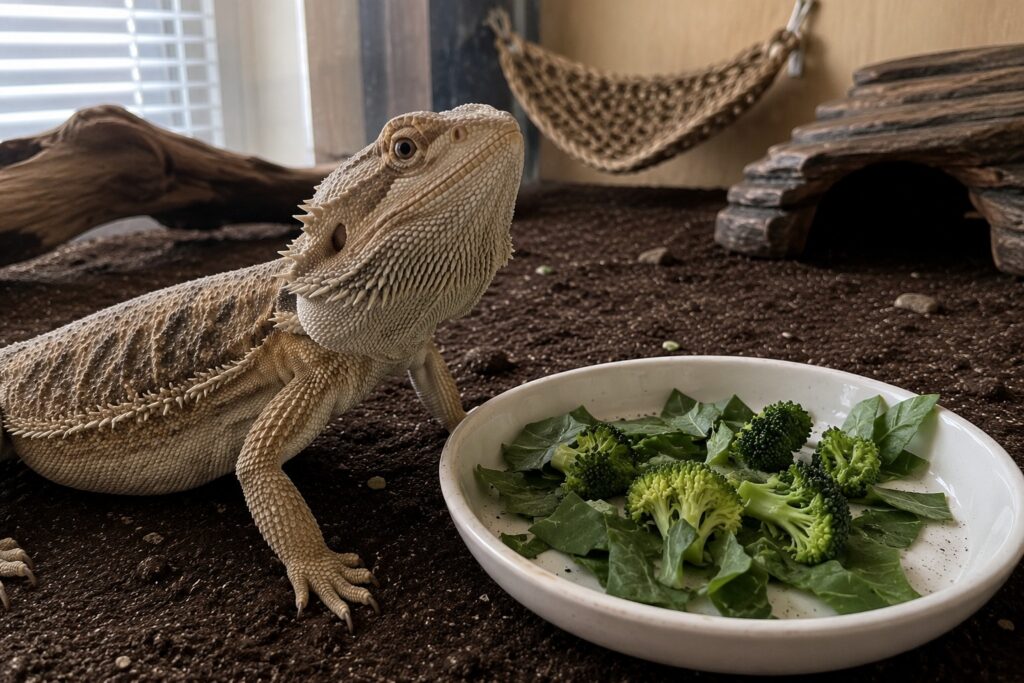
Chop small. The standard rule applies, nothing bigger than the space between your dragon’s eyes. Broccoli florets look soft but they’re fibrous, and a chunk that’s too big is a genuine impaction and choking risk. Skip the thick woody part of the stalk entirely. Thin slices of the tender upper stem are fine.
Raw is the default. Cooking loses water-soluble vitamins, though a quick blanch does knock down goitrogen levels a bit. If you have a beardie who ignores raw broccoli, a brief blanch and cool is a reasonable trade. Never add oil, salt, butter, or seasoning.
Mix it in rather than serving it alone. A few pieces of broccoli scattered through a salad of collard greens, mustard greens, or dandelion greens is the right way to serve it. That way the calcium-rich staples carry the meal and the broccoli is just texture and variety. Dust the whole salad with calcium powder as usual.
How Often Can Bearded Dragons Eat Broccoli?
Once or twice a month is the sweet spot. Some keepers push to once a week and their dragons are fine, but there’s no nutritional reason to. Broccoli isn’t giving you anything that collard greens or turnip greens don’t give you better and safer.
Age doesn’t change the answer much. Babies and juveniles are eating mostly insects anyway and their calcium demand is highest during growth, so if anything be stricter with them. Adults eating 75 to 80 percent plants have more room in the salad bowl, but broccoli still stays an occasional item.
If you want a fuller picture of what belongs in the bowl daily versus monthly, our bearded dragon food guide breaks the whole diet down by category.
What to Feed Instead of Broccoli
Your staples should be collard greens, turnip greens, dandelion greens, mustard greens, endive, and escarole. Those have good calcium ratios and no meaningful antinutrient problems at daily feeding levels. Build the salad on those and treat everything else as a garnish.
For occasional variety, butternut squash, bell pepper, and green beans are all better bets than broccoli. Carrots work in the same occasional slot but bring a vitamin A concern instead of a thyroid one. Cucumber is mostly water and adds hydration but almost no nutrition, so it fills a different role again.
The pattern across all of these is the same. Rotate, don’t repeat.
Tracking Occasional Foods Without Guessing
The tricky part with “once or twice a month” foods isn’t knowing the rule, it’s remembering when you last broke it out. Most keepers massively underestimate how often they’ve fed something. If your beardie gets broccoli on Sunday, carrots on Tuesday, and squash on Friday, that’s three phosphorus-heavy vegetables in one week and it doesn’t feel like much at the time.
The Exotic Reptile Care app lets you log what went in the bowl each day, so you can scroll back and see the actual pattern instead of relying on memory. It also handles weight logging, so if a diet shift starts affecting growth you’ll spot it on the chart before it becomes a vet visit.
Signs You’ve Overdone It
Watch for lethargy, unexplained weight loss, soft or swollen jaw, trembling limbs, or a beardie that suddenly struggles to grip or climb. Those point toward calcium problems and they need a vet, not a diet tweak. Runny stools after a broccoli meal usually just means the portion was too big, so cut it back and move on.
If anything on that list shows up, find a reptile-experienced vet through the ARAV vet directory rather than a general small animal clinic. Reptile medicine is its own specialty and a generalist can miss early metabolic bone disease easily.
FAQ: Can Bearded Dragons Eat Broccoli?
Can bearded dragons eat broccoli stems?
Thin slices from the tender upper stem are fine, chopped small. Skip the thick woody base, it’s tough, fibrous, and a choking risk that isn’t worth the trouble.
Can baby bearded dragons eat broccoli?
They can, but there’s little reason to offer it. Babies need every bit of calcium they can absorb for growth, and broccoli works against that. Stick to collard and mustard greens alongside their insects.
Is cooked broccoli better than raw for bearded dragons?
Blanching lowers goitrogen levels slightly, which is a small plus. But cooking also strips water-soluble vitamins. Raw and finely chopped is the standard recommendation, with a quick blanch as an option for picky eaters.
Can bearded dragons eat frozen broccoli?
Thawed frozen broccoli is acceptable in a pinch, though it comes out mushy and many beardies won’t touch it. Never serve it still frozen or cold, and check that no salt or sauce was added.
My bearded dragon ate a lot of broccoli, should I worry?
One large meal won’t cause lasting harm. Expect possibly loose stools for a day. Just skip other high-phosphorus vegetables for the next week or two and go back to calcium-rich staples.
So the short version: can bearded dragons eat broccoli, yes, as a once-a-month bit of variety in a salad built on proper staple greens. Treat it like a garnish and it’s harmless. Treat it like a green vegetable that must therefore be healthy and you’re slowly working against your dragon’s calcium balance.