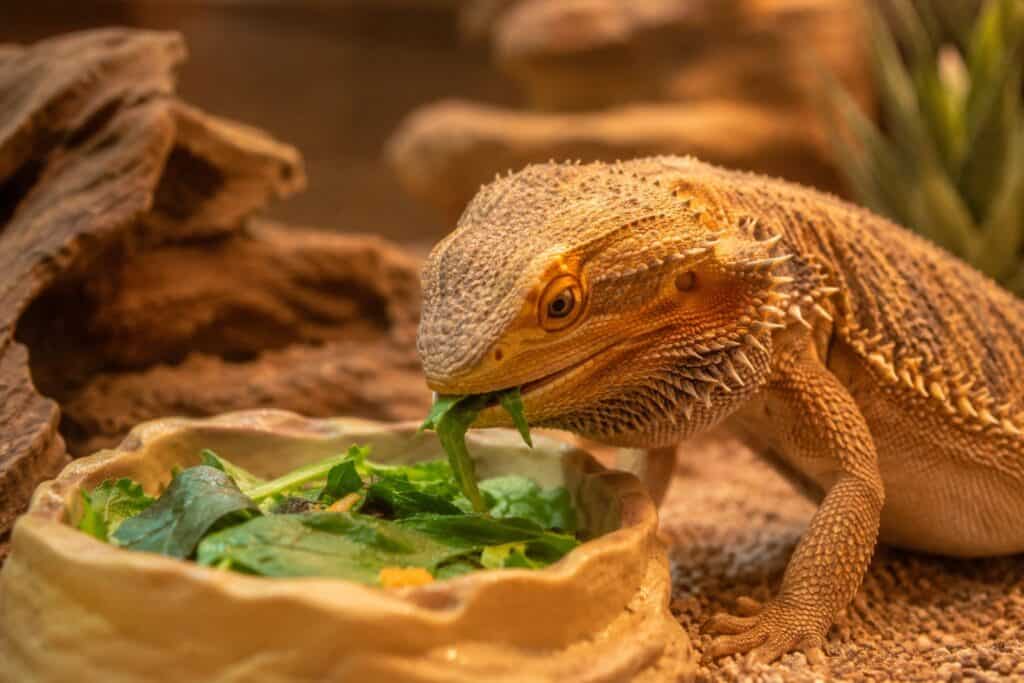

Can bearded dragons eat kale? Yes, once or twice a week in modest amounts, and it’s genuinely one of the better occasional greens. Cabbage is a different story and belongs much further down the rotation. Both come up constantly because they’re the vegetables people already have in the fridge, and both carry the same complication.
That complication is goitrogens, and the internet is split between people who treat kale as a superfood and people who treat it as poison. Neither is right.
| Green | How Often | Why |
|---|---|---|
| Kale | Once or twice weekly | Good calcium, moderate goitrogens |
| Green cabbage | Every other week | Low nutrition, higher goitrogens |
| Red cabbage | Occasionally | Slightly better than green |
| Savoy cabbage | Occasionally | Similar to green |
| Napa cabbage | Rarely | Mostly water |
| Collard greens | Daily | The staple to build on |
Can Bearded Dragons Eat Kale Safely?
Yes, and kale is better than its reputation suggests. It has a calcium to phosphorus ratio around 2.4:1, which is genuinely good, sitting above the 2:1 minimum you want. It’s also high in vitamin A, vitamin K, and calcium in absolute terms.
The catch is goitrogens, compounds found across the brassica family that interfere with iodine uptake and can suppress thyroid function when they build up over time. Kale has them, and so do cabbage, broccoli, bok choy, and brussels sprouts.
What matters is dose and frequency, not presence. A serving of kale once or twice a week alongside proper staple greens does nothing measurable. Kale as the base of every salad for months is a real problem, and thyroid issues in reptiles are slow to develop and difficult to diagnose.
Kale is also moderate in oxalates, which bind calcium in the gut. Not spinach-level, but enough that it shouldn’t crowd out your staples.
So the answer is yes, as a rotation green rather than a foundation.
Can Bearded Dragons Eat Cabbage?
Yes, but it earns its place far less. Cabbage has a weaker calcium to phosphorus ratio, more water, and less of everything useful. Where kale gives you real nutrition alongside its goitrogens, cabbage mostly gives you the goitrogens.
Green cabbage is the most common and the least interesting nutritionally. Red cabbage is slightly better, with more antioxidants and a bit more vitamin C. Savoy sits in between. Napa cabbage is largely water and closer to iceberg lettuce in usefulness.
Every other week at most, shredded fine and mixed into a proper salad. Cabbage is bulky and fibrous, and too much causes gas and loose stools.
If your dragon likes it and you’re using it to make a salad more appealing, that’s a fair reason to include a little. Just don’t mistake it for nutrition.
How to Prepare Both
Wash thoroughly, especially curly kale, since the ruffled leaves hold residue. Organic is worth it if it’s convenient.
Chop small. The standard rule applies: nothing wider than the space between your dragon’s eyes. Kale leaves are tough and fibrous, and cabbage is worse, so a piece that’s too large is both a choking and an impaction risk. Strip out the thick central stem of kale and the dense core of a cabbage.
Serve raw. Cooking loses water-soluble vitamins, and while a quick blanch reduces goitrogen levels slightly, it isn’t worth the trade for a food you’re only offering weekly.
Mix, don’t serve alone. A few pieces of kale scattered through a salad built on collard, mustard, dandelion, or turnip greens is the right approach. Dust the whole thing with calcium as usual.
Never add oil, salt, dressing, or seasoning.
Where They Fit in the Rotation
Your staples do the actual work: collard greens, turnip greens, mustard greens, dandelion greens, endive, and escarole. Those have good calcium ratios and no meaningful antinutrient issues at daily feeding levels.
Kale slots in as a weekly rotation green alongside things like bok choy and watercress. Cabbage sits further out with the occasional items.
The same logic covers the rest of the brassica family, which is why our post on whether bearded dragons can eat broccoli reaches a similar conclusion by a slightly different route. Carrots are also an occasional item, though their limiting factor is vitamin A rather than thyroid function.
For the full picture of what goes in the bowl daily versus weekly versus rarely, our bearded dragon food guide breaks the whole diet down.
Why Variety Is the Actual Answer
The reason goitrogens rarely cause problems in practice is that most keepers rotate. The dragons that develop thyroid or calcium issues are the ones eating the same one or two things indefinitely.
There’s a second reason to rotate. Bearded dragons get bored, and a dragon fed identical salad every day starts refusing it altogether. That’s one of the most common frustrations in the hobby, and our guide on a bearded dragon not eating greens covers how to fix it once it’s started.
Adding kale to the rotation genuinely helps with that. Different texture, different smell, and dragons often take it readily when they’ve gone off softer greens.
Signs Something Is Off
Watch for lethargy, unexplained weight loss, a soft or swollen jaw, trembling limbs, or a dragon that suddenly struggles to grip or climb. Those point toward calcium problems rather than thyroid ones, but both trace back to diet and both need a vet rather than a recipe change.
Persistent loose stools after a kale or cabbage meal usually just means the portion was too large or too fibrous. Cut it back.
If anything on that list shows up, find a reptile-experienced vet through the ARAV vet directory. General small animal practices frequently miss early metabolic bone disease.
Keeping Track of the Rotation
The problem with “once or twice a week” foods is remembering. Most keepers substantially underestimate how often they’ve offered something, and it’s easy to end up with kale on Monday, broccoli on Wednesday, and cabbage on Friday without noticing that’s three goitrogenic vegetables in one week.
Logging what actually goes in the bowl makes the pattern visible. The Exotic Reptile Care app records daily feeding alongside weight, so you can scroll back and see what the rotation genuinely looked like rather than what you think it looked like. Weight is the backstop, since a dragon whose diet has drifted usually shows it on the chart before anywhere else.
FAQ: Kale and Cabbage for Bearded Dragons
Can bearded dragons eat kale every day?
No. Once or twice a week is right. Daily kale over months allows goitrogens and oxalates to accumulate, which works against thyroid function and calcium absorption.
Is kale or cabbage better for bearded dragons?
Kale, clearly. It has a better calcium to phosphorus ratio and more actual nutrition. Cabbage is mostly water and fiber with similar goitrogen concerns and fewer benefits.
Can baby bearded dragons eat kale?
In small amounts occasionally. Juveniles have the highest calcium demand of any life stage, so staple greens like collard and mustard should make up nearly all of their plant intake.
Can bearded dragons eat red cabbage?
Yes, and it’s marginally better than green cabbage thanks to higher antioxidant and vitamin C content. Still an occasional item, roughly every other week.
Do I need to cook kale for my bearded dragon?
No. Serve it raw and finely chopped. Blanching reduces goitrogens slightly but also strips water-soluble vitamins, and it isn’t worth it for a weekly food.
What happens if my bearded dragon eats too much cabbage?
Expect gas and loose stools for a day or two. One large meal isn’t dangerous. Just skip other brassicas for the following week and return to calcium-rich staples.
The practical takeaway: can bearded dragons eat kale, yes, weekly, and it’s a useful green. Cabbage is fine but unremarkable. Build the salad on collard and mustard greens, rotate everything else through, and the goitrogen question stops mattering entirely.