What do geckos eat? The short answer is insects. The slightly longer answer is that it depends on the species. Most pet geckos are insectivores and eat nothing but live bugs. But some popular species, like crested geckos and day geckos, are omnivores that also eat fruit and commercial gecko diets. Feeding your gecko the wrong type of food for its species is a fast way to cause health problems, so knowing which category yours falls into matters.
This guide covers what the most common pet gecko species eat, which feeder insects work best, how to handle supplementation, and what to avoid entirely.
Insectivore Geckos vs Omnivore Geckos
The biggest split in gecko diets is between insectivores and frugivorous omnivores. Getting this right is step one.
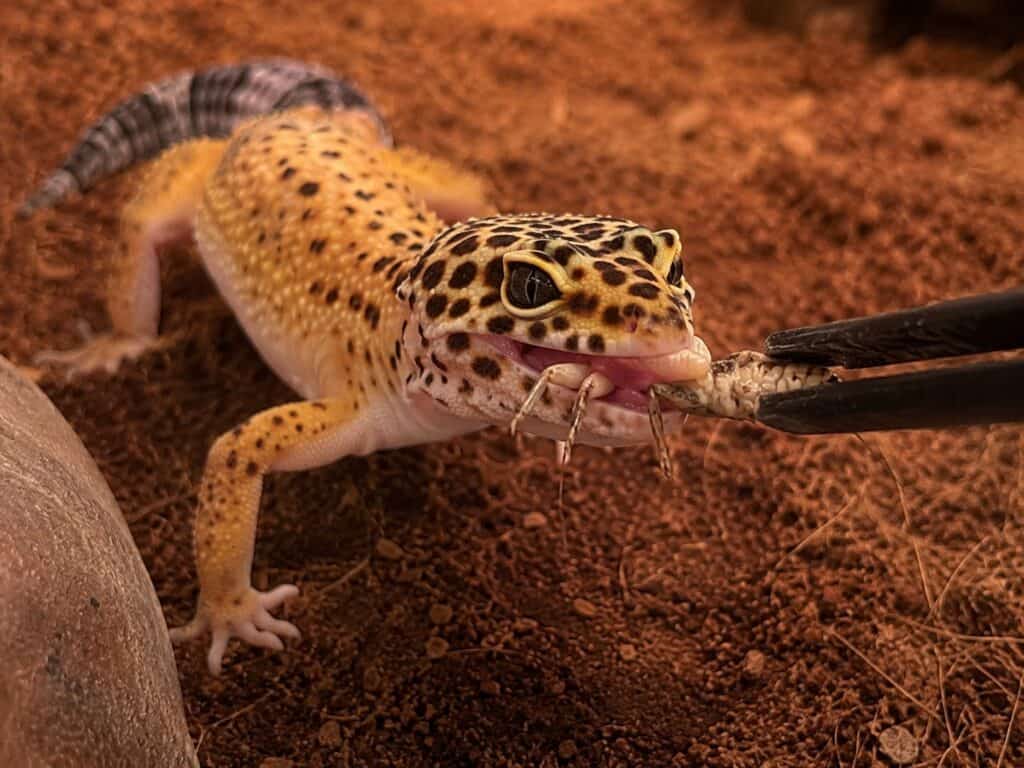
Insectivore geckos eat only live insects. No fruit, no commercial paste diets, no vegetables. Their digestive systems are built for protein and fat from bugs. The most popular insectivore pet geckos include leopard geckos, african fat tailed geckos, tokay geckos, and house geckos. If you keep any of these species, their entire diet is live feeder insects plus calcium and vitamin supplements.
Omnivore geckos eat a mix of commercial gecko diet (meal replacement powder mixed with water), fruit, and live insects. Crested geckos, gargoyle geckos, day geckos, and mourning geckos all fall into this category. For these species, a commercial diet like Pangea or Repashy forms the nutritional base, with insects offered a few times per week as a protein supplement.
Feeding fruit to a leopard gecko or skipping insects entirely for a crested gecko are both common mistakes. Know your species, feed accordingly.
Best Feeder Insects for Geckos
If you’re wondering what do geckos eat on a daily basis, for most species the answer is some combination of these feeder insects.
Dubia roaches are the top choice for most gecko keepers. They’re high in protein, low in fat, easy to gut load, and they don’t smell, chirp, or escape the way crickets do. If you can get them, use them as your primary feeder.
Crickets are the classic option. They’re cheap and widely available at pet stores. The downsides are real though. They’re noisy, they escape, they die quickly, and they smell terrible. Still, they work fine nutritionally when gut loaded and dusted.
Black soldier fly larvae are naturally high in calcium, which is unusual for a feeder insect. They’re a great staple or rotation feeder, especially for species with high calcium demands.
Mealworms are okay for adult geckos but should be avoided for juveniles and smaller species. The chitin shell is tougher to digest and carries a higher impaction risk for small geckos. Offer them as part of a rotation, not as the sole feeder.
Hornworms and silkworms are excellent supplemental feeders. They’re soft, hydrating, and most geckos love them. They don’t keep well long-term, so buy them as needed.
Waxworms are high in fat. Think of them as gecko candy. They’re useful for underweight geckos that need to gain mass, but they shouldn’t be a regular part of the diet. Geckos can become addicted to waxworms and refuse everything else.
For tiny gecko species like mourning geckos, flightless fruit flies and pinhead crickets are the right size. Standard crickets and dubia roaches would be too large.
The sizing rule applies across all species: the feeder insect should be no wider than the space between your gecko’s eyes.
What Do Omnivore Geckos Eat Besides Insects?
Crested geckos, gargoyle geckos, mourning geckos, and day geckos all eat commercial gecko diet as their nutritional base. Brands like Pangea and Repashy make meal replacement powders that you mix with water to a paste consistency. These provide a balanced mix of protein, fruit, vitamins, and minerals.
Offer the prepared diet in a small cup or bottle cap, ideally mounted on the enclosure wall for arboreal species. Replace it every 24 to 48 hours. Live insects should be offered two to three times per week on top of the commercial diet for extra protein and enrichment.
Some omnivore geckos also eat small amounts of fresh fruit. Mashed banana, papaya, and mango are common options. But fresh fruit alone isn’t nutritionally complete. It’s a supplement to the commercial diet, not a replacement. Skip citrus fruits entirely since they’re too acidic.
If you keep a crested gecko, we have a detailed breakdown of exactly how much and how often to feed in our crested gecko diet schedule article.
Gut Loading and Supplementation
Knowing what do geckos eat is only half the equation. How you prepare that food matters just as much.
Gut loading means feeding your feeder insects nutritious food 24 to 48 hours before offering them to your gecko. An unfed cricket is basically an empty shell of chitin with minimal nutritional value. Feed your insects fresh vegetables like carrots, squash, and leafy greens, or a commercial gut load diet. Whatever the insect eats passes along to your gecko.
Calcium supplementation is non-negotiable for every gecko species. Without adequate calcium and vitamin D3, geckos develop metabolic bone disease (MBD), which causes soft bones, jaw deformities, tremors, and shortened lifespan. It’s one of the most common and most preventable health problems in captive geckos.
For insectivore geckos, dust feeder insects with calcium powder at every feeding. Use calcium with D3 if you’re not providing UVB lighting. Add a multivitamin dust once or twice per week. For a detailed look at how this works in practice, check out our leopard gecko calcium schedule.
For omnivore geckos, most commercial diets already include calcium and vitamins. Still, dust live insects with calcium when you offer them, especially for breeding females that have higher calcium demands.
Foods to Never Feed a Gecko
Some foods are genuinely dangerous regardless of species.
Fireflies and lightning bugs are lethal. Even a single firefly can kill a gecko. If you live somewhere with fireflies, never let them near your enclosure. Wild-caught insects of any kind carry parasites, pesticides, and diseases. Only use commercially bred feeder insects. Citrus fruits are too acidic for any gecko species. Avocado is toxic. Vegetables and salads should never be offered to insectivore geckos since they can’t digest plant matter properly.
Don’t feed insects that are too large. Oversized feeders cause choking and impaction. Stick to the eye-spacing rule every time.
Tracking What Your Gecko Eats
Geckos are subtle when something is wrong. A gecko that’s slowly eating less over several weeks might not look any different until weight loss becomes visible. By then you’re already behind.
Logging feedings, even just a quick note of what was offered and whether your gecko ate, builds a pattern over time that makes problems obvious early. The Exotic Reptile Care app lets you track feedings, set supplement reminders, and monitor weight for every gecko in your collection. When you’re keeping a species that lives 10 to 20 years, that data adds up to a real advantage.
Feed for the Species, Not the Trend
What do geckos eat comes down to species. Insectivore geckos get live insects, gut loaded and dusted, on a consistent schedule. Omnivore geckos get commercial gecko diet plus insects for protein. Both need calcium supplementation. Both benefit from variety in their feeder rotation. Keep it simple, keep it consistent, and your gecko will eat well for years.
For species-specific feeding details, explore our care guides for the african fat-tailed gecko and mourning gecko.
What do geckos eat: frequently asked questions
What do geckos eat in the wild?
Most wild geckos are insectivores that hunt live prey like crickets, moths, roaches, spiders, and small invertebrates. Some species also lick nectar, tree sap, and overripe fruit, which is why omnivores like crested and day geckos eat fruit in captivity. What geckos eat always comes down to species, so the wild diet of a leopard gecko looks very different from that of a crested gecko.
Can leopard geckos eat fruit or vegetables?
No. Leopard geckos are strict insectivores, and their digestive systems can’t process plant matter. Feeding fruit or vegetables to a leopard gecko is a common mistake that offers no nutrition and can cause digestive problems. Their entire diet is live feeder insects, gut-loaded and dusted with calcium. Save the fruit for omnivore species like crested and gargoyle geckos.
What is the best feeder insect for geckos?
Dubia roaches are the top pick for most keepers, since they’re high in protein, low in fat, easy to gut load, and don’t smell or escape like crickets. Black soldier fly larvae are excellent too because they’re naturally high in calcium. Crickets work fine nutritionally but are noisy and messy. Rotating feeders gives the best nutritional variety.
How often should I feed my gecko?
It depends on species and age. Juvenile insectivores like young leopard geckos eat daily, while adults drop to every two to three days. Omnivore geckos should have commercial diet available at all times, replaced every 24 to 48 hours, with live insects offered two to three times a week. Match portions to what the gecko finishes and remove uneaten insects.
What should you never feed a gecko?
Never feed fireflies or lightning bugs, since even one can be lethal. Avoid all wild-caught insects because of parasites and pesticides, skip citrus fruit and avocado entirely, and never offer vegetables or salad to insectivore species. Also avoid feeders wider than the space between the gecko’s eyes, since oversized prey causes choking and impaction.
Do all geckos need calcium supplements?
Yes, every gecko species needs calcium. Without enough calcium and vitamin D3, geckos develop metabolic bone disease, one of the most common and preventable problems in captivity. Dust insects with calcium at feedings, use calcium with D3 if you don’t provide UVB, and add a multivitamin once or twice a week. Even omnivores on fortified commercial diets benefit from dusted insects.
How do I keep track of feeding across several geckos?
Geckos hide problems well, so a slow decline in appetite is easy to miss until weight loss shows. Logging what was offered and whether it was eaten builds a pattern that flags trouble early, which matters more when you keep multiple animals. The Exotic Reptile Care app tracks feedings, sets supplement reminders, and monitors weight per gecko, and it fits naturally into a consistent care routine across a collection.