Keeping one reptile is pretty manageable. You remember to feed it, you spot clean when you see something gross, and you check the temps when you think about it. But the moment you add a second animal, or a third, things start slipping. You forget who ate last, you realize the water bowl has been dry since yesterday, and the UVB bulb burned out two weeks ago without you noticing. A reptile care routine is what separates keepers who stay on top of things from keepers who are constantly playing catch-up.
The good news is that building a routine doesn’t require a spreadsheet or a biology degree. It just takes a little structure upfront so the daily and weekly stuff becomes automatic.
Start With the Daily Non-Negotiables
Every reptile, regardless of species, needs a few things checked every single day. These checks take about five minutes per enclosure once you get used to them, and they prevent the kind of slow-building problems that turn into vet visits.
First, check your temperatures. Glance at the warm side and cool side readings. If you’re using a thermostat (and you should be), this is usually just a quick confirmation. But thermostats can malfunction, probes can shift, and heat bulbs burn out. A basking spot that dropped 15 degrees overnight is a problem you want to catch today, not next week when your bearded dragon stops eating.
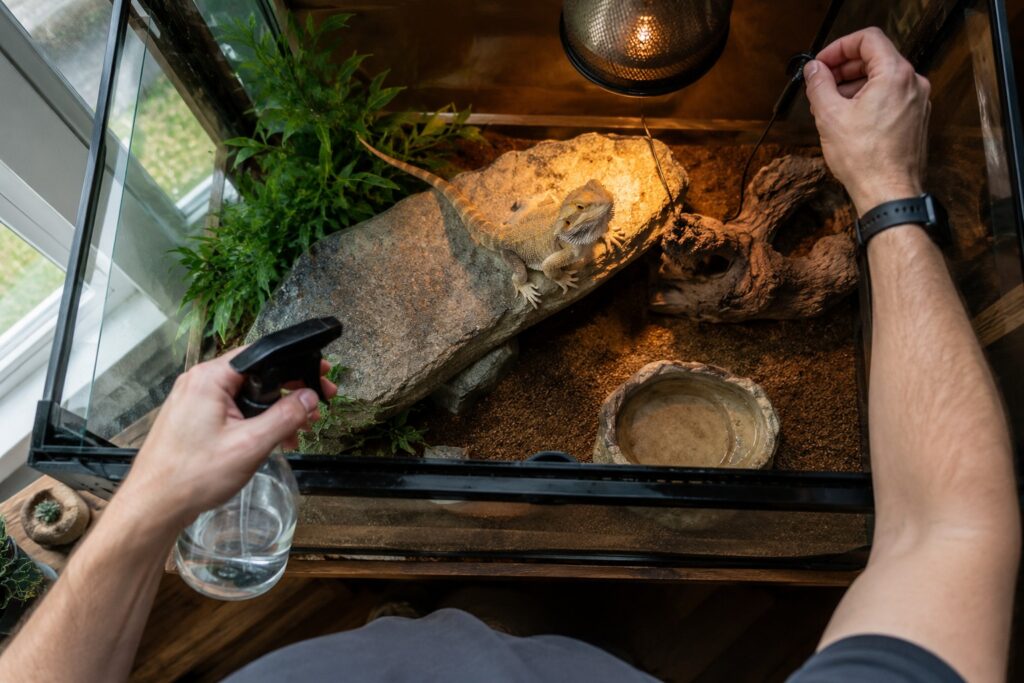
Second, check water. Fresh water daily, no exceptions. Reptiles tip bowls, soak in them, and sometimes defecate in them. If the water looks questionable, dump it and refill. This takes 30 seconds.
Third, spot clean. Pick up any visible waste, uneaten food, or shed skin pieces. Leaving waste in the enclosure doesn’t just smell bad. It grows bacteria and raises humidity in ways you don’t want. A quick spot clean keeps things manageable so your deep cleans are easier.
That’s it for daily tasks. Temperature, water, spot clean. Three things. If you do nothing else, do those three.
Build a Weekly Schedule Around Your Animals
The weekly stuff is where most keepers lose track, because it’s not urgent enough to feel like it needs to happen right now, but it’s too important to skip entirely.
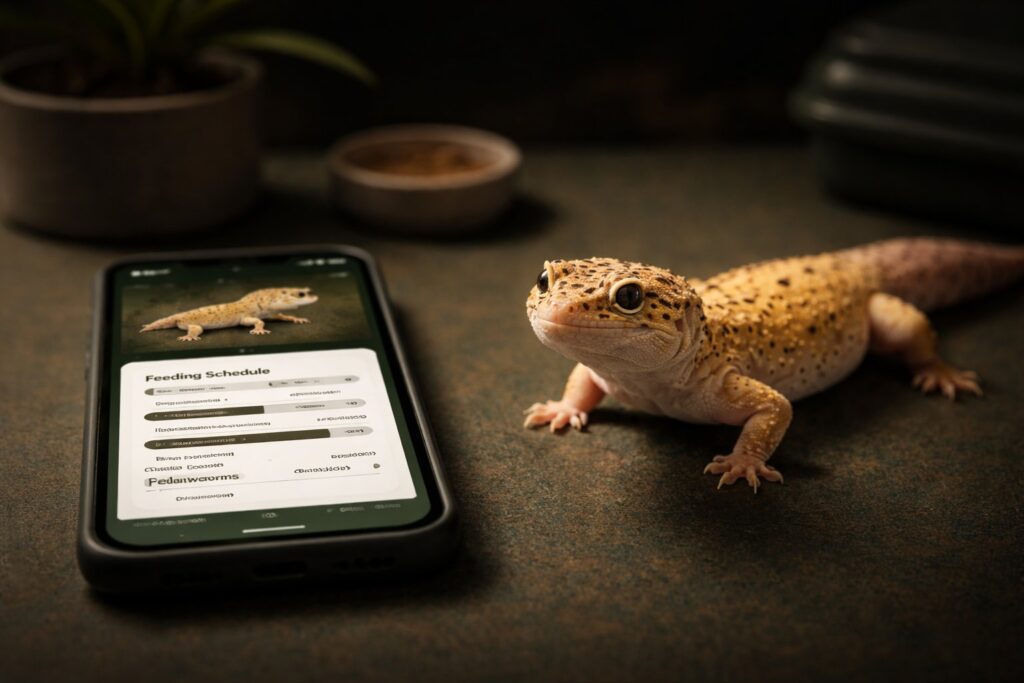
Feeding is the big one. Different species eat on different schedules. An adult ball python eats every 10 to 14 days. A juvenile bearded dragon eats daily. A leopard gecko eats every two to three days. If you keep multiple species, these schedules overlap in confusing ways, and after a couple of weeks you’re second-guessing whether you fed the corn snake on Tuesday or last Tuesday.
Write it down somewhere. A notebook, a whiteboard next to the enclosures, a notes app on your phone. Whatever you’ll actually look at. The format doesn’t matter nearly as much as the consistency.
Weekly is also when you should be checking humidity levels more carefully, especially for tropical species like crested geckos or ball pythons. Quick daily glances at the hygrometer help, but once a week take a closer look at the substrate moisture, mist hide conditions, and whether your humidity is holding overnight or crashing when the heat kicks on.
The Monthly and Seasonal Tasks People Forget
Monthly tasks are where things really fall through the cracks. Deep cleaning the enclosure, replacing substrate, checking that UVB bulbs are still putting out adequate output (they degrade long before they burn out), and weighing your animals.
Weighing is one of the most underrated things you can do. A reptile that’s slowly losing weight over two months looks fine day to day. You won’t notice until it’s obvious, and by then the problem has been going for a while. Weigh monthly, write it down, and compare. A kitchen scale accurate to one gram works perfectly for geckos and small snakes. For bigger animals like adult bearded dragons, a small postal scale does the job.
Seasonally, think about things like brumation prep for bearded dragons in the fall, adjusting misting frequency as your home’s humidity changes with the seasons, and swapping out UVB bulbs every six months even if they still light up. That bulb might look fine but it could be putting out almost zero UVB.
How to Handle a Reptile Care Routine With Multiple Animals
Once you’re keeping three or more reptiles, especially across different species, individual memory stops being reliable. You need a system.
Some keepers use a whiteboard with a grid, one row per animal, columns for feeding, cleaning, shedding, and weight. Others use a spreadsheet. Both work, but they require you to physically go update them, and it’s easy to forget when you’re rushing out the door.
The most practical approach for most keepers is something you already have in your pocket. The Exotic Reptile Care app lets you set up individual profiles for each reptile with custom reminders for feeding, cleaning, misting, weighing, and vet visits. You log a feeding and it records the date, food type, and whether the animal accepted or refused. You can track shed cycles, weight trends, and see everything on a timeline. It basically turns your phone into the care log you always meant to keep but never did.
A Simple Reptile Care Routine Template
If you want a starting point, here’s a basic framework you can adjust for your specific animals.
Every morning: check temps and humidity, refresh water, spot clean any waste. This should take five minutes total for a small collection.
Feeding days: feed according to each animal’s schedule, log what you fed and whether they ate. Note any refusals because those matter more than you think, especially if they start stacking up.
Once a week: deeper humidity check, clean and disinfect water dishes properly, check that all heating and lighting equipment is working, and inspect each animal briefly for any signs of stuck shed, weight changes, or unusual behavior.
Once a month: weigh every animal, deep clean at least one enclosure on rotation, check UVB output if you have a UV meter, and review feeding logs to make sure everyone’s eating consistently.
Twice a year: replace UVB bulbs, do a full substrate swap in non-bioactive enclosures, and consider scheduling a wellness check with a reptile vet, especially for animals over five years old. The ARAV vet directory can help you find a reptile-savvy vet in your area.
The Routine Is the Easy Part
Setting up a reptile care routine takes maybe 20 minutes of thought. The hard part is sticking with it for the first two weeks until it becomes a habit. After that, it’s just what you do. You walk into the reptile room, you check temps, you check water, you clean up anything messy, and you move on with your day. The animals stay healthier, you catch problems earlier, and you spend less time stressing about whether you forgot something. That’s the whole point.