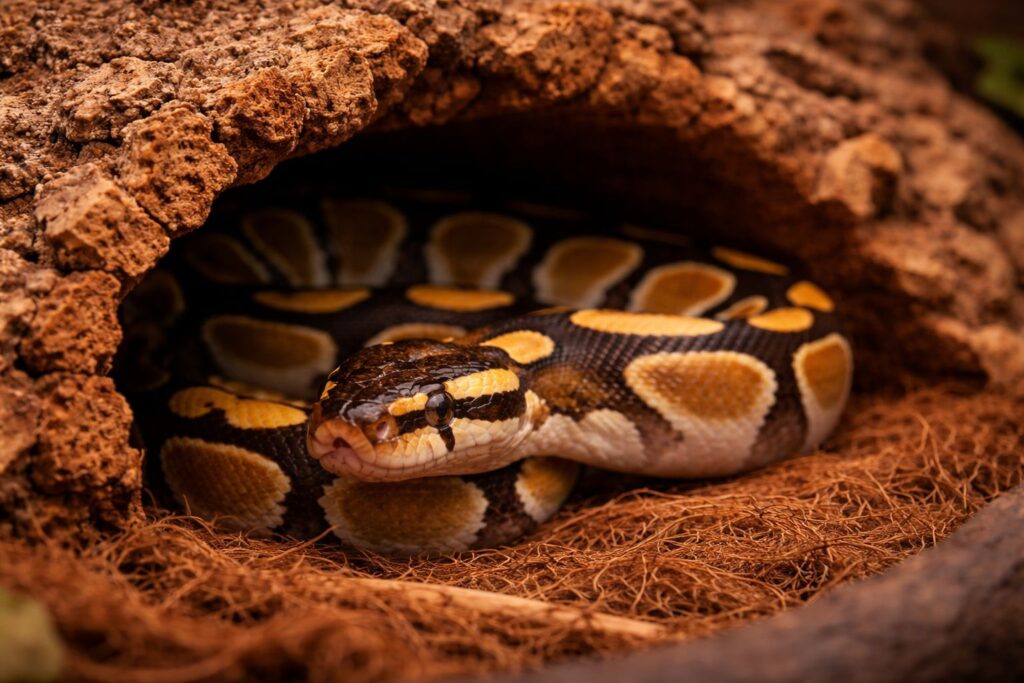
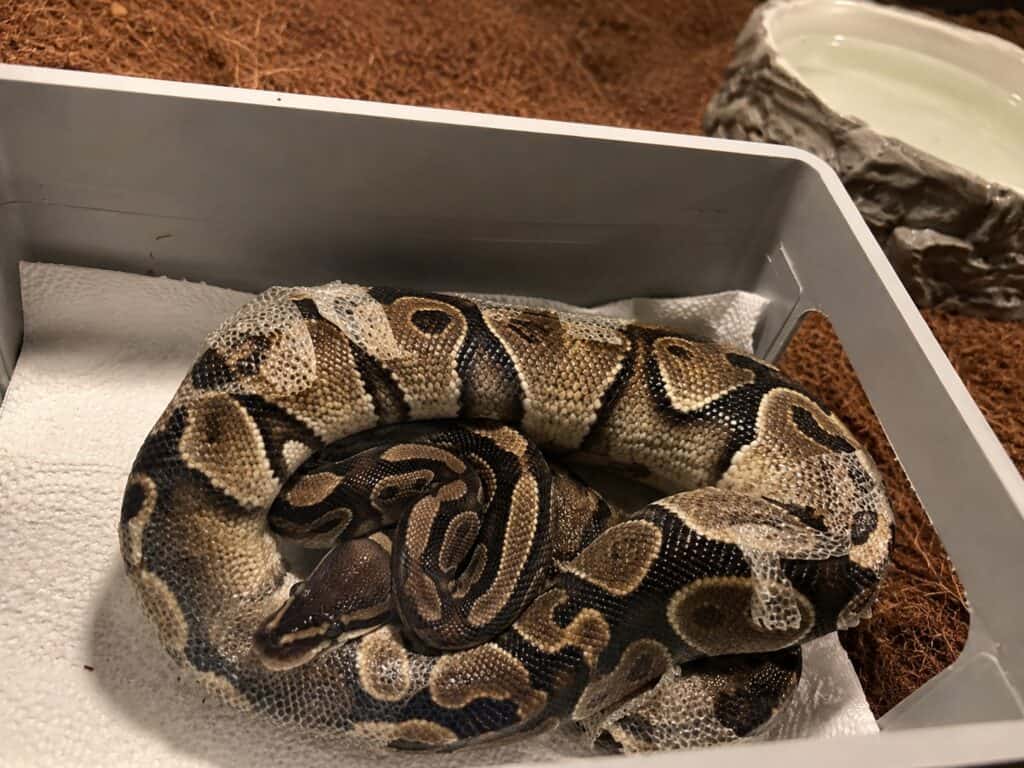
You check on your ball python after a shed and instead of finding a clean one-piece skin in the enclosure, there are torn pieces scattered around and patches of old skin still clinging to the snake’s body. Ball python stuck shed is one of the most common problems keepers deal with, especially during winter or in dry climates. The good news is that most stuck sheds are easy to fix at home if you handle them correctly. The bad news is that a lot of the advice floating around online, like forcefully pulling skin off or dunking your snake in water, can make things worse.
Why Ball Python Stuck Shed Happens
In a perfect shed, the old skin separates from the new layer underneath in one clean piece. Your ball python rubs its nose on something rough to get the process started, then crawls out of the old skin like pulling off a sock inside out. The whole thing takes a couple of hours.
Stuck shed happens when that separation doesn’t go smoothly. The number one cause is low humidity. Ball pythons need a baseline humidity of 60 to 70 percent at all times, and ideally 70 to 80 percent during the shed cycle. If your enclosure is sitting at 40 to 50 percent, the skin dries out before it can fully detach and you end up with pieces stuck on the body.
Other common causes include dehydration (if your snake isn’t drinking enough or the water bowl is too small), temperatures that are too low on the warm side, and stress from overhandling during the pre-shed phase. Some ball pythons are just inconsistent shedders too. Even with perfect husbandry, you might get the occasional bad shed. One rough shed every now and then isn’t a crisis. Repeated stuck sheds mean something in the setup needs fixing.
Where to Check for Ball Python Stuck Shed
Not all stuck shed is equally urgent. A small patch on the body will usually come off during the next shed cycle on its own. But certain areas need attention right away.
The eye caps are the first thing to check. Ball pythons shed a thin layer of skin over each eye, and if those caps don’t come off, they can build up over multiple shed cycles and eventually cause eye infections or vision problems. Look at your snake’s eyes after every shed. They should be clear and glossy. If they look cloudy or dull, there might be a retained eye cap.
The tail tip is another danger zone. Old skin that stays wrapped around the tail can dry out and constrict blood flow, eventually causing the tip to die. Check the last few inches of the tail carefully.
Anywhere skin is stuck around a tight area, like where the body narrows near the neck or the vent area, deserves attention. Skin stuck loosely on the main body is the least urgent, but you should still deal with it before the next shed cycle rolls around.
5 Safe Methods to Remove Ball Python Stuck Shed
Here’s what actually works, ranked from least stressful to most involved.
1. Bump up the humidity and wait. If the stuck shed is minor, sometimes just raising the enclosure humidity to 80 percent for a day or two is enough. The moisture softens the retained skin and your snake rubs it off naturally. This is the lowest stress option and should be your first move for small patches on the body.
2. Add a damp hide. Place a plastic container with a hole cut in the lid inside the enclosure, lined with damp sphagnum moss or wet paper towels. Put it on the warm side. The snake will use it like a personal sauna. Leave it in for a few days and check whether the stuck pieces have come off. This works surprisingly well and most ball pythons will actually seek it out.
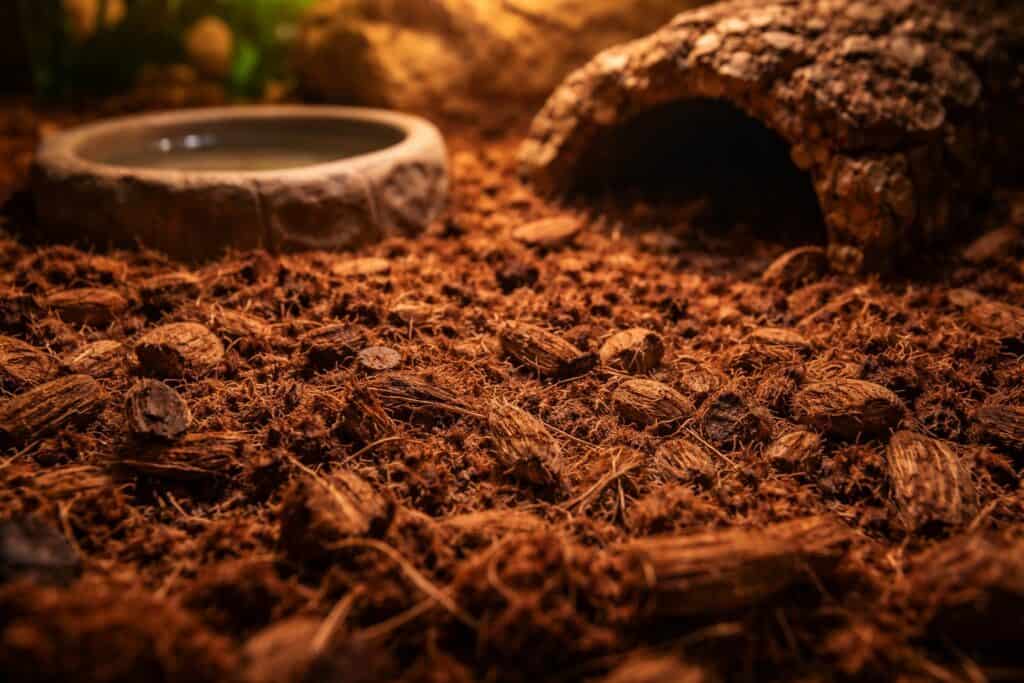
3. The snake sauna method. This is the go-to for more stubborn stuck shed. Take a plastic storage bin with a locking lid, line the bottom with two inches of damp coconut husk chips, and add warm water (85 to 90 degrees Fahrenheit) until the substrate is thoroughly moist but not flooded. Place your snake inside, close the lid, and drape a towel over the bin so it feels dark and secure. Leave the snake for 15 to 20 minutes. The trapped humidity loosens the skin and the texture of the coconut chips helps rub it off as the snake moves around. This method is less stressful than soaking because the snake isn’t sitting in open water.
4. A lukewarm soak. Fill a shallow container with water around 85 degrees, just deep enough to cover the bottom third of the snake’s body. Let the snake sit in it for 15 to 20 minutes. After soaking, you can gently work at loose pieces with a damp cloth or your fingers. Never pull hard. If the skin doesn’t slide off easily, it needs more soaking time. Some ball pythons tolerate soaking fine. Others hate it and get visibly stressed, thrashing around or trying to escape. If your snake is panicking, skip this method and use the sauna instead.
5. Damp cloth assist. For small stubborn patches, wet a soft cloth with warm water, gently wrap it around the area with stuck shed, and hold it for a few minutes to soften the skin. Then carefully rub in the direction the skin would naturally peel. This works well for body patches but don’t use it around the eyes or head. Those areas are too delicate for manual removal.
Dealing With Stuck Eye Caps
Retained eye caps deserve their own section because they’re the one type of ball python stuck shed that can cause real damage if mishandled.
After every shed, look at your snake’s eyes. Clear and shiny means the caps came off. Dull, cloudy, or wrinkled-looking means they’re likely retained. Sometimes you can see the edge of the old cap lifting slightly.
Do not try to peel eye caps off with tweezers or your fingers. The risk of damaging the eye underneath is too high. Instead, try the humidity method first. Raise humidity to 80 percent and provide a damp hide for several days. Many retained eye caps will come off on their own with enough moisture.
If they don’t budge after a few days of high humidity, that’s a vet visit. A reptile vet can safely remove retained eye caps using the right tools and technique. This is not something worth attempting at home. One wrong move and you’re looking at a scratched cornea or worse. The ARAV directory can help you locate a reptile vet near you.
How to Prevent Ball Python Stuck Shed
Prevention comes down to three things: humidity, hydration, and tracking.
Keep your humidity at 60 to 70 percent as a baseline. During shed cycles, push it to 70 to 80 percent. If you’re using a screen-top tank, cover 70 to 80 percent of the screen with aluminum foil or a damp towel to stop humidity from escaping. Switch to a moisture-holding substrate like coconut fiber or cypress mulch if you’re using something dry like aspen. Add a large water bowl on the warm side of the enclosure so evaporation helps maintain ambient moisture.
Make sure your snake always has access to a water bowl big enough to soak in if it wants to. Ball pythons that sit in their water bowl frequently are often doing it because the enclosure humidity is too low. That’s not normal behavior, it’s a cry for help.
The tracking piece is where a lot of keepers fall short. If you log shed dates and note whether each shed came off clean or not, patterns become obvious fast. Maybe every winter shed is a problem because your home heating dries the air out. Maybe the stuck sheds started after you switched substrate. The Exotic Reptile Care app lets you log shed dates, track humidity notes, and set reminders to bump up moisture when the next shed is approaching. It takes the guesswork out of a process that shouldn’t be stressful for you or your snake.
When Stuck Shed Means Something Bigger
If your ball python is getting stuck sheds consistently despite good humidity and hydration, something else might be going on. Mites can interfere with shedding because they irritate the skin and cause dehydration. Check around the eyes, under the chin, and in the water bowl for tiny black or red dots. Respiratory infections, parasites, and skin infections can also mess with shedding. If you’re seeing repeated bad sheds along with other symptoms like wheezing, lethargy, or loss of appetite, get to a vet.
A single bad shed is a husbandry hiccup. Multiple bad sheds in a row is a pattern, and patterns need investigating.