The african fat tailed gecko is one of the most underrated pet reptiles out there. They’re calm, easy to handle, and have surprisingly simple care requirements compared to a lot of other exotic species. If you’ve heard of leopard geckos but wanted something a little different, the african fat tailed gecko is the natural next step. They share a lot of similarities with leos but have their own personality and a few key care differences that matter.
This guide covers everything you need to set up a proper enclosure, feed the right diet, and keep your gecko healthy for the long haul.
African Fat Tailed Gecko Overview
African fat tailed geckos (Hemitheconyx caudicinctus) come from the dry savannas and scrublands of West Africa, specifically countries like Ghana, Togo, Nigeria, and Cameroon. They’re nocturnal, ground-dwelling lizards that spend their days hiding in rock crevices and burrows, coming out at dusk and night to hunt insects.
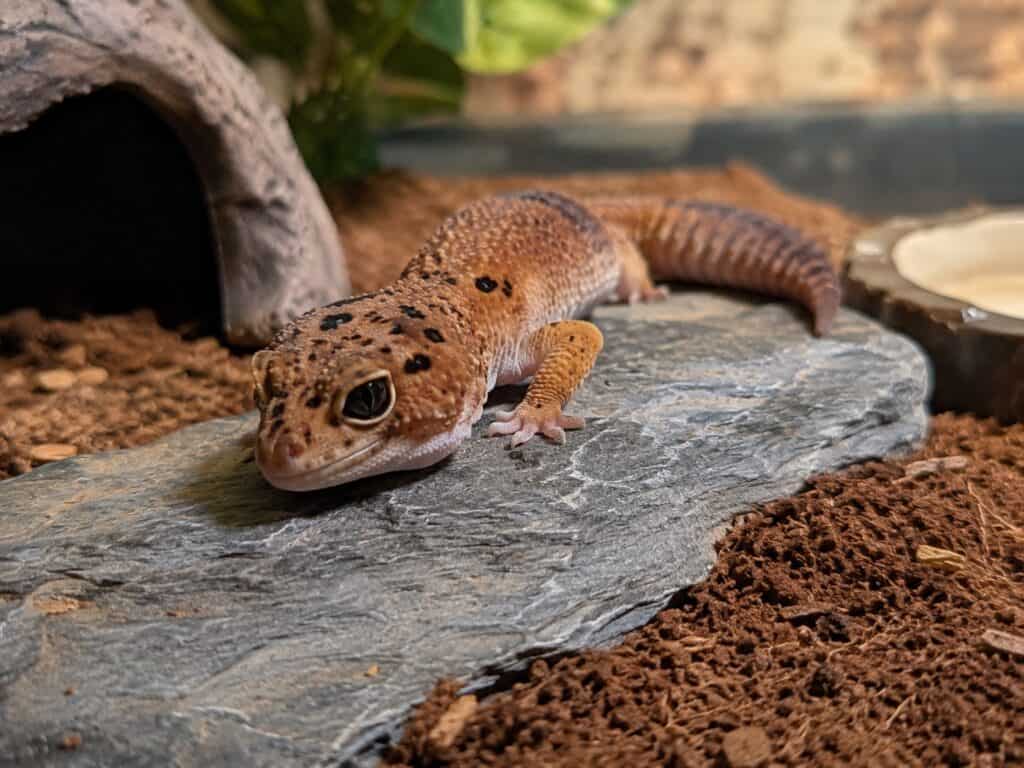
Adults reach about 7 to 9 inches in total length, with females generally being a bit smaller than males. They’re stocky and compact, with a fat tail that serves as an energy reserve, similar to how a camel stores fat in its hump. A plump, rounded tail is a sign of a healthy, well-fed gecko. A thin or bony tail means something is off.
Lifespan in captivity is impressive. With proper care, african fat tailed geckos commonly live 15 to 20 years, with some reaching 25. That’s a real commitment, so make sure you’re ready for it before bringing one home.
Temperamentwise, these geckos are about as docile as it gets. They’re slower and more deliberate than leopard geckos, and most tolerate handling well once they’re settled in. They rarely bite, and when they do it’s usually because they mistook your finger for food during feeding time.
Enclosure Setup for an African Fat Tailed Gecko
The minimum enclosure size for a single african fat tailed gecko is 36 by 18 by 18 inches. A 40 gallon long tank meets this requirement and is widely available. Front-opening enclosures are preferred because opening from above can startle a ground-dwelling gecko.
Bigger is always better. If you have the space, a larger enclosure gives you more room to create a proper temperature gradient and add enrichment. These geckos are more active than most people expect, especially at night, and they’ll use the extra space.
Do not house two males together. They will fight. A single gecko per enclosure is the safest approach for pets. Cohabitation can work with a male-female pair or female groups in larger enclosures, but it introduces risks like breeding stress and food competition. For most keepers, solo housing is the way to go.
For substrate, coconut fiber, a topsoil and play sand mix, or orchid bark all work well. These hold some moisture without staying soggy, which helps maintain the moderate humidity african fat tailed geckos need. Avoid loose calcium sand, which can cause impaction if ingested. Paper towels work fine too, especially for juveniles or quarantine setups, but they don’t hold humidity well.
Provide at least three hides: one on the warm side, one on the cool side, and one humid hide stuffed with damp sphagnum moss. The humid hide is critical. African fat tailed geckos need it for clean sheds, and without one you’ll end up dealing with retained skin on toes and tail tips regularly.
Add some flat rocks, cork bark, and low branches for climbing. Despite being terrestrial, they’re capable climbers and will use elevated surfaces if you provide them. A shallow water dish with clean fresh water should always be available.
Temperature and Lighting
African fat tailed geckos need a clear temperature gradient across the enclosure. The warm side should sit around 88 to 92 degrees Fahrenheit at the floor level. The cool side should be in the mid to upper 70s. Nighttime temps can drop to about 72 to 75 degrees.
Under tank heat mats are the traditional heating method and they work well for this species, especially in rack systems or glass tanks. If you use a heat mat, it must be on a thermostat. Every time. An unregulated heat mat can easily hit 110+ degrees and burn your gecko through the glass.
Overhead heating with a low-wattage halogen bulb is the more modern approach and creates a more natural heat gradient by warming the air and surfaces from above. Either method works as long as temperatures are correct and controlled.
These geckos are nocturnal so they don’t require intense lighting. However, they do benefit from a consistent light cycle, about 10 to 12 hours of light per day. Ambient room light or a low-output LED can establish this cycle.
UVB is a topic with evolving opinions. African fat tailed geckos can technically survive without it if they receive D3 supplementation through their diet. But more and more experienced keepers and vets recommend low-output UVB (a 5 to 7 percent T5 tube like the Arcadia ShadeDweller) because it supports immune function, digestion, and overall health in ways supplementation alone doesn’t fully replicate. If you can add it, do it. If not, make sure your calcium supplement includes D3.
Use digital thermometers with probes on both sides of the enclosure. Don’t rely on stick-on analog gauges. They’re consistently inaccurate.
Humidity Requirements
This is one of the key differences between african fat tailed geckos and leopard geckos. AFTs need slightly higher humidity, in the range of 50 to 70 percent. Leopard geckos do fine at 30 to 40 percent, but that’s too dry for a fat tail.
The humid hide handles most of the heavy lifting here. Keep the sphagnum moss inside it damp (not soaking wet) and replace it weekly to prevent mold. The ambient humidity in the rest of the enclosure doesn’t need to be tropical, just moderate.
If humidity drops too low, light misting of the substrate on one side of the enclosure bumps it back up. Keep the other side drier so your gecko can choose where to sit based on what it needs. A digital hygrometer with a probe in the middle of the enclosure is the easiest way to monitor.
For anyone who’s dealt with humidity challenges before, the principles are similar to what we covered in our ball python humidity guide, just at a lower target range.
What to Feed an African Fat Tailed Gecko
African fat tailed geckos are insectivores. Their entire diet is live insects. No fruit, no greens, no commercial pellets. Just bugs.
The best staple feeders are dubia roaches, crickets, and mealworms. Rotate between them to keep the diet varied. Black soldier fly larvae are a great addition since they’re naturally high in calcium. Hornworms and silkworms make excellent supplemental feeders, soft bodied and hydrating. Waxworms are high in fat and should only be offered as an occasional treat, not a staple.
All feeder insects should be appropriately sized, no wider than the space between your gecko’s eyes. Gut load your feeders 24 to 48 hours before offering them. This means feeding the insects nutritious food (vegetables, commercial gut load diets) so those nutrients pass along to your gecko.
Feeding schedule: juveniles should eat daily. Adults do well on 3 to 4 feedings per week. Offer as many insects as your gecko will eat in about 10 to 15 minutes, then remove uneaten feeders. Leftover crickets in particular can stress or even bite your gecko at night.
Dust feeders with calcium powder at every feeding. If you’re not providing UVB, use calcium with D3. If you have UVB, plain calcium works for most feedings with D3 added once or twice a week. Add a multivitamin supplement once a week.
Some keepers also leave a small dish of plain calcium powder in the enclosure for the gecko to lick as needed. It’s not required but it doesn’t hurt.
Tracking Feeding and Health
African fat tailed geckos are subtle when something is wrong. They won’t show obvious distress until a problem is already advanced. The tail is your best early indicator. A fat, plump tail means good health and nutrition. A visibly thinner or bony tail means your gecko is burning through its fat reserves, and that’s a red flag.
Tracking feedings, sheds, and weight over time is the most reliable way to catch problems before they get serious. If you notice your gecko eating less, shedding irregularly, or slowly losing weight, those patterns tell you something needs to change.
The Exotic Reptile Care app is built for exactly this. You can log every feeding, track weight with growth charts, monitor shed cycles, and set reminders for supplementation and enclosure maintenance. For a species that hides problems well, having that data on hand makes a real difference.
Common Health Issues
Most health problems in african fat tailed geckos come from incorrect husbandry, not from the gecko being fragile.
Stuck shed is the most common issue. It usually means humidity is too low or the humid hide isn’t damp enough. Retained shed around the toes can cut off circulation and lead to lost toes if not addressed quickly. If you notice stuck shed, soak the gecko in shallow lukewarm water for 10 to 15 minutes, then gently work the skin off with a damp cotton swab. Prevent it by keeping the humid hide properly maintained.
Tail loss (autotomy) happens when the gecko is severely stressed, grabbed by the tail, or attacked by a cage mate. The tail will regenerate, but the new one looks different and won’t store fat as efficiently as the original. Handle gently and avoid grabbing the tail.
Parasites are worth watching for, especially in wild-caught animals. Symptoms include loose stools, weight loss despite normal feeding, and lethargy. A vet visit with a fecal exam is the best way to diagnose and treat. Always try to buy captive bred when possible.
Metabolic bone disease (MBD) results from insufficient calcium or vitamin D3. Signs include rubbery jaw, tremors, difficulty walking, and kinked spine. It’s preventable with proper supplementation and UVB. Once advanced, MBD is very difficult to reverse.
Respiratory infections can occur if the enclosure is too cold or too humid with poor ventilation. Signs include wheezing, mucus around the nose or mouth, and open-mouth breathing. Requires veterinary treatment.
Handling Your African Fat Tailed Gecko
African fat tailed geckos are one of the more handleable gecko species. They’re slow moving, rarely defensive, and most learn to tolerate or even seem to enjoy brief handling sessions.
Give a new gecko at least one to two weeks to settle in before attempting to handle. Let it eat consistently and explore its enclosure first. When you start handling, keep sessions short, around 5 to 10 minutes, and stay low to the ground or over a soft surface in case of a jump or fall.
Scoop from below rather than grabbing from above. Support the body and let the gecko walk from hand to hand. Never grab or restrain the tail. If the gecko seems stressed, vocalizes, or tries to flee, put it back and try again another day.
Is an African Fat Tailed Gecko Right for You?
If you want a gecko that’s handleable, quiet, relatively low maintenance, and genuinely beautiful to look at, the african fat tailed gecko checks every box. They’re a step up from leopard geckos in terms of humidity management, but still firmly in beginner-friendly territory.
They don’t need a massive enclosure, they don’t need complicated lighting setups, and they eat readily available feeder insects. The main commitment is consistency, keeping temperatures stable, maintaining the humid hide, and feeding on a regular schedule. If you want help staying on top of that routine, our leopard gecko calcium schedule article covers the general supplement principles that apply to AFTs as well.
Get the basics right and an african fat tailed gecko will reward you with 15 to 20 years of calm, low-drama companionship.
For a detailed care reference from a trusted source, ReptiFiles has a solid african fat tailed gecko care sheet worth reading.