One of the most common questions new ball python owners ask is “how often should I feed my snake?” And the answer is frustratingly simple: it depends on how old they are. A hatchling ball python and a five-year-old adult have completely different nutritional needs, and feeding them the same way is a fast track to problems. Getting your ball python feeding schedule by age dialed in correctly makes a huge difference in growth rate, body condition, and overall health.
Here’s what actually works at each stage.
Ball Python Feeding Schedule for Hatchlings: Birth to 6 Months
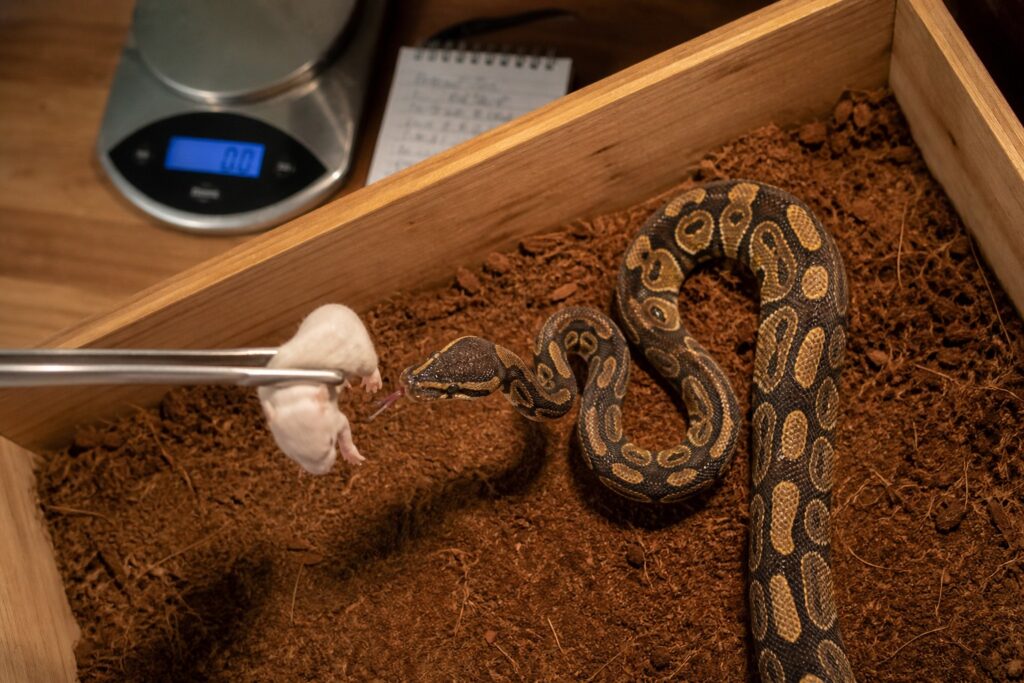
Hatchling ball pythons should eat every 5 to 7 days. At this stage, growth is rapid and consistent meals matter. Start with fuzzy mice or hopper mice, depending on the size of the hatchling. The prey should be roughly the same width as the widest part of your snake’s body, maybe just slightly larger.
Some hatchlings are tricky to get started. Ball pythons from certain morphs or bloodlines can be notoriously picky first feeders. If your hatchling refuses a thawed mouse, try a live hopper as a last resort, or try African soft fur rats which have a stronger scent. Once the snake is eating consistently, you can transition to frozen-thawed.
Don’t handle your hatchling for at least 48 hours after feeding. Their metabolism is working hard, and stress during digestion can lead to regurgitation, which sets you back weeks.
Juveniles: 6 Months to 1 Year
This is the stage where most keepers start bumping up prey size and spacing out feeds a little. Feed every 7 days with small adult mice or rat fuzzies. By the time your ball python hits 200 to 300 grams, you can start transitioning to rat pups.
The switch from mice to rats is something you want to do sooner rather than later. Ball pythons that eat mice their whole juvenile phase sometimes refuse rats later, and rats are the better long-term feeder for this species. They’re more nutritionally dense and you won’t need to feed multiple prey items per session once the snake is bigger.
Weigh your snake every two to three weeks during this stage. You should see steady, gradual weight gain. If weight stalls for more than a month and you’re feeding on schedule, check your husbandry. Warm side should be 88 to 92F, cool side around 76 to 80F. Low temperatures slow digestion and kill appetite.
Sub-Adults: 1 to 3 Years
This is where the ball python feeding schedule by age starts to shift more noticeably. Feed every 7 to 10 days with small to medium rats, depending on the snake’s size. A ball python in the 500 to 1000 gram range does well on small rats. Once they push past 1000 grams, move to medium rats.
A lot of keepers overfeed during this stage because the snake still seems eager. Ball pythons will eat if you offer food, but that doesn’t mean they need it. An overfed sub-adult ball python develops fat pads along the spine and can end up with fatty liver disease down the road, That’s hepatic lipidosis, and it’s a documented consequence of overfeeding captive reptiles. You want a body shape that’s roughly triangular when viewed from the front, not round like a sausage.
If your snake starts leaving meals or seems less enthusiastic, try stretching to 10 days between feeds. Some sub-adults naturally slow down as their growth rate declines, and that’s perfectly fine.
Adults: 3 Years and Older
Adult ball pythons need to eat less often than most people think. Every 10 to 14 days is plenty for a healthy adult, and some keepers go to every 14 to 21 days for large females that aren’t breeding. Offer a medium rat for most adults. Large males might only need a small rat every two weeks.
The biggest mistake with adult ball pythons is power feeding, keeping them on a juvenile schedule indefinitely. A 1500-gram adult does not need a medium rat every 7 days. That’s how you end up with an obese snake that develops health problems in its teens.
Adults also go through seasonal fasts more often than juveniles. A healthy adult ball python might refuse food for 4 to 8 weeks during winter months and lose barely any weight. If the snake is holding steady at a good body condition and staying active, don’t stress about it. Just keep offering every 10 to 14 days and they’ll eat when they’re ready.
Ball Python Feeding Schedule by Age: Why Prey Size Matters Too
Getting the frequency right is important, but prey size is just as critical. The general rule is prey should be 1 to 1.5 times the widest part of the snake’s body. Too small and the snake doesn’t get enough nutrition per meal. Too large and you risk regurgitation. Veterinary guidance on snake nutrition puts it similarly, with prey diameter kept close to the width of the snake’s head.
Here’s a rough guide:
- Hatchlings under 100g: fuzzy to hopper mice
- 100 to 200g: adult mice or rat pinkies
- 200 to 400g: rat fuzzies to rat pups
- 400 to 800g: weaned rats to small rats
- 800 to 1500g: small to medium rats
- 1500g and up: medium rats
These aren’t hard rules. Every snake is different, and body shape matters more than hitting an exact number on the scale. But they’re a solid starting point.
Why Tracking Feeds and Weight Changes Everything
The thing about a ball python feeding schedule by age is that it’s a guideline, not a law. Your individual snake might need adjustments based on its metabolism, activity level, and body condition. The only way to know if your schedule is working is to track what you’re feeding and how your snake’s weight responds over time.
When you log every feed, every refusal, and weigh your snake regularly, patterns jump out fast. Maybe your ball python always refuses the first meal after a shed. Maybe weight gain plateaus every winter. Maybe you realize you’ve been feeding a bit too often because weight is climbing faster than it should. The Exotic Reptile Care app makes this simple with feeding logs, weight charts, and reminders so you never have to guess when the last feed was or whether it’s time to size up prey.
Adjusting Your Ball Python Feeding Schedule as They Age
Don’t set a feeding schedule and forget about it. As your ball python grows through each life stage, the schedule needs to shift with it. The jump from hatchling to juvenile is pretty obvious because growth is visible week to week. But the transition from sub-adult to adult sneaks up on you. One day you realize your snake has been 1400 grams for six months and you’re still feeding it like it’s actively growing.
Check body condition regularly. Run your hand along the spine. If you can feel the vertebrae easily, the snake might be underweight. If the spine disappears under a layer of padding and the snake looks like a tube sock stuffed with golf balls, it’s time to cut back. A well-conditioned ball python has a gentle ridge along the spine with smooth, rounded sides.
There’s no single resource that beats knowing your specific snake’s weight trends and feeding response over months and years. That’s data only you can collect, and it’s what separates good keepers from great ones.
Ball python feeding schedule by age: frequently asked questions
How often should I feed my ball python at each age?
Hatchlings eat every 5 to 7 days, juveniles every 7 days, sub-adults every 7 to 10 days, and adults every 10 to 14 days. The pattern is simple: the older the snake, the less often it eats. Getting the ball python feeding schedule by age right is mostly about resisting the urge to keep an adult on a fast juvenile pace.
Can you overfeed a ball python?
Yes, and it’s one of the most common mistakes. Ball pythons will happily eat whenever food is offered, but that doesn’t mean they need it. An overfed snake develops fat pads along the spine and risks fatty liver disease. Aim for a gentle ridge along the spine with rounded sides, not a round, sausage-shaped body.
What size prey should I feed my ball python?
Prey should be about 1 to 1.5 times the width of the widest part of your snake’s body. Too small and the snake misses out on nutrition, too large and you risk regurgitation. Roughly, that means fuzzy mice for hatchlings, working up through rat pups and small rats to a medium rat for most adults. Body shape matters more than hitting an exact gram count.
How do I switch my ball python from mice to rats?
Start the transition once your snake reaches 200 to 300 grams, sooner rather than later. Snakes kept on mice through their whole juvenile phase often refuse rats later. If yours resists, try scenting the rat by rubbing it against a mouse, or offer a rat pup right after warming it well. Rats are more nutritious and mean fewer prey items per meal as the snake grows.
Is it normal for an adult ball python to stop eating?
Completely normal, especially in winter. A healthy adult can refuse food for 4 to 8 weeks and barely lose weight, since fasting is built into the species. As long as body condition holds and the snake stays active, keep offering every 10 to 14 days and it’ll eat when ready. Worry only if you also see weight loss, lethargy, or a visible spine.
How do I keep track of the schedule as my snake grows?
The schedule shifts through every life stage, and the sub-adult to adult transition sneaks up on keepers. Logging each feed, refusal, and weigh-in makes those transitions obvious instead of guessing. The Exotic Reptile Care app tracks feeding logs, weight charts, and reminders, so you know exactly when the last feed was and when it’s time to size up prey.