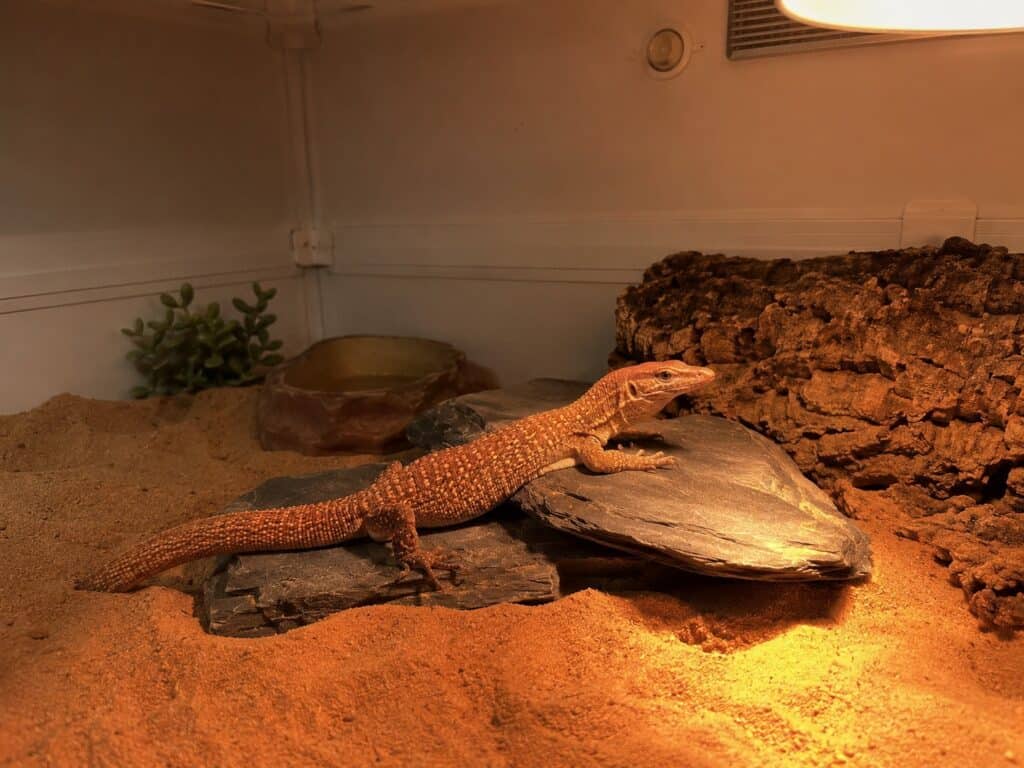
The ackie monitor is the gateway into monitor keeping for a lot of people, and for good reason. They’re small enough to house in a reasonable enclosure, hardy enough to tolerate some beginner mistakes, and intelligent enough to actually recognize their keeper and develop a personality. If you’ve been keeping geckos or bearded dragons and you want something with more presence, an ackie monitor is probably the next step.
But make no mistake, this is still a monitor lizard. They need serious heat, deep substrate for burrowing, strong UVB, and more space than most people expect for a lizard that only reaches 24 to 28 inches. This guide covers everything you need to set up a proper ackie monitor enclosure and keep your monitor healthy long term.
Here’s a quick reference for ackie monitor care specs before we get into the detail.
| Care Spec | Requirement |
|---|---|
| Adult size | 24 to 28 inches total length |
| Lifespan | 15 to 20 years |
| Minimum enclosure (single) | 4 x 2 x 2 ft, larger is better |
| Substrate depth | 12 to 18 inches minimum |
| Basking surface temp | 120 to 150°F |
| Cool side | 75 to 82°F |
| UVB | Mandatory, T5 HO 10 to 12 percent |
| Diet | Primarily insects, lean |
| Experience level | Intermediate (best first monitor) |
What Makes the Ackie Monitor Different
Ackie monitors (Varanus acanthurus), also called spiny-tailed monitors or ridge-tailed monitors, are native to the arid scrublands and rocky plains of northwestern and central Australia. They’re one of the smallest monitor species, topping out at about 24 to 28 inches total length including the tail. That’s roughly the size of a large bearded dragon, which makes them one of the few monitors you can realistically house indoors without building a walk-in enclosure.
Don’t let the size fool you though. Ackies are fast, curious, and constantly on the move. They dig, they forage, they climb, and they bask at temperatures that would cook most other pet reptiles. Their intelligence is noticeably different from geckos and snakes. Ackies learn routines, respond to their keeper, and can be trained to come out for feeding. Some become genuinely handleable over time with patient, consistent interaction.
Lifespan in captivity is 15 to 20 years with proper care. They come in two main color forms: red ackies and yellow ackies. Care requirements are the same for both.
Ackie Monitor Enclosure Setup
This is where most people underestimate what an ackie monitor needs. The minimum enclosure for a single adult is 4 feet long by 2 feet deep by 2 feet tall. If you can go larger, 5 or 6 feet long, your ackie will use every inch of it. These are active lizards that forage constantly and need room to move between temperature zones.
PVC enclosures are the best choice by far. They insulate well, which is critical when you’re trying to maintain a basking spot above 120 degrees without turning your entire room into a sauna. Glass tanks bleed heat and are hard to find in the sizes ackies need. Most keepers either buy a custom PVC enclosure or build one from PVC sheets. It’s more work upfront but it makes temperature management dramatically easier.
The enclosure needs to be sturdy. Ackies are strong diggers and they will push against lightweight walls, doors, and screen tops. Make sure everything is secure and escape-proof.
Deep Substrate Is Not Optional
This is the single most important thing that separates good ackie monitor care from bad. Ackies are obligate burrowers. In the wild they dig extensive burrow systems in the soil between rocks, and they rely on these burrows for thermoregulation, hydration, and security. Without deep substrate to dig in, an ackie monitor will be chronically stressed and will never behave naturally.
You need a minimum of 12 to 18 inches of substrate depth. Yes, really. Some experienced keepers go 24 inches. The substrate should be a mix that holds its shape when dug into, so the burrows don’t collapse. A 60/40 or 70/30 mix of organic topsoil and play sand works well. Some keepers add a small amount of clay to help the mix hold structure.
The top few inches of substrate should be dry. Below that, the substrate should be damp. Not wet, but noticeably moist. This creates a humidity gradient within the substrate itself. The surface is dry and arid like their natural habitat above ground, while the burrows below hold 60 to 80 percent humidity. This is how ackies stay hydrated in the wild, and it’s how they should stay hydrated in captivity.
Pour water directly into the substrate periodically (not from the surface down, but into the sides or deep into burrow openings) to maintain that moisture layer. A watering can with a long spout works well for this.
If you’ve built a bioactive enclosure before, the same clean-up crew principles apply here. Springtails and isopods will help manage waste in the deep substrate, though the hot basking zone will limit where they can survive.
Temperature: Hotter Than You Think
Ackie monitors need the hottest basking spot of any commonly kept pet reptile. The basking surface temperature should reach 120 to 150 degrees Fahrenheit. The only other common pet lizard that basks this hot is the uromastyx, a plant eater from North African and Middle Eastern deserts. Our uromastyx care guide covers that setup. Some experienced keepers push to 160 degrees on the surface. That sounds extreme, but it’s what these lizards need to properly digest food and maintain their metabolism.
The best way to achieve this is with a stack of halogen flood bulbs aimed at a thick stone slab or a Retes stack. A Retes stack is a series of flat stone or plywood pieces stacked with spacers between them, creating layers of different temperatures. The top surface gets blasting hot, the layers below get progressively cooler, and the ackie chooses which level to sit on based on how much heat it needs. It’s the gold standard for ackie monitor basking setups.
Cool side ambient temperature should be 75 to 82 degrees Fahrenheit. Nighttime temps can drop to the upper 60s to low 70s but should never go below 65 degrees.
Every heat source must be on a thermostat or controlled by a dimmer. Use an infrared temperature gun to check basking surface temps, not a probe thermometer. Probes measure air temperature, which will read significantly lower than the actual surface the ackie is sitting on.
UVB Lighting
UVB is mandatory for ackie monitors. This isn’t a “recommended but optional” situation like with some gecko species. Ackies are active, sun-loving lizards that need strong UVB to synthesize vitamin D3 and maintain healthy bones, immune function, and behavior.
Use a high-output T5 HO UVB tube in the 10 to 12 percent range (like an Arcadia Desert 12% or Zoo Med 10.0). The tube should span roughly half the enclosure length and be positioned over the basking area. This creates a UV gradient alongside the thermal gradient so the ackie can self-regulate its UV exposure.
Replace the UVB tube every 12 months even if it still produces visible light. UV output degrades long before the bulb burns out.
A supplemental LED or grow light can add extra brightness and support live plants if you’re running a bioactive setup. Ackies seem to respond well to bright, well-lit enclosures.
What to Feed an Ackie Monitor
Ackie monitors are primarily insectivores. Their diet should be mostly gut-loaded insects with occasional variety items.
The best staple feeders are dubia roaches, crickets, and locusts. These should make up the bulk of the diet. Black soldier fly larvae, hornworms, silkworms, and mealworms round out the rotation. Offer as much variety as you can source.
Occasional treats include scrambled or boiled egg (small amounts, once every week or two), and very rarely a pinky mouse. Do not make rodents a regular part of the diet. Ackies in the wild eat primarily insects and small invertebrates, not mammals. A diet heavy in rodents leads to obesity and fatty liver disease, which is one of the biggest killers of captive monitor lizards.
Juveniles should eat daily. Adults do well on 4 to 5 feedings per week. Offer enough food for an active 10 to 15 minute feeding session. Ackies are enthusiastic eaters and will forage around the enclosure hunting down their food, which is great enrichment.
Dust insects with calcium powder at every feeding. Use calcium with D3 once or twice per week if your UVB is strong, more often if UVB is weaker. Add a multivitamin supplement once per week.
A large water dish should always be available. Big enough for the ackie to soak in. These lizards will use it regularly and will also defecate in it, so plan on cleaning and refilling it daily.
Tracking Your Ackie Monitor’s Health
Ackies are robust animals, but they’re also good at hiding problems until they’re advanced. Weight monitoring is the single best tool you have. A healthy ackie should maintain steady weight with gradual growth during the first 18 months, then hold a stable adult weight.
The Exotic Reptile Care app lets you log feedings, track weight with growth charts, and set reminders for supplement schedules and substrate maintenance. For a species that lives 15 to 20 years and has complex environmental needs, having that data tracked consistently gives you a real edge in catching issues early.
Common Health Issues
Most ackie monitor health problems trace back to enclosure setup.
Insufficient basking temperature causes poor digestion, lethargy, and a weakened immune system. If your ackie is sluggish and not eating well, check your basking surface temp with an infrared gun before assuming anything else is wrong.
Shallow substrate causes chronic stress, abnormal behavior, and can lead to nose rubbing (rostral abrasion) from trying to dig into a hard floor. If your ackie is rubbing its nose raw, deepen the substrate.
Obesity from overfeeding or too many rodents shortens lifespan dramatically. Keep the diet lean and insect-based.
Metabolic bone disease from inadequate UVB or calcium supplementation causes bone deformities, weakness, and tremors. Prevention is straightforward: strong UVB plus consistent calcium dusting.
Respiratory infections can develop if the enclosure is too cold or if ventilation is poor with excessive surface humidity. Keep ambient humidity low (20 to 50 percent above ground) with moisture concentrated in the deep substrate below.
Handling an Ackie Monitor
With patient, consistent handling, many ackies become genuinely tame. They’re one of the few monitor species that regularly develops a comfortable relationship with their keeper. Some will climb onto your arm willingly, sit on your shoulder, and explore outside the enclosure under supervision.
Start slow. Let a new ackie settle for at least two weeks before attempting to handle. Begin with hand feeding using tongs to build a positive association. Then progress to placing your hand in the enclosure without grabbing, letting the ackie investigate on its own terms. Gradually work up to scooping from below.
Never grab an ackie from above or restrain it by the tail. Tail whipping, biting, and fleeing are all stress responses that set back the taming process. Patience wins with monitors. Rushed handling creates defensive animals.
Is an Ackie Monitor Right for You?
If you want a reptile with real personality, intelligence, and interactive behavior, the ackie monitor delivers in a way that geckos and snakes simply can’t. They recognize their keepers, they problem-solve, and watching one forage and explore a well-built enclosure is endlessly entertaining.
The tradeoff is commitment. They need a large enclosure with deep substrate, extreme basking temperatures, strong UVB, and a consistent insect diet. The setup cost is higher than most beginner reptiles, and the daily maintenance is more involved. This isn’t a set-it-and-forget-it pet.
But for keepers who are ready to step up from the basics, an ackie monitor is one of the most rewarding reptiles you can keep. They’re the best entry point into the monitor world, and most people who get one end up hooked.
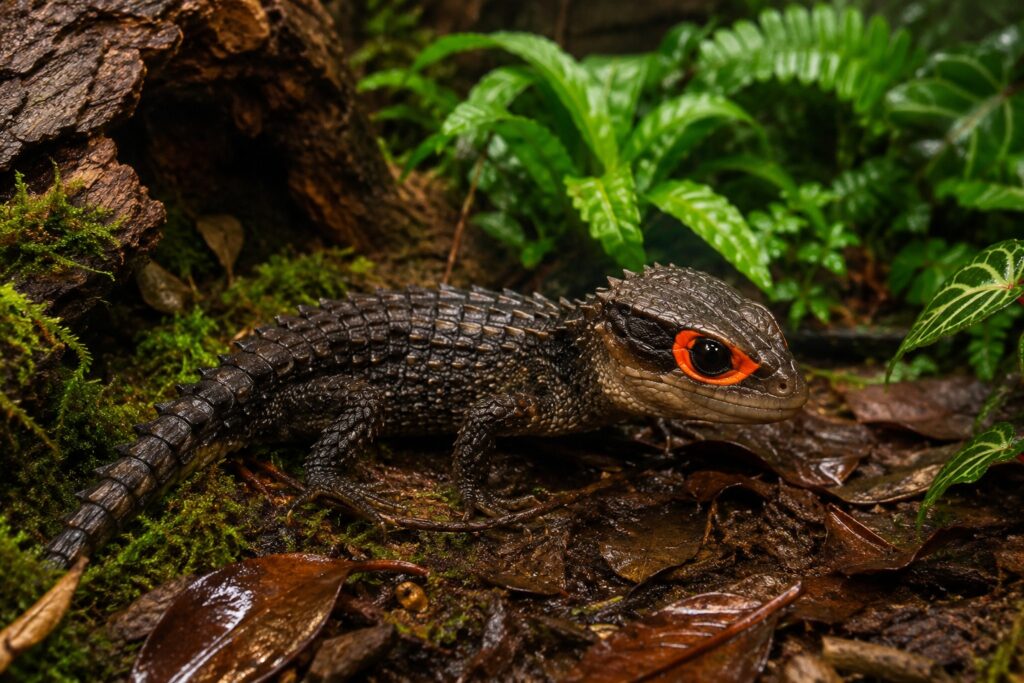
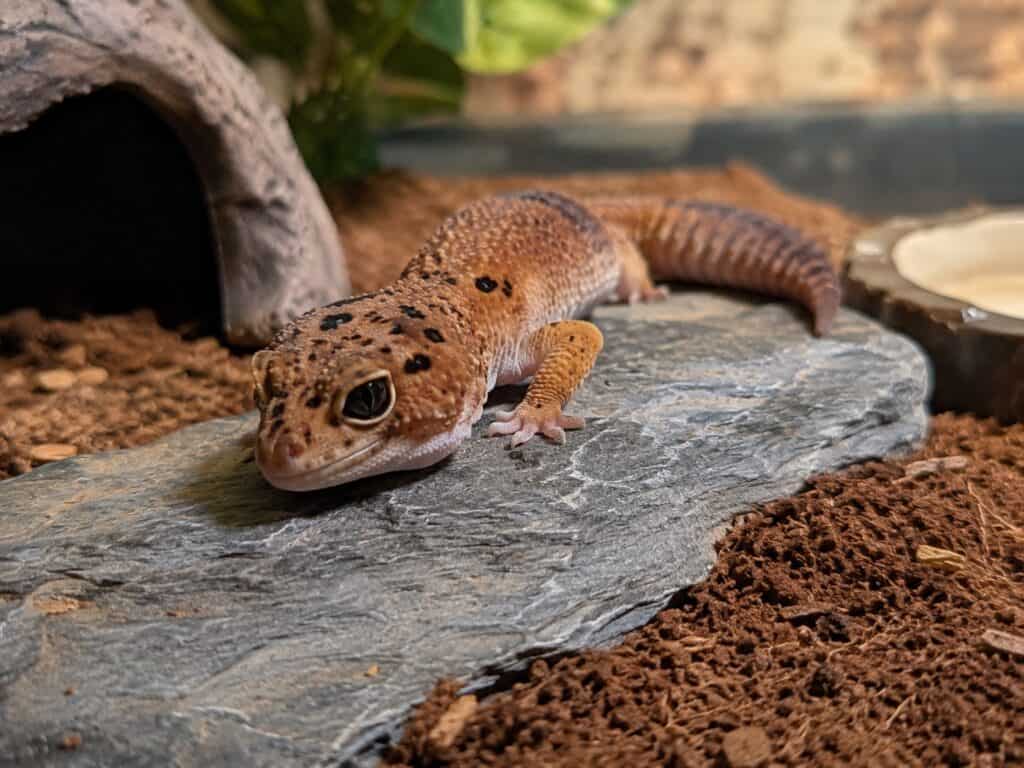
If you’re drawn to less common reptiles, explore our care guides for the red-eyed crocodile skink and African fat-tailed gecko.
Ackie monitor care: frequently asked questions
Are ackie monitors good for beginners?
They’re the best entry point into monitor keeping, but they’re not a true beginner reptile like a leopard gecko. They’re hardy and forgiving of small mistakes, yet they still need extreme basking heat, deep substrate, strong UVB, and a large enclosure. An ackie monitor is ideal for someone stepping up from geckos or bearded dragons who’s ready for more involved care, not a first-ever reptile.
How big do ackie monitors get?
Adults reach about 24 to 28 inches total length, including the tail, making them one of the smallest monitor species and roughly the size of a large bearded dragon. Despite that modest size, they’re active foragers that need a minimum 4 by 2 by 2 foot enclosure, and larger is always better. The small body hides a big personality and a lot of movement.
How hot does an ackie monitor’s basking spot need to be?
Very hot, hotter than almost any other pet reptile. The basking surface should reach 120 to 150°F, and some keepers push to 160°F. That extreme heat is what lets ackies properly digest food and drive their fast metabolism. Measure the surface with an infrared temp gun, not a probe, since probes read air temperature and will show a much lower number.
Why does an ackie monitor need such deep substrate?
Ackies are obligate burrowers that dig extensive tunnels in the wild for thermoregulation, hydration, and security. Without 12 to 18 inches of diggable substrate they become chronically stressed and never behave naturally. Keep the top few inches dry and the layers below damp, which creates a humid burrow microclimate while the surface stays arid, exactly like their native habitat.
What do ackie monitors eat?
They’re primarily insectivores. Staple feeders are dubia roaches, crickets, and locusts, rounded out with black soldier fly larvae, hornworms, and silkworms for variety. Rodents like pinky mice should be very rare, since a rodent-heavy diet causes obesity and fatty liver disease, a leading killer of captive monitors. Dust insects with calcium every feeding and add a multivitamin weekly.
Do ackie monitors need UVB?
Yes, UVB is mandatory, not optional. Ackies are sun-loving, active lizards that need strong UVB to synthesize vitamin D3 and maintain healthy bones, immunity, and behavior. Use a high-output T5 HO tube in the 10 to 12 percent range spanning about half the enclosure over the basking zone, and replace it every 12 months even if it still lights up, since UV output fades before the bulb dies.
Can you handle an ackie monitor?
Often yes, which is part of their appeal, since ackies are one of the few monitors that genuinely tame down. It takes patience: let a new one settle two weeks, start with tong feeding to build trust, then let it investigate your hand before scooping from below. Never grab from above or by the tail. Rushed handling creates a defensive, whip-happy lizard instead of a confident one.
How do I catch health problems early in a species that hides illness?
Ackies stay robust-looking until an issue is advanced, so weight tracking is your best early-warning tool. A healthy ackie grows steadily for about 18 months, then holds a stable adult weight. Logging feedings, weight, and supplement days in the Exotic Reptile Care app turns a subtle decline into visible data, which pairs well with a consistent care routine for a long-lived, high-maintenance species.