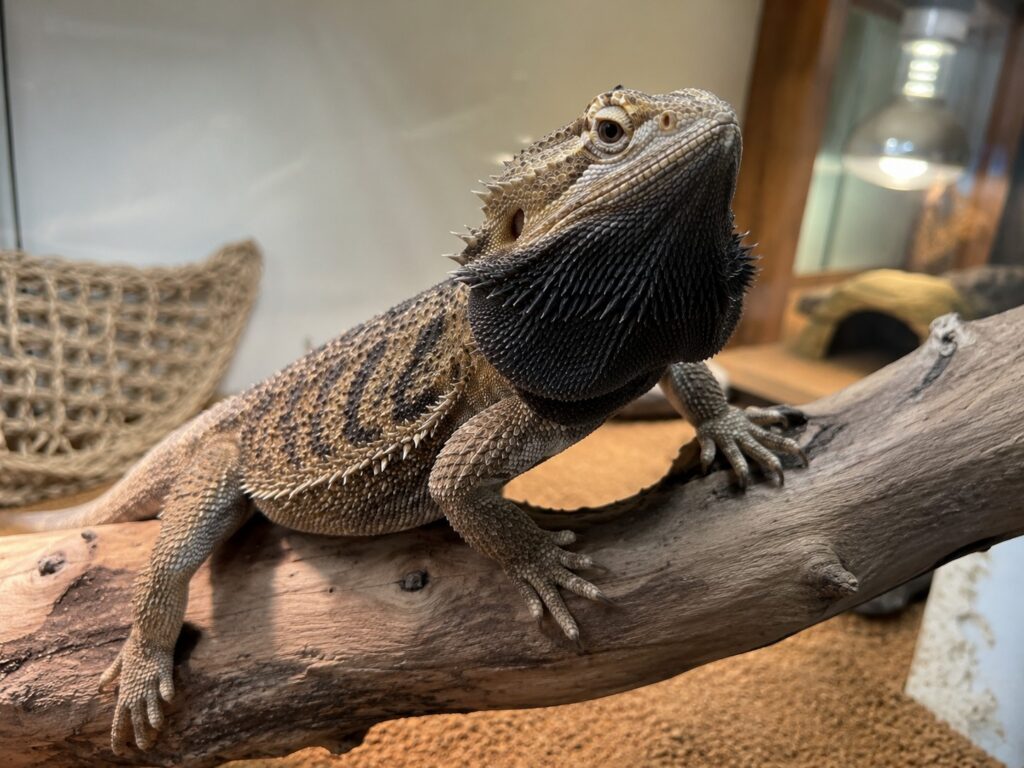
A bearded dragon black beard is one of the most alarming things a new keeper sees, and most of the time it means nothing serious. That patch under the chin darkens from tan to charcoal to full black, sometimes in seconds, and it looks like something has gone badly wrong. Usually it’s just your dragon talking. The trick is knowing which conversation you’re in.
| What You’re Seeing | Most Likely Meaning |
|---|---|
| Black beard, otherwise normal behavior | Stress, mood, or mild irritation |
| Black beard plus puffing and gaping | Threat display or territorial signal |
| Black beard in the morning only | Thermoregulation, absorbing heat |
| Black beard in a male, spring | Breeding season hormones |
| Black beard plus hiding and not eating | Brumation onset, or stress |
| Black beard plus open-mouth breathing and mucus | Respiratory infection, see a vet |
| Black beard plus lethargy and weight loss | Something is genuinely wrong, see a vet |
Why a Bearded Dragon Black Beard Happens at All
Beardies change color deliberately. They shift skin tone to regulate heat and to communicate, and the beard is the most expressive part of the whole animal. Darker skin absorbs more radiant heat, which is why a cool dragon under the basking lamp in the morning often goes dark and then lightens once it’s up to temperature.
The communication side covers everything from mild annoyance to full threat display. A bearded dragon black beard paired with a puffed-out throat and an open mouth is your dragon making itself look bigger. It’s directed at whatever it perceives as a rival or a threat, which might be you, a hand coming into the enclosure, the dog, or its own reflection in the glass.
Neither of those is a health problem. The beard is just the most obvious dial on a system that’s running normally.
Stress: The Most Common Reason
If your dragon is newly home, recently rehoused, or just had its enclosure rearranged, expect a dark beard for days or even a couple of weeks. New arrivals in particular spend a while unconvinced that they’re safe, and rehoming stress is real and takes time.
Other everyday stressors: too much handling too soon, a busy or loud room, a cage in a high-traffic hallway, a cat that sits and stares, or an enclosure with nowhere to hide. Dragons need somewhere to be unobserved, and a bare tank with a rock in it doesn’t give them that.
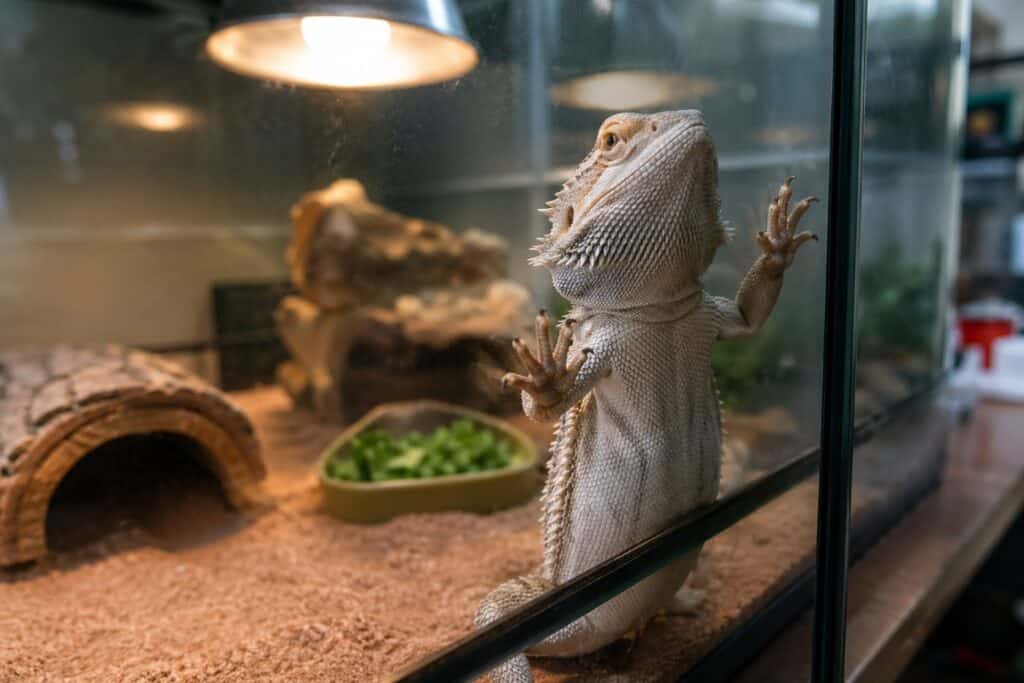
Reflections deserve their own mention. A dragon that sees itself in the glass often reads that as a rival and will darken up and display at it for hours. That same frustration drives the pacing behavior covered in our guide to bearded dragon glass surfing, and the two symptoms very often show up together in the same animal.
Temperature Problems and a Bearded Dragon Black Beard
Temperature is the boring answer that turns out to be right surprisingly often. A dragon that’s too cold darkens to soak up heat. If the beard is black first thing in the morning and lightens after an hour of basking, that’s normal thermoregulation. If it stays dark all day and your dragon is sitting under the lamp constantly, your basking temp is probably too low.
The reverse happens too. A dragon that’s overheated may darken while gaping and trying to get away from the heat, which people misread as basking contentment. Our post on bearded dragon basking temperature that’s too high covers the signs of a hot spot that’s gone too far.
Get a temp gun and check the actual basking surface, not the air, and not whatever the dial thermometer that came with the tank claims. Adults want a basking surface around 95 to 105F, juveniles a bit warmer, with a genuine cool end in the mid 70s to low 80s.
Breeding Season and Brumation
Adult males go dark in spring. It’s hormonal, it comes with head bobbing, restlessness, glass scratching, and sometimes reduced appetite, and it passes. Females can show it too, less dramatically. There’s nothing to fix, though a male that’s frantic for weeks may settle if you reduce the amount of time he can see his reflection.
A bearded dragon black beard during the autumn slowdown is also common. Dragons heading into brumation often darken while they’re hiding more and eating less. If the other signs line up, our guide to bearded dragon brumation signs walks through how to tell brumation from illness, which is the distinction that actually matters here.
When a Black Beard Is a Real Warning
Here’s the honest rule. A dark beard on its own, in a dragon that’s eating, pooping, alert, and moving normally, is almost never an emergency. A dark beard stacked with other symptoms is a different situation.
Get a vet involved if you see the beard darkening alongside open-mouth breathing when not basking, bubbling or mucus around the nose and mouth, wheezing or clicking sounds, sunken eyes, visible weight loss, refusal to eat for more than a week or two outside brumation, or lethargy where the dragon won’t move even when disturbed.
Respiratory infections are the one to take seriously, because they progress and reptiles hide illness until it’s advanced. Use the ARAV vet directory to find someone who actually treats reptiles rather than a general small animal clinic that sees one bearded dragon a year.
Appetite is worth watching closely too. A dragon that’s gone dark and stopped touching its salad may be stressed, brumating, or unwell, and our post on what to do when your bearded dragon isn’t eating greens helps narrow that down.
Track the Pattern, Not the Moment
The single most useful thing you can do with a bearded dragon black beard is write down when it happens. One dark beard tells you almost nothing. Six weeks of notes tells you whether it’s every morning before basking, only when the vacuum comes out, only since you moved the enclosure, or genuinely constant and getting worse.
That’s the difference between guessing and knowing, and it’s also exactly what a vet wants to hear if you do end up in the exam room. The Exotic Reptile Care app lets you log behavior notes and feeding alongside weight, so the pattern builds itself over time instead of living in your head. Weight in particular is the tiebreaker, since a dragon losing weight with a persistently dark beard needs a vet regardless of what else it’s doing.
Quick Fixes Worth Trying First
Before assuming the worst, run through the basics. Verify basking and cool end temperatures with an infrared temp gun. Add or improve hides so your dragon has somewhere to feel unseen. Cut back handling for a week or two if the animal is new. Block reflections by backing three sides of the enclosure. Move the enclosure out of a high-traffic path if it’s in one. Check UVB age, since a bulb over a year old is often dead even while lit.
Most black beard cases resolve on their own or with one of those adjustments. Give it a couple of weeks with good notes before you spiral.
FAQ: Bearded Dragon Black Beard Questions
Is a bearded dragon black beard always bad?
No. It’s a normal communication and thermoregulation signal. On its own, in an otherwise healthy, eating, active dragon, it’s usually stress, mood, temperature, or hormones rather than illness.
How long can a bearded dragon keep a black beard?
Minutes to weeks depending on the cause. A threat display fades quickly. Rehoming stress or breeding season can last weeks. Continuous darkening for over a month with no obvious trigger is worth a vet visit.
Do baby bearded dragons get black beards?
Yes, and often more than adults. Juveniles are naturally more nervous and darken easily during handling, cage changes, or transport. Most calm down considerably as they mature.
Why does my bearded dragon have a black beard at night?
Usually cooling down, sometimes settling for sleep. It’s only a concern if it comes with laboured breathing or if the enclosure is dropping below roughly 65F overnight.
Can a bearded dragon black beard mean it’s hungry?
It can. Some dragons darken and get pushy around feeding time, especially if they’re on a routine and it slips. That’s an easy one to confirm by feeding and seeing if the beard lightens.
The short of it: read the whole dragon, not just the beard. A dark beard on an animal that’s active, eating, and holding weight is a mood. A dark beard on an animal that’s hiding, thin, and breathing oddly is a symptom, and that one gets a vet.