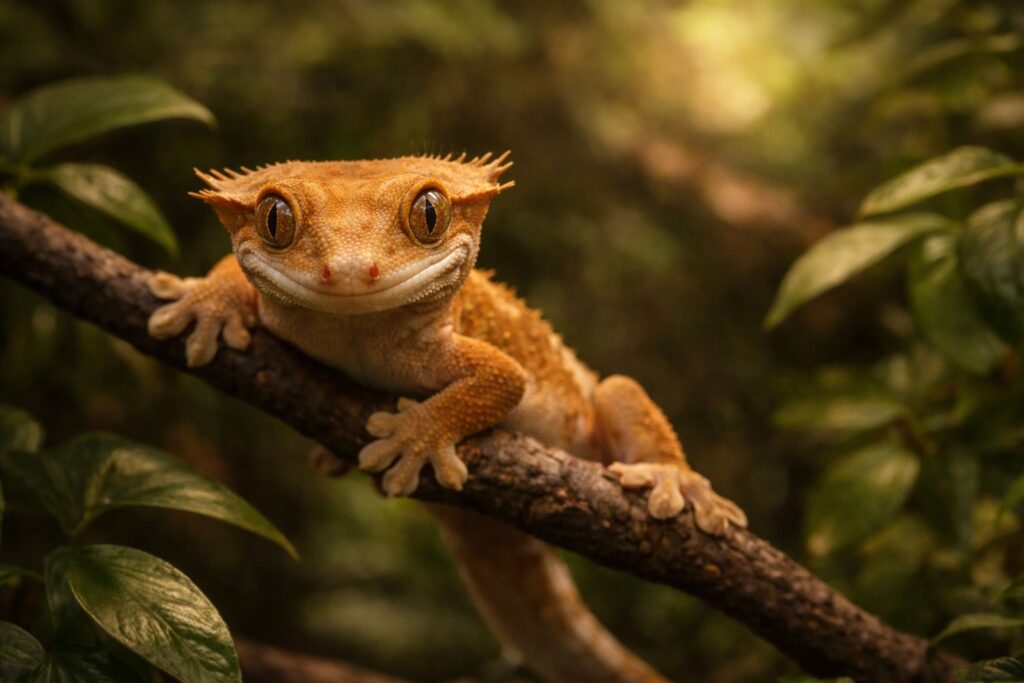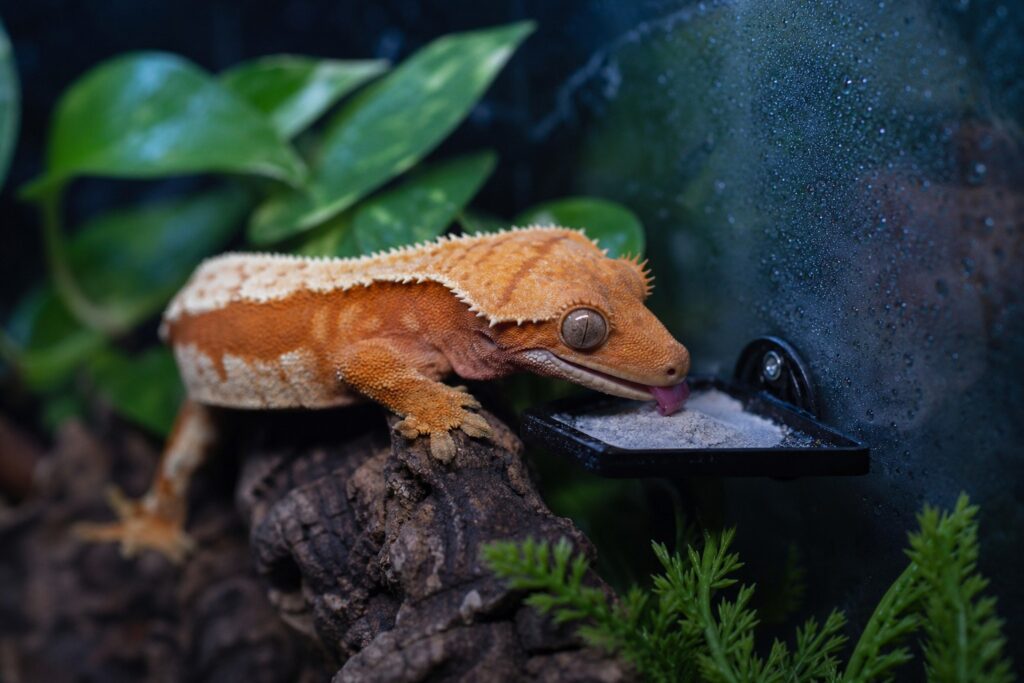

Crested gecko temperature is the one husbandry number where the usual reptile instinct gets people into trouble. Almost every lizard in the hobby needs supplemental heat, sometimes a lot of it. Crested geckos mostly don’t, and the mistake that kills them is being too warm rather than too cold.
The target is 72 to 78F during the day, with a drop to the mid or high 60s at night. In a lot of homes that means doing nothing at all. It also means that a summer heat wave is a genuine emergency for this species in a way it isn’t for a bearded dragon.
| Condition | Temperature |
|---|---|
| Ideal daytime range | 72 to 78F |
| Acceptable low | 68F |
| Night drop (beneficial) | 65 to 72F |
| Caution zone | 80 to 82F |
| Dangerous | Above 82F sustained |
| Often fatal | 85F and above |
Why Crested Geckos Run Cool
Crested geckos come from New Caledonia, a group of islands in the South Pacific with a mild, stable subtropical climate. They’re nocturnal and arboreal, spending days tucked into foliage and cool shaded spots rather than out in the sun.
Nothing about that background prepares them for sustained heat. Above roughly 82F they start showing stress, and sustained exposure to 85F and up kills them, sometimes within hours. There’s no acclimation period that changes this. The same applies to gargoyle geckos, which come from the same islands and share the same ceiling, so everything on this page transfers directly if you keep both.
That makes crested gecko temperature different from nearly every other species you’ll read about. If you also keep a bearded dragon or a ball python, everything you know about basking spots and heat gradients does not transfer here. Our reptile temperature and humidity guide puts the species side by side, and crested geckos sit at the cool end by a wide margin.
Do Crested Geckos Need a Heat Source?
Usually not. If your home sits between 70 and 78F year round, your enclosure is already correct and adding heat makes things worse.
If your house runs genuinely cold, below about 68F for extended periods, some supplemental heat helps. Digestion slows and appetite drops when they’re too cool, though this happens gradually rather than dangerously.
When you do need heat, use a low-wattage ceramic heat emitter or a deep heat projector on a thermostat, mounted above the enclosure. Both produce heat without visible light, which matters for a nocturnal animal. Some keepers run a very low-wattage halogen to create a gentle warm area around 80F at the top of a tall enclosure, letting the gecko choose. That works, but only in a tall enclosure with a real gradient, and only on a thermostat.
Skip heat mats. They’re designed for ground-dwelling species and an arboreal gecko spends its time well above the floor, so a mat heats substrate the animal isn’t using while doing little for ambient air.
Never run a heat source without a thermostat. That’s how enclosures reach lethal temperatures overnight.
Measuring Crested Gecko Temperature Correctly
Use a digital thermometer with a probe, not the analog dial gauge bundled with starter kits. Those routinely read 5 to 10 degrees off.
Placement matters more than people think. Put the probe at mid height where your gecko actually spends time, not on the floor and not at the very top. Tall enclosures develop real vertical gradients, and the reading at the top near a light can be several degrees warmer than where the gecko is sitting.
Check at different times of day. Afternoon sun through a window will spike an enclosure temperature far more than most keepers expect, and that spike is exactly when nobody’s looking.
Summer Is the Real Risk
This is where crested geckos die. A room that sits at a comfortable 75F in spring can hit 88F during a heat wave, and an enclosure in that room goes with it.
Practical steps, in order of how much they help. Air conditioning is the reliable answer if you have it. Move the enclosure away from windows and out of direct sun, and off upper floors if you can, since heat rises through a house. Increase airflow with a fan directed near but not into the enclosure. Frozen water bottles or ice packs wrapped in a towel and placed on top or beside the enclosure buy you several hours in an emergency.
One counterintuitive point: reduce misting during extreme heat rather than increasing it. High humidity combined with high temperature is more dangerous than heat alone, because it prevents evaporative cooling. Your gecko needs water available, but a warm swampy enclosure is worse than a warm dry one. Our guide on crested gecko humidity covers the normal range, and this is the one situation where you deliberately let it sit lower.
If you know a heat wave is coming, plan the enclosure’s location before it arrives rather than improvising at 2pm on the hottest day.
Signs of Heat Stress
Watch for gaping or open-mouth breathing, lethargy, sitting on the floor of the enclosure rather than up in the foliage, refusing food, and a gecko that looks limp or unresponsive.
That last one is an emergency. Move the gecko to a cooler room immediately and let it come down gradually rather than shocking it with ice or cold water. Then get veterinary help through the ARAV vet directory, since heat damage can affect organs even in a gecko that appears to recover.
One thing that isn’t heat stress: color change. Crested geckos naturally darken and lighten, which keepers call firing up and firing down, and it’s normal daily behavior rather than a warning sign.
Appetite is worth watching more broadly. A gecko that’s too warm often stops eating well before anything dramatic happens, and persistent refusal is one of the causes covered in our post on a crested gecko losing weight.
Enclosure Placement Does Most of the Work
Where you put the enclosure determines your crested gecko temperature more than any equipment will.
Avoid windows, radiators, heating vents, and the top floor of a house. Interior rooms on lower floors stay more stable. A basement or a north-facing room is often ideal.
Tall enclosures help, since vertical space creates a natural gradient and lets the gecko move to the coolest part on its own. Our crested gecko enclosure guide covers the setup, and height is doing more work than it appears to.
Plenty of foliage matters too. A gecko with dense cover can find a genuinely cooler shaded pocket. A bare enclosure gives it nowhere to go.
Tracking Temperature Over Seasons
The dangerous pattern with crested gecko temperature is seasonal drift. Nothing changes in your setup, but the room does, and the enclosure that read 75F all winter is quietly running 81F by July.
Checking and logging weekly is enough to catch that trend before it matters. The Exotic Reptile Care app handles custom reminders for routine checks and tracks weight over time, which is the other signal worth watching, since a gecko that’s chronically too warm eats less and the weight chart shows it before you notice anything else.
FAQ: Crested Gecko Temperature Questions
What temperature should a crested gecko be kept at?
72 to 78F during the day, with a drop to 65 to 72F at night. Sustained temperatures above 82F cause heat stress and 85F and above can be fatal.
Do crested geckos need a heat lamp?
Usually not. Most homes sit within the correct range naturally. If your house runs below 68F consistently, use a low-wattage ceramic heat emitter or deep heat projector on a thermostat.
Can crested geckos get too cold?
They tolerate cool better than heat. Below about 65F for extended periods, digestion slows and appetite drops. It’s a problem worth fixing, but it’s not the emergency that overheating is.
How do I cool a crested gecko enclosure in summer?
Move it away from windows and off upper floors, increase airflow with a fan nearby, and use frozen water bottles or wrapped ice packs beside the enclosure. Reduce misting during extreme heat, since humid heat is worse than dry heat.
Is a night temperature drop necessary for crested geckos?
Not strictly required, but a natural drop into the mid to high 60s is beneficial and matches their wild conditions. Most homes do this on their own.
The summary that matters: with crested geckos your job is mostly to keep heat away rather than add it. Put the enclosure somewhere cool and stable, own a digital thermometer with a probe, and have a plan for the hottest week of the year before it arrives.