You mist the enclosure every evening, the plants look fine, and everything seems normal. But then you notice your crested gecko has patches of stuck shed on its toes, or maybe it’s stopped eating, or it’s just sitting in one spot looking dull and inactive. You check the hygrometer and it’s reading 35 percent in the middle of the afternoon. That’s a problem. Crested gecko humidity too low is one of the sneakiest husbandry issues because the effects don’t show up immediately. They build up over days and weeks until your gecko is dehydrated, shedding poorly, or refusing food.
What Humidity Do Crested Geckos Actually Need?
Crested geckos come from New Caledonia, a tropical island chain where the air is warm and humid. In captivity, they need a humidity cycle that mimics those natural conditions. Not a flat number all day, but a rhythm.
After your evening misting, humidity should spike to 70 to 80 percent. Over the next 10 to 12 hours, it should gradually drop as the enclosure dries out, landing somewhere around 50 percent during the afternoon. Then you mist again in the evening and the cycle repeats.
The key word there is cycle. Your crested gecko humidity too low becomes a real concern when the daytime lows are consistently dropping below 40 to 45 percent, or when the evening spike after misting barely reaches 60 percent and crashes quickly. Both of those mean the enclosure isn’t holding moisture the way it should.
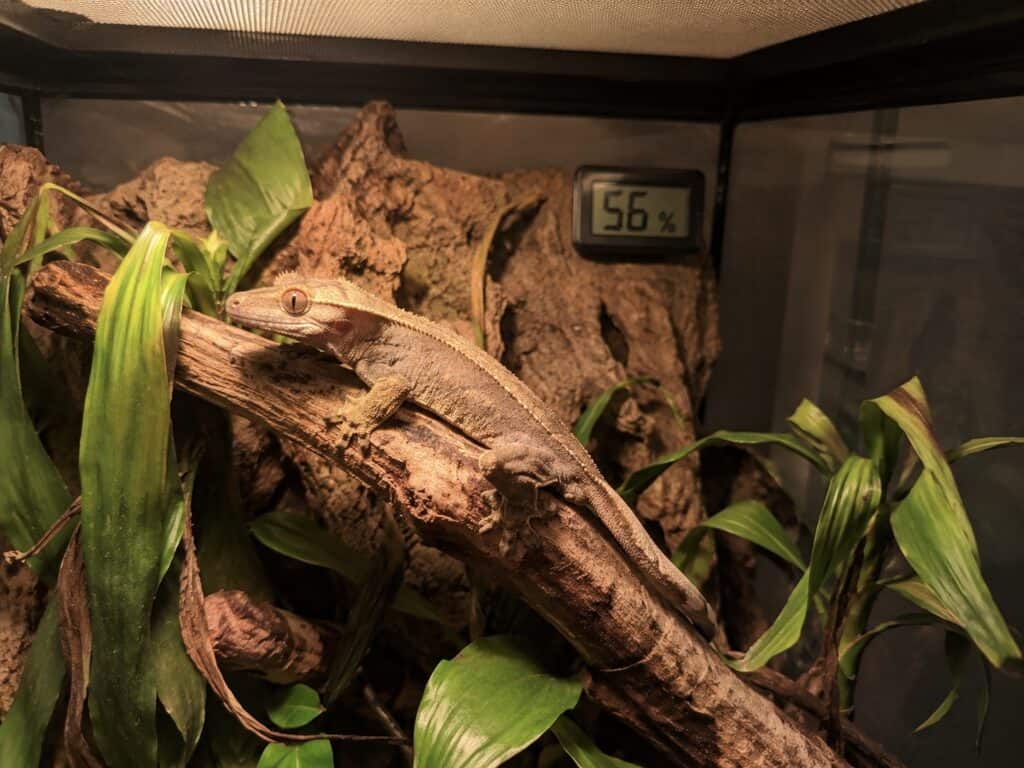
A cheap analog hygrometer stuck to the glass is not going to give you accurate readings. Invest in a digital hygrometer. They’re around ten dollars and the difference in accuracy is massive. Place it in the middle of the enclosure, not right next to the misting area where readings will be artificially high.
Here’s the crested gecko humidity cycle at a glance. Remember it’s a rhythm, not a flat number.
| Time of Day | Target Humidity |
|---|---|
| After evening misting (spike) | 70 to 80 percent |
| Afternoon low (dry-down) | Around 50 percent |
| Too low (danger zone) | Consistently below 40 to 45 percent |
| Weak spike warning | Barely reaching 60 percent, crashing fast |
Ranges differ a lot by species, and our temperature and humidity guide for reptiles lays them out together.
Signs Your Crested Gecko Humidity Is Too Low
The symptoms of crested gecko humidity too low are easy to miss at first because they develop slowly. Here’s what to look for.
Stuck shed. This is the most obvious sign. Crested geckos shed their entire skin and eat it, so you might not even notice a shed happening. But if you spot pieces of old skin still stuck on the toes, tail tip, or around the eyes, that’s incomplete shedding caused by insufficient moisture. Stuck shed on the toes is especially dangerous because it can cut off circulation and cause toe loss over time.
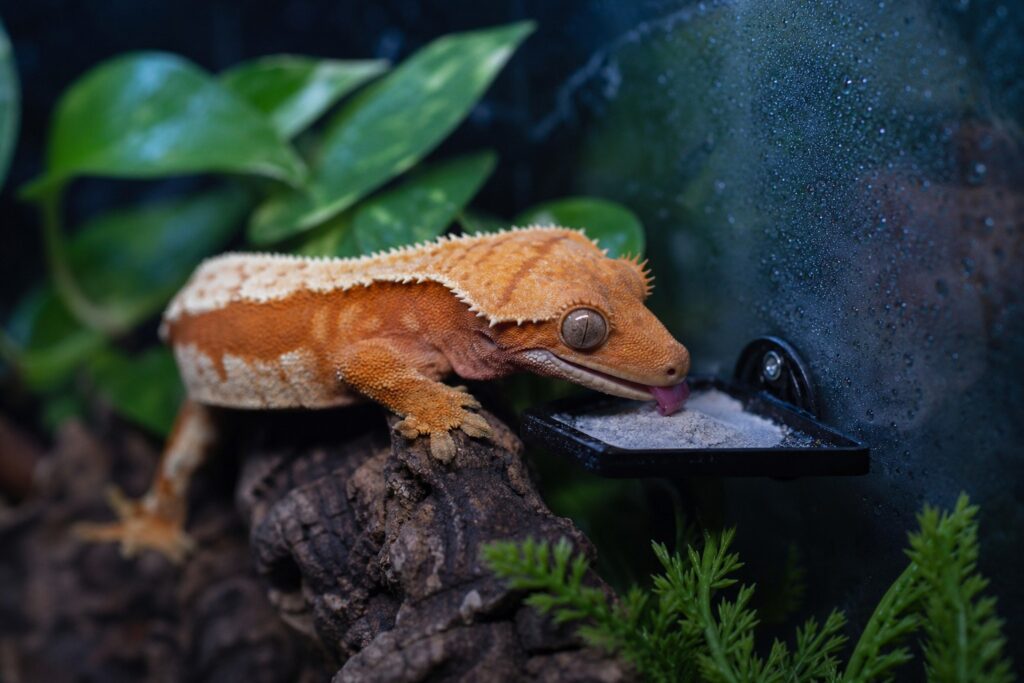
Wrinkled or dull skin. A well-hydrated crested gecko has smooth, slightly supple-looking skin. If the skin looks dry, wrinkled, or the colors seem muted, dehydration is likely. Crested geckos absorb a lot of their water by licking droplets off leaves and glass after misting. If those droplets evaporate too fast because the air is too dry, the gecko isn’t getting enough moisture.
Not eating. If your crested gecko isn’t eating and you’ve already checked temperature and stress factors, humidity might be the missing piece. Dehydrated geckos lose their appetite. They also tend to become less active overall, which is easy to overlook with a nocturnal species.
Spending too much time in the water dish. Crested geckos don’t normally soak. If yours is sitting in the water bowl regularly, it’s likely trying to compensate for low ambient humidity. This is the gecko equivalent of an SOS signal.
Lethargy and reduced activity. Crested geckos are crepuscular and should be active around dusk and dawn. If yours is barely moving even at night, low humidity causing mild dehydration could be suppressing its normal behavior.
5 Ways to Fix Crested Gecko Humidity Too Low
Here’s what actually works, starting with the simplest fixes.
1. Mist more thoroughly and at the right time. Most keepers mist once in the evening, but if your enclosure dries out too fast, add a lighter morning mist as well. The evening mist should be heavy enough that you see water droplets on leaves and glass. That’s drinking water for your gecko, not just ambient moisture. Use dechlorinated or reverse osmosis water to avoid mineral buildup on the glass.
2. Switch to a moisture-retaining substrate. If you’re using paper towel or a dry substrate, you’re fighting a losing battle with humidity. Coconut fiber, sphagnum moss, or an ABG mix (designed for bioactive setups) all hold moisture and release it slowly throughout the day. A two to three inch layer of substrate acts like a humidity reservoir. Mist the substrate directly, not just the plants and glass, and it’ll keep the enclosure more stable between mistings.
3. Reduce ventilation slightly. Screen-top enclosures are the worst offenders for crested gecko humidity too low. All that airflow pulls moisture out of the enclosure within an hour or two of misting. If you’re using a screen-top tank, cover 60 to 70 percent of the screen with a piece of glass, acrylic, or even aluminum foil. Leave some ventilation open so air still circulates, but reduce the total area that’s losing moisture. Front-opening terrariums with solid tops hold humidity much better by design.
4. Add live plants. Live plants aren’t just decoration. They transpire, which means they release moisture into the air throughout the day. Pothos, bromeliads, and ficus are all safe for crested gecko enclosures and do a great job maintaining ambient humidity between mistings. They also give your gecko more surfaces to drink water droplets from, and more cover to feel secure.
5. Add a humid hide. If you can’t get the whole enclosure to hold humidity well enough, a localized solution can help while you sort things out. A small plastic container with a hole cut in the side, filled with damp sphagnum moss, gives your gecko a high-humidity microclimate to retreat to whenever it needs moisture. Place it in the middle or upper third of the enclosure since cresties prefer height. Check and redampen the moss every couple of days.
What About Automatic Misting Systems?
If crested gecko humidity too low keeps being a problem despite manual misting, an automatic misting system is worth considering. These devices hook up to a reservoir and spray on a timer. You can set them to mist every evening and morning at the exact same time, which gives your gecko a consistent humidity cycle regardless of your schedule.
They’re not cheap compared to a spray bottle, but for keepers who travel, work long hours, or keep multiple enclosures, they pay for themselves in convenience and consistency. Just make sure you still check the hygrometer regularly. A misting system doesn’t guarantee your humidity is right if the enclosure is losing moisture too fast through ventilation.
Track Humidity Patterns to Stay Ahead of Problems
Crested gecko humidity too low often creeps in with seasonal changes. Your home’s humidity fluctuates throughout the day, and heating in winter can shift things without you realizing. Your enclosure might hold humidity perfectly in summer when the house is more humid, but crash every winter when the heating system dries the air out.
The Exotic Reptile Care app lets you set daily reminders to check and log humidity readings, so you can spot trends before they become problems. If you notice your gecko’s shed quality declining or appetite dropping, you can look back at your humidity logs and see if something shifted. You can also track shed outcomes alongside humidity data to see the direct connection. That kind of pattern recognition is hard to do from memory but easy when you have it logged.
When Humidity Is Only Part of the Problem
Low humidity doesn’t exist in a vacuum. If your crested gecko has lost weight or stopped eating and fixing humidity doesn’t resolve it within a week or two, something else might be going on. Respiratory infections, parasites, and metabolic issues can all cause similar symptoms. A reptile vet can run tests that a hygrometer can’t. It is also worth doing a full husbandry review rather than chasing one number. Our crested gecko care guide covers temperature, diet, and enclosure setup together.
But in the majority of cases, fixing crested gecko humidity too low solves the problem. Mist heavily in the evening, let it dry down during the day, keep the substrate moist, and give your gecko surfaces to drink from. Nail those basics and most humidity-related issues disappear on their own.
Crested gecko humidity too low: frequently asked questions
What humidity does a crested gecko need?
They need a cycle, not a flat number. Humidity should spike to 70 to 80 percent after evening misting, then dry down gradually to around 50 percent by afternoon before you mist again. Crested gecko humidity too low becomes a real problem when daytime lows stay under 40 to 45 percent or the evening spike barely hits 60 and crashes fast.
How do I raise humidity in a crested gecko enclosure?
Start with the enclosure itself, not just more misting. Switch to a moisture-holding substrate like coconut fiber or an ABG mix at two to three inches deep, cover 60 to 70 percent of a screen top with glass or acrylic, and add live plants like pothos that transpire moisture all day. Mist the substrate directly, not only the leaves, and the enclosure holds humidity far better between mistings.
Is misting once a day enough for a crested gecko?
Often yes, but it depends on how fast your enclosure dries out. A heavy evening mist is the priority, since those droplets on leaves and glass are also your gecko’s drinking water. If the hygrometer crashes below 45 percent by afternoon, add a lighter morning mist too. A screen-top tank almost always needs that second misting because airflow strips moisture within an hour or two.
Can low humidity cause a crested gecko to stop eating?
Yes. Dehydration from chronically dry air suppresses appetite and reduces overall activity, which is easy to miss in a nocturnal species. If you’ve already ruled out temperature and stress and your gecko still won’t eat, check the hygrometer. That said, if fixing humidity doesn’t restore appetite within a week or two, it’s time to look at other causes.
Why is my crested gecko sitting in its water dish?
It’s an SOS. Crested geckos don’t normally soak, so a gecko parked in the water bowl is usually trying to compensate for air that’s too dry. Treat it as a clear sign your ambient humidity is too low and work through the substrate, ventilation, and misting fixes rather than assuming it’s just a quirk.
Does low humidity cause stuck shed in crested geckos?
It’s the number one cause. Insufficient moisture means the old skin doesn’t loosen properly, leaving patches on the toes, tail tip, and around the eyes. Stuck shed on the toes is the dangerous one, since it tightens as it dries and can cut off circulation, leading to lost toes. Raising humidity before and during shed cycles prevents almost all of it.
How do I know if my humidity fix is actually working?
Use a digital hygrometer placed in the middle of the enclosure, not by the misting spot, and check it at both the evening spike and the afternoon low. Because problems creep in seasonally, especially when winter heating dries the air, logging readings over time is what reveals the trend. The Exotic Reptile Care app lets you log humidity next to shed outcomes, so a run of bad sheds lining up with a dry spell becomes obvious.