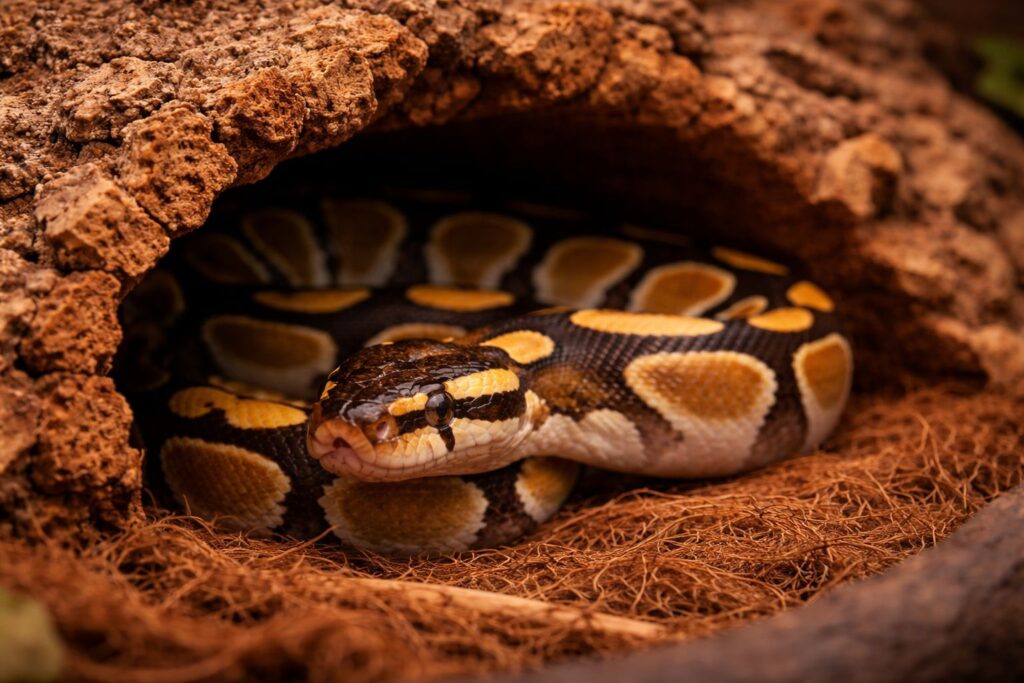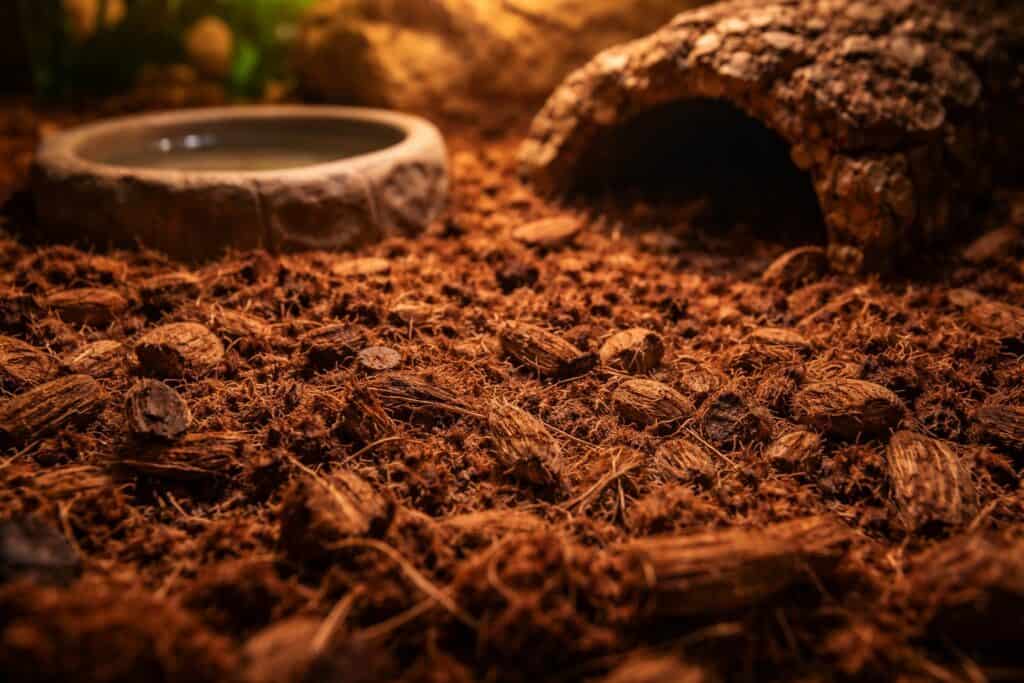
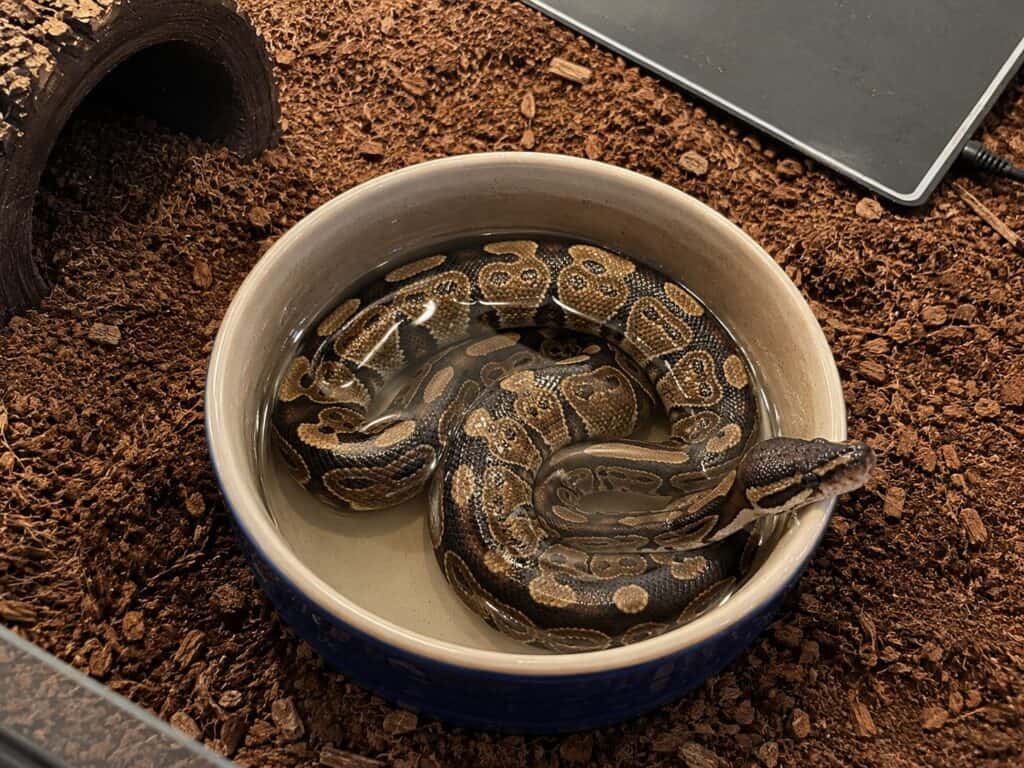
You walk into the room and your ball python is curled up in its water bowl. Again. Maybe it’s been happening every night this week, or maybe you just noticed it for the first time. Either way, it catches your attention because this isn’t something ball pythons normally do. A ball python sitting in water bowl is almost always a sign that something in the enclosure isn’t right. These snakes are not aquatic. They don’t enjoy swimming. They don’t hang out in water for fun. When a ball python chooses to sit in its water dish, it’s usually trying to solve a problem that you need to fix.
Is a Ball Python Sitting in Water Bowl Ever Normal?
Rarely. There are a handful of ball pythons out there that just seem to enjoy a soak occasionally, and if the husbandry is perfect and the snake is otherwise healthy, that might genuinely be a quirk. But treating it as normal behavior before ruling out actual problems is a mistake.
The general rule is this: if your ball python is soaking in its water bowl more than once in a while, something needs investigating. The five most common causes are mites, high temperatures, low humidity, pre-shed hydration, and stress. Most of the time it’s one of the first three.
Here’s a quick rundown of why a ball python sits in its water bowl and what to check first for each cause.
| Likely Cause | First Thing to Check |
|---|---|
| Mites | Pinhead dots near eyes and chin, specks in the water |
| Too hot | Warm side above 95°F or cool side above 82°F |
| Low humidity | Hygrometer sitting at 40 to 50 percent |
| Pre-shed | Dull skin and blue, cloudy eyes |
| Stress | Recent change, too few or loose-fitting hides |
1. Mites Are the First Thing to Check
Snake mites are the number one reason ball pythons soak for extended periods. Mites are tiny parasites that burrow under scales and feed on blood. They cause intense irritation and the snake soaks to try to drown them or relieve the discomfort.
Check your snake carefully. Blood mites are small red or dark brown dots, about the size of a pinhead. Look around the eyes, under the chin, in the heat pits along the mouth, and in the skin folds. Then check the water bowl itself. If you see tiny dark specks floating in the water or settled at the bottom, those are likely mites that fell off during soaking.
Run your hand firmly along the snake’s body and check your skin afterward. If you see tiny moving dots on your hand, that confirms it.
Mites need to be treated aggressively. They reproduce fast and can infest an entire collection if you don’t act. Remove all substrate, replace it with paper towel, and treat the snake and enclosure with a reptile-safe mite treatment. You’ll likely need to repeat the treatment a couple of times over two to three weeks to break the life cycle. If you’re not sure what you’re dealing with, a reptile vet can confirm the diagnosis and recommend treatment.
2. The Enclosure Is Too Hot
Ball pythons are ectothermic, so when their environment gets too warm, they can’t just sweat it out. If the warm side is running too high or the cool side isn’t cool enough, your ball python sitting in water bowl might be its only way to cool down.
Check your temperatures. The warm side surface should be 88 to 92 degrees Fahrenheit. The cool side should sit at 75 to 80 degrees. If your cool side is above 82 to 83, or your warm side is spiking above 95, the snake has nowhere comfortable to go except the water.
Use a temperature gun to check surface temps, not just the thermostat reading. Thermostats measure the probe location, which might not reflect what the snake is actually experiencing. If temps are too high, raise the lamp, lower the wattage, or adjust your thermostat settings. Once temperatures are dialed in, the soaking behavior usually stops within a day or two.
3. Humidity Is Too Low
This one is closely related to your ball python sitting in water bowl before or during a shed cycle, but it can happen anytime. Ball pythons need a baseline humidity of 60 to 70 percent. If your enclosure is sitting at 40 to 50, the snake is dehydrated and the water bowl is the only moisture source available.
Low humidity is especially common with screen-top tanks, dry substrates like aspen, and homes with central heating or air conditioning running. The snake isn’t soaking because it likes water. It’s soaking because it’s the wettest spot in an environment that’s too dry.
Fix this by switching to a moisture-holding substrate like coconut fiber or cypress mulch, covering part of the screen top to trap humidity, and adding a large water bowl on the warm side where evaporation helps boost ambient moisture. If you’ve already read our article on ball python humidity too low, you know the drill. Once humidity is consistently in the right range, the soaking should stop.
4. Pre-Shed Hydration
Ball pythons need extra moisture when they’re getting ready to shed. In the days leading up to a shed, the snake’s skin turns dull, the eyes go blue and cloudy, and it may start spending time in the water bowl to hydrate the skin and help the shed come off cleanly.
A ball python sitting in water bowl during pre-shed is the least concerning reason, but it’s still a signal. If your snake only soaks during pre-shed and never otherwise, your baseline humidity might be just barely adequate. A snake in a properly humid enclosure shouldn’t need to soak to shed well. Consider bumping humidity up to 70 to 80 percent when you see pre-shed signs, and provide a damp hide with sphagnum moss so the snake has a better option than the water bowl.
If your snake had a stuck shed recently, that’s another sign humidity needs attention.
5. Stress
A stressed ball python sitting in water bowl is more common than you’d think, especially after changes in the environment. Stress triggers include a new enclosure, too much handling, lack of adequate hides, an enclosure that’s too open or exposed, vibrations from nearby speakers or appliances, and visual disturbance from other pets or heavy foot traffic.
If you’ve ruled out mites, temps, and humidity, think about what changed recently. Did you move the enclosure? Rearrange the furniture in the room? Add a new pet? Start handling the snake more frequently? Ball pythons are creatures of habit and disruptions to their routine can cause behavioral changes.
Make sure the enclosure has at least two proper hides, one on the warm side and one on the cool side, both snug enough that the snake touches the walls when coiled inside. A ball python that doesn’t feel secure in its hides will sometimes default to the water bowl as the next best hiding spot, especially if the bowl is partially enclosed.
How to Track the Pattern and Find the Cause
When a ball python sitting in water bowl becomes a recurring behavior, tracking what’s going on in the enclosure helps you figure out the cause faster. Is it only happening at night when temps drop? Only during pre-shed? Did it start after you changed substrate?
The Exotic Reptile Care app lets you log daily observations, feeding responses, shed dates, and environmental notes all in one place. If you log that your snake soaked three nights in a row and then check back and see that humidity was reading 45 percent each of those days, the answer is obvious. Without a log, you’re relying on memory, and memory is unreliable when you’re troubleshooting something that develops over days or weeks.
When to See a Vet
If you’ve checked mites, temperatures, and humidity and everything looks right, but your ball python is still soaking daily, there might be a health issue at play. Respiratory infections, internal parasites, and other illnesses can cause discomfort that makes the snake seek out water. A snake that seems lethargic, has wheezing or crackling sounds when breathing, or is losing weight alongside the soaking behavior needs a vet visit.
A reptile vet can do a physical exam, check for mites you might have missed, and run tests for infections or parasites. Don’t write off a ball python sitting in water bowl as a personality quirk until you’ve genuinely ruled out everything else. Most of the time the fix is simple, but the longer you ignore the behavior, the worse the underlying problem can get.
Ball python sitting in water bowl: frequently asked questions
Is it normal for a ball python to sit in its water bowl?
Rarely. Ball pythons aren’t aquatic and don’t soak for fun, so a ball python sitting in water bowl is almost always trying to fix a problem. The occasional soak in an otherwise healthy snake with perfect husbandry can be a quirk, but you should rule out mites, heat, low humidity, and pre-shed before writing it off as normal.
Why is my ball python soaking in its water all of a sudden?
Sudden soaking usually points to something that just changed. The most common triggers are mites, a warm side that’s drifted too hot, humidity dropping into the 40s, an approaching shed, or stress from a recent disturbance. Work through those in order, since mites, temperature, and humidity account for the large majority of cases.
Can mites cause a ball python to soak in water?
Yes, and it’s the number one cause. Mites burrow under the scales and cause intense irritation, so the snake soaks to relieve the discomfort and drown them. Check around the eyes, chin, and heat pits for pinhead-sized red or brown dots, and look for specks in the water bowl. Mites spread fast, so treat the snake and enclosure aggressively over two to three weeks.
What temperature makes a ball python sit in water?
When the warm side climbs above 95°F or the cool side sits above 82 to 83°F, the snake has nowhere comfortable to go and the water becomes its only way to cool down. The correct gradient is a warm side of 88 to 92°F and a cool side of 75 to 80°F. Measure surface temps with a temp gun rather than trusting the thermostat reading, since the two often differ.
Does a ball python soak before shedding?
Often, yes, and it’s the least worrying reason. In the days before a shed the skin dulls and the eyes turn blue and cloudy, and the snake soaks to hydrate for a clean shed. That said, a snake in properly humid conditions shouldn’t need to. If yours only soaks at shed time, bump humidity to 70 to 80 percent and add a damp sphagnum moss hide so it has a better option than the bowl.
When should I take a soaking ball python to the vet?
If you’ve ruled out mites, temperature, and humidity and the snake still soaks daily, book a vet. Go sooner if you notice wheezing or crackling breath, lethargy, or weight loss alongside the soaking, which can point to a respiratory infection or internal parasites. Tracking helps you catch the pattern early, and pairing daily logs with a species care system like a consistent care routine makes those changes far easier to spot. Logging soaking nights next to humidity and temperature in the Exotic Reptile Care app often reveals the cause on its own.