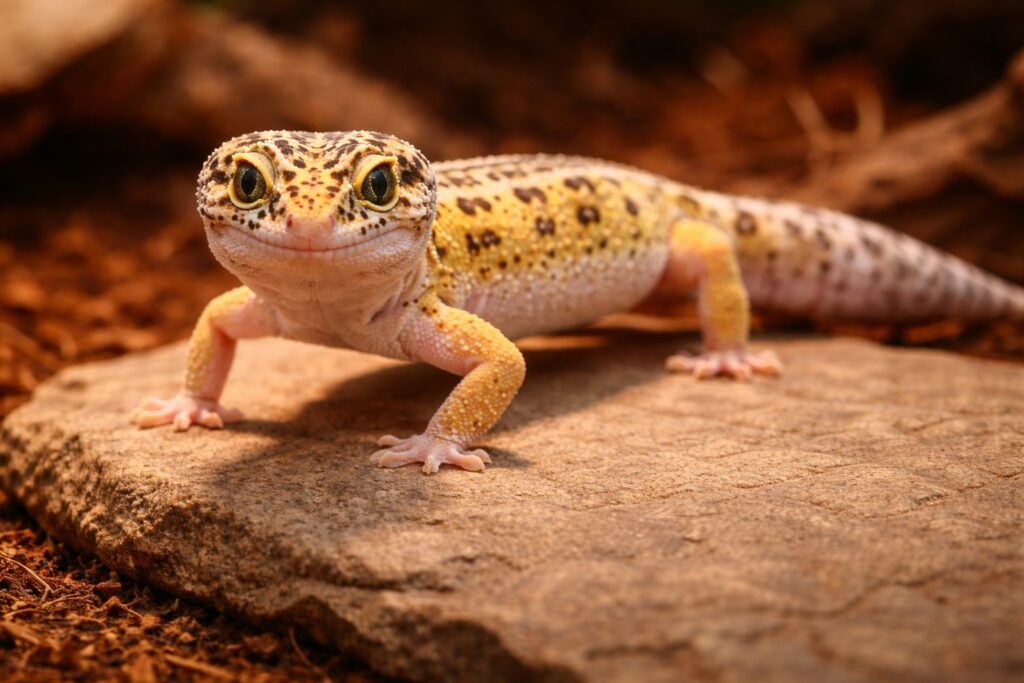
Your leopard gecko hasn’t pooped in five days. It’s barely eating, and when you look at its belly, it seems swollen. Maybe you even notice a dark patch showing through the skin on the underside. Something isn’t right. Leopard gecko impaction is one of the most serious health issues these geckos face, and it can turn fatal if you don’t catch it early. The good news is that mild cases are often treatable at home, and almost all cases are preventable once you understand what causes them.
What Is Leopard Gecko Impaction?
Impaction is a blockage in the digestive tract. Something your gecko swallowed, usually substrate or an oversized feeder insect, forms a hard mass that can’t pass through the intestines normally. The blockage prevents the gecko from pooping, which means waste and food back up behind it. Over time, the gecko stops eating because there’s nowhere for new food to go. If the blockage isn’t resolved, the gecko weakens, loses weight, and can eventually die.
It’s essentially severe constipation with a physical obstruction causing it. The difference between normal constipation and leopard gecko impaction is that impaction involves an actual mass blocking the gut, not just slow digestion.
What Causes It?
The number one cause is loose substrate. Sand is the classic offender. Leopard geckos flick their tongues to explore their environment, and they sometimes miss their target when striking at feeder insects. If the gecko is hunting crickets or mealworms on a sand substrate, it’s swallowing small amounts of sand with every feeding. Over time, that accumulates. Calcium sand, despite the marketing, is no safer. It clumps when wet and creates the same blockage risk.
Other loose substrates like gravel, walnut shell, and wood chips carry the same risk. Young geckos are especially vulnerable because their digestive tracts are smaller and can’t handle even small amounts of indigestible material.
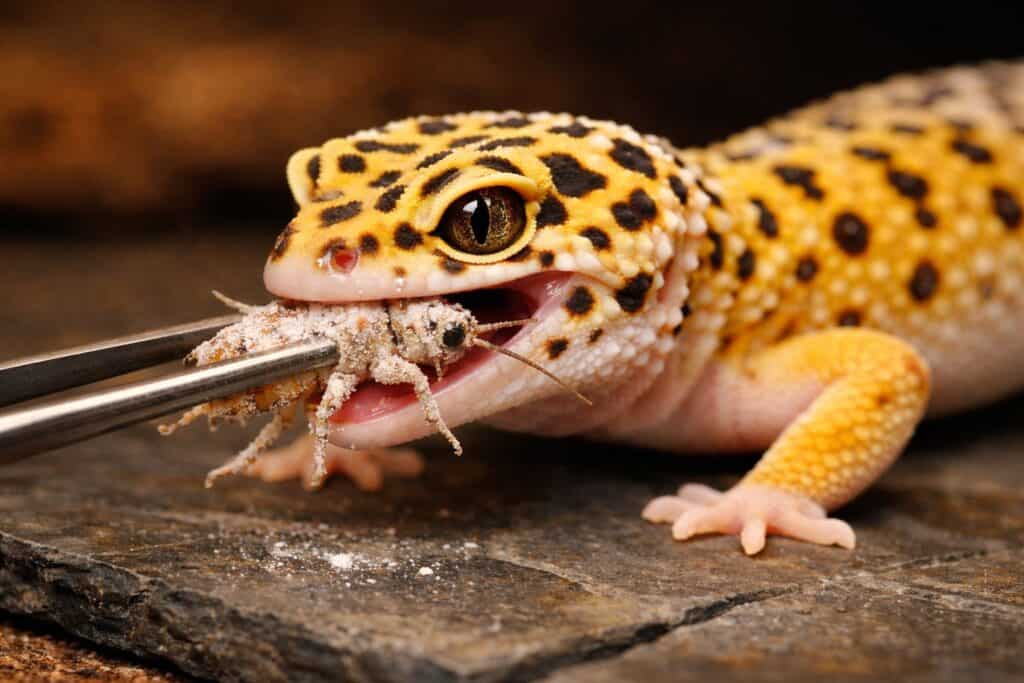
Oversized feeder insects are the second most common cause. The general rule is to never feed anything wider than the space between your gecko’s eyes. A juvenile leopard gecko eating adult crickets or superworms is asking for trouble. The hard chitin exoskeletons of mealworms and superworms are harder to digest than softer feeders, and feeding too many of them too often increases the risk.
Dehydration plays a supporting role. A dehydrated gecko doesn’t have enough fluid in its gut to move things along smoothly. If the enclosure humidity is too low, the water bowl is empty, or the gecko isn’t drinking enough, even a normal meal can become harder to pass. Low temperatures on the warm side compound this because digestion slows down when the gecko can’t reach proper basking temps. Without adequate heat, food sits in the stomach longer and moves through the intestines more slowly.
6 Warning Signs of Leopard Gecko Impaction
Catching impaction early makes all the difference. Here are the signs to watch for, roughly in order from early to severe.
No poop for several days. This is the first and most reliable sign. Leopard geckos are predictable poopers. Most adults go every one to two days. If you clean the enclosure regularly, which you should, you’ll notice when waste stops appearing. Three to four days without a bowel movement warrants attention. A full week without poop alongside other symptoms is a red flag.
Loss of appetite. A gecko that’s backed up doesn’t want to eat. If your leo was eating enthusiastically and suddenly starts refusing food, check the enclosure floor for droppings. No poop plus no appetite is the classic early combo for leopard gecko impaction.
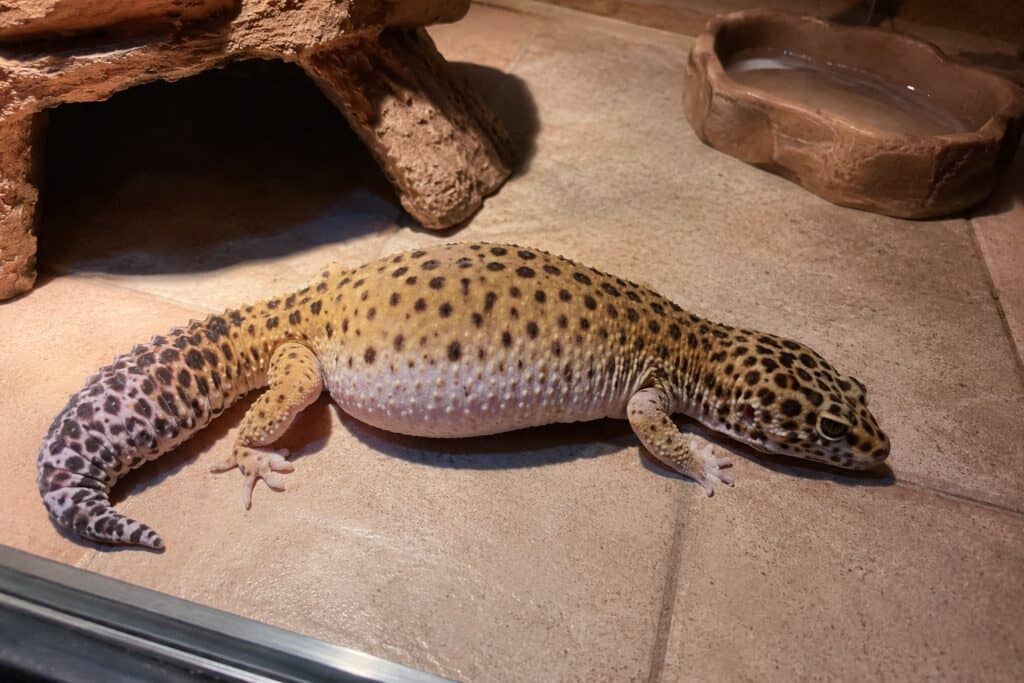
Bloated or swollen belly. Gently look at your gecko’s belly. A healthy leopard gecko has a smooth, slightly rounded abdomen. An impacted gecko may look visibly swollen or distended, especially along the sides. If you carefully feel the belly (be very gentle), you might detect a firm lump. Don’t press hard. You don’t want to cause more damage.
Dark spot on the belly. If you look at the underside of your gecko and see a dark blue or black patch showing through the skin, that’s often the impacted mass visible through the abdominal wall. This is a more advanced sign and means the blockage has been there for a while. It can also indicate other issues like a liver problem, so don’t diagnose on this alone, but combined with constipation and appetite loss, it points strongly toward impaction.
Lethargy. An impacted gecko becomes increasingly inactive. It may stop coming out to hunt, spend all day in its hide, and move slowly when it does emerge. As the condition progresses, the gecko may sit with its eyes partially closed, which is always a bad sign in reptiles.
Thin tail with bloated body. In advanced cases, the gecko’s tail starts thinning because it’s burning through its fat reserves while unable to eat. Meanwhile the belly stays swollen. This combination of a shrinking tail and a distended abdomen is urgent. Get to a vet immediately.
Here’s how leopard gecko impaction signs progress, from the earliest warning to the point where a vet is urgent.
| Warning Sign | Stage |
|---|---|
| No poop for 3 to 4 days | Early |
| Loss of appetite | Early |
| Bloated or swollen belly | Moderate |
| Lethargy, hiding all day | Moderate |
| Dark spot showing through the belly | Advanced |
| Thinning tail with bloated body | Urgent, see a vet now |
Home Treatment for Mild Leopard Gecko Impaction
If you’ve caught it early, meaning the gecko missed a few poops and is eating less but is still alert and moving around, you can try a couple of things at home before going to the vet.
A warm soak is the first step. Fill a shallow container with lukewarm water, around 85 degrees Fahrenheit, just deep enough to cover the gecko’s belly. Let it soak for 15 to 20 minutes. The warmth relaxes the muscles and the water helps hydrate the gut, both of which can encourage a bowel movement. You can do this once or twice a day for a few days.
While soaking, gently massage the belly from front to back with your fingertip. Very light pressure only. This can help move the blockage along. Some keepers also put a tiny drop of olive oil or mineral oil on the gecko’s nose and let it lick it off. The oil acts as a mild lubricant in the digestive tract. Don’t force oil into the gecko’s mouth. If it doesn’t lick it voluntarily, skip this step.
Make sure the warm side of the enclosure is hitting 88 to 92 degrees on the floor. Digestion requires heat, and if your temps are low, the gecko’s metabolism can’t do its job even if the blockage loosens up.
Stop feeding until the gecko passes the blockage. Adding more food on top of an obstruction only makes things worse.
When to See a Vet
If home treatment doesn’t produce results within two to three days, or if your gecko is showing advanced symptoms like a dark belly spot, severe lethargy, eyes barely open, or a rapidly thinning tail, you need a reptile vet. Severe leopard gecko impaction sometimes requires intervention that you can’t do at home, including fluid therapy, enemas, or in worst cases, surgery to remove the blockage.
Don’t wait too long to escalate. A gecko that’s been impacted for over a week is in serious trouble. The ARAV vet directory can help you locate a reptile vet in your area quickly.
How to Prevent Leopard Gecko Impaction
Prevention is straightforward once you know the risk factors.
Switch to a solid substrate. Tile, paper towel, reptile carpet, or a carefully managed bioactive setup with appropriate topsoil are all safer than loose sand or gravel. If you want a naturalistic look, a 70/30 topsoil and playsand mix compacted firmly is a much lower risk than pure loose sand, and it’s what many experienced keepers use. For tips on substrate choices, our bioactive enclosure guide covers the options in detail.
Feed appropriately sized insects. Nothing wider than the space between the eyes. For juveniles, stick to small crickets, small dubia roaches, and appropriately sized mealworms. Avoid superworms for young geckos entirely. Even for adults, vary the diet and don’t rely exclusively on hard-shelled feeders. Hornworms and silkworms are softer and easier to digest.
Keep your gecko hydrated. Fresh water available at all times, a moist hide with damp sphagnum moss, and proper humidity in the 30 to 40 percent range for the enclosure overall. For more on calcium and supplement schedules that support healthy digestion, check out our leopard gecko calcium schedule article.
Keep temps right. The warm side floor temperature should be 88 to 92 degrees Fahrenheit. Low temps are one of the sneakiest contributors to impaction because the gecko eats normally but can’t digest efficiently.
Repeated impaction episodes take years off a gecko’s life, and a healthy leo should be with you for a long time. See our guide on leopard gecko lifespan for what actually shortens it.
Track Feeding and Pooping to Catch Problems Early
The single best early warning system for leopard gecko impaction is a simple log of what goes in and what comes out. If you track feeding dates and note when you see droppings during your daily spot clean, a gap becomes obvious within two or three days instead of going unnoticed for a week.
The Exotic Reptile Care app makes this easy. Log every feeding with the type and quantity of insects, and note bowel movements when you clean. If there’s a gap forming, you’ll see it in the timeline before the gecko starts showing visible symptoms. You can also track weight weekly, which catches the slow decline that comes with chronic digestive issues before the tail starts visibly thinning. Early detection turns a potentially fatal problem into a minor course correction.
Leopard gecko impaction: frequently asked questions
How do I know if my leopard gecko is impacted?
The clearest early sign is no poop for several days paired with a loss of appetite, since healthy adults go every one to two days. As it progresses you’ll see a bloated belly, lethargy, and in advanced cases a dark patch showing through the underside or a thinning tail on a still-swollen body. No poop plus no appetite is the classic combo that should put leopard gecko impaction at the top of your list.
What does impaction look like on a leopard gecko?
Early on it mostly shows as behavior, a gecko that’s hiding, sluggish, and off its food. Physically, the belly looks swollen or distended along the sides rather than smoothly rounded, and you may feel a firm lump with very gentle pressure. A dark blue or black spot visible through the belly skin is a more advanced sign, though it can also point to a liver issue, so don’t diagnose on that alone.
Can a leopard gecko pass an impaction on its own?
A mild, early impaction often clears with home care, but it rarely resolves entirely on its own without help. Warm soaks at around 85°F, a gentle belly massage, correct 88 to 92°F warm-side floor temps, and stopping feeding until it passes give the gecko the best chance. If nothing moves within two to three days, or symptoms worsen, it needs a vet rather than more waiting.
What is the main cause of impaction in leopard geckos?
Loose substrate is the number one cause, especially sand and calcium sand, which the gecko swallows while striking at insects and which builds up over time. Oversized feeder insects are the second most common cause, so never feed anything wider than the space between the eyes. Dehydration and a too-cool warm side make both worse by slowing digestion.
How long can a leopard gecko go without pooping before it’s a problem?
Most adults poop every one to two days, so three to four days without a bowel movement warrants attention, and a full week alongside other symptoms is a genuine red flag. Juveniles are even more predictable and more vulnerable, so a young gecko backing up should be watched closely. This is exactly why noting droppings during your daily spot clean matters so much.
How can I prevent leopard gecko impaction?
Four things cover almost all of it: use a solid substrate like tile, paper towel, or a firmly compacted 70/30 topsoil and playsand mix, feed only insects narrower than the eye gap, keep the gecko hydrated with a moist hide and proper humidity, and hold the warm-side floor at 88 to 92°F. The other half is early detection. Logging feedings and bowel movements in the Exotic Reptile Care app makes a forming gap obvious in two or three days instead of a week.