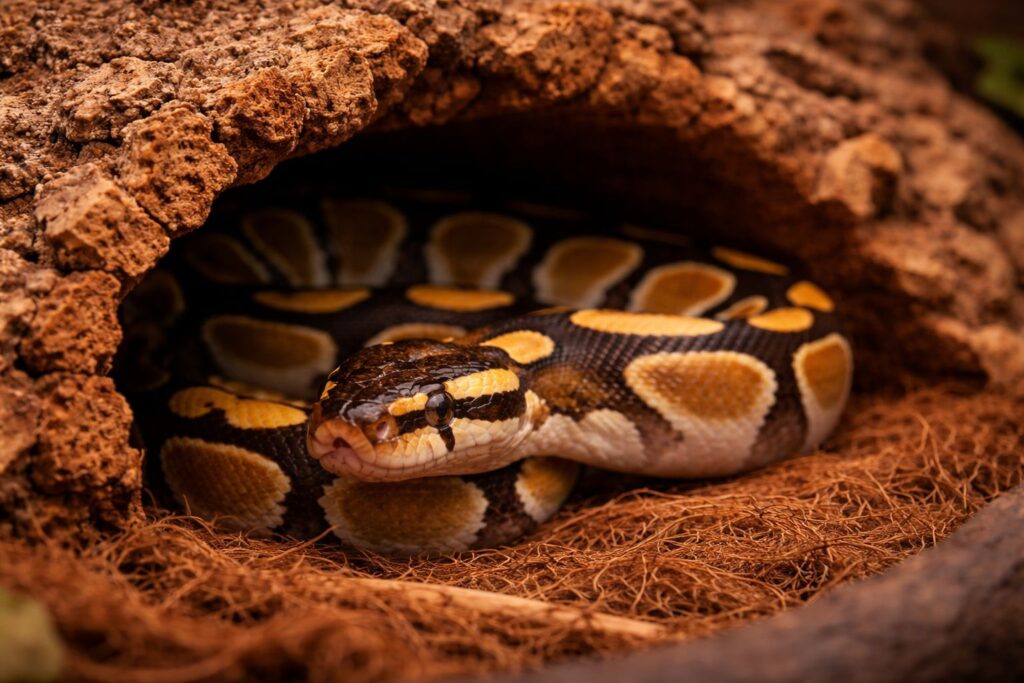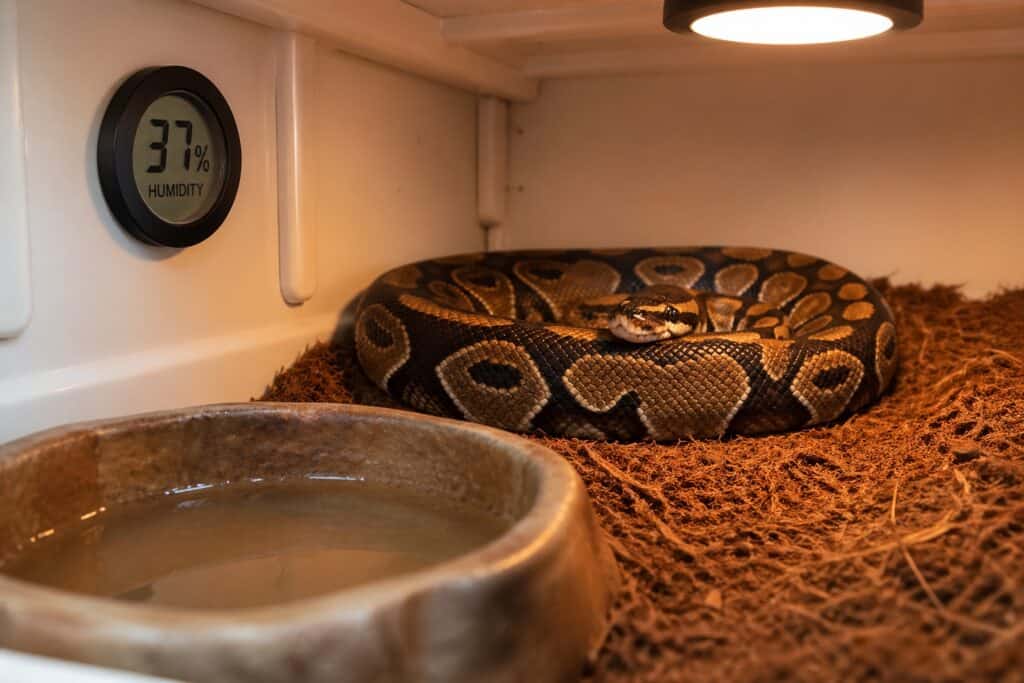
If you’ve spent any time on reptile forums, you know that ball python bedding is one of those topics people will argue about endlessly. Substrate, bedding, whatever you call it, everyone has a favorite. The truth is there’s no single best substrate for ball python enclosures, but there are several good options, a couple of okay ones, and a few that can actually hurt your snake. What matters most is whether the substrate holds humidity, stays clean, and lets your ball python behave naturally. Let’s cut through the noise.
What Makes the Best Substrate for a Ball Python Enclosure
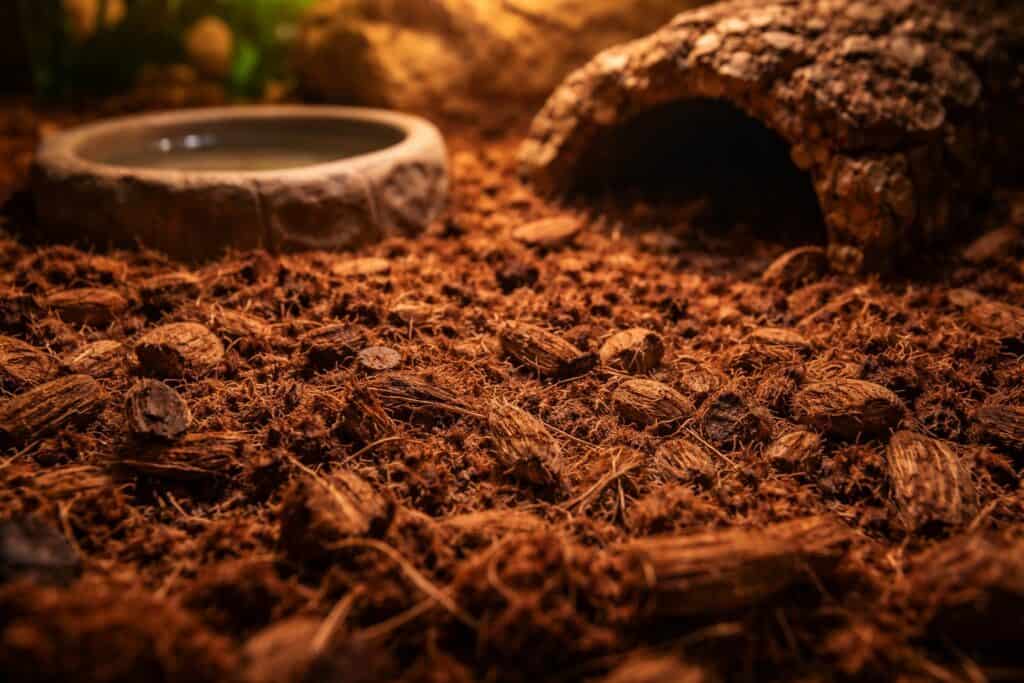
The best substrate for a ball python enclosure comes down to three things: it holds humidity in the 55 to 65 percent range, it stays clean with simple spot cleaning, and it lets your snake burrow. Everything else is personal preference. Coco husk and coconut fiber mixes nail all three, which is why most keepers land there. Below I break down every common option, what works, and what to avoid.
Is Ball Python Bedding the Same as Substrate?
Yes. Bedding and substrate mean the same thing for ball pythons, the loose material lining the bottom of the enclosure. You’ll see both words used interchangeably in pet stores and care guides. So when you’re shopping for “ball python bedding,” you’re looking for the same coconut husk, fiber, or soil mixes covered here. Don’t overthink the label, focus on humidity retention and safety.
Why Substrate Choice Matters More Than You Think
Ball pythons are ground-dwelling snakes from West Africa. In the wild, they spend most of their time in rodent burrows, leaf litter, and loose soil. The substrate you put in their enclosure directly affects humidity, hygiene, comfort, and even feeding behavior.
Get it wrong and you’ll fight humidity problems constantly, deal with mold, or worse, put your snake at risk for respiratory infections and scale rot. Your substrate choice also affects feeding behavior. Some substrates are riskier during feeding time because loose particles can be ingested with prey. If you’re still dialing in your ball python’s feeding routine, our ball python feeding schedule by age guide covers timing, prey size, and what to expect at each stage. Get it right and maintaining proper conditions becomes way easier. You’ll spend less time troubleshooting and more time actually enjoying your snake.
The ideal ball python substrate should hold humidity steady in the 55 to 65 percent range without going soggy, and let you push it to 70 percent or higher for a few days when your snake is in shed. be easy to spot clean, resist mold, and look decent if you care about the visual side of things. Not every substrate checks all those boxes, so here’s how the real options stack up.
The Best Substrate for Ball Python Enclosures
These are the substrates that experienced keepers consistently recommend and that actually perform well long term.
| Substrate | Humidity | Best For |
| Coconut Husk | Excellent | Most keepers |
| Coconut Fiber | Very Good | Budget setups |
| Cypress Mulch | Good | Natural look |
| DIY Tropical Mix | Very Good | Bioactive builds |
| Sphagnum Moss | Best | Humid hides only |
| Paper Towels | None | Quarantine, racks |
| Aspen | Poor | Not recommended |
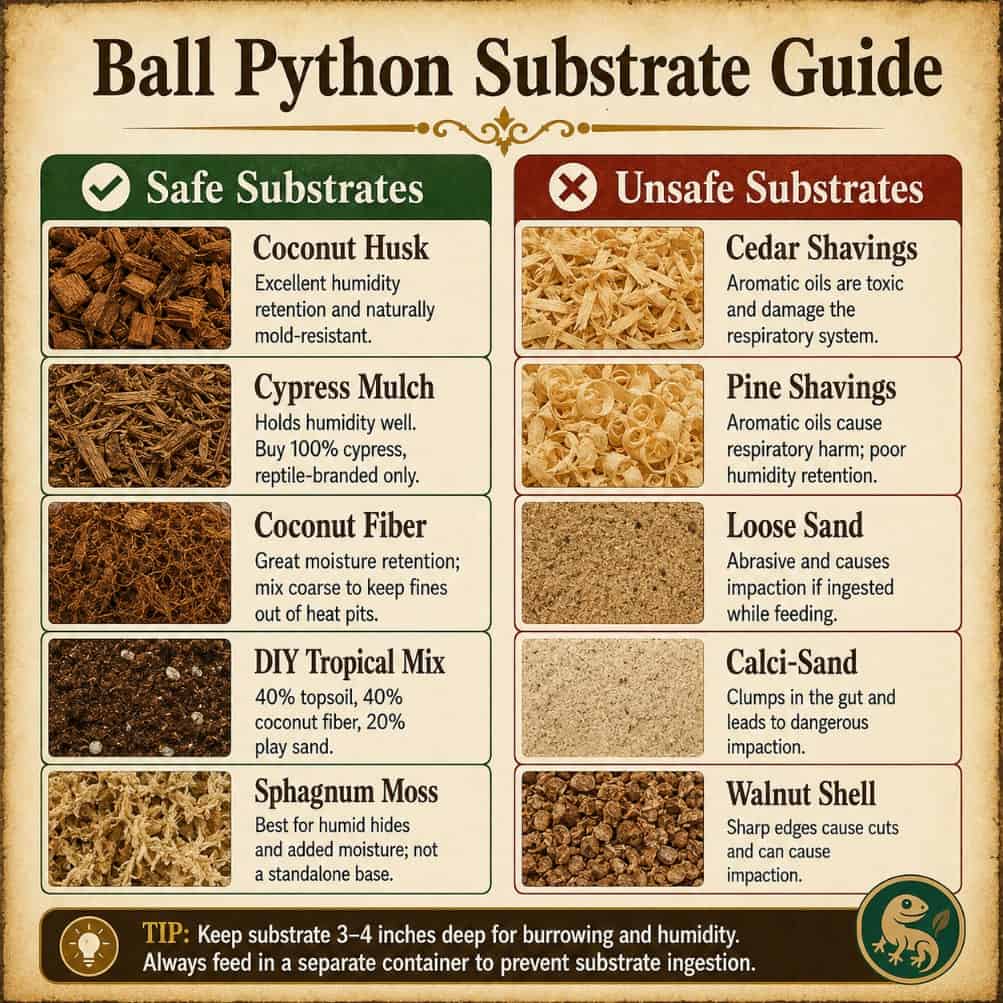
Coconut husk, sometimes sold as coconut chip or coco husk, is probably the most popular choice right now and for good reason. The most common branded options are ReptiChip, which is washed multiple times and runs low on dust, and Zilla Jungle Mix. ReptiChip also sells a finer Babychip grade if you want something less chunky for a smaller snake. It holds humidity extremely well, resists mold naturally, and absorbs odor better than most alternatives. It looks natural in the enclosure and gives ball pythons a nice surface to move across. The downside is cost. It runs more expensive than most other options, and the dark color can make it harder to spot waste. But for overall performance, it’s hard to beat.
Coconut fiber, also called coco coir, is the finer-textured version of coconut husk. Zoo Med Eco Earth and Exo Terra Plantation Soil are the two you will find in almost every pet store, usually sold as compressed bricks you rehydrate yourself. One brick expands to roughly 7 to 8 quarts, so it works out cheaper than it looks on the shelf. It holds moisture great and is cheap. The issue is that the fine particles can get stuck in your snake’s heat pits, which sit along the upper lip. It’s not dangerous, but it can be annoying for the snake. If you go with coco fiber, mixing it with something coarser like coconut husk or orchid bark helps a lot.
Cypress mulch works well for humidity and has a nice natural look. Zoo Med Forest Floor is the standard reptile-branded bag and the easiest way to avoid the sourcing problem below. It’s widely available and reasonably priced. The concern with cypress mulch is sourcing. Garden center cypress can be contaminated with pesticides or herbicides, so stick to reptile-branded bags. If you’re worried, you can bake it on a sheet pan at 250 degrees Fahrenheit for about an hour to sterilize it. Some keepers find the larger pieces can be an impaction risk, though this is rare with appropriately sized chunks.
A DIY tropical substrate mix of 40 percent organic topsoil, 40 percent coconut fiber, and 20 percent play sand is another excellent option. This substrate mix is popular among experienced ball python keepers because it’s cheap and performs just as well as the premium options. If you would rather buy than mix, Zoo Med ReptiSoil is the closest off-the-shelf equivalent, though it drains a little muddy on its own and does better cut with coconut husk. This mix also works as a base if you ever want to go bioactive down the road.
Okay Substrate Options for Ball Python (With Trade-offs)
Sphagnum moss is fantastic for humidity. Ball pythons love burrowing under it, and it looks great in a naturalistic setup. But it doesn’t work well as a primary substrate on its own because it compacts over time and can stay too wet. It’s best used as a top layer over another substrate or stuffed into a humid hide for shedding support.
Paper towels and newspaper are the simplest options. They’re cheap, easy to replace, and let you monitor waste with no guesswork. The problem is they do almost nothing for humidity. If you’re keeping a ball python on paper towels, you’ll need to mist more often and possibly add a humid hide with damp moss to compensate. A lot of breeders use paper for rack systems where the smaller enclosed space holds humidity better. In a glass tank or PVC enclosure, paper alone usually isn’t enough.
Aspen shavings are popular with corn snake and king snake keepers but they’re honestly not a great fit for ball pythons. Aspen doesn’t hold humidity, molds quickly when it gets damp, and ball pythons need more moisture in their environment than aspen can handle. You will find keepers who swear by aspen for ball pythons, and in a dry-climate rack system with a good humid hide they are not wrong. But for anyone running a glass or PVC enclosure and fighting to hold humidity, aspen makes the job harder than it needs to be. Zoo Med Aspen Snake Bedding is the version to use if you go that route, since general rodent aspen is dustier and comes in larger chips.
Substrates You Should Never Use
Pine and cedar shavings are a hard no. The aromatic oils in these woods release phenols that can damage your snake’s respiratory system and, with long enough exposure, affect the liver. This is well documented across reptile and small mammal keeping, and Melissa Kaplan’s write-up on cedar as a reptile substrate is the reference most keepers point to. It doesn’t matter how good they smell to you. They’re toxic to reptiles. Don’t use them.
Reptile carpet seems like a good idea but it’s a nightmare in practice. Waste soaks into the fibers, bacteria builds up fast, and the loops can snag on your snake’s scales or teeth. Cleaning it thoroughly enough to actually be hygienic is more trouble than it’s worth.
Sand on its own is another bad choice for ball pythons. It doesn’t hold humidity, can cause impaction if ingested, and doesn’t reflect anything close to their natural habitat. A small amount mixed into a soil-based substrate is fine, but straight sand is a problem.
How Much Substrate for Ball Python
Aim for 3 to 4 inches of substrate across the enclosure. Ball pythons like to burrow, especially during shedding, and a thin layer doesn’t give them the option. A good depth also helps maintain humidity more consistently because the lower layers stay damp while the top dries out, which is exactly the moisture gradient you want.
If you’re using a loose substrate like coconut husk or a tropical mix, you can lightly mist the lower layers and leave the top dry. This creates a humid microclimate underneath without making the whole enclosure feel swampy.
Bioactive Substrate for Ball Pythons
A bioactive setup swaps monthly substrate changes for a small colony of isopods and springtails that break waste down for you. It costs more upfront and takes a few weeks to establish, but once it settles you are spot cleaning far less.
The mix needs to hold structure and drain, so a pure coconut product will not cut it on its own. A workable blend is 60 percent organic topsoil with no fertilizer or weed inhibitor, 20 percent coconut fiber, and 20 percent play sand, with coconut husk or cypress mulch stirred through to keep it from compacting. Go 4 inches minimum so the cleanup crew has somewhere cool and damp to retreat to, and cover the whole surface with dried leaf litter. The leaf litter is not decoration. It is what the isopods actually eat between waste cycles.
Springtails handle mold and isopods handle waste. Dwarf whites and powder oranges both do fine at ball python humidity. Give the crew two to four weeks to establish before the snake goes in.
If you want the full walkthrough on drainage layers, cleanup crews, and plant choices, see our guide to setting up a bioactive reptile enclosure.
Best Ball Python Substrate for Humidity
If humidity is your main struggle, not all substrates are equal. Here’s how the options rank from best to worst for moisture retention: sphagnum moss is the best at holding water but doesn’t work as a standalone substrate, followed by coconut husk, coconut fiber, the DIY tropical mix, cypress mulch, and finally aspen at the bottom. Aspen and humidity don’t mix at all.
For most keepers in dry climates, coconut husk or a coconut fiber mix with regular misting keeps humidity sitting in the 55 to 65 percent range without going soggy. If you’re still fighting low humidity after picking the right substrate, check your enclosure ventilation. Screen-top tanks lose moisture fast, and switching to a PVC or glass front-opening enclosure makes a bigger difference than any substrate swap. If you’re dealing with humidity dropping below 55 percent regularly, check out our guide on fixing low ball python humidity for a full breakdown.
Keeping It Clean
No matter which substrate you choose, spot clean daily. Remove feces as soon as you see them, scoop out urates and the substrate around them, and refresh the water bowl. A full substrate change should happen about once a month for most loose substrates. If you want a deeper breakdown on cleaning frequency and what to clean when, check out our guide on how often to clean a snake enclosure. If you’re running a bioactive setup with a cleanup crew, you can stretch that to every 6 to 12 months.
Keeping track of when you last changed the substrate, when your snake last defecated, and when they’re due for a shed helps you stay ahead of problems. The Exotic Reptile Care app lets you set custom reminders for cleaning, track feeding and shedding cycles, and keep all your enclosure maintenance on a schedule. It takes the guesswork out of knowing when things need attention.
Pick What Works for Your Setup
The best substrate for ball python keeping is the one that maintains proper humidity in your specific enclosure, stays clean with reasonable effort, and keeps your snake comfortable. For most keepers, coconut husk or a coconut fiber mix will be the best all-around choice. If you’re on a budget, the DIY tropical soil mix performs just as well for a fraction of the cost. Whatever you pick, avoid pine, cedar, and sand, keep it deep enough for burrowing, and stay consistent with maintenance.
For a complete breakdown of ball python enclosure setup including heating and hides, see our full ball python enclosure setup guide.
Frequently Asked Questions
What is the best substrate for ball pythons?
Coconut husk or a coconut fiber mix is the best substrate for ball pythons. It holds humidity, resists mold, and is easy to spot clean. A DIY tropical soil mix works just as well on a budget.
How deep should ball python substrate be?
Aim for 3 to 4 inches across the enclosure. That’s deep enough for burrowing and holding humidity, without creating a layer so deep that anaerobic bacteria builds up at the bottom.
Can I use coco husk for a ball python?
Yes, coco husk is one of the best substrate options for ball pythons. It holds humidity well, resists mold, and is easy to spot clean. Most experienced keepers consider it the top all-around choice.
What bedding is bad for ball pythons?
Pine and cedar shavings are the worst options. The aromatic oils are toxic to reptiles and can cause respiratory damage and neurological issues. Reptile carpet and pure sand are also bad choices for different reasons.
How often should I change ball python substrate?
Spot clean daily by removing waste and soiled substrate. A full substrate change should happen about once a month for loose substrates like coconut husk or cypress mulch. Bioactive setups can go 6 to 12 months between full changes.
Is coconut fiber safe for ball pythons?
Yes, coconut fiber is safe. The only downside is that the fine particles can get stuck in your snake’s heat pits along the upper lip. Mixing it with something coarser like coconut husk or orchid bark helps prevent that.
Can I mix substrates for a ball python?
Absolutely. Mixing substrates is actually one of the best approaches. A popular substrate mix is 40 percent organic topsoil, 40 percent coconut fiber, and 20 percent play sand. It’s cheap, holds humidity, and gives your snake a natural burrowing experience.
How much substrate do I need for a 4x2x2 ball python enclosure?
A 4x2x2 foot enclosure needs roughly 24 quarts of substrate for a 3 inch layer, or about 32 quarts for 4 inches. That is around three expanded Eco Earth bricks, or one large bag of ReptiChip. For a 40 gallon breeder tank, figure on 14 to 18 quarts.