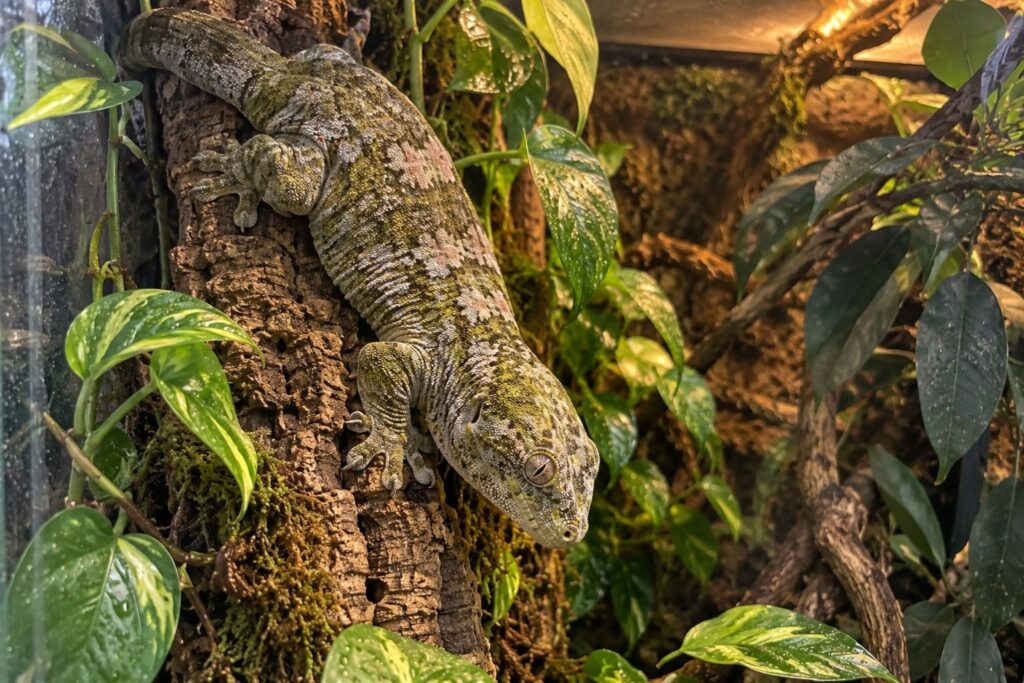
The first thing people notice about a leachie is the size. An adult New Caledonian giant gecko can hit 14 inches or more and weigh as much as a small guinea pig, which makes it the largest living gecko. The second thing they notice is how slowly a baby leachie gets there. Good leachie gecko care is mostly about patience. The setup is simple, the diet is easy, and the biggest worry keepers have is usually a gecko that’s growing exactly as slowly as it’s supposed to.
Leachie Gecko Care Quick Specs
A leachie gecko needs a tall planted enclosure, ambient temperatures of 72 to 78°F, a warm spot of 80 to 82°F, humidity of 60 to 80% with a nightly spike, and a diet of powdered fruit-based gecko food plus insects.
| Parameter | Target |
|---|---|
| Adult length | 10 to 14+ inches, including tail |
| Adult weight | 250 to 500+ g, depending on locality |
| Lifespan | 20+ years |
| Time to adult size | Often 3 to 5 years |
| Adult enclosure | 24 x 24 x 36 inch minimum, 24 x 24 x 48 better |
| Ambient | 72 to 78°F |
| Warm spot | 80 to 82°F |
| Night | 65 to 72°F |
| Humidity | 60 to 80%, higher at night, dry-down by day |
| Diet | Powdered gecko diet plus insects |
| Housing | Alone, unless an established pair |
Leachies don’t handle heat well. Keep the warm spot in the low 80s and never let the enclosure climb above about 85°F.
Localities and Size
Leachies are sold by locality, meaning the island or region their bloodline came from. Size, color, and body shape vary a lot. Grande Terre leachies are the big ones, the animals people picture when they hear “largest gecko in the world.” Many island localities, like Nuu Ana and other small offshore islands, stay noticeably smaller. Henkeli are a separate group of leachies that also stay on the smaller side.
Leachie gecko care is the same across localities, but plan your enclosure around the adult size of the one you buy, and always buy captive bred from a breeder who can tell you the locality and hatch date.
Setting Up a Leachie Gecko Enclosure
Leachies are arboreal and spend their lives on tree trunks, so in leachie gecko care height matters most. An adult needs at least a 24 x 24 x 36 inch front opening enclosure, and 24 x 24 x 48 is better for the big localities.
Babies and juveniles are a different story. Leachies are shy, and a tiny one in a huge enclosure often hides constantly and struggles to find food. Most keepers start babies in a small, ventilated tub or a 12 x 12 x 18 inch enclosure and move them up gradually as they grow.
The key piece of furniture is a hide. In the wild leachies shelter in tree hollows, and they want a large cork tube or a hollow they can fit their whole body into, mounted high or at an angle. Add thick branches, more cork, and lots of plants. Pothos, ficus, and dracaena all handle a heavy gecko climbing on them.
A coco fiber and topsoil substrate a few inches deep holds humidity well. Leachies also do very well in planted bioactive setups.
Temperature and Humidity for Leachie Gecko Care
Keep ambient temperatures at 72 to 78°F, with one warm spot of 80 to 82°F near the top of the enclosure from a low wattage bulb on a thermostat. At night, temperatures can drop to 65 to 72°F with the light off. If your home stays in the 70s, you may barely need heat at all.
Humidity should sit around 60 to 80%. Mist heavily in the evening, so the enclosure spikes higher overnight when the gecko is active, then let it dry down during the day. Leachies drink from droplets and also use a water dish, so provide both. Constant wetness causes skin and respiratory problems, so the dry-down matters as much as the misting.
A low output UVB tube, like a 5 or 6% tube for shade dwelling species, is worth adding. It isn’t strictly required with good supplements, but most keepers see better activity with it.
Feeding a Leachie Gecko
The base of leachie gecko care is the same powdered fruit-based diet used for crested geckos and gargoyles, the powdered fruit diets sold for crested geckos. Mix it to a ketchup-like consistency and offer it in a ledge feeder or a dish up high two to three times a week. Replace it after a day or two.
Add insects one to two times a week. Dubia roaches, crickets, black soldier fly larvae, and hornworms all work, sized no larger than the space between the gecko’s eyes. Dust with calcium, plus a multivitamin about once a week if you’re not using a complete powdered diet. Big adults of the large localities can also take the occasional pinky mouse, but it’s a treat, not a staple, since too much rich food leads to obesity.
Feed in the evening, when leachies are active.
Slow Growth: Normal or a Problem?
This is the question almost every new leachie keeper asks. A baby leachie can look like it barely changes for months. That’s usually normal. Leachies, especially the big Grande Terre animals, often take three to five years to reach full size, and growth tends to come in spurts rather than a steady climb.
The only way to know is to weigh. Use a gram scale once a month, same day and time, before feeding. Eyeballing a leachie’s size month to month is almost useless, since growth is so gradual. Keep a record and look at the trend. The app’s growth charts in Exotic Reptile Care plot every weigh-in for you, so a flat three months followed by a jump looks exactly like it should, and a slow decline stands out right away.
A flat line for a few months, then gains: normal. Leachies grow in spurts.
Weight holding steady over winter: often normal too. Many leachies eat less in cooler months.
Steady weight loss over two or three weigh-ins: not normal. Check temperatures first, since a too warm enclosure kills appetite in this species. Then check that the gecko can reach the food and isn’t too stressed to come out. A shy juvenile in an oversized enclosure is a common cause.
Weight loss plus other signs: if you see sunken eyes, loose skin that doesn’t spring back, a thin tail base, or runny droppings, take a fresh dropping and the gecko to a reptile vet for a check and fecal exam.
Handling and Temperament in Leachie Gecko Care
Leachies are famous for their bark. A disturbed leachie will open its mouth, growl or bark loudly, and lunge. Most of it is bluff, but a big adult can bite hard and hold on, a lot like a tokay. Many leachies settle with time and tolerate calm handling. Others never enjoy it.
Approach slowly from the side, let the gecko walk onto your hand instead of grabbing it, and keep sessions short. Never grab one by the tail. Leachies have short tails and can drop them, and unlike crested geckos, they do grow back, but slowly.
Housing and Similar Species
Keep leachies alone unless you’re working with an established, compatible breeding pair. Males fight, and even pairs need watching.
If you love the look and temperament but want something smaller and faster growing, gargoyle geckos are close relatives with very similar care and a much more manageable size.
Frequently Asked Questions
How big do leachie geckos get?
Large Grande Terre leachies can reach 14 inches or more and weigh over 400 grams. Many island localities stay noticeably smaller.
How long do leachie geckos live?
With good care, 20 years or more is common, and some live much longer.
What do leachie geckos eat?
A powdered fruit-based gecko diet two to three times a week, plus dusted insects once or twice a week.
Why is my leachie gecko not growing?
Slow growth is normal. Leachies can take three to five years to reach adult size and often grow in spurts. Weigh monthly and look at the trend over several months.
Can leachie geckos be handled?
Some tolerate calm, short handling once settled, but many are defensive and can bite hard. Treat handling as optional, not a requirement.
Leachie gecko care rewards patience more than anything. Keep the enclosure cool, humid at night and dry by day, feed a good powdered diet with insects on the side, and weigh instead of worrying. Give it a few years and you’ll have one of the most impressive geckos in the hobby.