Crested gecko food is one of the easiest jobs in reptile keeping, and keepers still manage to overcomplicate it. These geckos have the closest thing the hobby has to a complete packaged diet, which means you can feed one properly with a jar of powder, a water bottle, and a small dish. Everything beyond that is optional extras.
The trouble usually comes from two directions. People either treat the powder as a base and pile on fruit and insects until the balance is wrecked, or they skip the powder entirely and try to build a diet from baby food and mashed banana. Both go badly.
| Food Type | How Often | Notes |
|---|---|---|
| Complete diet powder | 3 times a week | The staple, mixed fresh |
| Feeder insects | 1 to 2 times a week | Dusted and gut loaded |
| Fresh fruit | Occasional treat | Small amounts, soft and ripe |
| Baby food | Rarely or never | No complete nutrition |
| Wild-caught insects | Never | Pesticide and parasite risk |
The Staple: Complete Crested Gecko Diet Powder
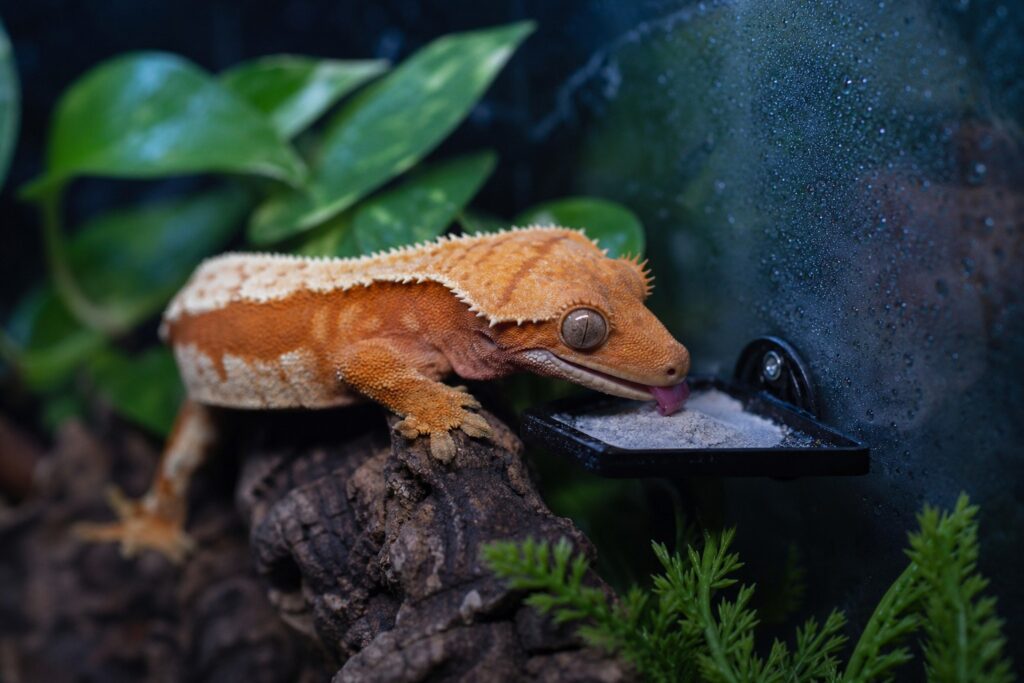
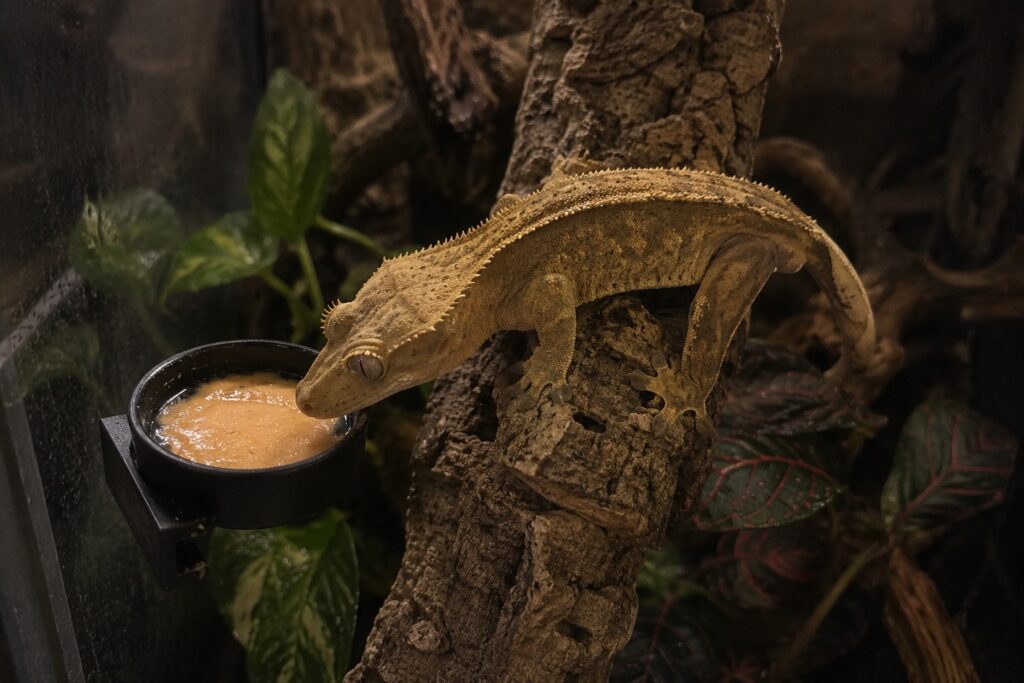
This is the whole foundation. Commercial meal replacement powders for crested geckos are formulated with the right calcium to phosphorus ratio, vitamins, and protein, and a gecko can live its entire life on one with nothing else added. That’s genuinely unusual for a reptile.
Mix it fresh, typically one part powder to two parts water, though check what your brand specifies since some run thinner. You want the consistency of a thick smoothie or ketchup, not a paste and not soup. Put it out in the evening when your gecko becomes active, and pull it after 24 to 36 hours before it spoils.
Most of the flavors are fruit-based, which is why this works so well as the sole crested gecko food. Crested geckos are frugivorous in the wild, eating soft fruit, nectar, and insects. Their digestive system handles fruit sugars in a way that most pet lizards can’t, which is exactly why leopard geckos can’t eat fruit while cresties thrive on it.
If your gecko rejects one flavor, try another before assuming it’s off food. They have preferences and they’re stubborn about them.
Insects as Part of a Crested Gecko Food Routine
Insects aren’t strictly required if you’re feeding a complete powder, but most keepers offer them and there are decent reasons to. They provide enrichment, they trigger natural hunting behavior, and they add protein for growing juveniles and breeding females.
Good options are dubia roaches, crickets, and black soldier fly larvae. Keep the insect no longer than the space between your gecko’s eyes. Gut load them for a day or two before feeding, and dust with calcium plus D3 unless you’re running UVB.
Once or twice a week is plenty. Insects should not become the main crested gecko food, because a gecko that fills up on protein and skips the powder misses the vitamin and mineral balance the powder was designed to provide. Gargoyle geckos are the exception worth knowing about if you keep both. They eat the same powdered diets but take insects more readily and benefit from them more regularly, which is covered in our gargoyle gecko care guide.
Never feed wild-caught insects. Pesticide exposure and parasites aren’t worth the free meal. Fireflies in particular are toxic to reptiles and have killed geckos.
Fresh Fruit as a Treat
Fruit is fine occasionally and it’s the part keepers enjoy most, but it’s a treat rather than a food group. Fresh fruit doesn’t carry the calcium a crested gecko needs, and too much of it dilutes an otherwise balanced diet.
Good choices are soft, ripe, and low in oxalates. Mashed banana, mango, papaya, figs, apricot, and peach all work. Serve it mashed or pureed, in small amounts, once every week or two at most.
Skip citrus entirely, since the acidity irritates them. Avoid avocado, which is toxic to most reptiles. Rhubarb is another hard no. And be cautious with anything high in oxalates, like starfruit, because oxalates bind calcium in the gut.
Baby food gets recommended constantly and it shouldn’t be a staple. It’s fine as a rare treat or as a way to tempt a gecko that’s stopped eating, but it has no calcium balance and no complete nutrition. A gecko raised on baby food heads toward metabolic bone disease.
What Not to Feed
Beyond the ones above: no insects larger than the eye gap, no citrus, no avocado, no rhubarb, no wild insects, no dog or cat food, and no fruit-flavored anything intended for humans with added sugar.
The general principle behind this is worth knowing. Veterinary nutrition guidance for reptiles emphasizes matching captive diets to what a species actually eats in the wild, and cautions against depending on a single narrow food source. For crested geckos that means a fruit-and-insect-shaped diet, delivered mostly through a formulated powder rather than through your fruit bowl.
Water and Hydration
Crested gecko food is only half the picture, since these are humid-forest animals that drink water droplets off leaves rather than from a dish. Mist the enclosure once or twice daily, heavier in the evening. Keep a shallow water dish available anyway, since some geckos do use them.
Dehydration shows up as wrinkled skin, sunken eyes, and stuck shed around the toes and tail tip. It’s a common cause of what looks like a food problem.
When Food Is the Cause of Weight Loss
A gecko that’s dropping weight usually has a food issue somewhere in the chain, and it’s rarely as simple as “not eating.” Common versions: the powder is being mixed too thin, the dish is somewhere the gecko doesn’t go, the enclosure is too cold for proper digestion, or the food is being left out long enough to spoil and get rejected.
Our post on a crested gecko losing weight walks through diagnosing that properly. For how often to feed at each life stage, our crested gecko diet schedule covers the timing side, which this guide deliberately doesn’t repeat.
Tracking What Gets Eaten
The hard part with crested geckos is that they eat at night, in small amounts, out of a dish you can’t easily read. A dish that looks partly empty could mean a full meal or it could mean evaporation.
Weighing is the honest answer. An adult holding steady week to week is eating enough regardless of what the dish looks like. The Exotic Reptile Care app logs weight over time and lets you record which flavor or feeder you offered and whether it got touched, which is how you find out that your gecko has quietly refused the same powder for three weeks running.
FAQ: Crested Gecko Food Questions
Can crested geckos live on powdered diet alone?
Yes. Complete commercial crested gecko diets are formulated as full nutrition, and a gecko can live its whole life on one. Insects and fruit are enrichment rather than requirements.
How often should I feed my crested gecko?
Three times a week for adults, more often for juveniles. Put food out in the evening and remove it after 24 to 36 hours.
Can crested geckos eat baby food?
Only as an occasional treat. It lacks the calcium balance a gecko needs, and long-term use leads to metabolic bone disease.
What fruit is safe for crested geckos?
Soft, ripe, low-oxalate fruit like banana, mango, papaya, fig, and peach, mashed and offered in small amounts. Avoid citrus, avocado, rhubarb, and starfruit.
Do crested geckos need insects?
Not strictly, if you’re feeding a complete powder. Most keepers offer them once or twice a week anyway for enrichment and extra protein, especially for growing juveniles.
The honest summary is that good crested gecko food is boring. Powder three times a week, insects when you feel like it, fruit occasionally, water every day. Keepers who get into trouble are almost always the ones who decided the simple version couldn’t possibly be enough.