Most people feed a gargoyle exactly like a crested gecko, because that’s what the care sheets suggest. That’s close, but not quite right. A gargoyle gecko diet uses the same powdered food as a crestie’s, but gargoyles are more carnivorous, and they do noticeably better when insects are a regular part of the week rather than an optional extra.
Here’s how to balance the two, what to dust with, and what to do when your gargoyle won’t touch the powder.
Gargoyle Gecko Diet at a Glance
A gargoyle gecko diet is built on a complete powdered gecko diet offered three times a week, plus dusted insects once or twice a week, with fruit only as an occasional treat.
| Food | Adults | Juveniles |
|---|---|---|
| Powdered gecko diet | 3 times a week | Every other day |
| Dusted insects | 1 to 2 times a week | 2 to 3 times a week |
| Fresh fruit | Mashed, every 1 to 2 weeks | Rarely, small amounts |
| Water | Shallow dish, changed daily | Shallow dish, changed daily |
Why Gargoyles Need More Insects
In the wild, gargoyle geckos eat fruit and nectar like cresties, but they also hunt a lot more. They take insects, spiders, and even small lizards, including other geckos. Their jaws are stronger and their bodies stockier, and that shows in what they need.
In practice, a gargoyle that only gets powder will usually survive, but it often looks thinner, grows more slowly as a juvenile, and is less active. Adding insects once or twice a week fills that gap. Juveniles and breeding females benefit the most, so give them insects more often.
Don’t overdo it the other way, though. A gargoyle that fills up on bugs every night may skip the powder, which carries the vitamins and calcium balance it needs. Insects are part of the diet, not a replacement for it.
The Powdered Base
The staple of a gargoyle gecko diet is a complete powdered diet, the same powders sold for crested geckos. Mix it with water to a thick, ketchup-like consistency, usually about one part powder to two parts water, and offer it in a ledge dish about two thirds of the way up the enclosure. Put it out in the evening and remove it after 24 to 36 hours, before it spoils.
Some brands make formulas with added insect protein, which suit gargoyles well. Rotating two or three flavors keeps a picky gargoyle interested.
Best Insects for a Gargoyle Gecko Diet
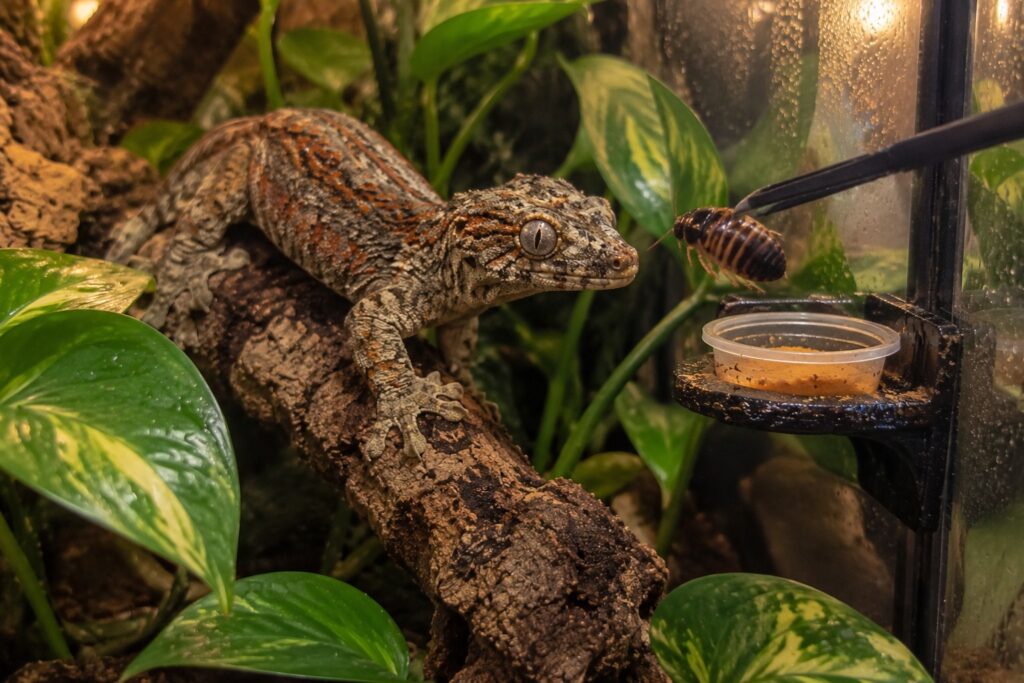
Good staples are dubia roaches, crickets, and black soldier fly larvae. Hornworms and silkworms make good soft extras. Waxworms are a treat only, since they’re very fatty. Keep every insect no longer than the space between the gecko’s eyes. For more options, see the full feeder insect rundown.
Feed insects with tongs or in a smooth-sided dish, and remove any that aren’t eaten within a few hours. Loose crickets left overnight will nibble on a sleeping gecko.
Skip pinky mice. They aren’t needed and add a lot of fat.
Dusting and Gut Loading
Insects are naturally low in calcium, which is why the Merck Veterinary Manual’s lizard nutrition page recommends supplementing feeders for insect-eating lizards. Dust every insect meal with calcium. If you don’t run a UVB tube, use calcium with D3. If you do, plain calcium is fine for most meals.
Gut load insects for a day or two before feeding with fresh greens, carrot, or a commercial gut load diet. A starved cricket is mostly shell.
Fruit and Foods to Avoid
Fruit is a treat, not a food group. Soft, ripe fruit like mango, papaya, fig, and banana can be mashed and offered once every week or two. Skip citrus, avocado, rhubarb, and anything with added sugar. Never feed wild caught insects, since they can carry pesticides and parasites. Fireflies are toxic to reptiles.
When Your Gargoyle Ignores the Powder
This is the most common gargoyle gecko diet complaint. Work through it in order.
1. Check the temperature. A gargoyle sitting above 80°F loses its appetite. Keep the enclosure at 72 to 78°F, and measure near the top where it sleeps.
2. Check the mix. Powder mixed too thin or too thick gets ignored. Aim for ketchup, and mix fresh every time.
3. Check the dish. A dish on the floor or hidden behind plants may never be found. Mount it high and in the open. Our gargoyle gecko enclosure guide shows where the ledge works best.
4. Cut back the insects. If you’re feeding bugs several times a week, the gecko may be full. Drop to once or twice a week and offer the powder on the other nights.
5. Weigh before you worry. Powder dries out and always looks half eaten, so the dish isn’t a reliable guide. Weigh monthly for adults and weekly for juveniles, and log meals and weights in the feeding tracker in the Exotic Reptile Care app. If the weight is holding steady, your gargoyle is eating enough. A steady drop over two or three weigh-ins means it’s time to look closer, and possibly see a vet.
Frequently Asked Questions
What do gargoyle geckos eat?
A complete powdered gecko diet three times a week, plus dusted insects once or twice a week. Fruit is an occasional treat.
Can gargoyle geckos live on powder alone?
They can survive on it, but most do better with regular insects, especially juveniles and breeding females.
How often should I feed a gargoyle gecko insects?
Once or twice a week for adults, and two to three times a week for juveniles.
Can gargoyle geckos eat crested gecko food?
Yes. They eat the same powdered diets. Formulas with added insect protein are a good fit.
What fruit can gargoyle geckos eat?
Soft, ripe fruit like mango, papaya, fig, and banana, mashed, once every week or two. Avoid citrus and avocado.
For setup, heat, and housing, see our gargoyle gecko care guide.
Feed the powder three times a week, add dusted bugs once or twice, keep fruit as a treat, and weigh instead of reading the dish. A gargoyle gecko diet doesn’t need to be more complicated than that.