Most uromastyx problems come down to one mistake: the keeper set the enclosure up like a bearded dragon tank. It looks right, the numbers feel hot, and the lizard sits in the corner, barely eats, and looks grey. Uromastyx care isn’t harder than dragon care, it’s just hotter, brighter, and drier than most people expect. Get the basking spot properly hot and a lot of other problems quietly disappear.
This guide covers the species, the setup numbers, diet, and a short set of checks for a uro that won’t eat or bask.
Uromastyx Care Quick Specs
A uromastyx needs a basking surface of 120 to 130°F, warm side air around 95 to 100°F, a cool end of 75 to 85°F, humidity under 35%, strong UVB, and a diet of leafy greens with dried seeds and lentils.
| Parameter | Target |
|---|---|
| Adult size | 10 to 18 inches for most species |
| Lifespan | 15 to 25+ years |
| Enclosure | 48 x 24 x 24 inch minimum |
| Basking surface | 120 to 130°F |
| Warm side air | 95 to 100°F |
| Cool end | 75 to 85°F |
| Night | 65 to 75°F |
| Humidity | 20 to 35% |
| UVB | T5 HO 12% tube over most of the enclosure |
| Diet | Leafy greens, flowers, dried seeds and lentils |
| Housing | One per enclosure is safest |
That basking number is not a typo. Uromastyx come from some of the hottest deserts on earth, and they digest food properly only when they can heat up that much.
Which Uromastyx Species Is Which
“Uromastyx” is a genus, not one species, and care is similar across them with a few differences in size and temperament.
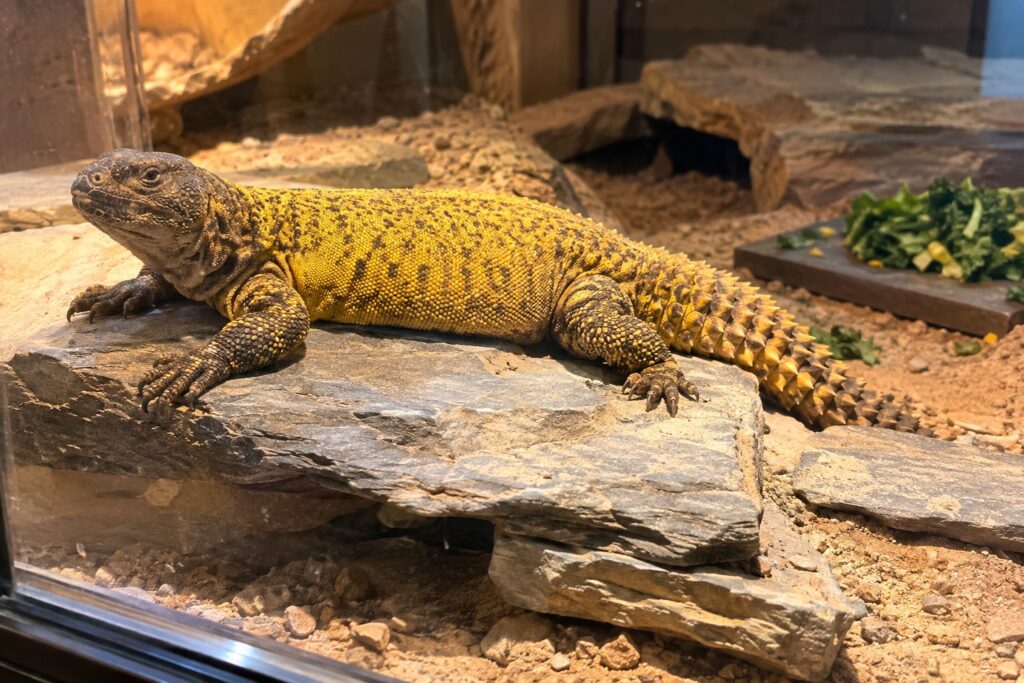
- Mali uromastyx, bright yellow or orange, the most common and calmest pet species
- Ornate uromastyx, colorful green and blue males, a bit more delicate
- Saharan uromastyx, red or yellow, small and active
- Moroccan uromastyx, black with yellow or orange speckles, cold tolerant for a uro
- Egyptian uromastyx, much larger at up to 30 inches, needs a far bigger enclosure
For a first uro, a captive bred Mali is the easy pick, and it makes uromastyx care far more forgiving. Many uros in the trade are still wild caught, and those often arrive dehydrated and carrying parasites. If you buy one, plan on a fecal test in the first month.
Enclosure Setup for Uromastyx Care
A 48 x 24 x 24 inch enclosure is the minimum for one adult of the common species, and bigger is better. Front opening PVC or wooden enclosures hold heat far better than glass, which matters when you’re trying to hit 120°F at the basking spot without cooking the whole room.
The basking spot should be a stack of flat rocks or slate, built so the lizard can lie on the top surface close to the lights. Wedge the pieces firmly or glue them, because uros dig underneath and an unstable stack can collapse. Add a few hides, at least one on the cool side, and some cork or rock caves they can wedge into. In the wild they back into rock crevices and block the entrance with that spiky tail.
For substrate, use a sand and soil mix, roughly 60% play sand and 40% topsoil, 4 to 6 inches deep, and lightly dampen and pack it when you set it up so it holds burrows. Avoid calcium sand, walnut shell, and seed beds. Packed sand and soil gives them a natural surface to dig and run on, and it’s easy to spot clean.
Heat and UVB: Where Most Setups Fall Short
The basking surface should read 120 to 130°F on an infrared temp gun, measured on the rock the lizard actually lies on. Air temperature on the warm side should sit around 95 to 100°F, with the cool end at 75 to 85°F. At night, lights off, temperatures can drop to 65 to 75°F.
To hit those numbers, most keepers use two or three halogen flood bulbs grouped over the basking stack, rather than one big bulb. That gives a wide, even hot zone instead of a single scorching dot. Put them on a dimming thermostat with the probe near the basking area, and check the rock surface with a temp gun every few days. If you’re not confident in your readings, here’s how to measure surface temperatures properly.
UVB is essential. Use a T5 HO 12% linear tube running across most of the enclosure length, mounted next to the heat lamps so the basking spot gets both heat and UV. Replace it every 12 months even if it still lights up. The setup is very close to the same UVB layout we use for bearded dragons, just with a hotter basking zone. Run lights for 12 to 14 hours a day in summer, a bit less in winter.
Uros also love light itself, not just heat. A bright enclosure with good visible light makes them noticeably more active and more colorful.
What to Feed a Uromastyx
The diet side of uromastyx care is simple. Uromastyx are herbivores. Build the diet on dark leafy greens and weeds, then add dry seeds and lentils for protein and variety. Good greens and weeds include dandelion, endive, escarole, collard greens, turnip greens, mustard greens, arugula, and plantain. Most of the weed list from our Russian tortoise diet guide works well for uros too. Hibiscus and dandelion flowers make good extras.
Offer fresh greens daily for juveniles and most days for adults, chopped small. Add a small dish of dried split lentils, split peas, and mixed seeds like millet. Juveniles can have this daily. Adults do well with a small amount a few times a week. Skip insects for most species, and skip fruit, which is too sugary.
Dust the greens with calcium a few times a week and a multivitamin once a week. With a good 12% UVB tube, plain calcium without D3 is enough.
Water is a bit different with uros. They get most of their moisture from greens, and a permanent water bowl raises humidity in the enclosure. Lightly mist the greens before offering them, and offer a shallow dish of water once or twice a week, or briefly after a shed. Watch for signs of dehydration, like sunken eyes or wrinkled skin along the sides.
When Your Uromastyx Won’t Eat or Bask
A uro that sits on the cool side, looks dark or grey, and ignores food is the most common worry in uromastyx care. Work through these in order.
1. Measure the basking rock. Point a temp gun at the exact spot the lizard lies on. If it reads under 115°F, that’s almost certainly your problem. A uro that can’t get hot enough can’t digest, so it stops eating to avoid food sitting in its gut. Add another halogen or lower the stack closer to the bulbs.
2. Check the UVB age. A tube that’s more than a year old may still look bright but has lost most of its UV output. This is the one that’s easiest to forget, so set a reminder for the UVB swap in the Exotic Reptile Care app the day you install a new tube. It can also log your uro’s weight monthly, which helps you tell a seasonal slowdown from a real problem.
3. Look at the calendar. Many uromastyx slow down in late fall and winter, eating less and basking less, even with normal temperatures. If the lizard is otherwise healthy and holding weight, that’s a seasonal slowdown, not illness. Keep offering food and keep the heat on.
4. Check hydration. Sunken eyes, wrinkled flanks, or thick white urates that stick to the substrate mean the lizard is short on water. Mist greens more heavily and offer a shallow dish for a few days.
5. Rule out parasites. If the uro eats but keeps losing weight, or it’s a wild caught animal in its first few months, take a fresh dropping to a reptile vet for a fecal test. Parasites are common in imported uros and easy to treat once identified.
Handling and Temperament
Captive bred Malis are usually calm and tolerate gentle handling once settled. Approach from the side, not from above, and scoop under the belly while supporting the whole body. Many uros are happier when you let them walk onto your hand on their own.
The tail is their main defense. A cornered uro may swing it hard, and those spikes are surprisingly sharp. They can also bite, though a captive bred, settled uro rarely does. Keep sessions short at first and never grab them by the tail.
Frequently Asked Questions
Are uromastyx good for beginners?
Yes, as long as you’re willing to set up the heat and UVB properly. Captive bred Mali uromastyx are calm and hardy, and their diet is simple. Most problems come from basking spots that aren’t hot enough.
How hot should a uromastyx basking spot be?
The basking surface should read 120 to 130°F, measured on the rock with an infrared temp gun. Air temperature on the warm side should be about 95 to 100°F.
Do uromastyx need a water bowl?
Not permanently. They get most of their water from greens. Mist the greens before feeding and offer a shallow dish once or twice a week.
Can uromastyx eat insects?
Most species don’t need them and do better without. Their diet should be leafy greens, flowers, and dried seeds and lentils.
How long do uromastyx live?
With good care, 15 to 25 years is common, and some live longer.
Good uromastyx care comes down to three things: a basking rock that actually hits 120°F, a UVB tube you replace on schedule, and a diet built on greens rather than bugs. Get those right and you’ll have a bright, active lizard that’s out basking every time you walk past.