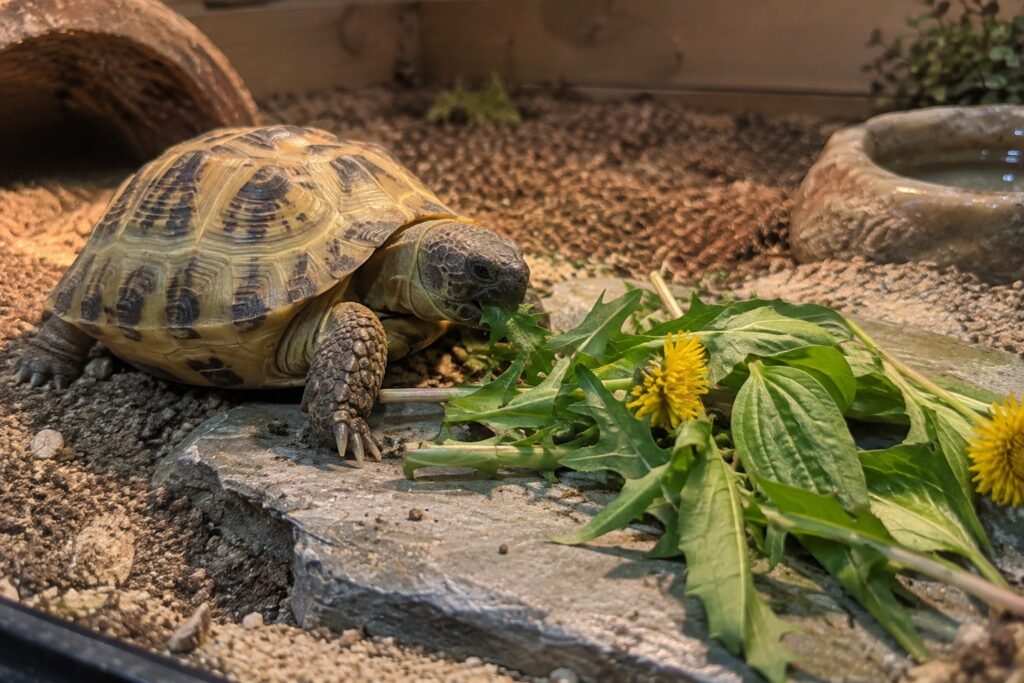
A Russian tortoise should eat mostly weeds and leafy greens, high in fiber and low in protein, with no fruit and no animal protein. That’s the whole Russian tortoise diet in one sentence. The part most keepers get wrong isn’t the rule, it’s the grocery run. Supermarket greens are the backup plan. The best food for a Russian tortoise is growing free in a lawn or a vacant lot near you.
Russian Tortoise Diet at a Glance
| Item | Target |
|---|---|
| Staple | Broadleaf weeds and dark leafy greens |
| Portion | A pile roughly the size of the shell |
| Juveniles | Fed daily |
| Adults | Fed 5 or 6 days a week, one fasting day |
| Calcium | Dusted a few times a week |
| Multivitamin | Once a week |
| Fruit | None, or at most twice a year |
| Protein | None |
Why Weeds Beat Store Greens in a Russian Tortoise Diet
Russian tortoises come from dry Central Asian steppe, where they eat tough, fibrous, low sugar plants for a few months a year. Weeds are much closer to that than anything in a salad bag. They carry more fiber, more calcium relative to phosphorus, and they wear down the beak as the tortoise chews. Soft supermarket leaves do none of that, which is one reason pet Russians so often end up with overgrown beaks.
Pick only from places that haven’t been sprayed and aren’t next to a busy road. Your own garden, if you skip the weed killer, is ideal.
12 Weeds to Feed
These form the core of a good Russian tortoise diet. Rotate between as many as you can find.
- Dandelion, leaves and flowers
- Broadleaf plantain
- Narrowleaf plantain
- Sow thistle
- Chicory
- Cat’s ear
- Common mallow
- Hibiscus, leaves and flowers
- Mulberry leaves
- Grape leaves
- Nasturtium, leaves and flowers
- Clover, in smaller amounts
Clover is fine but richer than the others, so treat it as a regular extra rather than the main pile. Prickly pear pads, with the spines removed, are another great option if they grow near you.
When weeds aren’t available, the best store-bought greens are endive, escarole, collard greens, mustard greens, turnip greens, radicchio, and arugula. Romaine is fine as a filler but shouldn’t be the whole meal.
5 Foods to Skip
- Fruit. The sugar upsets gut bacteria in an animal that never meets fruit in the wild. Runny stool is the usual first sign.
- Animal protein. Dog food, cat food, insects, and meat all cause fast, lumpy growth and strain the kidneys.
- Iceberg lettuce. Mostly water, almost no nutrition.
- Spinach and kale every day. Fine now and then, but in large amounts they interfere with calcium and thyroid function.
- Pellets as the main food. Some keepers use a few as an occasional extra, but a pellet based diet is too rich and too soft.
This is the same logic behind the sulcata tortoise diet, just in smaller portions. And don’t borrow advice from turtle keepers. A box turtle diet includes protein and fruit, which is exactly wrong for a Russian.
A Simple Weekly Russian Tortoise Diet Plan
Feed in the morning, after the tortoise has had time to warm up under the basking lamp. A cold tortoise won’t eat well, so check that the basking surface reads 95 to 100°F before blaming the food.
Offer a pile about the size of the shell, chopped roughly or left whole for adults to tear at. Put it on a flat stone or tile so the tortoise doesn’t swallow substrate and the rough surface helps keep the beak trimmed. Mix three or four different weeds or greens at every meal.
Adults eat five or six days a week, with one day off. Juveniles eat every day. Dust the food with calcium a few times a week and a multivitamin once a week. Keep a shallow water dish available, changed daily.
In winter, when fresh weeds are scarce, dry your own in summer by spreading them out in the shade for a few days, then store them in paper bags. Crumble a handful over fresh greens to keep the fiber up until spring.
Weaning a Tortoise Off Lettuce or Fruit
This is where most Russian tortoise diet problems actually get solved. Plenty of Russians come from stores or previous owners that fed them lettuce and strawberries, and they’ll refuse weeds at first. They’re not being picky for no reason. They just learned to expect sugar.
Start by mixing a small amount of chopped weeds into the food the tortoise already eats, about one quarter weeds. Every three or four days, shift the balance further, until after two to three weeks the old food is gone. Chopping everything finely helps, since the tortoise can’t sort out the bits it prefers. A few dandelion flowers on top make the new mix far more tempting.
A healthy adult may refuse for a day or two when the old food disappears completely. That’s fine. Don’t cave and bring the fruit back, because that restarts the whole process. The Exotic Reptile Care app is useful here, since you can log what gets eaten each day and weigh the tortoise monthly. If weight holds steady, the refusal is just stubbornness. If weight drops, or a juvenile refuses for more than three or four days, check temperatures and see a vet.
Signs the Diet Needs Adjusting
- Runny or very green stool: too much water rich food or fruit. Cut back on soft greens and add more weeds.
- Pyramided shell growth in young tortoises: usually too much protein, fast growth, and low humidity together.
- Overgrown beak: too much soft food. Feed tougher weeds whole and use a rough feeding stone.
- Steady weight gain in an adult: portions are too big. Keep the pile to shell size and keep the fasting day.
A good Russian tortoise diet is cheap, simple, and mostly free. Learn to recognize five or six local weeds, keep fruit out of the dish, and your tortoise will be eating better than most pet Russians ever do. For enclosure, heating, and brumation, see our full Russian tortoise care guide.
Frequently Asked Questions
Can Russian tortoises eat strawberries or other fruit?
No, or at most a small piece once or twice a year. Their gut isn’t built for sugar, and regular fruit leads to runny stool and gut problems. Dandelion or hibiscus flowers make a better treat.
Can Russian tortoises eat romaine lettuce?
Yes, as a filler. Romaine isn’t harmful, but it’s low in fiber and calcium, so mix it with weeds or darker greens rather than feeding it alone.
Do Russian tortoises need hay?
It isn’t a staple for this species, but many will nibble on timothy or meadow hay. It’s a fine fiber source to leave in a corner, especially in winter when fresh weeds are scarce.
Can Russian tortoises eat carrots?
Only a little grated carrot now and then. Carrots are sugary for a tortoise, so treat them as an occasional topping, not a regular part of the diet.
How much should I feed my Russian tortoise?
A pile about the size of the shell per meal. Adults eat five or six days a week with a fasting day, juveniles every day.