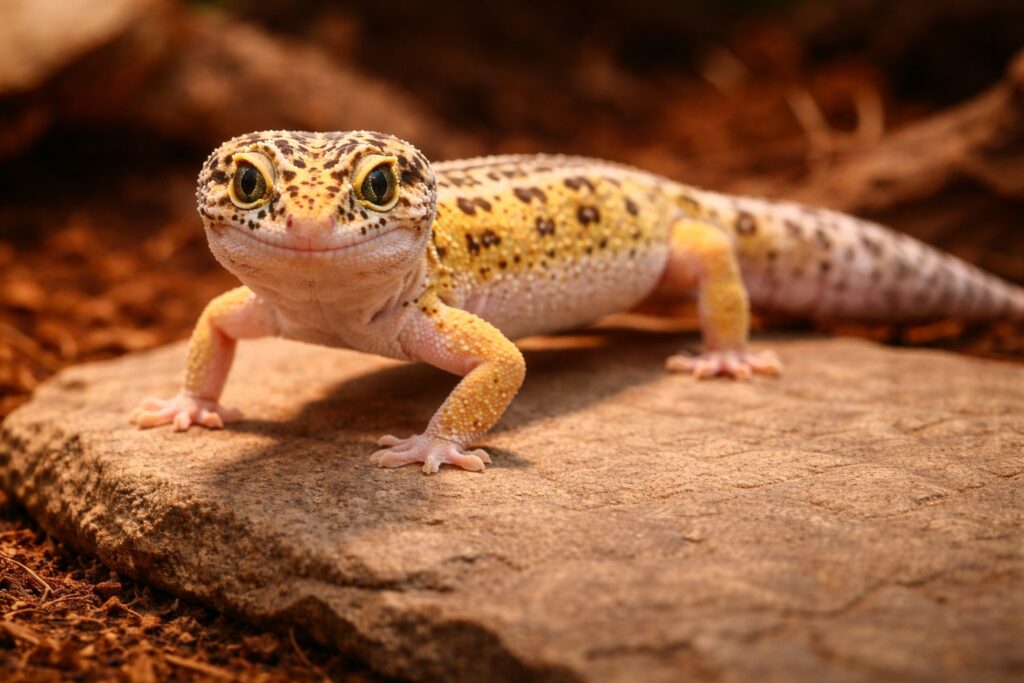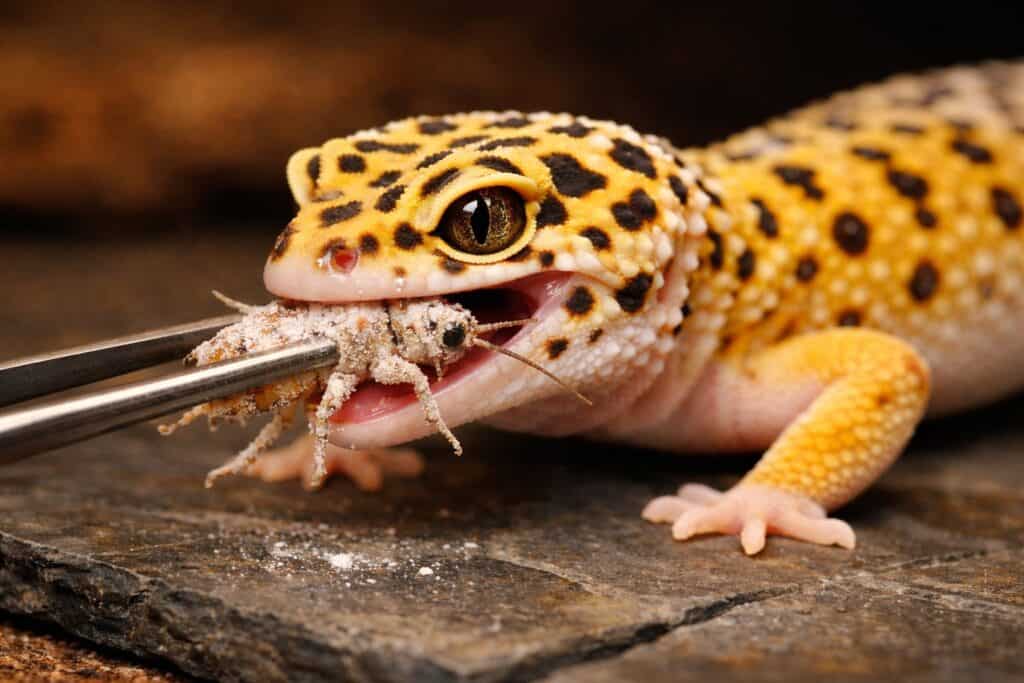
What do leopard geckos eat? Live insects, and nothing else. Leopard geckos are strict insectivores, so their whole diet is gut-loaded feeder insects dusted with calcium. No fruit, no vegetables, no pellets. The part most keepers get wrong isn’t what to feed, though. It’s which insects to use as staples, how many to offer, and how often a gecko of a given age should eat.
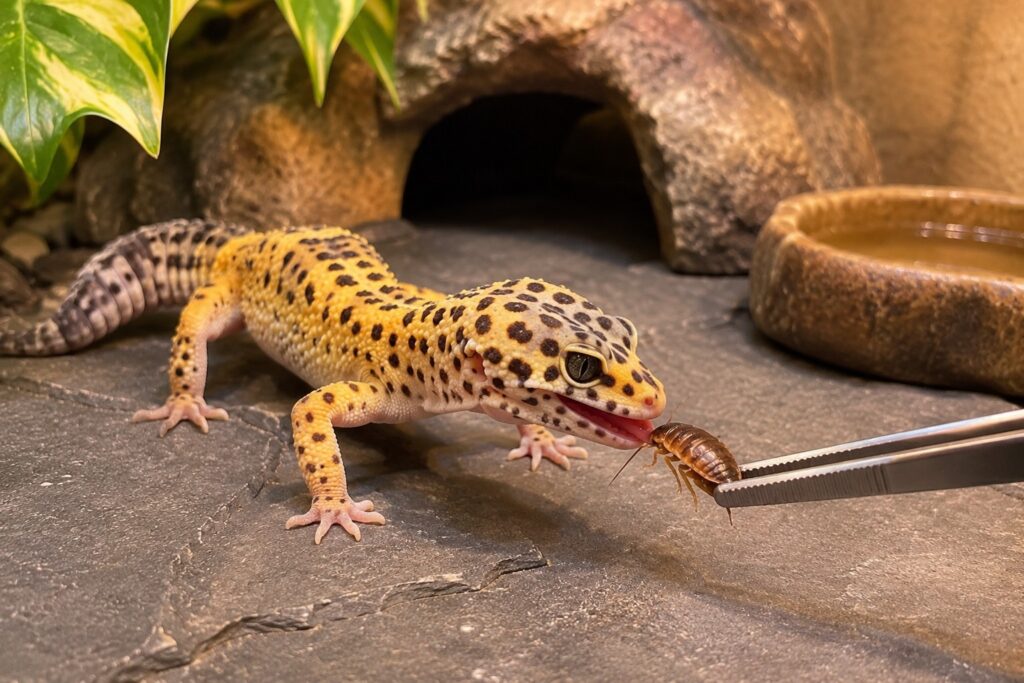
What Do Leopard Geckos Eat? The Best Feeder Insects
Dubia roaches, crickets, and black soldier fly larvae make the best staple feeders for leopard geckos. Hornworms and silkworms are great for variety, mealworms work in rotation, and waxworms are treats only.
| Feeder | Use as | Notes |
|---|---|---|
| Dubia roaches | Staple | Easy to keep, don’t smell, can’t climb glass |
| Crickets | Staple | Good nutrition, but noisy and escape easily |
| Black soldier fly larvae | Staple or rotation | Naturally high in calcium |
| Hornworms and silkworms | Variety | Soft bodies, extra hydration |
| Mealworms and superworms | Occasional | Fattier, hard shells; skip superworms for young geckos |
| Waxworms and butterworms | Treat only | Once a week at most for a healthy adult |
A good rotation is two staples plus one variety feeder. Most keepers settle on dubia roaches and black soldier fly larvae as the base, with hornworms every week or two. Variety matters more than any single insect, because each feeder carries a slightly different nutrient profile.
Size is the rule that prevents most problems. Never offer an insect wider than the space between your gecko’s eyes. Oversized feeders and loose substrate are the two biggest causes of impaction, and the hard shells of mealworms and superworms make the risk worse in young geckos.
How Often and How Much to Feed
Feed juveniles under 12 months daily or every other day, and adults every 2 to 4 days. Offer about 5 to 7 small insects to a juvenile and 6 to 10 appropriately sized insects to an adult, then take out anything left after 15 minutes.
| Age | How often | Insects per feeding |
|---|---|---|
| Hatchling to 4 months | Daily | 5 to 7 small insects |
| 4 to 12 months | Daily or every other day | 5 to 8 insects |
| Adult (12 months plus) | Every 2 to 4 days | 6 to 10 insects |
These are starting points for what leopard geckos eat at each age, not a fixed menu. Watch the tail. A healthy adult has a tail about as thick as its neck. A tail thicker than the body means you can space meals out. A thin tail with visible hips means the gecko needs more food or a vet check.
Don’t leave crickets loose overnight. They’ll bite a sleeping gecko and stress it out. Feed in the evening, when leopard geckos naturally hunt, and use a smooth-sided dish for worms so they can’t burrow into the substrate.
Consistent spacing is easier with a reminder than with memory, especially once an adult moves to every third or fourth day. You can set a feeding reminder for each gecko in the Exotic Reptile Care app and log how many insects it actually ate, which makes a slow drop in appetite easy to spot.
Calcium and Gut Loading
Gut load feeders for 24 to 48 hours before feeding them off, using fresh greens, squash, carrots, or a commercial gut load diet. The insect is only as nutritious as what it ate last.
Then dust. Use plain calcium without D3 at most feedings, calcium with D3 twice a week, or about once a week if your gecko has a UVB light, and a multivitamin once a week. Keep a small dish of plain calcium in the enclosure too. Our full calcium and D3 schedule has the details by age. Without enough calcium, leopard geckos develop metabolic bone disease, which the Merck Veterinary Manual’s guide to lizard nutrition lists among the most common diet problems in pet lizards.
3 Foods to Never Feed a Leopard Gecko
Fruit and vegetables. Leopard geckos can’t digest plant matter. Fruit sugar upsets their gut and can cause diarrhea. Here’s more on why leopard geckos can’t eat fruit, even as a treat.
Wild-caught insects. Bugs from the garden carry parasites and pesticides. Fireflies are the worst. Even one can kill a gecko.
Pinkie mice. Some older care sheets recommend them for breeding females. They’re far too fatty for a regular diet and aren’t needed if your feeders are gut loaded and dusted.
When Your Leopard Gecko Ignores Its Insects
A healthy leopard gecko usually hunts as soon as insects move. When it doesn’t, work through these in order.
Check the warm side first. A cold leopard gecko won’t eat. The surface under the warm hide should be hot enough for digestion, so measure it with a temperature gun rather than trusting a dial thermometer.
Look for a shed. Many geckos skip meals for a few days before and during a shed. Dull, pale skin is the sign.
Rule out the season. Adults often eat less in winter, especially males. If the tail stays thick and the weight holds, it’s normal.
Try a different feeder. Some geckos get bored of one insect. A hornworm or a few black soldier fly larvae will often restart a picky eater.
Weigh it. A gecko losing weight over two weeks while refusing food needs more than a menu change. Our guide to a leopard gecko that has stopped eating covers the next steps and when to see a vet.
Frequently Asked Questions
Can leopard geckos eat dead insects?
Most won’t, because they hunt by movement. Some learn to take freshly killed or canned insects from tongs, but live feeders are the standard.
How many crickets should I feed my leopard gecko?
About 5 to 7 small crickets for a juvenile and 6 to 10 adult-sized crickets for an adult, removing any left after 15 minutes.
Can leopard geckos eat mealworms every day?
No. Mealworms are fattier and harder to digest than other feeders. Use them in rotation with dubia roaches or crickets, not as the only insect.
What can leopard geckos eat besides insects?
Nothing. Leopard geckos are strict insectivores, so fruit, vegetables, and commercial pellet diets aren’t suitable.
So what do leopard geckos eat, day to day? Something boring on purpose: two staple insects, one variety feeder, dusted and gut loaded, on a steady schedule. Keep it consistent and watch the tail, and you’ll know straight away when something changes.