
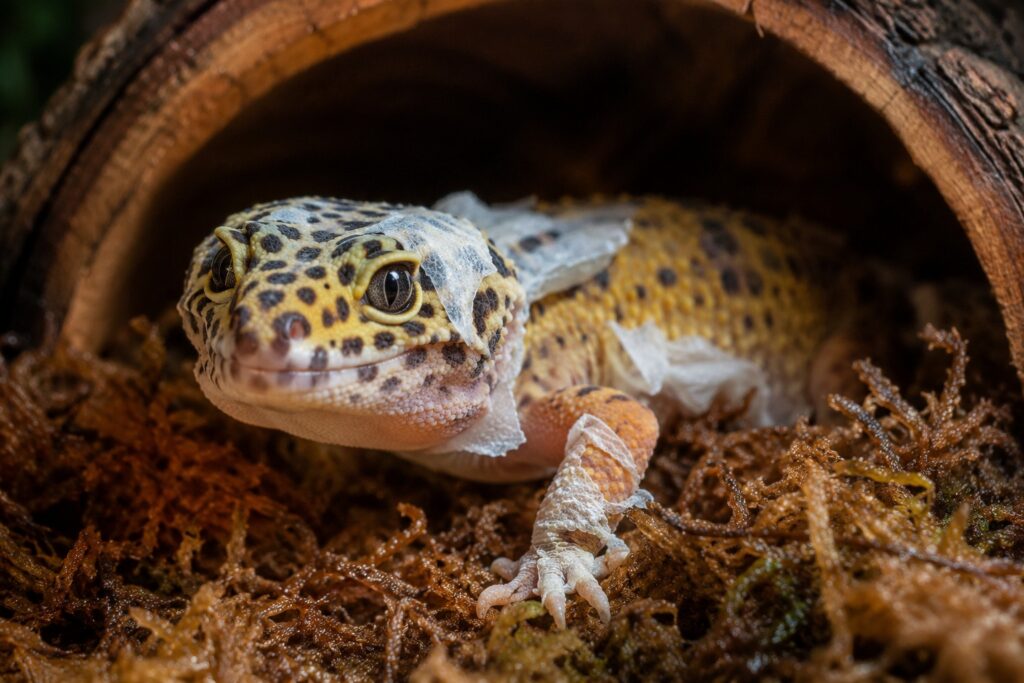
You notice your leopard gecko turning pale, and you know what’s coming. Shed time. But instead of waking up to a clean gecko with bright fresh skin, you find patches of old skin clinging to the toes, the tail tip, maybe even around the eyes. Leopard gecko shedding problems are one of the most common issues keepers deal with, and if you don’t handle them quickly, they can turn into something serious. The good news is that most stuck sheds are fixable at home, and almost all of them are preventable.
Why Leopard Geckos Get Stuck Shed
Shedding, or ecdysis, is a totally normal process. Young leos shed as often as every one to two weeks because they’re growing fast. Adults slow down to roughly once a month. The gecko’s skin turns dull and grayish, they get a bit grumpy, they might skip a meal or two, and then they peel everything off and eat it. That’s the ideal scenario.
Stuck shed happens when something in the environment or the gecko’s health isn’t quite right. The number one cause is low humidity. Leopard geckos come from arid environments, but they still need a humid microclimate to shed properly. If your enclosure is sitting at 20 percent humidity with no moist hide, your gecko is going to struggle. The skin dries out before it can fully separate from the new layer underneath.
Other common causes include temperatures being too low on the warm side, vitamin A deficiency, dehydration, stress from overhandling, and sometimes just bad luck. Some geckos are consistently poor shedders even when everything else is dialed in. That’s frustrating, but it happens.
The Danger Zones: Toes, Tail, and Eyes
Not all stuck shed is created equal. A small patch on the back or belly usually isn’t urgent. But there are three areas where retained shed becomes a real problem fast.
Toes are the biggest concern. Old skin wraps around the tiny toes and dries into a tight band that cuts off blood flow. If you don’t catch it within a day or two, your gecko can actually lose toes. This is not an exaggeration. It happens all the time with new keepers who don’t know to check.
The tail tip is similar. Retained shed can constrict circulation and cause the tip to die off. And shed stuck around the eyes can dry into a hard cap that prevents the gecko from opening them, which means they can’t hunt, can’t see, and will stop eating.
After every shed, do a quick check. Look at all four feet, examine the tail tip, and make sure both eyes are clear. It takes 30 seconds and it can save your gecko a lot of pain.
How to Fix Leopard Gecko Shedding Problems Safely
If you find stuck shed, don’t panic and don’t start pulling. Ripping dry skin off a gecko can tear the new skin underneath and cause open wounds.
The safest approach is a lukewarm soak. Fill a shallow container with water that’s around 80 to 85 degrees Fahrenheit, just enough to cover the gecko’s feet and belly. Let them sit in it for 10 to 15 minutes. This softens the retained skin considerably. After the soak, you can gently work at the stuck pieces with a damp cotton swab. Go slow, especially around the toes. If the skin doesn’t come off easily, soak again the next day. Don’t force it.
For stubborn spots, a “sauna hide” works well. Take a plastic container, poke a gecko-sized hole in the lid, lay a damp paper towel or warm wet cloth inside, and let your gecko sit in it for 20 to 30 minutes. The trapped humidity does most of the work. You can place the container on a heat mat set to 80 degrees if you want to keep the humidity from dropping too fast.
If there’s stuck shed around the eyes, be extra careful. A damp cotton swab held gently against the eyelid for a few minutes can help loosen things. But if it doesn’t come off easily, that’s a vet visit. Don’t risk damaging the eye trying to be a hero.
How to Prevent Leopard Gecko Shedding Problems Before They Start
Prevention is always easier than treatment. The single most important thing you can do is provide a proper moist hide. This is just a hide with damp sphagnum moss, paper towel, or coconut fiber inside. Place it on the warm side of the enclosure. The warmth plus the moisture creates a little sauna effect that makes shedding almost effortless.
Check the moss every couple of days and re-dampen it as needed. If you live in a dry climate or run air conditioning a lot, you might need to mist it daily. The ambient humidity in the enclosure should sit between 30 and 40 percent, but inside the moist hide it should be noticeably higher.
Make sure your warm side temps are actually hitting 88 to 92 degrees on the floor of the hide. A lot of keepers think their temps are fine because the thermometer on the wall says 85, but the floor where the gecko sits is 10 degrees cooler. Use a temperature gun or a probe thermometer on the ground level. Low temps slow down the shedding process and make incomplete sheds more likely.
Diet matters too. Gut-load your feeder insects properly and dust with calcium and a multivitamin that includes vitamin A. Vitamin A deficiency is directly linked to chronic shedding issues and eye problems in leopard geckos. If your gecko is getting plain crickets with no supplementation, that’s a problem waiting to happen.
Track Shed Cycles to Spot Patterns Early
One thing that really helps with leopard gecko shedding problems is keeping a record. If you know your gecko normally sheds every 25 to 30 days and suddenly goes 45 days without shedding, that could signal a health issue. Or if you notice stuck shed happening every single time, you can look back at your notes and figure out if something changed in the enclosure.
The Exotic Reptile Care app lets you log every shed with dates and notes, so you can track the pattern over time. You can also set reminders to check and re-dampen the moist hide a few days before the next shed is expected. It takes the guesswork out of it.
When to See a Vet
Most stuck sheds are manageable at home, but there are times when you need professional help. If your gecko has recurring shedding problems despite good husbandry, there might be an underlying health issue like parasites, a nutritional deficiency, or a skin infection. If you see any redness, swelling, or discharge around areas where shed was stuck, that’s an infection and it needs treatment.
Eye shed that won’t come off after two gentle soaking sessions should also go to a reptile vet. The longer retained eye caps stay on, the higher the risk of permanent damage. You can find a reptile vet through the Association of Reptilian and Amphibian Veterinarians directory.
The bottom line is this: keep the moist hide damp, keep your temps right, supplement properly, and check your gecko after every shed. Do those four things and you’ll avoid 90 percent of shedding problems before they ever start.
Leopard gecko shedding problems: frequently asked questions
How often should a leopard gecko shed?
Young geckos shed every one to two weeks because they’re growing fast, while adults slow to roughly once a month. There’s no single correct number, so what matters is your gecko’s normal rhythm. Most leopard gecko shedding problems become obvious when that rhythm changes suddenly, like a gecko that usually sheds every 25 days going 45 without one.
How can I tell my leopard gecko is about to shed?
The skin turns dull and grayish over a day or two, and the gecko often gets grumpy and skips a meal or two. Some hide more than usual right before. Once you learn the pale, washed-out look, you’ll spot it every time, which is your cue to make sure the moist hide is freshly dampened.
Is it normal for a leopard gecko to eat its shed skin?
Completely normal and healthy. In the wild, eating the shed removes evidence of their presence from predators and recovers some nutrients. If your gecko peels everything off and the skin seems to vanish, it ate it. That’s the ideal outcome, not something to worry about.
Should I peel stuck shed off my leopard gecko?
No, never pull dry skin. Ripping it off can tear the fresh skin underneath and cause open wounds. Instead, soak the gecko in lukewarm water at 80 to 85F for 10 to 15 minutes to soften the shed, then gently work at it with a damp cotton swab. If it doesn’t lift easily, soak again the next day rather than forcing it.
What humidity does a leopard gecko need to shed properly?
Ambient humidity should sit around 30 to 40 percent, but the real key is a moist hide with a much higher microclimate inside. Fill a hide with damp sphagnum moss, paper towel, or coconut fiber, place it on the warm side, and keep it damp. That little sauna effect prevents the majority of stuck sheds. Low humidity with no moist hide is the number one cause of trouble.
How do I stop recurring leopard gecko shedding problems for good?
Consistency is what fixes chronic cases. Keep the moist hide damp, confirm warm-side floor temps hit 88 to 92F, and supplement with calcium plus a multivitamin that includes vitamin A, since vitamin A deficiency drives repeat sheds. Building those checks into a steady care routine is what keeps them from slipping, and logging each shed with dates in the Exotic Reptile Care app makes a bad pattern obvious before it turns into lost toes.
My leo used to get stuck shed on his toes almost every time until I switched from paper towel to sphagnum moss in the humid hide. Game changer. If anyone’s still dealing with this, seriously check your warm side temps too, that was the other thing I was getting wrong.