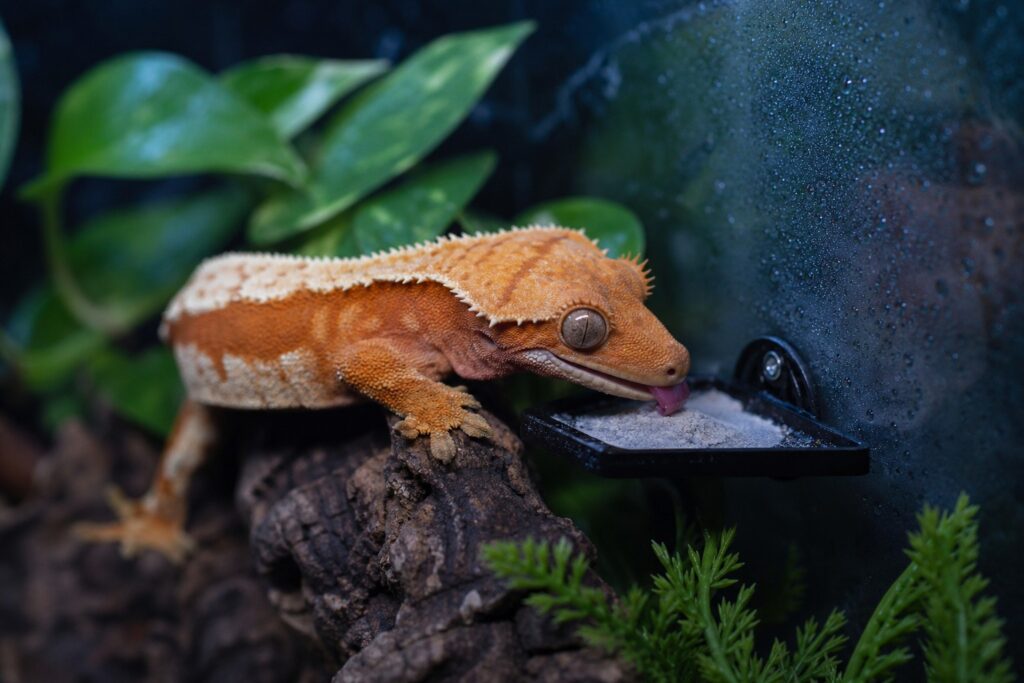
Most crested gecko keepers never actually see a shed. Cresties shed at night and eat the old skin as they go, so you go to bed with a slightly pale gecko and wake up to a bright one. That’s why crested gecko shedding problems sneak up on people. The shed itself is easy to miss, and the one place it goes wrong, a ring of old skin left on a toe or the tail tip, is easy to miss too.
This guide covers how often cresties shed, the signs one is coming, how to check a shed you never saw, and how to safely fix stuck shed.
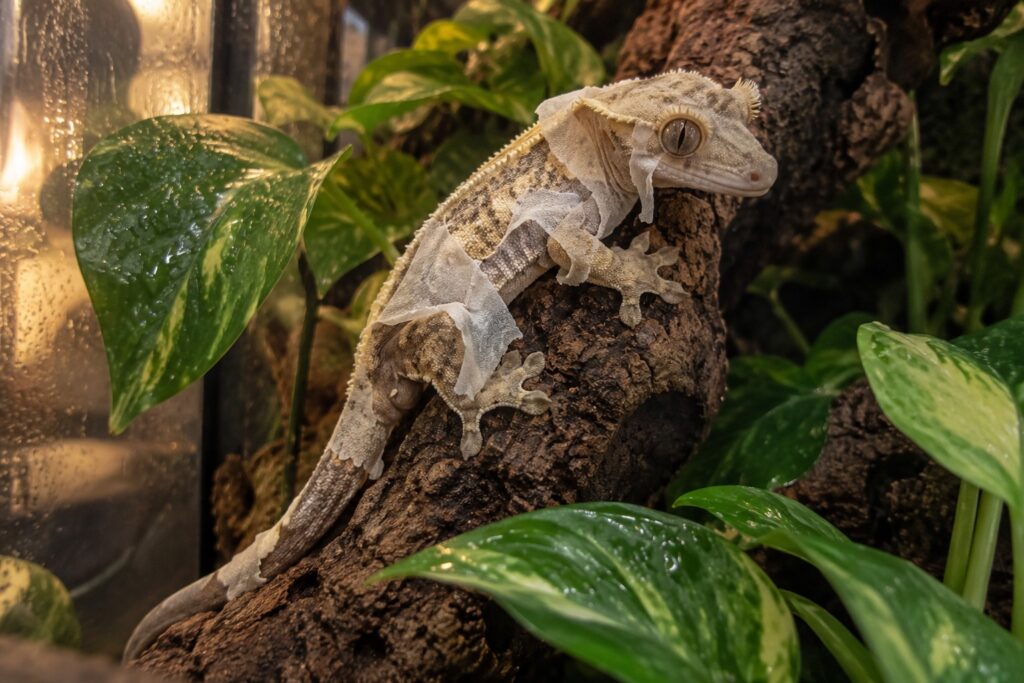
How Often Do Crested Geckos Shed?
Crested gecko shedding follows growth. Juvenile crested geckos shed every 2 to 4 weeks because they’re growing fast. Adults shed about every 4 to 8 weeks. The pattern for your gecko matters more than the exact number.
| Age | How often | What to expect |
|---|---|---|
| Hatchling and juvenile | Every 2 to 4 weeks | Fast growth, frequent sheds |
| Subadult | Every 3 to 6 weeks | Slowing down |
| Adult | Every 4 to 8 weeks | Steady, often overnight |
A healthy shed comes off in a night or two, and the gecko usually eats most of it. Finding small bits of skin in the enclosure is fine. Finding skin still on the gecko the next day is the problem.
Signs a Shed Is Coming
The most obvious sign of crested gecko shedding is color. A crestie about to shed looks paler, duller, or slightly greyish, and the pattern seems faded. Some look almost white for a day. Others change so little that you only notice the bright color afterwards.
You may also see the gecko hiding more, sitting still longer, or skipping a meal. That’s normal for a day or two. A gecko that stops eating for longer is a different issue, covered in our guide to a crested gecko that isn’t eating.
Getting Humidity Right for Crested Gecko Shedding
Almost every crested gecko shedding problem comes back to humidity. Cresties need a cycle, not a constant number. Mist heavily in the evening so humidity spikes to 70 to 80%, then let it dry down to about 50% by the afternoon.
When you see a shed coming, make sure the evening misting is heavy and the gecko has a humid hide, a small container with damp sphagnum moss. Don’t keep the whole enclosure soaked for days, which causes its own problems. If your readings keep crashing too low, our guide to fixing crested gecko humidity that’s too low covers every fix.
How to Tell a Shed Went Fine
Since crested gecko shedding usually happens overnight, check the next morning after your gecko has gone pale and then bright again. Look closely at four spots:
- Each toe, especially the tips and the toe pads
- The tail tip
- Around the eyes and the crests above them
- The vent area
Clean toes and a bright, even body mean the shed went fine. A thin ring or collar of white skin on any toe means it didn’t.
Keep a record of each shed date and whether it came off clean. Over a few months you’ll see your gecko’s normal rhythm, which makes a missed or slow shed obvious. Logging it in the shed log in the Exotic Reptile Care app takes a few seconds and keeps the history in one place next to feeding and weight.
How to Fix Stuck Shed in 4 Steps
This is the one part of crested gecko shedding that needs you. Stuck shed on a toe can tighten as it dries and cut off blood flow, and cresties can lose toe tips this way. Deal with it the same day.
1. Make a humid box. Put the gecko in a small container with air holes and a layer of damp paper towel warmed with lukewarm water, not hot. Close the lid and leave it for 15 to 20 minutes in a warm room. The moisture softens the old skin.
2. Let the gecko do some of the work. Often the gecko walks around in the box and the skin rubs off on the damp towel. Check after the soak. If it’s gone, you’re done.
3. Roll, don’t pull. If skin is still there, gently roll it off with a damp cotton swab, working from the base of the toe toward the tip. Never pull it or use tweezers. If it won’t move easily, stop and soak again later.
4. Repeat and raise humidity. It can take two or three soaks over a day or two. Then fix the cause by misting more heavily in the evening and keeping the humid hide damp, so the next shed comes off clean.
When to See a Vet
Most stuck shed clears with soaking. Go to a reptile vet if a toe or the tail tip looks dark, swollen, or shrunken under the old skin, since that means blood flow is already reduced. See a vet too if sheds keep going badly despite good humidity, or if your gecko is shedding far more often than its normal pattern. Repeated bad sheds can point to dehydration, poor nutrition, or illness. Our crested gecko care guide covers the basics worth checking first.
Frequently Asked Questions
How often do crested geckos shed?
Juveniles shed every 2 to 4 weeks, and adults about every 4 to 8 weeks.
Do crested geckos eat their shed?
Yes, most do. It’s normal, and it’s why you rarely find skin in the enclosure.
Why is my crested gecko white or pale?
It’s probably about to shed. Cresties turn pale or dull a day or two before shedding, then look brighter afterwards.
Can I help my crested gecko shed?
Usually you don’t need to. If skin is stuck on the toes or tail tip, use a humid box for 15 to 20 minutes and gently roll the skin off with a damp cotton swab.
Do crested geckos stop eating when shedding?
Some skip a meal or two around a shed. That’s normal. A longer refusal is worth looking into.
Good crested gecko shedding comes down to a heavy evening mist, a humid hide, and a quick look at the toes the morning after. Catch a stuck ring of skin the same day and it’s a five minute fix instead of a lost toe.