How long do bearded dragons live? In captivity, most bearded dragons live 8 to 15 years with proper care. Some well-kept individuals push past 15, and the oldest bearded dragon on record made it to 18. That’s a real commitment. A beardie you bring home today could still be sitting on your shoulder when you’re finishing college, switching careers, or moving across the country.
If you are comparing species before committing, leopard geckos live about as long and need a simpler setup.
But that 8 to 15 year range is wide for a reason. Where your bearded dragon lands within it depends almost entirely on how you care for it. The difference between an 8-year life and a 15-year life isn’t luck or genetics. It’s husbandry.
| Environment | Average Lifespan | Best Case |
| Wild (Australia) | 5 to 8 years | ~10 years |
| Captivity (poor care) | 5 to 8 years | ~10 years |
| Captivity (proper care) | 10 to 15 years | 18+ years |
Captivity vs the Wild
Wild bearded dragons in central Australia live significantly shorter lives, typically 5 to 8 years. They deal with predators like dingoes, monitor lizards, and birds of prey. They face seasonal food scarcity, drought, extreme heat, competition for territory, and parasites. A wild bearded dragon that makes it to 8 years is doing well.
Captive bearded dragons avoid all of that. Reliable food, no predators, controlled temperatures, veterinary access. That’s why the lifespan difference between wild and captive beardies is so dramatic. But captivity only extends life if the care is actually good. A bearded dragon in a 20-gallon tank with no UVB, a diet of mealworms, and a basking spot that barely hits 90 degrees isn’t going to live much longer than a wild one. It’s going to spend its shortened life dealing with metabolic bone disease, obesity, and organ failure instead of predators.
What Determines How Long Bearded Dragons Live
Most of the factors that shorten a bearded dragon’s life are preventable. Here’s what matters most.
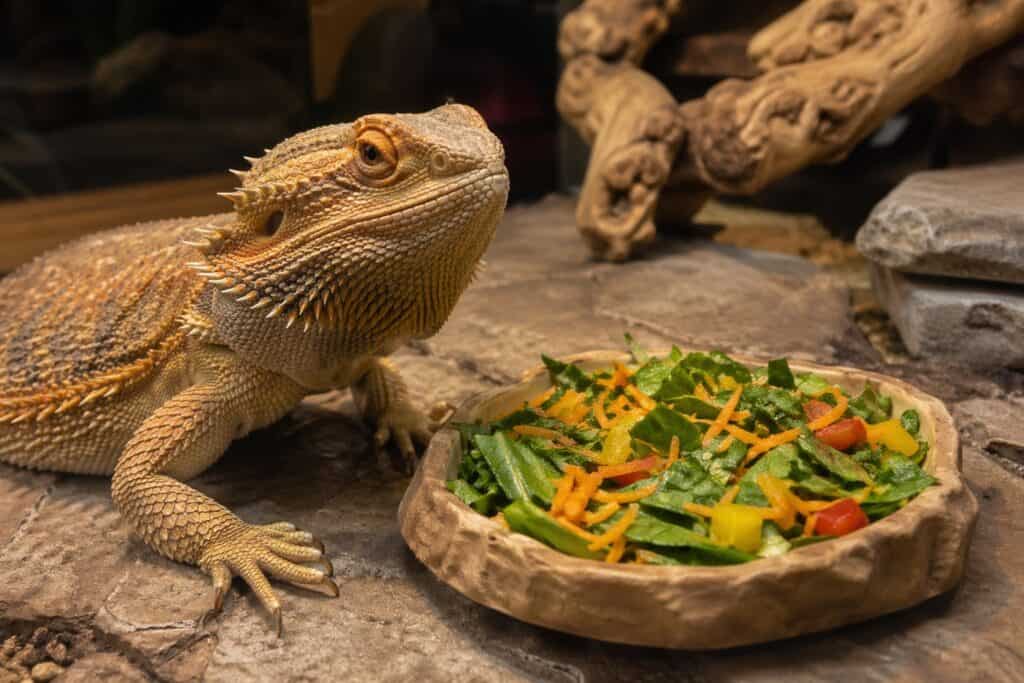
Diet has the biggest long-term impact. A bearded dragon eating the right balance of greens, vegetables, and insects for its age will outlive one on a poor diet every time. Juveniles need heavy insect protein for growth. Adults need mostly greens with insects a few times per week. Getting that ratio wrong in either direction causes problems. Too many insects for an adult leads to obesity and fatty liver disease. Not enough insects for a juvenile stunts growth and weakens bones.
If you’re not sure what the right diet looks like at each life stage, our bearded dragon food guide breaks it down in detail.
UVB lighting is the second biggest factor. Bearded dragons need strong UVB to synthesize vitamin D3, which is essential for calcium absorption. Without it, they develop metabolic bone disease (MBD), the single most common life-shortening condition in captive beardies. MBD causes soft bones, jaw deformities, tremors, paralysis, and eventual organ failure. A proper T5 HO UVB tube spanning two-thirds of the enclosure, replaced every 12 months, prevents it entirely.
Basking temperature needs to hit 100 to 110 degrees Fahrenheit for adults. Bearded dragons depend on high basking temps to digest food properly. A basking spot that’s too cool leads to chronic digestive issues, food rotting in the gut, and a weakened immune system. Check your basking surface temp with an infrared gun, not just an air probe.
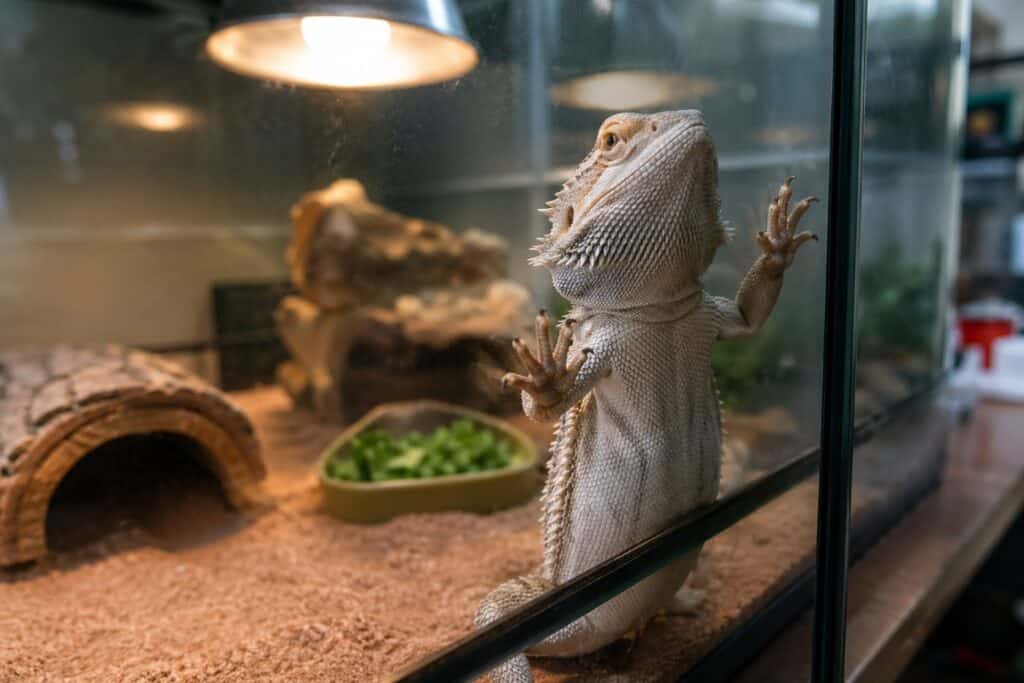
Enclosure size matters more than people think. An undersized enclosure limits movement, reduces the temperature gradient, and causes chronic stress. Adults should be in a minimum of 4 by 2 by 2 feet. Bigger is better.
Calcium supplementation works alongside UVB to prevent MBD. Dust insects with calcium at every feeding for juveniles and several times per week for adults. Use calcium with D3 if your UVB setup is weak. Use plain calcium if your UVB is strong. Our leopard gecko calcium schedule covers the general supplementation principles that apply across reptile species.
Hydration is often overlooked. Bearded dragons get water from their food, from misting, and from soaking. Chronic low-grade dehydration stresses the kidneys over years and shortens lifespan without obvious symptoms until it’s advanced. Offer fresh water, mist greens before serving, and provide occasional shallow baths.
Health Problems That Shorten Bearded Dragon Lifespan
The leading killers of captive bearded dragons are almost all husbandry-related.
Metabolic bone disease from inadequate UVB and calcium is the most common. It’s progressive and largely irreversible once advanced. Prevention is simple: proper UVB, proper supplementation, proper diet.
Obesity from overfeeding insects to adults is increasingly common. Fat deposits accumulate around organs, particularly the liver, leading to hepatic lipidosis (fatty liver disease). An overweight bearded dragon might look healthy on the outside while its liver is failing on the inside. Feed adults a greens-heavy diet with insects only a few times per week.
Impaction from inappropriate substrate, dehydration, or temperatures too low for proper digestion. Signs include bloating, constipation, and lethargy. Most cases are preventable with correct husbandry.
Respiratory infections from enclosures that are too cold, too humid, or poorly ventilated. Signs include wheezing, mucus around the nose, and open-mouth breathing. These need veterinary treatment.
Adenovirus (atadenovirus) is a viral infection common in bearded dragons that suppresses the immune system. It’s often asymptomatic in healthy dragons but can be devastating in stressed or immunocompromised individuals. There’s no cure, but beardies that test positive can still live full lives with excellent husbandry that keeps their immune system strong.
Signs of Aging in Bearded Dragons
Bearded dragons don’t go grey, but they do slow down with age. An older beardie will be less active, less interested in chasing insects, and more content to bask for extended periods. Appetite may decrease. Colors can fade slightly. They may brumate longer or more frequently.
Some older dragons develop cataracts or cloudy eyes. Joints can stiffen, making climbing more difficult. Weight loss in a senior beardie should be monitored closely as it can indicate kidney issues or other age-related organ decline.
None of these changes are emergencies on their own, but they do mean your dragon’s care needs adjusting. Softer foods, lower climbing surfaces, and more frequent health monitoring become important as your beardie ages.
Tracking Health Over the Long Haul
When you’re asking how long do bearded dragons live, the honest answer is that it depends on how consistently you maintain good care over years, not weeks. A perfect setup on day one means nothing if temperatures drift, supplementation gets forgotten, and diet slides.
The Exotic Reptile Care app is built for exactly this kind of long-term tracking. Log feedings, monitor weight with growth charts, set reminders for supplementation and UVB bulb replacement, and track brumation patterns over the years. When your dragon is 10 years old and you need to compare current behavior to what was normal three years ago, having that data makes all the difference.
A 10 to 15 Year Commitment
A bearded dragon isn’t a pet you pick up and move on from in a year or two. It’s a decade-plus commitment that requires consistent daily care. The good news is that the care isn’t hard. Correct diet, proper UVB, right temperatures, and regular monitoring. That’s the formula.
Most bearded dragons that die young die from preventable causes. The ones that make it to 12, 14, 15 years aren’t lucky. Their keepers just did the basics right, every day, for years. That’s the real answer to how long do bearded dragons live. As long as you’re willing to put the work in.
How long do bearded dragons live: frequently asked questions
How long do bearded dragons live as pets?
Most captive bearded dragons live 8 to 15 years with proper care, and well-kept individuals push past 15. The oldest on record reached 18. Where your dragon lands in that range comes down almost entirely to husbandry, not luck, so a decade-plus commitment is realistic when diet, UVB, temperatures, and monitoring are all done right.
How long do bearded dragons live in the wild?
Wild bearded dragons in central Australia typically live only 5 to 8 years, with a rare individual reaching around 10. They face predators like dingoes, monitors, and birds of prey, plus drought, food scarcity, and parasites. Captivity removes those threats, which is why good captive care roughly doubles their expected lifespan.
What is the oldest a bearded dragon has lived?
The oldest documented bearded dragon reached 18 years. That’s the exception rather than the norm, but it shows what’s possible with excellent long-term husbandry. Reaching the mid-teens is a realistic goal for a dragon kept with correct UVB, diet, temperatures, and consistent care over its whole life.
What shortens a bearded dragon’s lifespan the most?
Metabolic bone disease from inadequate UVB and calcium is the leading preventable killer, followed by obesity and fatty liver disease from overfeeding insects to adults. Impaction, respiratory infections, and chronic dehydration also take years off. Nearly all of these trace back to husbandry, which means nearly all of them are preventable with the right setup and diet.
Do bearded dragons live longer than leopard geckos?
They’re in a similar league, though leopard geckos often edge ahead. Bearded dragons average 8 to 15 years while leopard geckos commonly reach 15 to 20. Both are long-lived reptiles that far outlast most people’s expectations, so either one is a serious multi-year commitment rather than a short-term pet.
How can I help my bearded dragon live longer?
There’s no shortcut, just doing the basics well for years. Provide strong T5 HO UVB replaced yearly, an age-appropriate diet, a basking surface of 100 to 110°F for adults, a minimum 4 by 2 by 2 foot enclosure, consistent calcium, and good hydration. Then watch for slow changes. Logging weight, feedings, and UVB replacement in the Exotic Reptile Care app turns years of care into data you can actually compare, which fits naturally into a consistent care routine.