
Why is my bearded dragon not eating is the question that sends more keepers into a panic than any other, and most of the time the answer is boring. Temperature, season, or a shed. Actual illness is further down the list than the internet makes it feel.
That said, dragons hide sickness well, so “probably fine” isn’t the same as “ignore it.” The useful skill is knowing which of these you’re looking at, and there’s a fairly reliable order to work through.
| Cause | Clue That Points to It |
|---|---|
| Cool basking spot | Winter, or new setup, or unchecked thermostat |
| Brumation | Autumn or winter, sleepy, still hydrated |
| Shedding | Dull skin, white patches, grumpy |
| Stress | Recently moved, new enclosure, new house |
| Age change | Around 12 to 18 months old |
| Impaction | No stools, straining, lethargy |
| Parasites or illness | Weight loss, runny stools, sunken eyes |
Check the Basking Temperature First
Before anything else, point an infrared temp gun at the basking surface. Not the air, not a stick-on dial, the actual spot your dragon sits on.
Bearded dragons digest with heat. An adult needs a basking surface around 95 to 105F, with juveniles at the higher end. Below that, digestion slows down and appetite goes with it. A dragon that can’t process a meal stops asking for one.
This is behind a huge share of winter appetite loss. Nothing in the setup changed, but the room got colder, the bulb aged, or the thermostat drifted. Bulbs lose output long before they burn out, which is why a lamp that’s been running eighteen months can be producing far less heat than it did on day one.
Too hot causes the same result from the other direction. A dragon that spends its day hiding on the cool end and refusing food may be avoiding an overheated basking area, which our guide on a bearded dragon basking temperature that’s too high gets into.
Check UVB too. An expired tube looks identical to a working one and still glows. Replace linear T5 tubes every 12 months regardless of appearance. Write the install date on the tube in marker, because twelve months is exactly long enough to forget. Getting bearded dragon UVB right also covers tube strength and mounting distance, both of which can leave a dragon underlit even with a new bulb.
Brumation Is Probably What’s Happening in Autumn
If it’s autumn or winter, your dragon is over about ten months old, and it’s sleeping constantly but looks otherwise healthy, this is likely brumation. It’s a natural dormancy, not a problem to fix.
Brumating dragons burrow, hide, sleep for days at a time, refuse food entirely, and can go weeks without eating without harm. The important part is that they stay hydrated and don’t lose significant weight.
The tell is overall condition. A brumating dragon still has good muscle tone, clear eyes, and normal colour when it does surface. A sick dragon looks sick. Our full breakdown of bearded dragon brumation signs covers how to tell the difference and what to do while it lasts.
Weigh weekly through it. Slow gradual loss is normal. Rapid loss is not brumation.
Shedding, Stress, and Age
Dragons often go off food for a few days before and during a shed. Look for dull skin, whitish patches, and a generally irritable mood. It resolves on its own.
Stress does the same thing. A dragon that’s just been brought home, moved to a new enclosure, or had its room rearranged may not eat for several days to a couple of weeks. New dragons especially. Give them a week or two of minimal handling and a well-covered enclosure before worrying. Appetite loss alongside pacing and scratching at the glass usually points here, and our post on bearded dragon glass surfing explains the other half of that behaviour.
Age matters too. Juveniles eat insects constantly. Somewhere between twelve and eighteen months, that appetite drops off sharply and they shift toward greens. Keepers regularly read that normal transition as a problem. An adult refusing insects while still picking at salad is doing exactly what it should. If it’s specifically the greens being ignored, that’s a narrower issue covered in our guide on a bearded dragon not eating greens.
When It’s Actually Something Wrong
Some things do need a vet, and this is the part worth reading properly.
Impaction blocks the gut and shuts down appetite. Look for no stools for an unusually long stretch, straining, lethargy, weakness in the back legs, or a hard lump visible along the belly. Loose substrate and oversized feeder insects are the usual causes.
Parasites cause appetite loss with runny, foul, or unusually smelly stools and steady weight loss despite eating. Common in newly acquired dragons and easily confirmed with a faecal test.
Mouth rot shows as swelling, discharge, or discolouration around the mouth, and it makes eating painful.
Metabolic bone disease brings trembling, weakness, a soft or swollen jaw, and difficulty gripping or climbing. It traces back to insufficient UVB or calcium.
Egg binding affects females, including ones never near a male. A gravid female that stops eating, digs frantically, then goes still and lethargic needs a vet quickly.
The threshold worth using: refusing food for more than a week outside of brumation, or any refusal paired with weight loss, sunken eyes, black beard held constantly, or abnormal stools. At that point find a reptile-experienced vet through the ARAV vet directory rather than waiting it out.
Sometimes It’s the Food
Boredom is real. A dragon fed identical salad daily will eventually stop bothering, and the same goes for the same feeder insect week after week.
Rotate greens, change the presentation, and try live insects if you’ve been offering them dead or in a dish. Movement triggers a feeding response that a static bowl doesn’t. Our bearded dragon food guide covers what belongs in the daily rotation.
Feeder size matters as well. An insect wider than the space between the eyes is intimidating and risky, and some dragons simply won’t attempt one.
Why Tracking Answers This Faster Than Guessing
The reason this question is hard to answer is that nobody remembers accurately. Ask a keeper when their dragon last ate properly and you’ll usually get a guess that’s off by a week.
That guess is the difference between two very different situations. A dragon that’s eaten lightly for three days is not the same as one that’s eaten nothing for eighteen, and only one of those is a vet visit today.
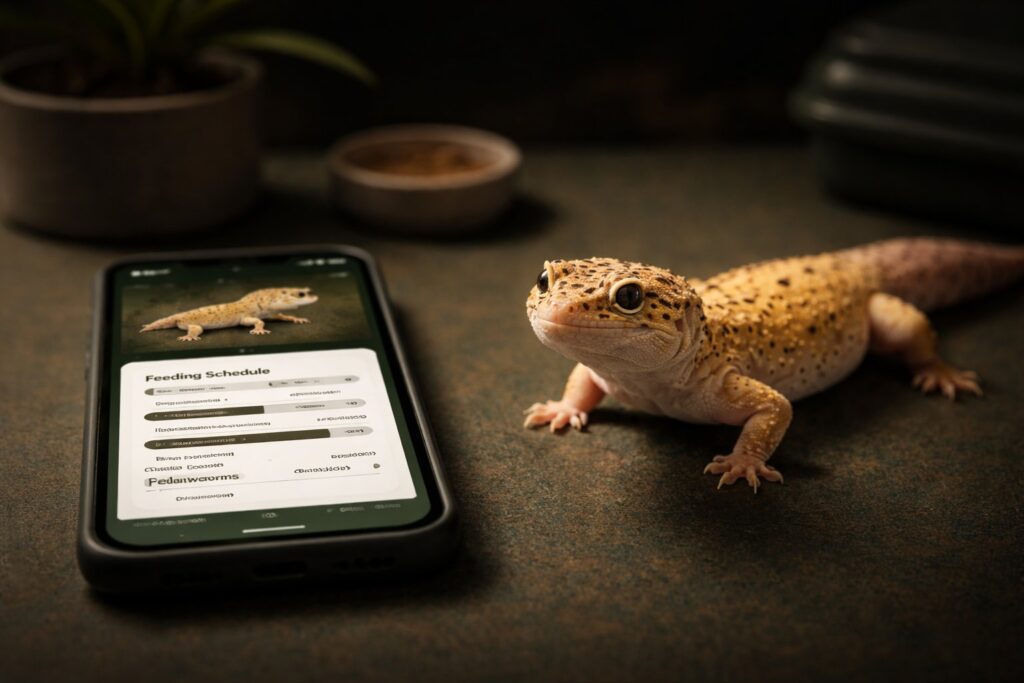
Logging feeding and weight makes it factual. The Exotic Reptile Care app records what was offered and what was taken alongside a weight chart, so a decline shows up as a visible trend rather than a hunch. Weight is the real signal here. A dragon eating less at a stable weight is usually fine. A dragon eating less with a falling weight line needs attention now.
It also makes the vet appointment far more productive, since you arrive with dates and numbers instead of “a few weeks, I think.”
FAQ: Bearded Dragon Appetite Questions
How long can a bearded dragon go without eating?
A healthy adult can go weeks, and brumating dragons routinely go one to two months. Juveniles are far less tolerant and shouldn’t skip more than a couple of days without investigation.
Why is my bearded dragon not eating but still active?
Usually shedding, an approaching brumation, or the normal juvenile to adult appetite shift. An active, alert dragon at a stable weight is rarely an emergency.
Why is my baby bearded dragon not eating?
Most often stress from a recent move, or a basking spot that’s too cool. Babies need higher temperatures and daily insects, so a refusal lasting more than two or three days deserves a proper temperature check.
Should I force feed a bearded dragon that won’t eat?
No, not without veterinary direction. Force feeding a brumating or impacted dragon can cause real harm. Fix husbandry first, then see a vet.
Is a black beard a sign my dragon is sick?
Not on its own. Beards darken with stress, temperature, and territorial displays. A beard held black constantly alongside appetite loss and weight loss is the combination that matters.
Start with the temp gun, then the calendar, then the weight. That order answers this question correctly most of the time, and it stops you rushing a healthy brumating dragon to a vet in November.