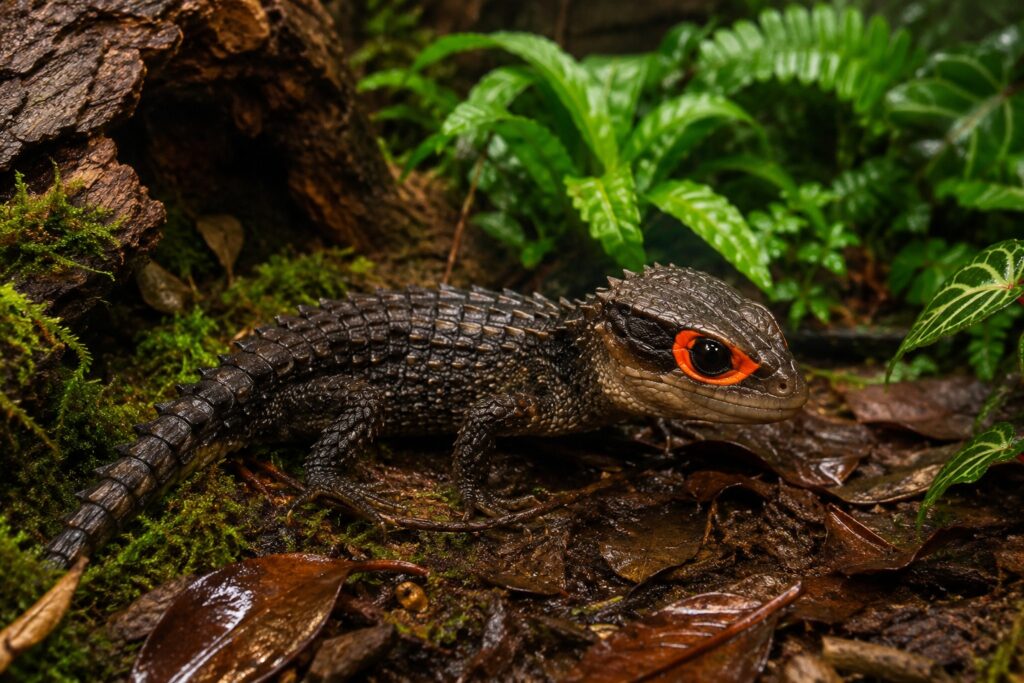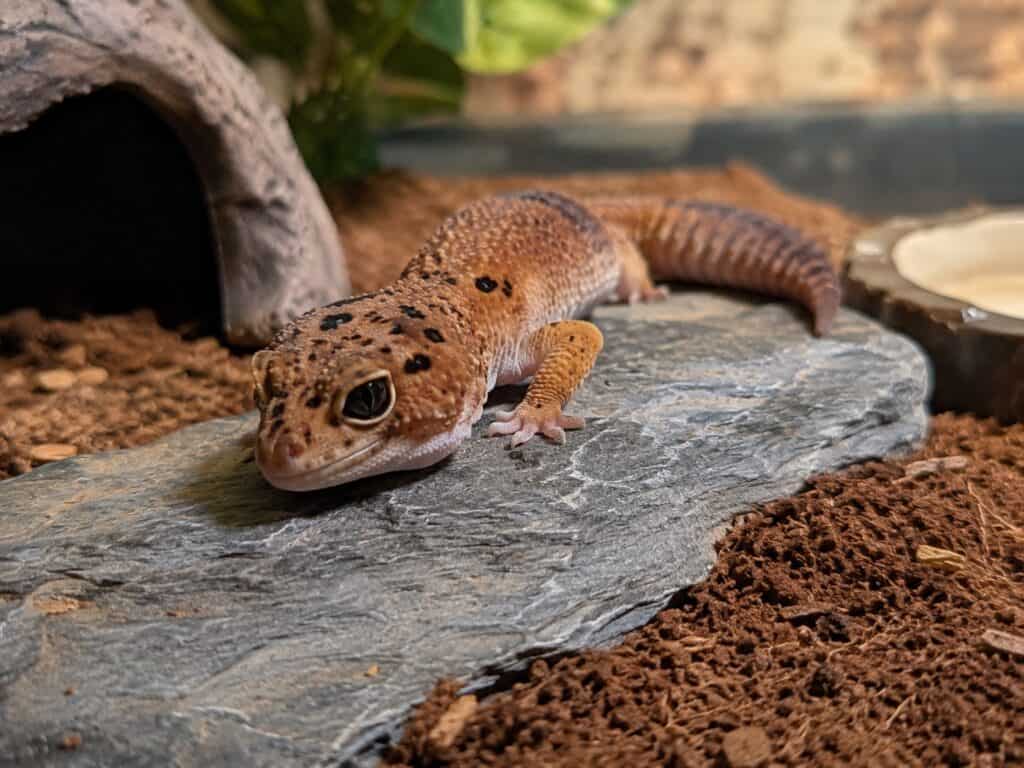

Gargoyle gecko care is close enough to crested gecko care that most of what you read about cresties transfers directly, with three real differences. Gargoyles take more insect protein, they’re more inclined to bite each other, and they regrow their tails, which cresties never do.
They’re a genuinely underrated species. Slightly chunkier than a crested gecko, with the bumpy cranial knobs that give them their name, and a reputation for being a bit calmer to handle. If you want something in the New Caledonian gecko family that isn’t the default choice, this is it.
| Gargoyle Gecko Basics | What to Expect |
|---|---|
| Adult size | 7 to 9 inches, 45 to 65 grams |
| Lifespan | 15 to 20 years |
| Enclosure (adult) | 18x18x24 inches minimum |
| Temperature | 72 to 78F, never above 82 |
| Humidity | 60 to 80%, with a dry-down |
| Diet | Prepared diet plus insects |
| Handling | Tolerant, but they jump |
| Housing | One per enclosure |
What Makes Them Different From Crested Geckos
Same island, same genus, similar requirements. Gargoyle geckos and crested geckos both come from New Caledonia and both are nocturnal and arboreal.
The heavyweight of the family is the leachie, the largest gecko in the world. Its care runs close to a gargoyle’s at several times the weight, covered in our leachie gecko care guide.
The differences that matter in practice:
Gargoyles are more carnivorous. In the wild they eat more insects and will take small vertebrates, including other geckos. Your feeding routine should lean harder on insects than it would for a crestie.
They regenerate tails. A dropped tail grows back, usually shorter and differently shaped. Crested geckos do not regrow theirs, which is why so many adult cresties are tailless.
They’re more aggressive toward each other. Cohabitation goes badly more often and more severely than with crested geckos, and bite injuries are common.
They tend to be a little stockier and slightly more tolerant of handling, though individual temperament varies more than species averages suggest.
Enclosure Setup
An adult needs 18 by 18 by 24 inches minimum, and taller is better since these are climbing animals. Juveniles do better in something smaller, around 12 by 12 by 18, because a hatchling in a large enclosure struggles to find food.
Front-opening glass terrariums are the standard and they work well. Vertical space matters more than floor space here, which is the opposite of most lizards.
Fill it with climbing structure. Cork bark rounds and flats, sturdy branches, and dense foliage, whether live or artificial. A gargoyle gecko with plenty of cover comes out and uses the space. One in a bare enclosure hides constantly and you’ll never see it.
Substrate should hold moisture without staying soggy. Coconut coir, cypress mulch, or a bioactive soil mix all work. Paper towel is fine for quarantine or for a new animal you’re monitoring.
The build is close to a crestie’s, and our gargoyle gecko enclosure guide covers it step by step, including when to move a juvenile up and the signs a setup is wrong. Our crested gecko enclosure guide covers the same ground for cresties.
Temperature and Humidity
Here’s where gargoyle gecko care catches people out. Like crested geckos, they run cool and they die from heat.
Keep them at 72 to 78F during the day with a night drop into the mid to high 60s. Above 82F sustained causes heat stress, and 85F and up can be fatal. Most homes hold the correct range without any heating equipment at all.
If your house runs genuinely cold, below 68F for long stretches, use a low-wattage ceramic heat emitter or deep heat projector on a thermostat. No heat mats, since an arboreal gecko doesn’t use the floor. The heat risks and summer management are the same as for cresties, covered in our crested gecko temperature guide, and the advice transfers directly.
Humidity should run 60 to 80 percent with a daily dry-down. Mist heavily in the evening and let the enclosure dry out partially before the next misting. Permanently soggy conditions cause respiratory infections and skin problems, while permanently dry conditions cause stuck shed on the toes and tail tip.
UVB isn’t strictly required if you supplement properly, but a low-output 5 to 6 percent T5 tube improves calcium absorption and is worth adding. Provide shaded retreats either way.
For comparisons across the species you keep, our reptile temperature and humidity guide puts the ranges together.
Gargoyle Gecko Care: Feeding
The foundation is a complete powdered diet formulated for New Caledonian geckos. Mix with water to a thick smoothie consistency, offer in a shallow ledge dish in the evening, and remove after 24 to 36 hours before it spoils. Three times a week for adults, more often for juveniles.
The gargoyle-specific part is insects. Offer them once or twice a week rather than treating them as optional. Dubia roaches, crickets, and black soldier fly larvae all work. Keep the insect no longer than the space between the gecko’s eyes, gut load for a day or two beforehand, and dust with calcium.
Fresh fruit is a small treat, offered mashed once every week or two. Soft ripe fruit like mango, papaya, fig, and banana. Skip citrus and avocado entirely.
The powdered diet side is identical to crested geckos, and our crested gecko food guide covers mixing, flavors, and what to avoid.
Provide a shallow water dish and change it daily, even though most of their drinking comes from misted droplets.
Handling and Temperament
Gargoyle geckos handle reasonably well once settled. Give a new animal a week or two before you start, then keep sessions short.
They jump. This is the main thing to know. Hand-walking works better than trying to hold one still. Jumping is about the worst a gargoyle will do. If you want to see the other end of the gecko temperament scale, read about how hard a tokay gecko bites before you buy one. and doing it low over a bed or sofa saves you chasing a gecko across a room.
Never grab or restrain by the tail. Even though gargoyles regrow theirs, tail loss is stressful and the regrown tail never looks the same.
Some hissing or a quick lunge from a new or startled gecko is normal and fades with consistent gentle handling.
Cohabitation: Don’t
One gargoyle gecko per enclosure. This is firmer advice than it is for crested geckos, and it’s the most common serious mistake in gargoyle gecko care.
Males will fight, often badly. Females housed together frequently produce a dominant animal that stresses and outcompetes the other. Even mixed pairs are a problem outside of deliberate breeding, since males harass females relentlessly and repeated breeding drains a female’s calcium reserves.
The bite injuries are real. Missing toes, damaged tails, and open wounds are common outcomes, and they happen at night while you’re asleep.
Health Problems to Watch
Metabolic bone disease from inadequate calcium or missing D3, showing as trembling, weakness, or a soft or misshapen jaw. Stuck shed from low humidity, particularly on toes and the tail tip, which constricts and causes tissue loss if left. Respiratory infection from conditions that stay too wet or too cold, showing as wheezing or open-mouth breathing. And impaction from substrate ingestion, which is why feeding from a dish matters.
For any of these, find a reptile vet through the ARAV vet directory rather than a general practice.
Weight loss is the earliest general warning sign. Geckos hide illness well and a gecko that’s dropping grams over a few weeks tells you something before anything else does.
Tracking a Nocturnal Animal
The practical problem with gargoyle gecko care is that everything happens while you’re asleep. They eat at night from a dish you can’t read reliably, since prepared diet evaporates and looks partly eaten either way.
Weighing weekly for juveniles and monthly for adults is the honest measurement. The Exotic Reptile Care app plots weight over time so a decline shows up as a trend rather than a hunch, and it tracks shed cycles, which is how you catch a humidity problem before it costs your gecko a toe.
FAQ: Gargoyle Gecko Care Questions
How big do gargoyle geckos get?
Seven to nine inches in total length and roughly 45 to 65 grams as adults. They’re slightly stockier than crested geckos.
How long do gargoyle geckos live?
Fifteen to twenty years with good care, and some individuals go longer. It’s a genuine long-term commitment.
Do gargoyle geckos need heat?
Usually not. They do best at 72 to 78F, which most homes hold naturally. Supplemental heat is only needed if your house sits below 68F consistently, and it should always be on a thermostat.
Can gargoyle geckos live together?
No. They’re more aggressive toward each other than crested geckos and bite injuries are common. House one per enclosure.
Do gargoyle geckos regrow their tails?
Yes. A dropped tail grows back, usually shorter and a different shape. Crested geckos are the ones that can’t regrow theirs.
What do gargoyle geckos eat?
A complete powdered New Caledonian gecko diet as the staple, plus insects once or twice a week and occasional fruit. They take more insect protein than crested geckos do.
If you already keep crested geckos, gargoyle gecko care will feel familiar and you’ll get most of it right on instinct. The two things to adjust are feeding more insects and being stricter about housing them alone.