Leopard gecko temperature is measured at the floor, and that one sentence solves most of the problems people write in about. These are belly-heat animals. They lie flat on a warm surface and absorb heat through their underside, which is a different setup from almost every other beginner reptile.
Air temperature barely matters. A thermometer stuck to the glass reading 78F tells you almost nothing about whether your gecko can digest a meal.
| Zone | Target |
|---|---|
| Warm side floor | 90 to 95F |
| Cool side floor | 70 to 75F |
| Ambient air | 75 to 85F |
| Night minimum | 65F |
| Danger threshold | 96F and above |
| Humid hide | On the warm side |
Why the Warm Floor Does the Work
A leopard gecko digests by lying on warm ground. In the wild that’s rock and packed earth holding the day’s heat well after sunset, which is exactly when the gecko is active.
Get that surface to 90 to 95F and everything downstream works. Food gets processed, calcium gets absorbed, shedding goes normally. Let it fall to the low 80s and digestion slows, appetite drops, and undigested food sitting in the gut can lead to impaction.
This is why the first question about a leopard gecko that stopped eating should be what the warm floor reads, not what’s wrong with the gecko. Our guide on a leopard gecko not eating but active covers the rest of that list, but temperature is the first thing to eliminate.
The cool side has to be genuinely cool. 70 to 75F, with its own hide. A gecko needs somewhere to go when it’s had enough heat, and an enclosure that reads 90F end to end is a gecko with no way to thermoregulate.
Measuring Leopard Gecko Temperature Properly
Two tools, and between them you’ll be right.
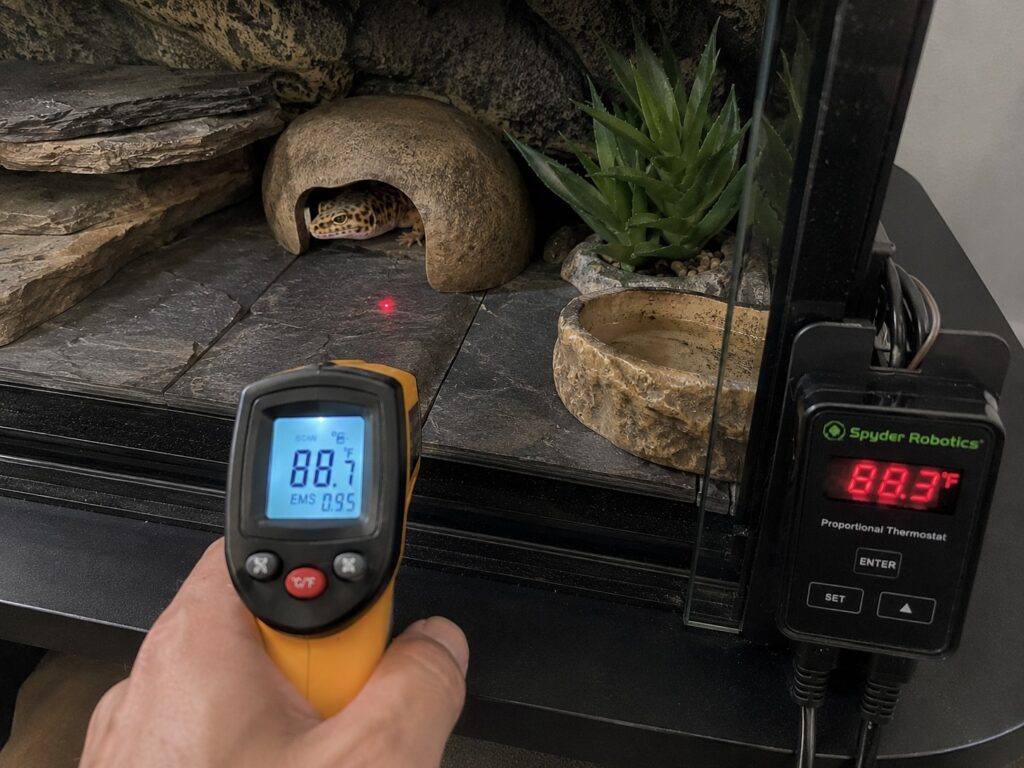
An infrared temp gun for surfaces. Point it at the floor on the warm side, inside the warm hide, at the cool end, and inside the cool hide. Four readings in ten seconds and you know your whole gradient. This is the single most useful piece of equipment in reptile keeping and it costs very little.
A digital probe thermometer for continuous monitoring, with the probe sitting at floor level on the warm side. Not dangling in the air, and not wherever the suction cup happened to stick.
What to throw away: the stick-on dial thermometers that come with starter kits. They read air, they’re routinely off by 5 to 10 degrees, and they’ve convinced a lot of keepers their setup was fine when the floor was in the 70s.
Measure inside the warm hide specifically. That’s where the gecko spends its day, and a hide with thick walls can read several degrees cooler than the open floor beside it.
The Thermostat Is Not Optional
An unregulated heat mat can climb past 110F. Leopard geckos do not reliably move off heat that’s damaging them, and belly burns are one of the more common serious injuries in the hobby.
Every heat source goes on a thermostat, no exceptions and no “I’ll check it manually.” An on-off thermostat is adequate for a heat mat. A dimming or pulse proportional unit is better for overhead sources because it holds a steadier temperature.
Probe placement decides whether the thermostat is doing anything useful. It should sit on the floor surface directly over the heat mat, under the substrate or tile if you use one, taped down so it can’t shift. A probe hanging in the air regulates air temperature and lets the floor run far too hot, which is the exact failure the thermostat was meant to prevent.
Heat Sources That Work
Under-tank heaters and heat tape are the traditional and still perfectly good option. Cover about a third of the floor. Any more and there’s no gradient left. Under tile or slate they work especially well, since stone holds and spreads heat the way natural rock does.
Overhead halogen has become popular and there’s a good argument for it. It creates a warm surface plus radiant heat and better ambient temperature, closer to how a rock warms under sun. Many keepers now run halogen overhead with a heat mat as backup.
Deep heat projectors and ceramic emitters produce heat with no visible light, which suits a crepuscular animal and works well for cold rooms overnight.
Heat rocks: never. They have internal elements that fail unevenly and they cause severe burns. There’s no version of this product worth using.
Whichever you pick, the enclosure needs the space for a real gradient. Anything under 36 inches long struggles to hold 95F at one end and 72F at the other, which is part of why our leopard gecko enclosure guide pushes for a 40 gallon breeder or larger.
Night, Seasons, and Cool Rooms
Leopard geckos tolerate a night drop well. Down to about 65F is fine and mirrors desert conditions. Below that consistently and digestion slows enough to matter.
Don’t use coloured night bulbs. Red and blue lights disturb sleep cycles and produce poor heat. If your room drops too far overnight, use a ceramic heat emitter or deep heat projector on a thermostat.
Seasonal drift is the pattern that catches people. Nothing in the setup changes, but the room does. A warm side reading 92F in June is running 84F by January, and the gecko that “suddenly went off food” has actually been slightly too cool for six weeks.
Some geckos reduce feeding through winter regardless, particularly adults. That’s normal as long as weight holds steady. Weight falling is not.
Temperature and Humidity Together
The two interact more than people expect. Heat dries air, and a warm side running hot pulls humidity down across the whole enclosure, which shows up as stuck shed on the toes and around the eyes.
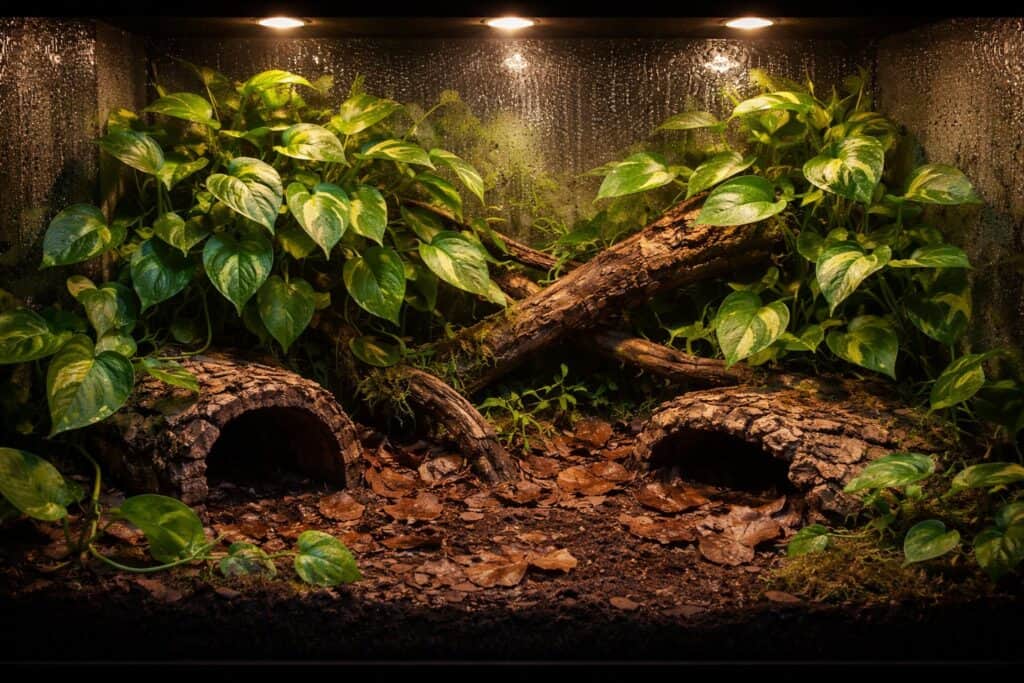
The fix isn’t to soak the substrate. It’s a humid hide, placed on the warm side, with damp sphagnum moss or paper towel inside. Warm and humid together is what loosens shed. A humid hide on the cool end does considerably less. Our guide on leopard gecko humidity covers the rest of it, and our reptile temperature and humidity guide puts the numbers next to the other species you might keep.
Signs Your Temperatures Are Off
Too cold: refusing food, undigested food in the stools, regurgitation, constant sitting on the warm side, sluggishness, and slow or incomplete sheds.
Too hot: hiding on the cool end permanently, restlessness, glass surfing, gaping, and refusing to use the warm hide at all.
Cold is the more common problem and it does its damage slowly. A gecko that’s been digesting poorly for two months looks fine right up until it doesn’t. Calcium absorption suffers too, since a gecko that isn’t processing food properly isn’t getting full value from supplements either, which our leopard gecko calcium schedule guide explains in more detail.
If you see straining without stools, visible weakness, or a gecko that stays lethargic after temperatures are corrected, get a reptile vet involved through the ARAV vet directory rather than waiting.
Check It Weekly and Write It Down
Leopard gecko temperature problems are almost always drift rather than sudden failure. A thermostat probe shifts a few millimetres, a heat mat degrades, the house gets colder, and none of it announces itself.
Thirty seconds a week with a temp gun catches all of that. Logging the number is what makes it useful, because a reading of 88F means nothing on its own and quite a lot if the same spot read 93F for the previous four months.
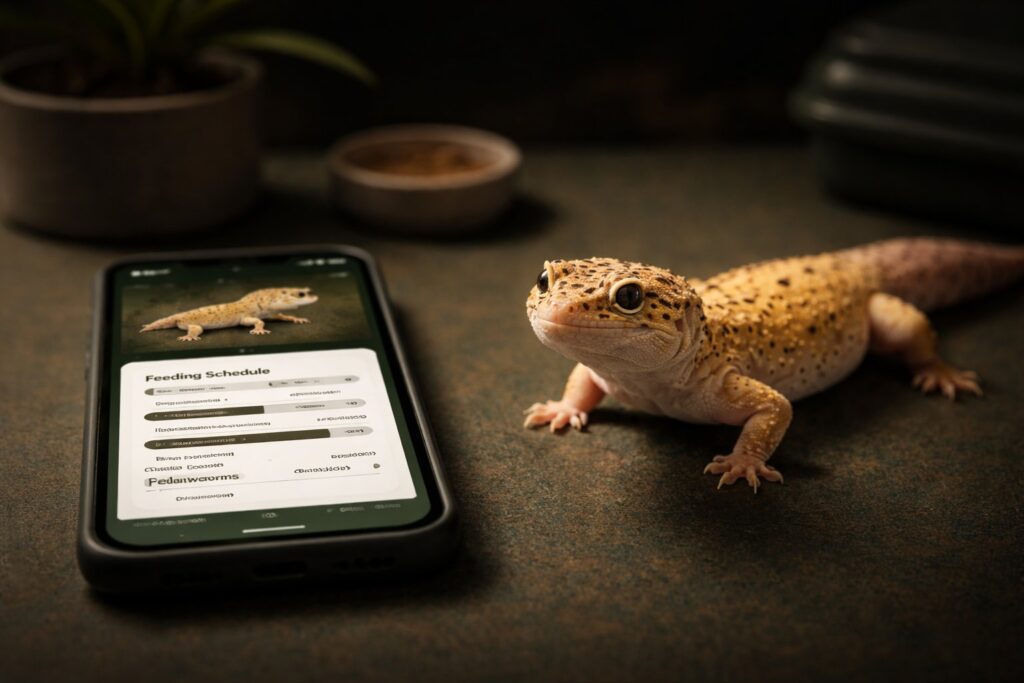
The Exotic Reptile Care app handles reminders for routine checks and tracks weight alongside feeding, which is the honest early warning. A gecko eating less at a stable weight is usually seasonal. A gecko eating less with a falling weight line has a problem, and the temperature is the first place to look for it.
FAQ: Leopard Gecko Temperature Questions
What temperature should a leopard gecko tank be?
Warm side floor 90 to 95F, cool side floor 70 to 75F, ambient air between roughly 75 and 85F. Nights can drop to about 65F safely.
Do leopard geckos need a heat lamp?
They need floor heat above all. A heat mat on a thermostat is the traditional approach, and overhead halogen also works well and adds better ambient warmth. Either is fine, a thermostat is mandatory.
How do I measure leopard gecko temperature correctly?
With an infrared temp gun aimed at the floor surface, including inside the warm hide. Stick-on dial thermometers measure air and are frequently inaccurate.
Can leopard geckos get too hot?
Yes. Above 96F on the floor risks burns and heat stress, and an unregulated heat mat can exceed 110F. This is why every heat source needs a thermostat.
Do leopard geckos need heat at night?
Not usually. A drop to around 65F is natural and healthy. If the room falls below that consistently, use a ceramic heat emitter or deep heat projector on a thermostat, never a coloured night bulb.
Why is my leopard gecko not eating in winter?
Most often a warm side that’s cooled off as the room did. Check the floor temperature first. Some adults also reduce feeding seasonally, which is fine as long as weight stays stable.
Buy a temp gun and a thermostat before you buy anything decorative. Point the gun at the floor, not the air, and check it weekly. That’s the whole of it, and it prevents most of what goes wrong with this species.