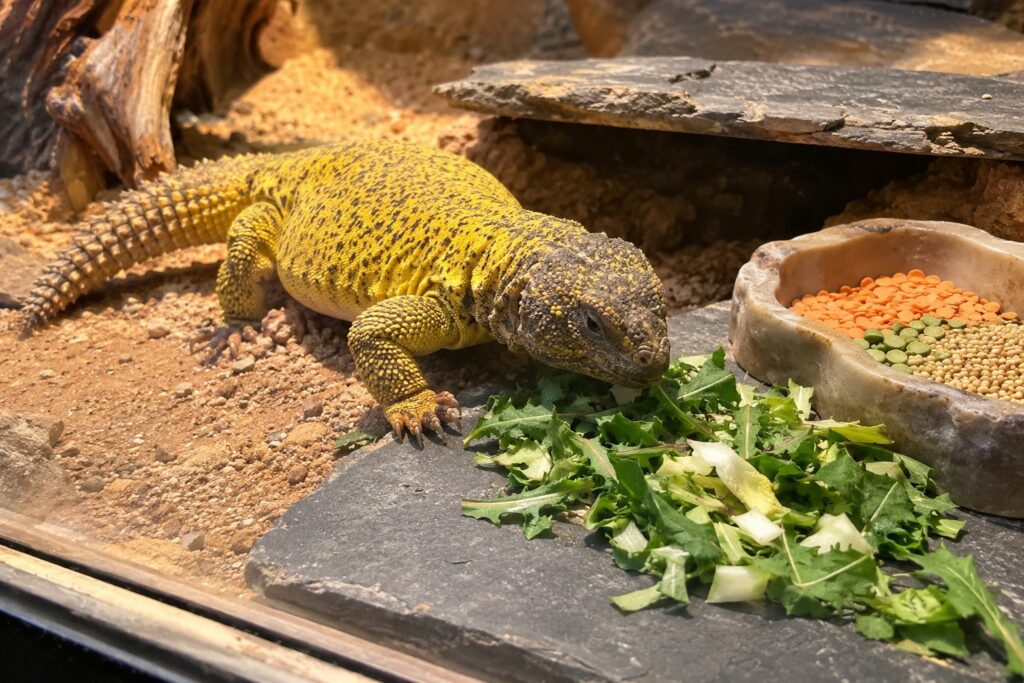
A uromastyx diet is built on dark leafy greens and weeds, with a small dish of dry lentils and seeds on the side. No insects for most species and no fruit. The part that surprises new keepers is the dry food. In the wild, uros eat a lot of dried seeds and plant material, and a little dry dish in the enclosure is one of the simplest things you can do to keep one eating and growing well.
Uromastyx Diet at a Glance
| Item | Juveniles | Adults |
|---|---|---|
| Fresh greens | Daily | Most days |
| Dry lentils and seeds | Daily | A few times a week |
| Calcium | A few times a week | A few times a week |
| Multivitamin | Once a week | Once a week |
| Insects | Not needed | Not needed |
| Fruit | No | No |
The Greens to Rotate
Fresh greens are the base of a healthy uromastyx diet. Aim for three or four different kinds at each meal, chopped small enough that the lizard can grab a mouthful without tearing.
- Dandelion, leaves and flowers
- Endive and escarole
- Collard greens
- Turnip greens
- Mustard greens
- Arugula
- Broadleaf and narrowleaf plantain
- Hibiscus leaves and flowers
Weeds are even better than store greens, because they’re higher in fiber and closer to what uros eat in the wild. Most of the weed list in our Russian tortoise diet guide works for uros too. Pick only from unsprayed ground away from busy roads.
A little grated squash or bell pepper now and then adds color and variety, but keep it as a topping, not a main ingredient.
Why Dry Lentils and Seeds Belong in the Dish
This is the part of the uromastyx diet that sets it apart from other herbivores. Offer a small, shallow dish of dry food alongside the greens: split red lentils, green or yellow split peas, and small seeds like millet. Feed them dry, not cooked or soaked. Uros crack them easily, and the dry dish doesn’t spoil in the heat like wet food does.
Juveniles can have the dish in the enclosure daily. For adults, put it out a few times a week. These seeds and lentils give extra protein for growth and help keep adults in good condition through the year.
A few things to avoid in the dish. Skip whole dry kidney beans and other large beans, which are hard to digest and can be toxic raw. Avoid bird seed mixes with dyes, coatings, or added fruit, and go easy on sunflower seeds, which are very fatty.
Foods to Skip in a Uromastyx Diet
Uros are built to ferment plant fiber in a large hindgut, which is why the Merck Veterinary Manual’s guidance on lizard nutrition recommends plant-based diets for herbivorous lizards and warns that fruit is too low in fiber for them. That rules out most of what new keepers are tempted to offer.
- Insects. Most pet uromastyx species do better without them. Too much animal protein strains the kidneys.
- Fruit. Too sugary, and it upsets their gut bacteria.
- Spinach in large amounts. It binds calcium. A leaf now and then is fine, but not as a staple.
- Iceberg lettuce. Mostly water, very little nutrition.
- Cooked food, bread, or pet food. None of these belong in a uro’s diet.
Supplements and Water in a Uromastyx Diet
Dust the greens with calcium a few times a week and a multivitamin once a week. If your uro has a good 12% UVB tube, plain calcium without D3 is enough.
Uros get most of their water from food. Lightly mist the greens before you offer them, and give a shallow dish of water once or twice a week rather than leaving a bowl in permanently, which raises the humidity too much. Sunken eyes or wrinkled skin along the sides mean your uro needs more water, so mist more heavily for a few days.
When Your Uro Only Eats the Seeds
A uro that picks out the lentils and seeds and ignores the greens is one of the most common diet complaints. It’s usually fixable in a week or two.
Start by checking heat. A uro that can’t get its basking surface to 120 to 130°F won’t digest greens well, and it often switches to dry food or stops eating entirely. If you haven’t checked recently, our uromastyx care guide has the full heat and UVB setup.
Next, change the order of meals. Offer greens first thing in the morning, after the uro has basked, and put the dry dish in only in the afternoon once some greens are gone. Chop the greens finely and scatter a few lentils on top so the lizard has to eat both to get at the seeds. A sprinkle of dandelion or hibiscus flowers makes greens far more tempting.
It also helps to watch what actually gets eaten over a week, rather than guessing. Keeping track in the feeding log in the app shows quickly whether greens intake is improving, and Exotic Reptile Care keeps the weight log alongside it so you can see if a picky week is costing your uro any condition. The same idea works for a bearded dragon that refuses greens, so the tricks there are worth borrowing too.
If your uro stops eating both greens and seeds, and the heat is correct, look at the season. Many uros slow down in late fall and winter. If weight holds steady, that’s normal.
Get the greens rotation right, keep the dry dish small, and skip the bugs and fruit. A good uromastyx diet is cheap, easy to prepare, and keeps these lizards bright and active for decades.
Frequently Asked Questions
What is the best uromastyx diet?
Fresh dark leafy greens and weeds most days, with a small dish of dry lentils and seeds. Juveniles get both daily. Adults get the dry dish a few times a week. No insects or fruit.
Can uromastyx eat lentils?
Yes. Dry split lentils and split peas are a good protein source for uros. Offer them dry, in a shallow dish, rather than cooked or soaked.
Can uromastyx eat insects?
Most pet species don’t need insects and do better without them. Too much animal protein can harm their kidneys over time.
Can uromastyx eat fruit?
No. Fruit is too high in sugar for their gut. Use dandelion or hibiscus flowers as a treat instead.
How often should I feed an adult uromastyx?
Fresh greens most days, and a small dish of dry lentils and seeds a few times a week. Dust with calcium a few times a week and a multivitamin once a week.