Getting the blue tongue skink diet right is the difference between a skink that lives twenty years and one that develops fatty liver disease at eight. These are true omnivores, which sounds easy and actually makes them harder to feed than a bearded dragon or a leopard gecko. You’re balancing two food groups instead of managing one.
The short version: roughly half protein, forty percent vegetables, ten percent fruit, adjusted by age. Everything below is detail on how to hit that without overfeeding, because overfeeding is the mistake almost everyone makes with this species.
| Age | Feeding Frequency | Protein to Plant Ratio |
|---|---|---|
| Hatchling (0 to 3 months) | Daily | 60 / 40 |
| Juvenile (3 to 12 months) | Every other day | 50 / 50 |
| Adult (12 months plus) | 2 to 3 times weekly | 40 / 60 |
| Overweight adult | 1 to 2 times weekly | 30 / 70 |
The Protein Half of a Blue Tongue Skink Diet
Protein sources, roughly in order of how often I’d use them.
High-quality wet dog or cat food is the backbone for most keepers, and it surprises people every time. Grain-free, high meat content, no onion or garlic in the ingredients. Check the label properly, since onion and garlic powder show up in a lot of otherwise decent brands and both are toxic to reptiles. This is a convenient complete-ish protein, not a full diet on its own.
Insects give better enrichment. Dubia roaches, snails, hornworms, and black soldier fly larvae all work. Snails are particularly good, since they’re a natural food item and the shell provides calcium. Buy captive bred rather than collecting from the garden, since wild snails carry parasites.
Cooked egg is cheap and well accepted. Scrambled with nothing added, offered occasionally.
Lean ground turkey or chicken, cooked plain. Fine as part of a rotation, not as a staple, since muscle meat alone has a poor calcium to phosphorus ratio.
What to skip: processed meats, anything seasoned, dairy, and raw meat from the grocery store. Also skip feeder rodents. Some keepers offer pinkies occasionally, but they’re fatty and unnecessary for a species already inclined toward obesity.
The Plant Half
Build the vegetable share on the same calcium-friendly greens that work for other omnivorous and herbivorous reptiles. Collard greens, mustard greens, dandelion greens, turnip greens, endive, and escarole are your staples. If you already keep a beardie, this is the same list from our bearded dragon food guide, which makes shopping simpler if you keep both.
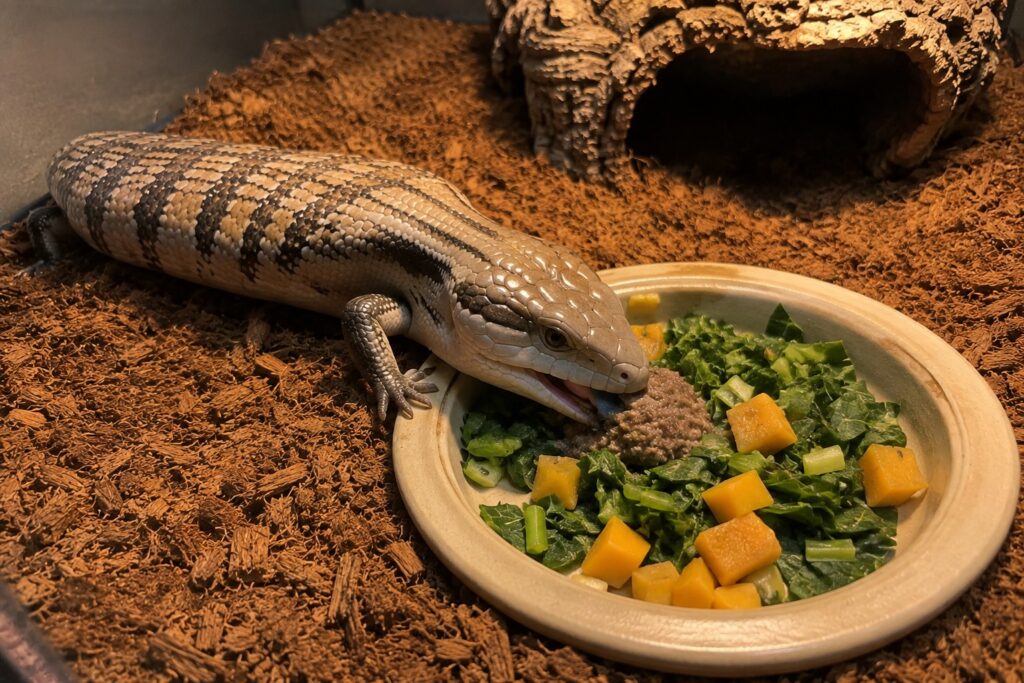
Beyond greens, add squash, butternut and acorn both work, along with green beans, bell pepper, carrot in moderation, and peas. Chop everything small enough to swallow easily, since skinks tend to gulp rather than chew.
Fruit is the smallest share and functions as a treat. Berries, mango, papaya, fig, and melon are all fine in small amounts once or twice a week. Some keepers use fruit to get a reluctant skink interested in a salad it’s ignoring, which works well as a tactic and badly as a habit.
Avoid iceberg lettuce, which has essentially no nutrition. Go easy on spinach and kale, which are high in oxalates and goitrogens respectively. Neither is dangerous occasionally, but neither should be a staple.
Foods That Are Never Safe
Avocado is toxic to reptiles. Onion and garlic in any form, including powdered in prepared foods. Rhubarb. Wild-caught insects, because of pesticide exposure and parasites, with fireflies being outright lethal. Anything with added salt, sugar, or seasoning.
The general principle worth understanding here is that veterinary nutrition guidance for reptiles emphasizes matching captive diets to wild feeding strategy and avoiding reliance on any single narrow food source. For blue tongue skinks that means genuine variety on both sides of the plate, not the same wet food and the same green every week for years.
Supplements
Dust with calcium powder at most feedings. If you’re running proper UVB, use calcium without D3. If you’re not, use calcium with D3 and be precise about it, since the margin for error is smaller.
Add a reptile multivitamin once a week. That covers vitamin A and the trace nutrients that a home-mixed diet tends to miss.
Skipping supplementation is how metabolic bone disease starts, and it develops quietly over months before you see trembling or a soft jaw. Our blue tongue skink care guide covers the health side in more detail, along with the UVB setup that determines which calcium product you need.
How Much to Feed
This is where the blue tongue skink diet goes wrong most often. Skinks eat with enthusiasm and will keep eating well past what they need, and keepers read that as a healthy appetite.
A reasonable portion is roughly what fits in a dish about the size of the skink’s head, offered at the frequencies in the table above. Remove uneaten fresh food after a few hours so it doesn’t spoil in a warm enclosure.
Signs of an overweight skink: fat deposits behind the front legs, a belly that drags noticeably, and skin folds along the sides when the animal is at rest. A healthy adult should have a visible waist when viewed from above.
If yours is overweight, cut frequency before you cut portion size, and shift the ratio toward plants. Do it gradually. Crash dieting a reptile is its own problem.
Feeding Setup
Use a shallow, heavy dish that won’t tip. Place it away from the basking area so fresh food doesn’t cook and spoil, and away from the water dish so substrate doesn’t end up in both.
Substrate ingestion is worth thinking about. Skinks lunge at food and pick up mouthfuls of whatever it’s sitting on. A wide flat dish or a feeding tile reduces that. It’s one more reason the deep loose substrate covered in our blue tongue skink enclosure guide needs a designated feeding spot rather than scatter feeding.
Some skinks eat better in the morning after they’ve warmed up. If yours refuses food, check basking temperature first, since digestion stalls when they’re too cool.
Tracking Intake Over Years
Obesity in blue tongue skinks happens in slow motion. Nobody overfeeds a skink dramatically. It’s an extra feeding day here, a portion that crept up there, and eighteen months later the animal is carrying a third more weight than it should.
Monthly weigh-ins catch it while it’s still easy to correct. The Exotic Reptile Care app plots weight over time so a slow climb reads as a rising line rather than a vague sense that your skink looks chunky. Logging what you fed alongside it tells you which direction to adjust, since a skink gaining weight on three feedings a week needs a different fix than one gaining on a fruit-heavy rotation.
FAQ: Blue Tongue Skink Diet Questions
How often should I feed my blue tongue skink?
Hatchlings daily, juveniles every other day, and adults two to three times a week. Overweight adults can drop to once or twice weekly with a higher plant share.
Can blue tongue skinks eat dog food?
Yes. High-quality grain-free wet dog or cat food is a standard protein source, provided it contains no onion or garlic. It should make up part of the protein share, not the whole diet.
What vegetables can blue tongue skinks eat?
Collard, mustard, dandelion, and turnip greens as staples, plus squash, green beans, bell pepper, peas, and carrot in moderation. Avoid iceberg lettuce and limit spinach and kale.
Can blue tongue skinks eat fruit?
Yes, as roughly ten percent of the diet. Berries, mango, papaya, fig, and melon in small amounts once or twice a week.
What foods are toxic to blue tongue skinks?
Avocado, onion, garlic, rhubarb, and wild-caught insects, especially fireflies. Also avoid processed or seasoned foods of any kind.
Do blue tongue skinks need calcium supplements?
Yes. Dust most meals with calcium and add a multivitamin weekly. Use calcium without D3 if you have proper UVB, with D3 if you don’t.
The habit that matters most here is weighing your skink once a month and writing the number down. Blue tongue skink diet problems almost never announce themselves. They show up as a number that’s been climbing for a year while you were sure everything looked fine.