Crested gecko care is about as beginner-friendly as reptile keeping gets. These little geckos don’t need blazing hot basking lamps, they thrive at room temperature, and a healthy one can live 15 to 20 years, so you are signing up for a long, low-drama companion. That said, “easy” is not the same as “no rules.” Almost every problem new keepers run into, refusing food, dropping weight, stress firing, a shed that will not come off, traces back to one of a small handful of care basics being off. Get those basics right and a crestie is one of the most rewarding reptiles you can own. This guide walks through everything you need: housing, temperature, humidity, diet, handling, and health, with links to our deeper guides on each piece.
Are Crested Geckos Good for Beginners?
Yes, and it is not a close call. Crested geckos are one of the top recommendations for a first reptile, for a few good reasons. They stay small, around 35 to 55 grams and roughly 8 inches nose to tail as adults, so they do not need a huge enclosure. They do not require the intense heating and UVB setups that bearded dragons demand. They tolerate handling well once settled. And their diet is mostly a pre-formulated powder, which takes the guesswork out of nutrition.
Good crested gecko care starts with knowing they’re a cool-climate species, which flips the usual reptile challenge on its head. With most reptiles you are working to keep things warm enough. With a crestie, the danger is things getting too warm. Keep that in mind and the rest of crested gecko care falls into place easily.
Crested Gecko Enclosure and Setup
Crested geckos are arboreal, meaning they climb, so height matters more than floor space. For a single adult, the minimum enclosure is an 18 by 18 by 24 inch front-opening terrarium, and taller is always better if your budget allows. Front-opening matters because cresties bolt upward when startled, so reaching in through a top-opening screen invites escape attempts.
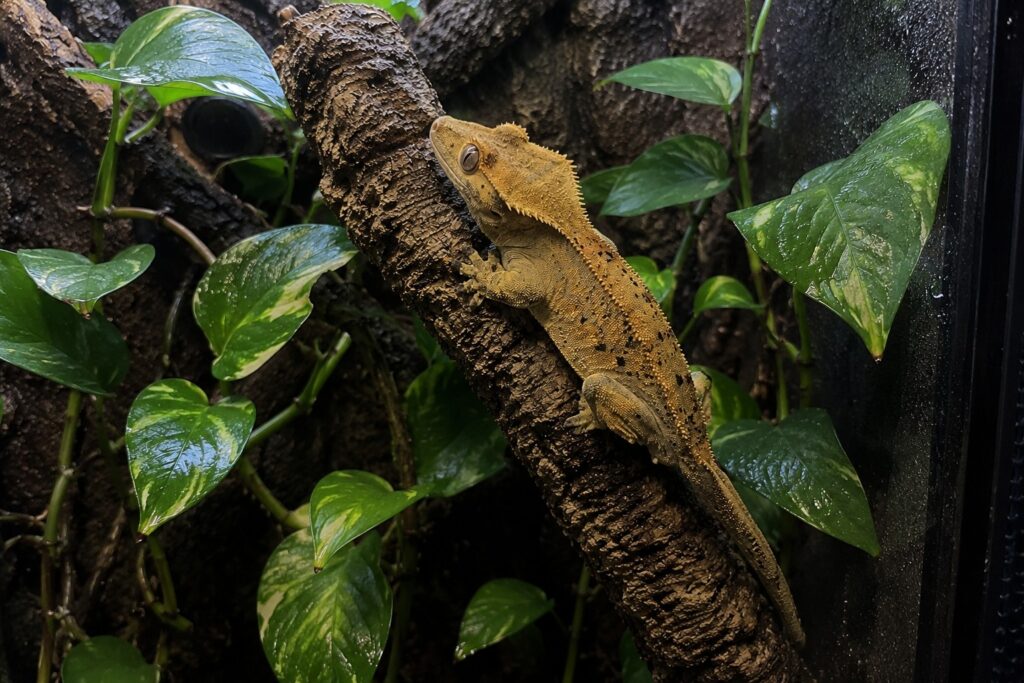
Juveniles under about 15 grams actually do better in a smaller 12 by 12 by 18 enclosure, because a baby can struggle to find its food in a big space, which quietly leads to weight loss. Inside, give them plenty of vertical cork bark, branches, and vines to climb, at least two hides (one high, one low), and a feeding ledge mounted about two thirds of the way up. Live plants like pothos and bromeliads are a big plus for cover and humidity. For the full breakdown of sizing, layout, and the common setup mistakes, see our crested gecko enclosure guide.
Temperature and Lighting
This is where crested gecko care is genuinely the easiest reptile around. They do best at plain room temperature: 72 to 78 degrees Fahrenheit during the day, dropping to 65 to 72 at night. Most homes already sit in that range with no supplemental heat at all.
The critical rule is the opposite of what you would expect from a reptile: do not let them get too hot. Sustained temperatures above 82 degrees cause serious stress, and anything above 85 can be fatal. Keep the enclosure out of direct sun and away from windows, and if your room runs cold in winter, a low-wattage ceramic heat emitter on a thermostat can nudge temps up a few degrees. Never use a stick-on heat mat.
On lighting, the old advice was that crested geckos need no UVB because they are nocturnal. The current consensus is that a low-output UVB tube (like an Arcadia ShadeDweller) is beneficial even if not strictly required, since it supports calcium absorption and overall health. If you skip UVB, you must supplement calcium with D3 at every insect feeding instead. Either way, give them a simple 12-hour day-night cycle on a timer.
Humidity
Humidity is the one part of crested gecko care you have to actively manage. They need 60 to 80 percent humidity, but just as important, they need it to cycle rather than sit high all day. Stagnant high humidity leads to respiratory infections and skin issues.
The routine is simple: mist heavily once or twice a day, usually evening and optionally morning, so humidity spikes after misting and then dries down before the next one. That wet-to-dry rhythm mimics their native New Caledonia. Use a digital hygrometer placed at mid-level where the gecko actually spends time, not the cheap analog stick-on kind. If your readings keep crashing too low and you are fighting stuck sheds, our guide on fixing crested gecko humidity that is too low covers every fix.
Crested Gecko Diet
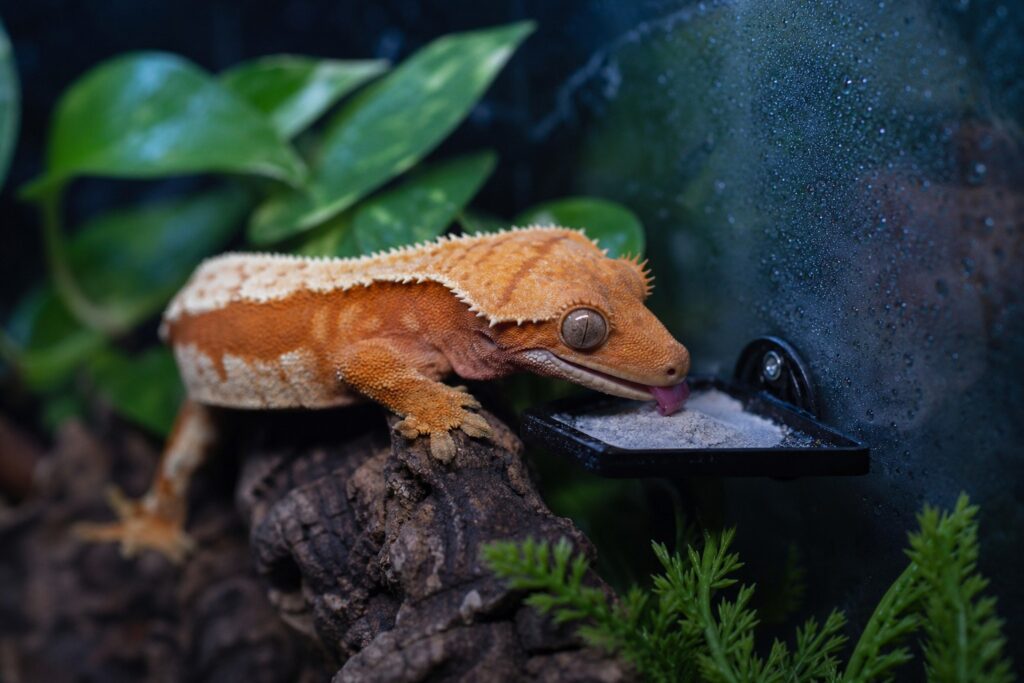
Here is the part that surprises new keepers: the base of a crested gecko’s diet is not insects, it is a commercial meal replacement powder (MRP) like Pangea or Repashy. You mix the powder with water into a paste and serve it in a shallow dish or ledge. Offer fresh MRP every other day, roughly three to four times a week, and remove the old food after 24 hours before it spoils in the humidity.
Insects are a supplement, not the main course. Offer appropriately sized crickets or dubia roaches once or twice a week on non-MRP days, dusted with calcium (with D3 once weekly, plain calcium the other time). Some cresties refuse insects entirely, and that is fine, a good MRP is nutritionally complete on its own. Feed in the evening when they are active, and place food high in the enclosure since they rarely come to the floor. Our full crested gecko diet schedule lays out a sample weekly routine and MRP tips. If your gecko starts refusing food, our guide on a crested gecko not eating walks through the usual causes.
Handling and Temperament
Gentle handling is part of good crested gecko care, but they need time to settle in first. Give a new gecko two to three weeks in its enclosure before handling, so it learns the space is safe and starts eating reliably. When you do start, keep sessions short, five to ten minutes, and let the gecko walk hand over hand rather than gripping it.
Two quirks to know. First, they are jumpy, especially young ones, so handle low over a soft surface or bed until you both get the hang of it. Second, and this catches everyone off guard, a crested gecko can drop its tail when stressed or grabbed, and unlike leopard geckos, it does not grow back. A tailless crestie (called a “frog butt” in the hobby) is perfectly healthy and lives a normal life, but it is a one-way change, so handle calmly to avoid triggering it.
Common Health Issues to Watch
Most crested gecko care problems come straight back to husbandry, which is good news because it means they’re preventable. The big ones to know:
Metabolic bone disease, caused by too little calcium or D3, shows as weakness, wobbly limbs, or a kinked jaw. Prevent it with consistent calcium dusting and either UVB or D3 supplementation. Stuck shed, usually from humidity that is too low, tends to cling to toes and tail tip where it can constrict, fix it by raising humidity and adding a humid area. Weight loss is the sneakiest one, since it creeps in over weeks, our guide on a crested gecko losing weight covers spotting and reversing it. And floppy tail syndrome, where the tail falls over the head while resting, is common and usually harmless but can relate to calcium in some cases.
Weigh your gecko monthly. A healthy adult holds fairly steady between 35 and 55 grams, and a slow decline over two or three months is your earliest warning that something in the routine needs adjusting.
Keeping Track of Care Over Time
The hardest part of crested gecko care is not any single task, it is staying consistent for the 15 to 20 years these geckos live. Humidity drifts with the seasons, you lose track of whether you fed MRP yesterday, and a UVB bulb quietly expires without you noticing. Small lapses add up.
Logging the routine removes the guesswork. The Exotic Reptile Care app lets you log feedings, track weight over time with growth charts, and set reminders for misting, cleaning, and UVB bulb replacement, so nothing slips during a busy week. For a long-lived pet, that kind of record is what lets you catch a problem in week two instead of month three.
The Bottom Line on Crested Gecko Care
Crested gecko care really does come down to a short list: a tall enclosure with plenty to climb, cool room-temperature conditions that never overheat, cycled humidity in the 60 to 80 percent range, a meal replacement powder base with occasional dusted insects, gentle handling, and monthly weigh-ins to catch trouble early. None of it is expensive or complicated once it is dialed in. Keep it consistent and you will have an easy, hardy, long-lived little gecko that is genuinely one of the best reptiles a beginner can start with. For a deeper reference on any single topic, follow the linked guides above.
Crested Gecko Care: Frequently Asked Questions
Are crested geckos easy to care for?
Yes, they are one of the best beginner reptiles. They live at room temperature with no basking lamp, eat a simple pre-formulated meal replacement powder, tolerate handling, and are hardy. The main thing to watch is that they must not overheat, since they are a cool-climate species.
Do crested geckos need a heat lamp?
Usually not. If your room stays between 72 and 78 degrees Fahrenheit, no supplemental heat is needed. Only if your home regularly drops below about 68 would you add a low-wattage ceramic heat emitter on a thermostat. Never use a high-output basking lamp, since sustained temperatures above 82 degrees are dangerous for them.
What do crested geckos eat?
The base of their diet is a commercial meal replacement powder (MRP) like Pangea or Repashy, offered three to four times a week. Insects such as crickets or dubia roaches are an optional supplement once or twice a week, dusted with calcium. A good MRP is nutritionally complete on its own, so an insect-free diet is fine.
How long do crested geckos live?
With good care, crested geckos commonly live 15 to 20 years in captivity. That long lifespan is one reason getting the basics right and staying consistent matters so much.
Do crested geckos like to be handled?
They tolerate gentle handling well once settled, but give a new gecko two to three weeks to acclimate first. Keep sessions short and let it walk hand over hand. Handle calmly, since stress can cause them to drop their tail, which does not grow back.