
How long do geckos live? Most popular pet geckos live 15 to 20 years in captivity, and some species pass 25. Small species like mourning geckos and gold dust day geckos have shorter lives, usually 8 to 15 years, while big leachianus geckos regularly reach 20 or more.
That’s a long time for a small lizard, often longer than a dog or a cat. Whether your gecko reaches the top of its range depends far more on its setup than on luck. Here’s how long each common species lives, why pet geckos outlive wild ones, and the five problems that cut most gecko lives short.
How Long Do Geckos Live? Lifespan by Species
| Species | Lifespan in captivity | Long-lived individuals |
|---|---|---|
| Leopard gecko | 15 to 20 years | Past 28 years |
| Crested gecko | 15 to 20 years | Pushing past 25 years |
| Gargoyle gecko | 15 to 20 years | Some live longer |
| Leachianus gecko | 20+ years | Some live much longer |
| Tokay gecko | 15 to 20 years | Rarely beyond 20 |
| African fat-tailed gecko | 15 to 20 years | Up to 25 years |
| Giant day gecko | 10 to 20 years | Around 20 years |
| Gold dust day gecko | 8 to 12 years | Around 12 years |
| Mourning gecko | 10 to 15 years | Around 15 years |
| Common house gecko | About 5 to 10 years | Around 10 years |
If you’re choosing a first gecko, these numbers matter. A leopard or crested gecko bought as a hatchling today could still be with you in 20 years, so plan for moves, holidays, and who would care for it if you couldn’t.
Why Pet Geckos Outlive Wild Geckos
Wild geckos rarely reach the ages in the table. Wild leopard geckos usually live only 6 to 8 years, and estimates for wild crested geckos run from 5 to 15. Predators, parasites, droughts, cold snaps, and food shortages all take their toll.
A pet gecko avoids nearly all of that. It gets steady temperatures, regular food, clean water, and no predators. That’s why captive lifespans are often double the wild ones, as long as the keeper gets the basics right. When the basics are wrong, the advantage disappears, and a pet gecko can die younger than a wild one.
Do Bigger Geckos Live Longer?
Broadly, yes. The longest-lived species in the table are the heavier ones: leachianus geckos, which can weigh 250 to 500 grams, and the stocky leopard and fat-tailed geckos. The shortest-lived are the smallest. Mourning geckos top out at 3 to 4 inches, and gold dust day geckos at 4 to 6 inches.
Size isn’t the whole story, though. Crested and gargoyle geckos are mid-sized and still reach 15 to 20 years. Small, fast-moving, high-energy species tend to live shorter lives than slower, heavier ones.
Sex can matter too. Females that lay clutch after clutch use up a lot of calcium, and heavy egg-laying can shorten their lives. That’s one reason careful breeders rest females between seasons.
5 Things That Shorten a Gecko’s Life (and the Fix for Each)
Most geckos that die young die from one of these five problems. Work through them in order. The first two cause the most early deaths.
1. Missing calcium and D3. Without enough calcium and vitamin D3, geckos develop metabolic bone disease. Warning signs are soft or rubbery jaws, bowed legs, a wobbly walk, and trouble climbing. The fix is regular dusting of feeder insects, and for crested and gargoyle geckos a complete powdered diet. Our leopard gecko guide lays out a simple calcium and D3 schedule that works for most insect-eating geckos.
2. Wrong temperatures. Leopard and fat-tailed geckos need a warm side to digest. A gecko kept too cold eats less, digests poorly, and gets sick more often. Tropical species have the opposite problem: crested and gargoyle geckos can die from sustained heat above about 82 to 85°F. Check what your species needs. Our guide to crested gecko temperature covers the heat-sensitive species.
3. Humidity that’s too low or too high. Too dry and you get stuck shed that can cost toes or a tail tip. Too damp, all the time, and you invite respiratory infections. Desert species need a dry enclosure plus a humid hide. Tropical species need a daily wet-then-dry cycle.
4. A poor or one-note diet. Feeding a single insect species forever, or offering fruit and baby food to a crested gecko instead of a complete diet, leads to slow nutritional problems. Rotate feeders, gut-load them, and check what each species eats before you buy food.
5. Problems spotted too late. Geckos hide illness well. By the time a gecko looks sick, it has often been sick for weeks. A yearly checkup with a reptile vet catches parasites and weight loss early. If you don’t have one, the ARAV vet directory lists reptile vets by location.
Tracking a 20-Year Commitment
The geckos that reach their late teens and twenties usually have keepers with good records. A slow weight drop over three months is easy to miss by eye and obvious on a chart. The same goes for a female producing more eggs than usual, or a gecko eating a little less every season.
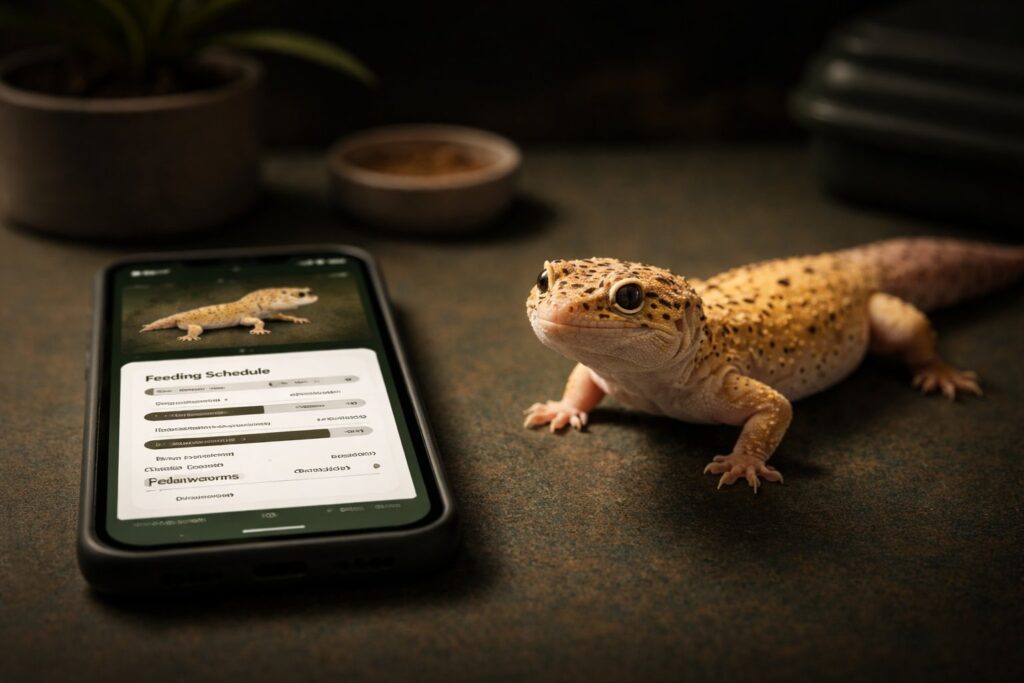
Weigh your gecko once a month on a kitchen scale that reads grams, and note every feeding, shed, and vet visit. You can log weight and feedings for years in the app with Exotic Reptile Care, which charts weight over time so a slow decline shows up early. For species-specific aging signs, see our leopard gecko lifespan guide.
Frequently Asked Questions
How long do geckos live as pets?
Most pet geckos live 15 to 20 years with good care. Leopard, crested, gargoyle, tokay, and African fat-tailed geckos all fall in that range. Leachianus geckos often live past 20, while small species like mourning and gold dust day geckos live 8 to 15 years.
What gecko lives the longest?
Leopard geckos hold some of the best-documented records, with individuals passing 28 years. Leachianus geckos also commonly live 20 years or more.
How long do house geckos live?
Common house geckos usually live about 5 to 10 years in captivity, and less in the wild. They’re small and fast-living, so they have some of the shortest lifespans of any gecko kept as a pet.
How long do geckos live in the wild?
Usually far less than in captivity. Wild leopard geckos typically live 6 to 8 years, and wild crested geckos an estimated 5 to 15 years, because of predators, parasites, and food shortages.
How can I help my gecko live longer?
Get calcium and D3 right, keep the correct temperature and humidity for your species, feed a varied diet, weigh your gecko monthly, and see a reptile vet once a year. Those five habits prevent most early deaths.
A gecko is a long commitment, often 15 years or more. Get the setup right in the first year, keep records, and your gecko has every chance of reaching the top of its species’ range.